Latex vs Memory Foam Mattress: Which Sleeps Cooler?
We compare how latex and memory foam handle heat, then pick three mattresses that genuinely sleep cooler — from a natural latex hybrid to a budget-friendly foam.
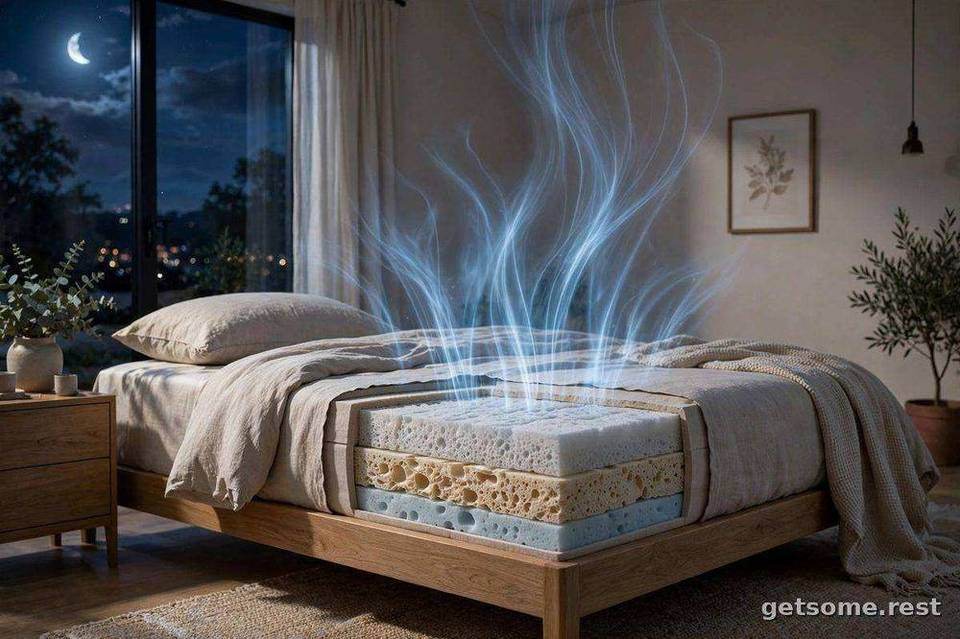
Choosing latex and memory foam mattresses is much easier once you know what to compare. We researched and tested the options so you can focus on the few details that really change how a product feels at night.
Contents
Our top picks at a glance
Here is how our three favorites compare. Each name links to its full write-up further down the page.
| Product | Best for | Price | Rating |
|---|---|---|---|
| Avocado Green Mattress | Naturally cool latex hybrid | $1,999 | 4.7 out of 5 |
| Amerisleep AS3 | Cooler-feeling memory foam | $1,049 | 4.4 out of 5 |
| Nolah Evolution 15 | Engineered cooling for hot sleepers | $1,749 | 4.6 out of 5 |
Prices last checked October 11, 2026 and may change. Ratings reflect our own testing and research.
How to choose latex and memory foam mattresses
In this guide, latex and memory foam mattresses means latex and memory foam mattresses are the two most common foam comfort materials in modern beds, and whichever one sits in your top comfort layer largely decides how warm or cool you sleep. Most buying mistakes come from skipping the same few checks, so run through the list below before you compare prices.
- Price: compare the real checkout price, including shipping, not just the list price.
- Materials: look for clear details about fabrics and fill instead of vague marketing terms.
- Trial period: a longer home trial makes it easier to return something that doesn’t suit you.
- Warranty and returns: read the terms, including who pays for return shipping.
The short version of the science: memory foam is dense and conforms closely to your body, which limits airflow and lets heat pool at the surface — the classic 'sleeping hot' complaint. Latex has an open-cell structure with tiny pinholes from manufacturing, so air moves through it instead of getting trapped. Pocketed coils underneath either material improve cooling further, because the spaces between coils act as ventilation channels.
The Sleep Foundation recommends keeping your bedroom between 65 and 68°F (18.3–20°C), noting that your body's temperature naturally drops as you sleep — so a cooler room makes it easier to fall and stay asleep.
Source: Sleep Foundation (sleepfoundation.org)
Setting up the rest of the room
A good product works best in a well-planned space. If you are still building your bedroom around it, our guide to Memory Foam vs Hybrid Mattress for Hot Sleepers covers the basics, and our comparison of Best Cooling Mattress Topper for Night Sweats shows how similar options stack up.
Price and value
The most expensive option is rarely the best fit. We look at what each product costs per year of expected use, and we note when a cheaper alternative gets you most of the way there. For a closer look at budgets, see Best Budget Mattress Under $300, and for evening habits that pair well with new gear, read Best Mattress for Back Pain Under $500.
How latex and memory foam actually handle heat
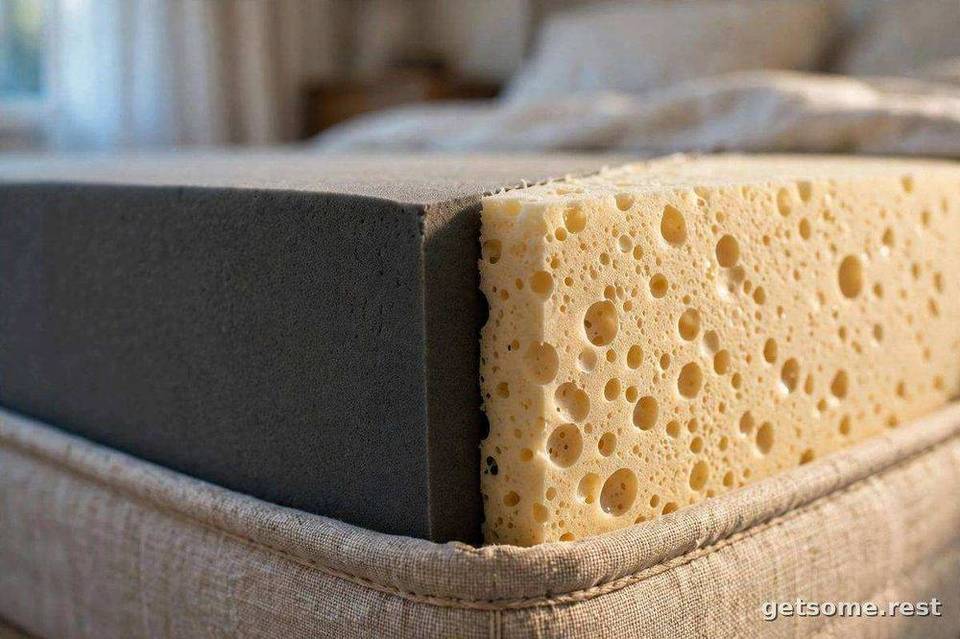
Think of it as the difference between a sponge and a dense rubber mat. Latex behaves like the sponge: its open cells let warm air escape and cooler air circulate with every small movement you make during the night. Memory foam behaves more like the mat — it absorbs your shape beautifully, but that close contact seals off airflow, so your body heat has nowhere to go. Two mattresses with identical firmness can feel completely different at 2 a.m.
Cooling technologies like gel infusions, graphite and phase-change covers can narrow the gap, and they genuinely help for the first hour or two of sleep. But most infusions can only absorb so much heat; once saturated, the foam behaves like regular memory foam for the rest of the night. The material's underlying breathability matters more than any add-on, which is why latex starts the race with a real advantage.
Our picks in detail
Each pick below includes a one-line verdict, the current price, and the main pros and cons from our testing.
We focused this roundup on mattresses where cooling is a structural feature — breathable materials and airflow-friendly builds — rather than beds relying on a cooling cover alone.
 Best overall
Avocado Green Mattress
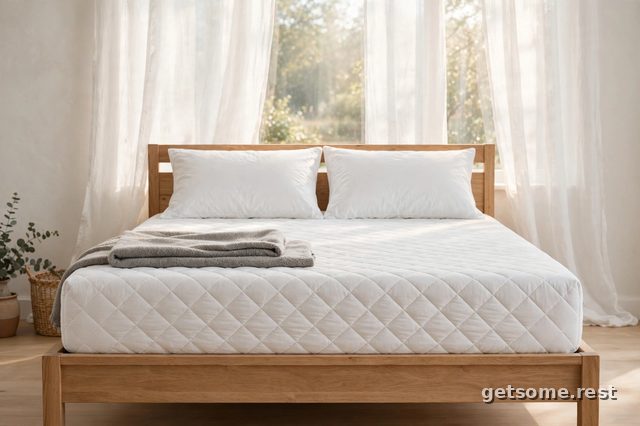
The Avocado Green is our top pick for naturally cool sleep because it combines GOLS-certified organic latex with a coil support layer — and that combination is the real secret. Latex's open-cell structure already breathes better than memory foam, and the pocketed coils underneath create air channels that let body heat escape instead of pooling around you. The organic wool in the cover adds natural temperature regulation. At $1,999 for a queen it is an investment, but you get a 365-night trial and a 25-year warranty, which is about as confident as a mattress company gets. The firm feel suits back and stomach sleepers best; side sleepers may prefer the pillow-top version.
$1,999 at time of writing
Pros
- GOLS-certified organic latex over coils sleeps naturally cooler than all-foam beds
- 365-night trial and 25-year warranty are among the best policies anywhere
- Organic wool and cotton cover adds breathable, chemical-free temperature regulation
Cons
- Heavy to move and set up — plan for two people
- Firm feel may not suit strict side sleepers without the pillow-top upgrade
Best budget
Amerisleep AS3
The Amerisleep AS3 is proof that not all memory foam sleeps hot. Its plant-based Bio-Pur foam uses an open-cell structure that breathes better than traditional petroleum-based memory foam, and every AS3 ships with a free Refresh cover designed to help you sleep cooler. The medium feel and five-zone support layer make it a strong all-rounder for combination sleepers who want that classic memory-foam hug without waking up sweaty. Be realistic, though: as an all-foam mattress it still sleeps warmer than either hybrid in this guide, and edge support is softer than coil-based beds. At $1,049 for a queen it is the easiest way to upgrade from a heat-trapping old foam bed without spending hybrid money.
$1,049 at time of writing
Pros
- Plant-based Bio-Pur foam runs cooler than standard petroleum memory foam
- Free Refresh cooling cover included with every mattress
- 100-night trial and 20-year warranty at a mid-range price
Cons
- All-foam build still sleeps warmer than a latex or coil hybrid
- Softer edge support than hybrid alternatives
Best cooling tech
Nolah Evolution 15
If you want a mattress engineered specifically to fight heat, the Nolah Evolution 15 is the most technology-packed option here. Its AirFoamICE comfort layer is graphite-infused to pull heat away from your body, and the breathable ArcticTex cover plus a ventilated Euro top keep air moving at the surface. Underneath, individually wrapped coils add the deep airflow that all-foam beds lack. It comes in three firmness levels so hot sleepers are not stuck with one feel, and the 120-night trial plus lifetime warranty are genuinely generous. The tradeoffs: a 15-inch profile that needs deep-pocket sheets and help moving, and a premium price even after Nolah's near-permanent discounts bring the queen to around $1,749.
$1,749 at time of writing
Pros
- Graphite-infused AirFoamICE layer actively draws heat away from the body
- Three firmness options plus coils for deep airflow
- 120-night trial and lifetime warranty
Cons
- 15-inch profile needs deep-pocket sheets and two people to move
- Premium pricing even after frequent sale discounts
How we test
We never accept payment for rankings. Every product is judged against the same five checks:
- Price
- We record the real price at checkout, note regular discounts, and recheck prices when we update the guide.
- Materials
- We read the fabric, fill and build details, and note anything the brand doesn’t make clear.
- Sleep trials
- We check how long you can try the product at home and whether the trial has conditions.
- Warranty
- We compare warranty length and what it actually covers, in plain language.
- Return policy
- We look at how returns work, who pays for shipping, and how refunds are handled.
Frequently asked questions
Does latex really sleep cooler than memory foam?
Yes, in most real-world comparisons. Latex has an open-cell structure with tiny pinholes left over from manufacturing, which lets air circulate through the material instead of getting trapped. Memory foam, by contrast, is denser and conforms closely to your body, which limits airflow and lets body heat build up at the surface — the classic sleeping hot complaint. Independent reviewers consistently rate latex and latex-hybrid mattresses higher for temperature neutrality than all-foam memory foam beds. The difference is biggest in all-latex versus all-memory-foam comparisons; once you add coils to either side, the gap narrows because coils add airflow. No mattress material can overpower a very warm bedroom, though — pair a breathable mattress with a cool room around 65°F and breathable bedding for the full effect.
Is a latex hybrid or an all-latex mattress cooler?
A latex hybrid usually sleeps a touch cooler than an all-latex mattress, and the reason is airflow. In a hybrid, the comfort layer of latex sits on top of pocketed coils, and the spaces between those coils act as ventilation channels that let warm air escape downward and out the sides of the bed. An all-latex mattress is still far more breathable than memory foam, but it is a solid stack of foam with no air gaps, so it retains slightly more heat. Hybrids also tend to cost less than thick all-latex builds and offer better edge support. The one case where all-latex wins is durability and motion isolation — but for pure cooling, a hybrid is the safer bet.
Do gel infusions and cooling covers actually make memory foam cooler?
They help, but with limits. Gel beads, graphite, copper and phase-change materials are added to memory foam to absorb heat or move it away from your body, and cooling covers use breathable or moisture-wicking fabrics. In testing, these features usually make the first hour or two of sleep feel noticeably cooler — the cool-to-the-touch effect you notice when you first lie down. The catch is that most infusions have a limited capacity to absorb heat; once saturated, the foam behaves like regular memory foam for the rest of the night. Phase-change covers tend to perform better over a full night than gel infusions do. Think of cooling tech as a useful boost, not a fix — it works best on a mattress that already breathes reasonably well.
Will a cooling mattress topper fix my hot memory foam mattress?
A cooling topper can meaningfully improve a hot mattress, and it is the cheapest fix worth trying before replacing the bed. A breathable latex or wool topper adds a ventilated layer between you and the heat-trapping foam, which is exactly where most of the warmth builds up. Our separate guide to the best cooling mattress toppers for night sweats compares the options that work best for this. Set expectations, though: a topper cannot add the deep airflow that coils provide, so a thick all-foam mattress will still sleep warmer than a hybrid. If your mattress is also sagging or more than eight years old, the topper is a band-aid — put the money toward a new breathable mattress instead.
Which lasts longer, latex or memory foam?
Latex wins on durability by a clear margin. A quality natural latex mattress typically lasts 12 to 15 years or more, while most memory foam mattresses start to soften and develop body impressions after 7 to 10 years. Latex is naturally more resilient — it springs back instead of slowly conforming — so it resists the sagging that ends a memory foam bed's useful life. That longevity is part of why latex mattresses cost more upfront; spread over 12-plus years, the yearly cost often ends up similar. Whichever you choose, a breathable mattress protector and a supportive foundation will extend its life. And durability ties back to cooling: a sagging foam mattress traps more heat because your body sinks deeper into warm foam.
Key takeaways
- Our top pick for most people is Avocado Green Mattress; Amerisleep AS3 is the better choice on a tighter budget.
- Compare real checkout prices, materials, trial length, warranty and return terms before you buy.
- Latex sleeps cooler than memory foam in most tests, but a hybrid build with coils beats an all-foam bed of either material for airflow.
- Rankings on GetSome Rest are never for sale, and we update our guides weekly.