How to Sleep Cool Without AC: The Complete Guide
You don't need air conditioning to sleep cool. This guide covers the bedding, fan placement, showers, hydration, and bedroom tweaks that actually lower your sleep temperature — ranked by cost and effort.
Waking up at 3 a.m. damp, sticky, and wide awake is a special kind of miserable. Your bedroom does not have to be an icebox for you to sleep well — your body just needs to cool down by a couple of degrees to fall asleep, and stay cool enough to stay asleep. Air conditioning is the obvious answer, but it is expensive to run, noisy, and unavailable to plenty of people. The good news: a stack of cheap, low-effort changes can get you most of the way there. This guide covers every lever that actually works — bedding, airflow, showers, hydration, clothing, and bedroom setup — with a cost-and-effort ranking so you can start with the easy wins tonight.
Contents
Why heat ruins your sleep
Your core body temperature follows a daily rhythm: it peaks in the late afternoon, then drops by about two to three degrees in the evening, reaching its lowest point around 4 to 5 a.m. That drop is not a side effect of sleep — it is one of the triggers for it. Your brain reads the cooling as a signal to release melatonin and start the descent into deep sleep.
A hot bedroom breaks this mechanism. When the air and bedding around you are warm, your body cannot shed heat efficiently, so the temperature drop stalls. The result is well documented: longer time to fall asleep, more nighttime awakenings, and less time in the deep slow-wave sleep your body uses for physical recovery. You do not need a study to feel it, but it helps to know the misery has a mechanism — and that every trick in this guide works by helping your body complete that cooling.
You do not fall asleep because you are tired. You fall asleep because your body cools down.
Source: GetSome Rest editorial analysis
Aim for the right bedroom temperature
Most sleep research points to roughly 60–67°F (15–19°C) as the sweet spot for adult sleep, with around 65°F the most common recommendation. Older adults often prefer it slightly warmer — research suggests 68–77°F (20–25°C) can suit people over 60 better.
Without AC you may not reach the textbook range on a hot night, and that is fine. The goal is progress, not perfection: every degree you shave off the bedroom — and especially the microclimate under your sheets — helps your body complete its cooling. For the full breakdown of what the research actually says, see our guide to the ideal bedroom temperature for sleep.
Switch to breathable bedding
Bedding is the highest-impact change most people can make, because it controls the microclimate — the few inches of air between your skin and the room. A heavy polyester duvet in summer is a personal greenhouse.
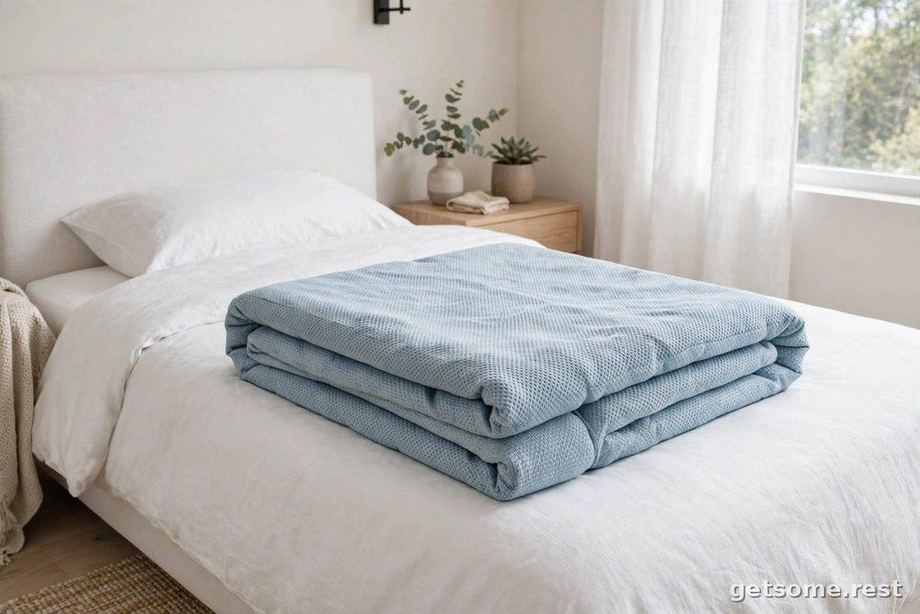
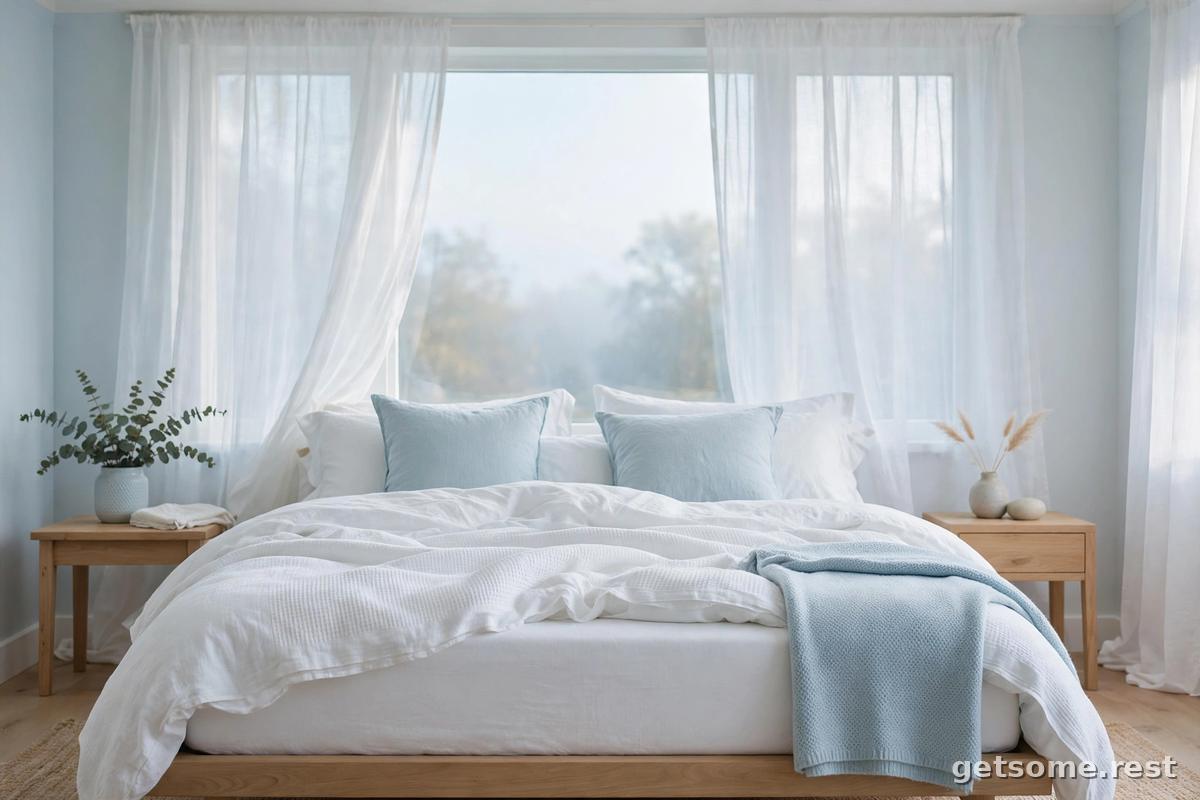
- Choose natural, breathable fibers: cotton percale (a crisp, cool weave), linen (softens with every wash, breathes exceptionally well), or bamboo and lyocell (silky, moisture-wicking). These let heat and moisture escape instead of trapping them against your skin.
- Avoid heat traps: high-thread-count sateen has a tight weave that holds warmth, and microfiber polyester is essentially plastic — cheap, but it sleeps hot.
- Swap the duvet for a top sheet: on genuinely hot nights, a single breathable top sheet is all you need. Keep a light blanket folded at the foot of the bed in case the room cools toward morning.
- Stick a foot out: your feet and hands are radiators — blood vessels near the surface dump heat efficiently. Sleeping with your feet uncovered speeds up the whole cooling process.
Place your fan like you mean it
A fan does not lower a room's temperature — it accelerates heat loss from your skin by moving air across it, and that is exactly what your body needs to cool down. But most people place their fan wrong: aimed at their face in a room with closed windows, it just pushes the same hot air around.
The cross-breeze setup
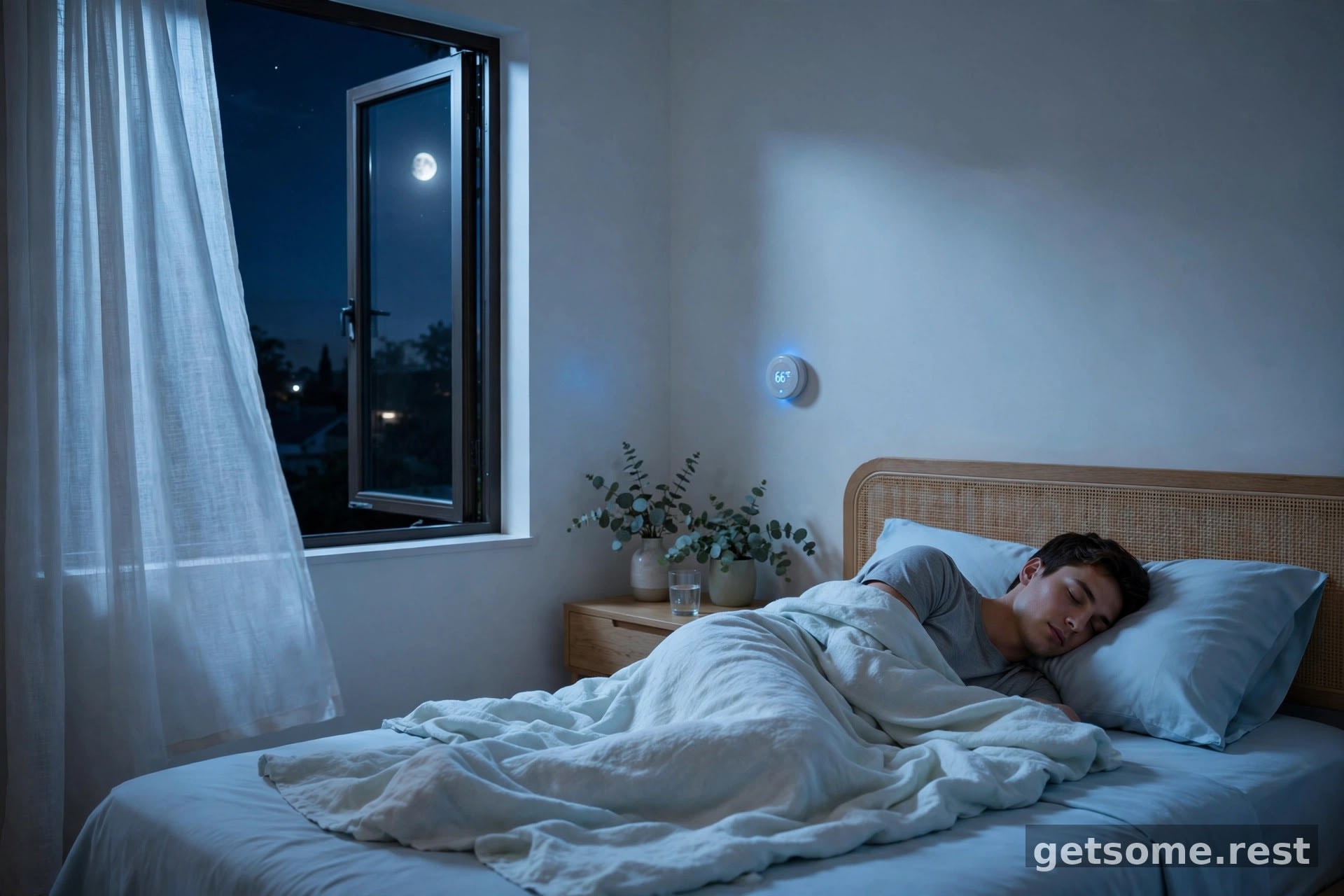
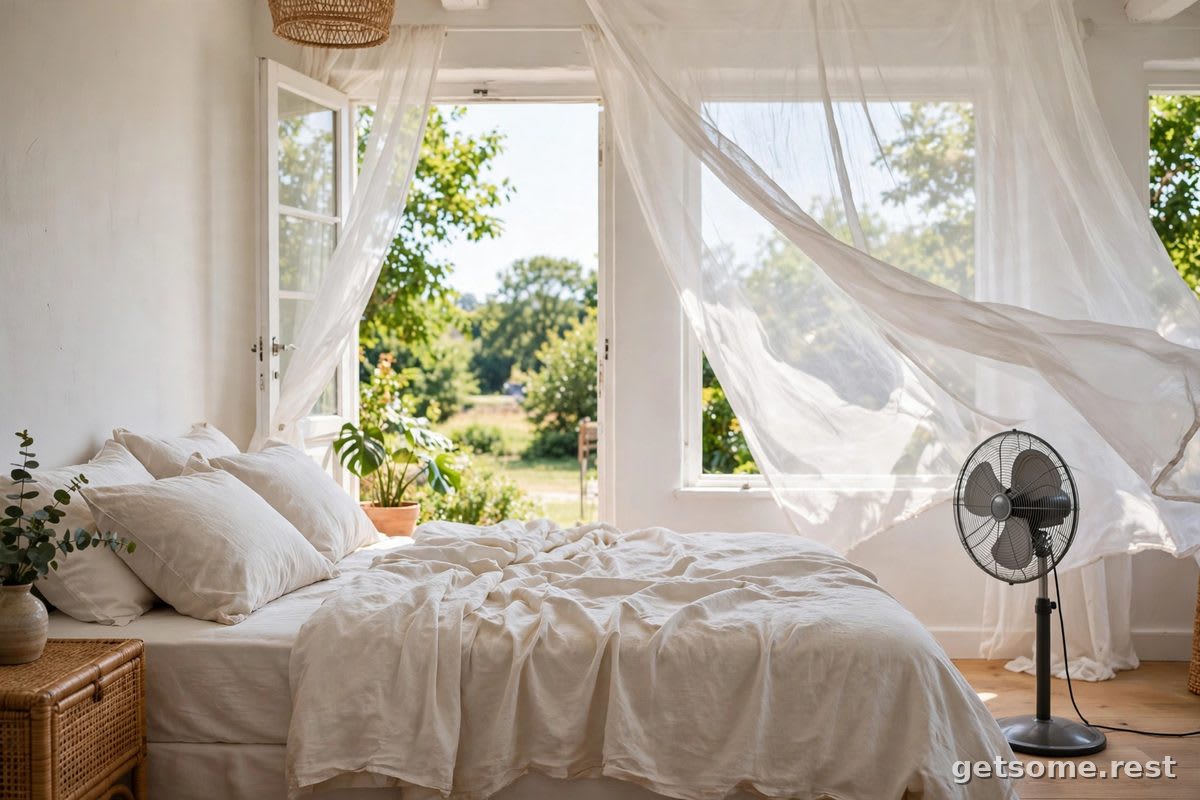
The most effective fan arrangement uses two windows. Place the fan in one window blowing outward, and open a second window on the opposite side of the room (or the apartment). The fan exhausts hot air, and cooler night air gets pulled in through the intake window — you have built a wind tunnel through the bedroom. Cool air sinks, so a fan placed low, near the floor by the window, works with the physics instead of against it. This one change is the closest thing to free air conditioning.
Placement mistakes to avoid
- Fan in a sealed room: with no intake, you are just stirring hot air. Always pair a fan with an open window or door.
- Blasting your face all night: direct airflow on your face for eight hours dries out sinuses and eyes. Aim the airflow across the bed or at your torso instead.
- Open windows on hot afternoons: during the day, an open window lets heat in. Keep sun-facing windows closed and shaded, and open them for the cross-breeze only once outside air is cooler than inside — usually after sunset.
Take a warm shower before bed
This one is counterintuitive: take a warm shower, not a cold one. Warm water draws blood to the surface of your skin; when you step out, the evaporation off your skin drops your core temperature — mimicking the natural evening cooling your body is trying to do anyway. A cold shower does the opposite: it constricts blood vessels, trapping heat in your core, and your temperature can rebound higher afterward.
Timing matters more than temperature. Shower about 60–90 minutes before bed, giving your body time to complete the post-shower cool-down right as you are getting into bed. Lukewarm to comfortably warm is the range — you want to feel pleasantly warm stepping out, not chilled.
Wear less, and wear the right fabric
What you wear to bed matters almost as much as what you sleep under. The rules are simple: loose, breathable, and as little as you are comfortable with.
- Fabric: loose cotton or moisture-wicking sleepwear. Skip tight synthetics, which trap a layer of warm air against your skin.
- Amount: sleeping nude is perfectly effective if you are comfortable with it; a loose cotton t-shirt and shorts is the practical middle ground.
- Socks: skip them in the heat. Warm feet can help sleep onset in a cool room, but on hot nights bare feet dump heat faster — one more radiator working for you.
Hydrate smart in the evening
Sweating is your body's cooling system, and it needs water to run. Drink a full glass of water in the evening and keep another on the nightstand — dehydration makes heat feel worse and can contribute to morning headaches. You do not need to overdo it; chugging a liter right before bed just buys you a 3 a.m. bathroom trip.
Two things to skip: alcohol, which raises body temperature and fragments sleep even though it feels sedating, and heavy, spicy late meals, which keep your metabolism — and your temperature — elevated when it should be dropping. A light evening snack is fine; a feast at 10 p.m. is not your friend on a hot night.
Tweak your bedroom setup
Small environmental changes compound. None of these cost much; together they keep the room from banking heat all day.
- Block daytime sun: the biggest free win. Keep blinds or curtains closed on sun-facing windows during the day, especially west-facing ones that catch the afternoon blast. Blackout curtains do double duty — they block light and a meaningful amount of heat. Our guide to the best blackout curtains covers options that seal out both.
- Clear airflow around the bed: move the bed a few inches from the wall if you can, declutter under and around it, and keep the bedroom door ajar so air circulates instead of pooling.
- Move heat sources out: gaming PCs, chargers, and old incandescent bulbs all radiate heat. Power down what you are not using, and swap hot bulbs for LEDs.
When the mattress itself sleeps hot
If you have done everything above and still wake up sweating, the mattress is the likely culprit. Traditional memory foam is notorious for trapping body heat — it softens with warmth and holds it against you all night. Breathable designs like hybrids (coils plus foam) and latex sleep noticeably cooler because air can move through them. Our comparison of memory foam vs. hybrid mattresses for hot sleepers walks through the differences in detail.
You do not have to replace the mattress to improve it. A cooling topper — gel-infused foam, latex, or wool — adds a breathable layer between you and a hot mattress for a fraction of the price. See our guide to the best cooling mattress toppers for night sweats. And check your mattress protector: cheap waterproof covers can feel like sleeping on plastic wrap. A breathable cotton protector keeps the waterproofing without the sauna effect.
Methods ranked by cost and effort
Start at the top of this table and work down. The first four rows cost little or nothing and deliver most of the cooling — the expensive options are for when the cheap ones are not enough.
| Method | Typical cost | Effort | Cooling effect |
|---|---|---|---|
| Cross-breeze fan setup (fan out one window, intake from another) | $0–40 | Low | High |
| Warm shower 60–90 min before bed | $0 | Low | Medium |
| Block daytime sun (close blinds/curtains) | $0 | Low | Medium |
| Bedside water and evening hydration | $0 | Low | Low |
| Breathable cotton or linen sheets | $30–60 | Low | Medium–High |
| Loose cotton sleepwear | $10–25 | Low | Low–Medium |
| Declutter and improve airflow around the bed | $0 | Medium | Low–Medium |
| Cooling mattress topper | $80–200 | Medium | High |
| Replace a hot mattress (hybrid or latex) | $400+ | High | High |
Costs are typical US ranges at time of writing. Cooling effect is relative — stacking several medium-effect methods usually beats one expensive one.
A sample hot-night routine
Here is how the pieces fit together on a typical hot evening:
- 90 minutes before bed: warm shower. Set out loose cotton sleepwear.
- 30 minutes before bed: set up the cross-breeze — fan in the window blowing out, second window open. Top sheet only on the bed, feet uncovered. Water on the nightstand.
- Bedtime: lights low, screens away, the same wind-down you would run any night. Our 30-minute evening routine pairs well with this — the cooling handles the body, the routine handles the mind.
- If you wake up hot: drink some water, flip the pillow, and stick your feet out from under the sheet before deciding the night is ruined. Most hot wake-ups pass in minutes once you are actually cooling again.
Frequently asked questions
Can a fan really replace AC for sleep?
For many people, yes. A fan doesn't lower the room's temperature, but moving air accelerates heat loss from your skin — which is what your body needs to fall asleep. The cross-breeze setup (a fan exhausting out of one window, with intake from another) is far more effective than a fan blowing stale hot air around a closed room. On extreme heat-wave nights, fans alone may not be enough — layer them with the bedding and shower tricks in this guide.
Is it better to shower cold or warm before bed?
Warm, not cold. A cold shower constricts blood vessels and can actually raise your core temperature afterward. A warm shower sends blood to your skin, and the evaporation when you step out drops your core temperature — mimicking the natural cooling your body does before sleep. Aim for 60–90 minutes before bed.
Why do I wake up sweating even when the room feels fine?
Usually it's trapped heat, not room heat — a memory-foam mattress and polyester bedding can create a microclimate several degrees warmer than the room. Alcohol and heavy late meals also raise nighttime body temperature. Fix the bedding and mattress layer first. One caveat: night sweats that regularly soak through your clothes are worth discussing with a doctor — that's a conversation for a clinician, not a bedding upgrade.
What is the best bedding for hot sleepers?
Breathable natural fibers: cotton percale (a crisp, cool weave), linen (it gets better with washing), or bamboo and lyocell (silky and moisture-wicking). Avoid high-thread-count sateen — the tight weave traps heat — and microfiber polyester, which is essentially plastic. In summer, sleep with just a top sheet and keep your feet uncovered.
Should I sleep with the window open or closed?
Open, once the outside air is cooler than inside — typically after sunset. During the day, keep sun-facing windows closed and shaded so heat doesn't build up. The ideal setup: day = closed and shaded, night = open with a fan creating a cross-breeze. If outside air stays hot all night during a heat wave, keep windows closed and rely on fans plus the other methods.
Key takeaways
- Your body must drop 2–3°F to fall asleep — every cooling trick works by helping it complete that drop.
- The cheapest high-impact wins: breathable sheets, a cross-breeze fan setup, and a warm shower an hour before bed.
- Bedding and mattress changes matter more than room gadgets — fix the microclimate around your body first.
- Block daytime sun and keep air moving around the bed for free extra cooling.
- Night sweats that regularly soak through your clothes are worth discussing with a doctor.