Sleeping With Your Dog: What the 2026 PLOS One Tracker Study Found
A PLOS One study tracked 25 people and 38 dogs for four weeks with wrist and collar monitors. Sharing the bed did not measurably change sleep duration or quality.
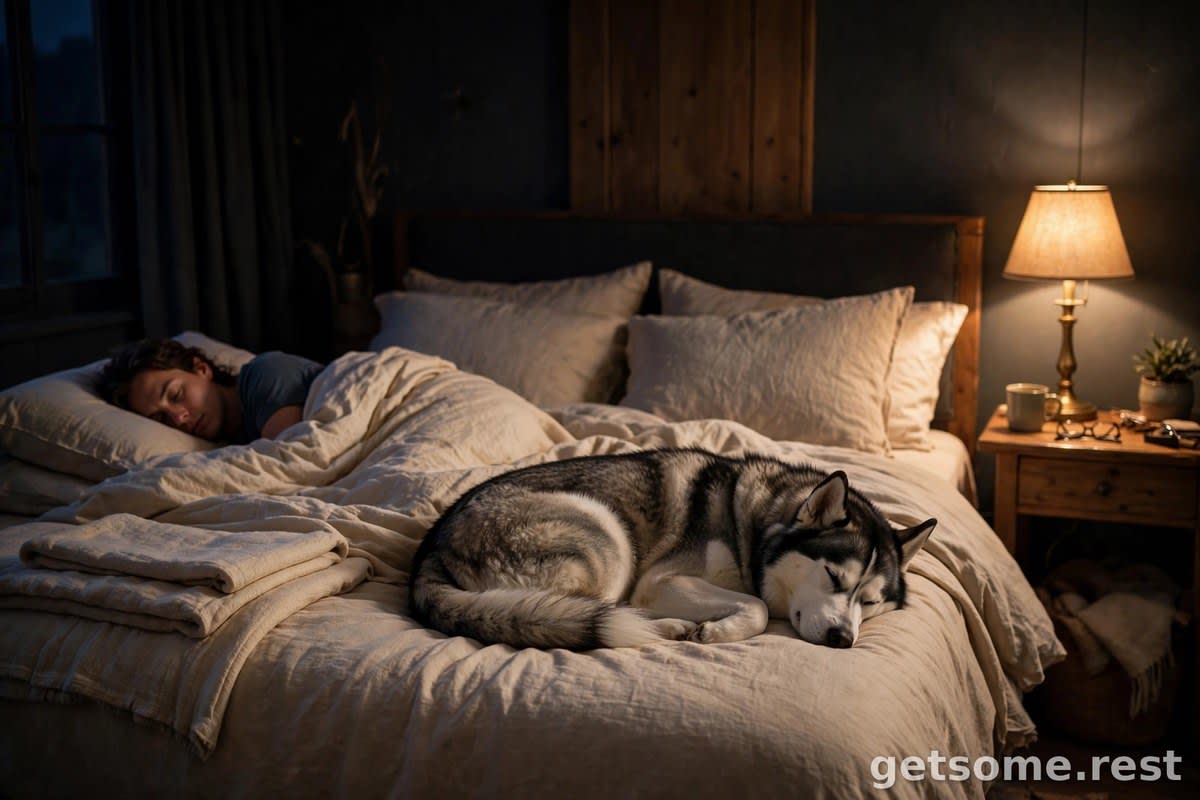
If you have ever blamed a 3am shuffle on the dog at the foot of your bed, a new study has an awkward reply: the trackers say it may have been you. Published in PLOS One on October 7, 2026, by researchers at the University of Toronto, this is one of the first studies to measure both sides of the bed at once — people with wrist activity monitors, dogs with collar monitors — for four full weeks.
Contents
At a Glance: What the Study Found
Published in PLOS One on October 7, 2026, by Ming Fei Li, Lavania Nagendran, and colleagues at the University of Toronto, the study asked a question most dog owners have argued about at least once: who is actually waking whom up?
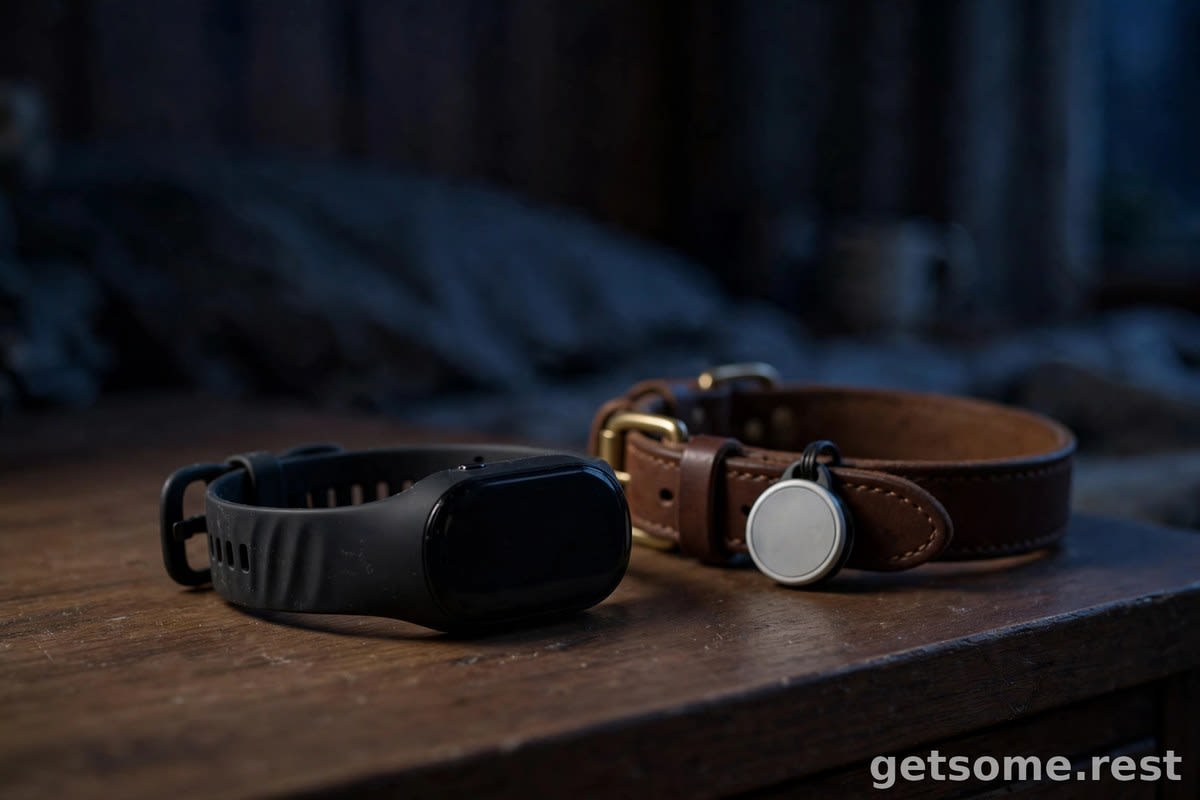
- The setup: 25 humans and their 38 dogs in southern Ontario, tracked for four weeks with activity monitors — wrist-worn for people, collar-worn for dogs.
- The headline result: sharing the bed with a dog did not significantly affect sleep duration or sleep quality on objective tracker measures, even for owners who reported feeling disturbed.
- The twist: human and dog nighttime activity was strongly correlated, but humans began moving before dogs more often than the other way around.
- The caveat the authors stress: a limited, volunteer sample with no dog-free control group, so this is a starting point, not a final verdict.
That combination — a null result on the trackers, a clear pattern in who moves first, and an honest list of limits — is what makes this study worth a careful read rather than a headline skim.
How to Read This Study Without Overreading It
Co-sleeping research is easy to misread in both directions: as proof that dogs ruin sleep, or as proof that they cannot. Three questions keep the reading honest.
1. What did the device actually measure? Activity monitors record movement. From movement, researchers infer sleep timing and restlessness. They do not record sleep stages, breathing, or how rested you feel the next morning. A night can look fine on a movement trace and still feel rough, and vice versa.
2. Who was in the study? Twenty-five volunteers and 38 dogs is small, and the dogs were mostly Nordic breeds — Siberian Huskies and Alaskan Malamutes — which are not a stand-in for a snoring Bulldog, a restless puppy, or three large dogs on a double bed. Women were overrepresented, and the data were collected in the pandemic era, when daily routines were unusual.
3. What was not compared? There was no dog-free control group sleeping in the same homes under the same conditions. The study compares nights and patterns within dog-owning households; it cannot isolate the dog as the single cause of anything, for better or worse.
Keep those three questions in mind and the study's conclusions land exactly where they should: interesting, well-measured, and provisional.
The Findings, Side by Side
Every headline result from the study, what it measured, and the limit that applies to it.
| Finding | What was measured | Limit to keep in mind |
|---|---|---|
| Bed-sharing did not significantly change sleep duration | Nightly sleep time from wrist activity monitors over four weeks | Small sample; no dog-free control group |
| Bed-sharing did not significantly change sleep quality | Movement-based quality measures from the same monitors | Monitors track movement, not sleep stages |
| Human and dog activity was strongly correlated at night | Minute-by-minute movement from wrist and collar monitors | Correlation is not proof of who caused the stir |
| Humans moved first more often than dogs | Order of movement onsets in paired nighttime activity | Mostly huskies and malamutes; may not generalize |
| Owners still reported feeling disturbed | Self-reported sleep experience alongside tracker data | Perceived and measured sleep often disagree |
The row that matters most for daily life is the last one. Feeling disturbed is a real experience even when a tracker shows little change, and a study that captures both sides — feeling and measuring — is more useful than one that picks a side.
Our Verdict: The Honest Takeaway
Here is the most defensible reading of this research — what is supported, what is plausible, and what it does not show.
Supported: in this small, closely tracked group, a dog in the bed did not measurably cost people sleep time or tracker-measured sleep quality, and nighttime stirring ran in both directions, with humans often first.
Plausible, not proven: that the same pattern holds for other breeds, household sizes, and bed sizes. The study's breed mix and small numbers make that an open question, and the authors say so plainly.
Not shown: that dogs improve sleep, that every dog is an equally good bed partner, or that a dog in the bed can never disturb a light sleeper. A large, restless, or snoring dog on a small bed is a different setup from the one most studied here, and common sense about space still applies.
Practical bottom line: if you and your dog both sleep well, this study gives you no reason to change anything. If you do not, try the unglamorous fixes first — more bed space, a washable cover you can launder weekly, a wind-down routine for the dog before your own bedtime, and a vet visit if snoring, coughing, or restlessness is new. Those fixes help whether the dog or you is the one stirring first.
What the Coverage Got Right — and Where It Overreached
Most coverage of this study got the core numbers right: October 7, 2026, PLOS One, University of Toronto, 25 people, 38 dogs, four weeks, wrist and collar monitors. Where coverage diverged was in the verb. Some headlines said dogs ‘do not ruin sleep’ — a fair summary of the tracker result, but broader than the study's own claim. Others flipped it into ‘humans ruin their dogs' sleep’ — punchier, and closer to the who-moved-first pattern, but still an overstatement of a correlation in a small sample.
The most careful coverage did two things: it named the breed and sample limits in the same breath as the finding, and it set this study against the 2024 survey work that found the opposite pattern in self-reports. That contrast is the real story. When surveys and trackers disagree, the answer is usually not that one side is lying; it is that they measure different things, in different people, at different scales. The honest next step is a bigger tracker study with more breeds, more men, a control group, and sleep-stage data — exactly what the authors call for.
One more note on the coverage: several write-ups treated the pandemic-era timing as a footnote. It deserves more weight. Routines, work hours, and time at home were all unusual when these data were collected, and all of them shape both human and dog sleep. A post-pandemic replication would be the single most useful follow-up.
How We Reported This Story
This article is a research roundup, so our method is literature coverage rather than product testing. We started from the study's own record — Li, Nagendran and colleagues, PLOS One, October 7, 2026 — and the University of Toronto and PLOS summaries of it, then checked the numbers (25 people, 38 dogs, four weeks, wrist and collar monitors) against at least two independent write-ups. Where coverage disagreed with the study record, we followed the study record.
We did not re-analyse the raw data, and we did not contact the authors. Product mentions in this article are general comfort suggestions, not tested recommendations, and they carry no claim about sleep quality. If a larger replication appears, we will update this article and say what changed.
Disclosure: GetSome Rest contains affiliate links. If you buy through them, we may earn a commission at no extra cost to you.
Frequently asked questions
Did the PLOS One study prove dogs do not disturb sleep?
Not quite. It found no significant effect of bed-sharing on objective sleep duration or sleep quality in this small group, measured by activity monitors over four weeks. That is a narrower claim than proof for all dogs, all owners, and all bedrooms — and the authors themselves flag the small sample and the lack of a dog-free control group.
Who moved first at night, the human or the dog?
More often the human. Nighttime activity was strongly correlated between people and dogs, with both commonly becoming active around the same time, but human movement usually came before dog movement. The authors read this as owners disturbing their dogs at least as much as the reverse.
Why did owners still feel disturbed if the trackers showed no effect?
That gap between feeling and measuring is the study's most interesting finding. A brief stir that you notice and remember can feel like a ruined night even when total sleep time and tracker-measured quality barely change. Perceived disturbance and measured sleep are related, but they are not the same thing.
Does this contradict earlier surveys linking pets in bed to worse sleep?
It complicates them rather than cancelling them. A larger 2024 US questionnaire study linked co-sleeping, especially with dogs, to poorer self-reported sleep and more insomnia symptoms. Surveys capture how people feel about their sleep; trackers capture movement. Both can be true at once, which is why the authors call for larger, more diverse tracker studies.
Should I change where my dog sleeps because of this study?
This study alone is not a reason to change a routine that works for you. If you sleep well and your dog sleeps well, the trackers give you no reason to evict anyone. If you wake up tired and suspect the dog, the practical fixes are boring and effective: a bigger bed, a washable cover you can launder often, a consistent bedtime routine for the dog, and a vet check if snoring or restlessness is new.
Key Takeaways
- A PLOS One study (October 7, 2026) tracked 25 people and 38 dogs for four weeks with wrist and collar activity monitors.
- Bed-sharing did not significantly change objective sleep duration or sleep quality in this group, even when owners felt disturbed.
- Human and dog nighttime movement was strongly linked, and humans moved first more often than dogs.
- The sample was small, mostly women, mostly huskies and malamutes, with no dog-free control group and no sleep-stage data.
- The study complicates, rather than cancels, earlier survey findings that linked pet co-sleeping to worse self-reported sleep.
- If your current routine works for both of you, the trackers give no reason to change it; if it does not, start with bed space, bedding laundry, and routine.