Elegear Arc-Chill vs SlumberCloud: Cooling Blankets Compared (2026)
Elegear Arc-Chill 3.0 vs SlumberCloud UltraCool compared in 2026: ~$41 budget throw vs ~$304 phase-change comforter, cooling tech, and who should buy which.
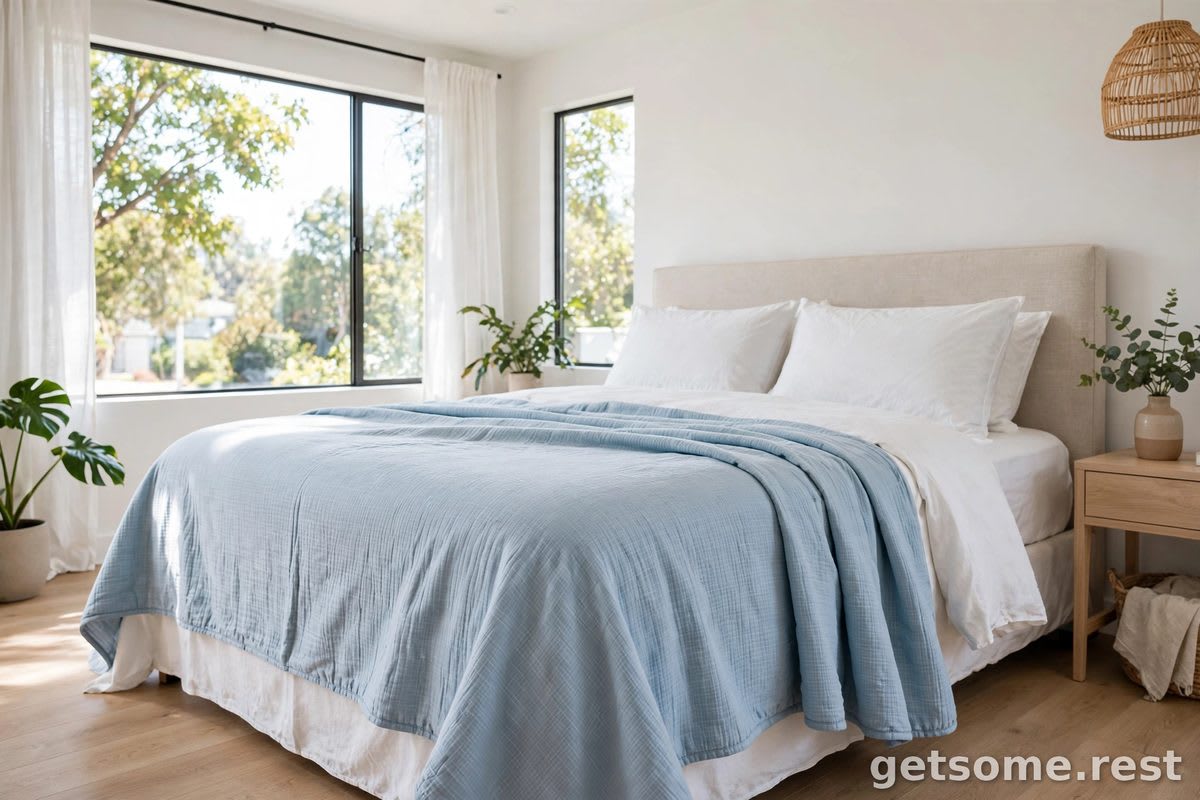
The Elegear Arc-Chill 3.0 and the SlumberCloud UltraCool are both called cooling blankets, but they are barely the same product: one is a ~$41 thin throw that feels cold the instant you touch it, the other is a ~$304 comforter built around NASA-inspired phase-change fill that buffers your temperature all night. We compared their cooling tech, materials, care, and real prices so you buy the right one — and set honest expectations for each.
Contents
At a glance: Elegear Arc-Chill 3.0 vs SlumberCloud UltraCool
Night sweats are common — in one cross-sectional study of 2,267 adult patients, 41% reported night sweats in the prior month. Cooling bedding is the first-comfort-step most reviewers recommend, and these two take opposite approaches. Here is the honest summary before the details.
| Fact | Elegear Arc-Chill 3.0 | SlumberCloud UltraCool |
|---|---|---|
| What it is | Thin cooling throw/blanket | Cooling comforter (Lightweight or All-Season) |
| How it cools | Contact cooling — feels cold instantly | Thermal buffering — absorbs/releases heat gradually |
| Cooling tech | Arc-Chill 3.0 fiber + jade nano-particles, Q-Max > 0.5 | Outlast phase-change material (NASA-inspired) |
| Price (Oct 2026) | ~$41 Full; $26–$45 on Amazon | ~$264 Twin; ~$304 Full/Queen |
| Certifications | None found | Oeko-Tex Standard 100 certified technology |
| Care | Machine wash in net bag; air dry only | Machine wash cold gentle; tumble dry low |
| Trial/returns | 30-day returns; 1-year quality guarantee | 30-night satisfaction guarantee |
| Best for | Budget buyers; hot summer nights; gift buyers | Year-round hot sleepers; couples with mismatched temperatures |
How to choose cooling bedding (and what to expect)
First, the honest physics: passive cooling bedding does not refrigerate you. It either moves heat away from your skin quickly (contact cooling) or absorbs and releases it gradually (thermal buffering). Both help you stay comfortable in a warm room, and neither replaces a fan, breathable sheets, or a 65–68°F bedroom — the Sleep Foundation's standard recommendation.
Contact cooling (Elegear's game). Japanese Arc-Chill 3.0 fabric is infused with jade nano-particles to hit Q-Max > 0.5, which means it feels genuinely cold the instant you touch it. The catch, noted by independent reviewers: the effect fades as the fabric warms to your body temperature, and it works best when the room is warm to begin with. Think of it as the fabric version of flipping to the cool side of the pillow.
Thermal buffering (SlumberCloud's game). Outlast phase-change material, developed with NASA heritage, absorbs excess body heat and stores it, then releases it when your skin cools — smoothing out the hot-then-cold cycle that wakes hot sleepers. It is less dramatic on first touch but works for more of the night and across seasons, which is why it costs more.
Set the right expectation for each. The Elegear is a thin throw — it layers over your duvet or replaces it in summer. The UltraCool is a full comforter that replaces your existing one. Comparing them on price per se is misleading; compare them on what they replace. A note on the YMYL side: position both as sleep-comfort products, never as treatment for night sweats tied to medical conditions.
Head-to-head: specs, materials, and pricing
| Specification | Elegear Arc-Chill 3.0 | SlumberCloud UltraCool |
|---|---|---|
| Product type | Thin throw/blanket | Full comforter |
| Cooling tech | Japanese Arc-Chill 3.0 double-sided cool fiber with jade nano-particles | NASA-inspired Outlast phase-change material + cooling nylon/spandex shell |
| Cooling claim | Q-Max > 0.5 (contact-cool); skin-temperature reduction of 2–5°C / 4–9°F | Absorbs, stores, releases heat to buffer swings; up to 50% fewer night sweats (brand claim) |
| Materials | Jade-infused Arc-Chill fabric both sides; DARCON fluffy fill | 89% cooling nylon / 11% spandex shell; polyester fiberfill |
| Fill weight | Lightweight throw (GSM not published) | 171 GSM shell; 150 GSM Lightweight / 300 GSM All-Season fill |
| Sizes | Throw 51"×67" to King 90"×108" | Twin/Twin XL, Full/Queen, King/Cal-King |
| Price | ~$41 Full (official); $26–$45 on Amazon | ~$264 Twin/Twin XL; ~$304 Full/Queen (retail) |
| Care | Machine wash (net bag); air dry only | Machine wash cold, gentle; tumble dry low with dryer balls |
| Certifications | None found | Oeko-Tex Standard 100 certified technology |
| Returns | 30-day returns + 1-year quality guarantee | 30-night satisfaction guarantee; free US shipping |
Our verdict: which one to buy
Buy the Elegear Arc-Chill 3.0 if you want cooling for the price of a pizza. At ~$41 from the official site (often less on Amazon), the contact-cool fabric is genuinely effective for hot summer nights, it is machine washable, and the risk is basically zero thanks to the 30-day returns. It is the sensible first experiment for anyone wondering whether cooling bedding is for them.
Buy the SlumberCloud UltraCool if you sleep hot year-round and want a real comforter. The phase-change fill buffers temperature swings through the night instead of just feeling cold on first touch, the materials carry Oeko-Tex certification, and at ~$304 you are paying for a premium product, not just a premium brand. Specify Lightweight (150 GSM) vs All-Season (300 GSM) at checkout — the price swings by variant.
Our honest read: start with the Elegear plus breathable percale sheets and a fan. If you still wake up hot most nights, that is the signal that the SlumberCloud's thermal buffering is worth the money.
The two products, reviewed
What each one does well, where it falls short, and the sleeper it suits. Prices are October 2026 US pricing at the time of writing.
Best budgetElegear Arc-Chill 3.0
Instant cool-to-touch fabric on a lightweight throw — the cheapest real cooling upgrade you can buy.
~$41 Full, official site (Amazon $26–$45)
Pros
- Q-Max > 0.5 fabric feels cold instantly on contact
- Throw to King sizes; multiple colors
- Machine washable (net bag), 30-day returns
- Lightweight — layers over a duvet or replaces it in summer
Cons
- Cooling fades as fabric warms to body temp
- GSM/weight not published; Amazon prices swing
- Air-dry only; thin throw won't replace a comforter
- No certifications found
Best year-roundSlumberCloud UltraCool (Comforter)
A real comforter with Outlast phase-change fill that buffers your temperature instead of just feeling cold.
~$304 Full/Queen Lightweight at retail
Pros
- Outlast phase-change fill regulates heat all night, year-round
- Lightweight (150 GSM) and All-Season (300 GSM) options
- Oeko-Tex Standard 100 certified technology
- Machine washable; 30-night satisfaction guarantee
Cons
- Costs 5–7x the Elegear
- It's a comforter, not a thin blanket — bulkier to store
- Retail stock unreliable (out of stock at crawl)
- Official-site pricing not published
How we compared them
We did not sleep under both for a season — this is a research synthesis, not a lab test. Here is exactly what went in.
- Pricing
- Elegear's $40.99 official-site Full price was crawled October 18, 2026; Amazon listings fluctuate $26–$45 by color and size. SlumberCloud pricing comes from Target listings ($264 Twin/Twin XL, $304 Full/Queen Lightweight, both out of stock at crawl) because SlumberCloud's own site showed no current prices. Older ~$199 queen figures appear stale.
- Cooling technology
- Arc-Chill 3.0 (Q-Max > 0.5, jade nano-particles) and Outlast phase-change descriptions come from manufacturer materials; the 50%-fewer-night-sweats figure is SlumberCloud's own claim, not an independent result.
- Care and materials
- Wash instructions come from each brand's official care pages; certifications (Oeko-Tex for SlumberCloud's tech; none found for Elegear) are reported as found, not assumed.
- Where facts ran out
- Elegear does not publish GSM fabric weight, and the older ~$32/$59 Amazon prices from earlier queues appear to be stale deals — both are marked unverified rather than presented as current.
Frequently asked questions
Do cooling blankets actually work for night sweats?
A cooling blanket can lower how hot the sleep surface feels, which helps with heat-related wake-ups. Contact-cool fabrics like the Arc-Chill feel cold the instant you touch them (Q-Max > 0.5 is the benchmark), while phase-change fills like Outlast absorb heat and release it as you cool. What no blanket can do is stop perspiration itself — and if frequent or new night sweats are an issue, it is worth discussing with a clinician.
What does Q-Max mean on a cooling blanket?
Q-Max is the measured rate of heat transfer when skin touches fabric — basically, how instantly cool it feels. Anything above 0.5 is marketed as contact-cool (the Elegear Arc-Chill 3.0 clears this bar). Higher Q-Max feels colder on first touch, but the effect fades as the fabric warms to your body temperature; it does not mean the blanket actively chills you all night.
Is a cooling blanket enough, or do I need cooling sheets too?
They do different jobs. Sheets are the layer you sleep directly on and decide most of the breathability at your skin; a blanket is the insulation layer on top. Many hot sleepers layer both: percale or bamboo sheets for wicking plus a cooling blanket for the top layer. If you only buy one, sheets usually change more — they touch more of your body.
How do I wash a cooling blanket without ruining the cooling?
Follow the care label, because the cooling treatments differ. The Elegear Arc-Chill is machine washable in a laundry net bag and air-dried only — heat is the enemy. The SlumberCloud UltraCool goes machine wash cold on gentle with dryer balls and tumble dry low. Never use fabric softener on cooling bedding; it coats the fibers and blunts the cool-to-touch feel over time.
Is the SlumberCloud UltraCool worth 7x the Elegear?
Only if you need what it does that the Elegear cannot: year-round temperature buffering instead of seasonal contact cooling, a substantial comforter feel rather than a thin throw, and Oeko-Tex certified materials. For a hot summer bedroom on a budget, the ~$41 Elegear plus a fan solves the problem for most people. For year-round hot sleepers and couples with mismatched temperatures, the UltraCool's phase-change fill earns its premium.
Key takeaways
- The Elegear Arc-Chill 3.0 (~$41) is the budget experiment: instant cool-to-touch throw with Q-Max > 0.5 fabric — great for hot summer nights, limited year-round effect.
- The SlumberCloud UltraCool (~$264–$304) is a real comforter with Outlast phase-change fill: less dramatic on first touch, better through the night and across seasons.
- They are different products — throw vs comforter. Compare them on what they replace, not on price alone.
- Neither replaces the basics: breathable sheets, a fan, and a 65–68°F bedroom move more heat than any blanket.
- Cooling bedding is a comfort product, not a treatment — frequent or new night sweats deserve a clinician's opinion.