Incline Sleep 100 Adjustable Base Explained (2026)
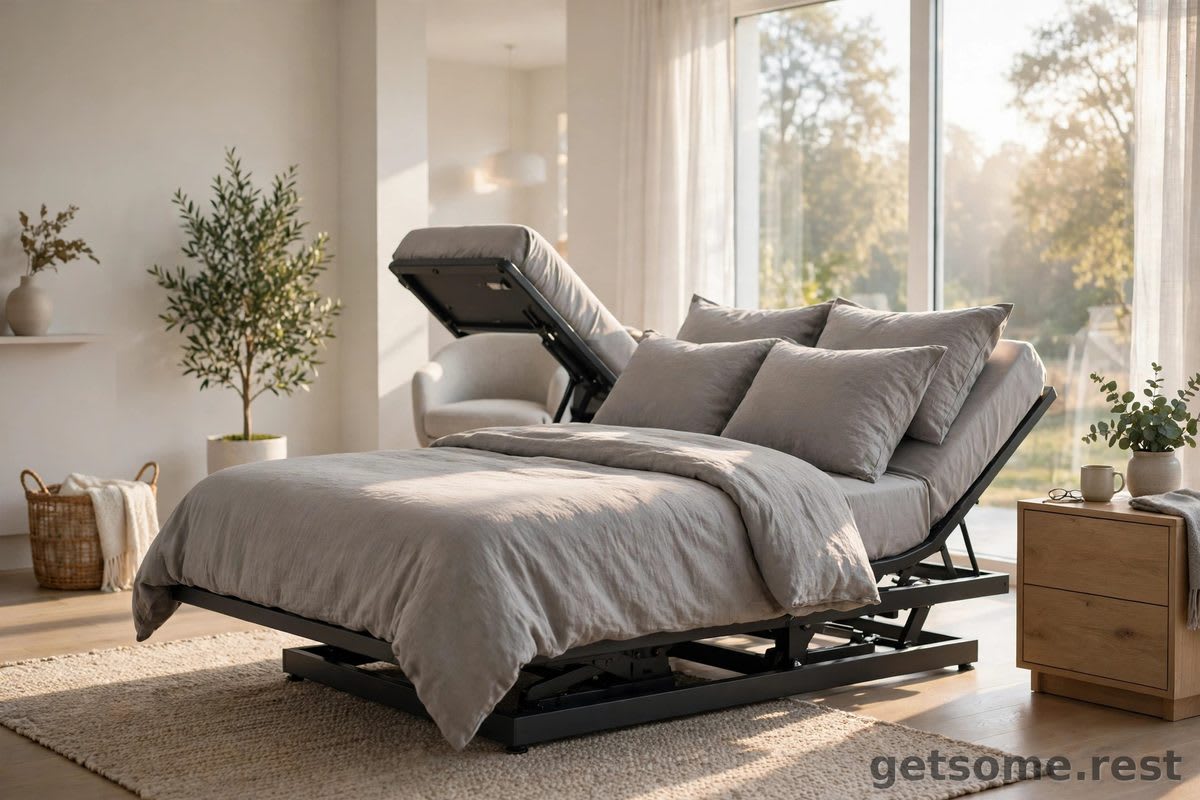
Incline Sleep's new Incline Sleep 100 is a tilt-only adjustable base that raises the whole sleeping surface from 0 to 12 inches by remote — no hinge, no fold in the mattress — built for latex and luxury mattresses, with a 10-year warranty and no price published yet.
Most adjustable bases bend your mattress in the middle. Incline Sleep's new Incline Sleep 100 does the opposite: it tilts the entire sleeping surface as one flat plane, raising the head end anywhere from 0 to 12 inches by remote control, so the mattress never folds at all. Announced November 4, 2026, it is built for latex and luxury mattresses — the ones a hinged base can damage — and for side and back sleepers who need a flat surface even when the bed is raised. It has 18 slats, a 1,200-pound capacity and a 10-year warranty. The one thing missing is the price: Incline Sleep has not published one yet. Here is what the base does, who it suits, and how it compares with the hinged bases and wedges you can buy today.
Contents
At a Glance: The Incline Sleep 100
Incline Sleep is a small company with one idea: sleep on a slope, with the whole bed tilted instead of bent. The Incline Sleep 100 is its tilt-only base — no head hinge, no foot hinge, just a flat platform that rises at the head end on a remote command.
- Price: not published yet. Announced November 4, 2026; check InclineSleep.com for pricing when it goes on sale.
- Tilt: remote-controlled elevation from 0 to 12 inches, anywhere in between — the whole sleeping surface tilts as one flat plane, so the mattress never folds.
- Built for: latex and luxury mattresses, and side and back sleepers. Latex mattresses are heavy and do not bend well on hinged bases; the flat tilt avoids that problem entirely.
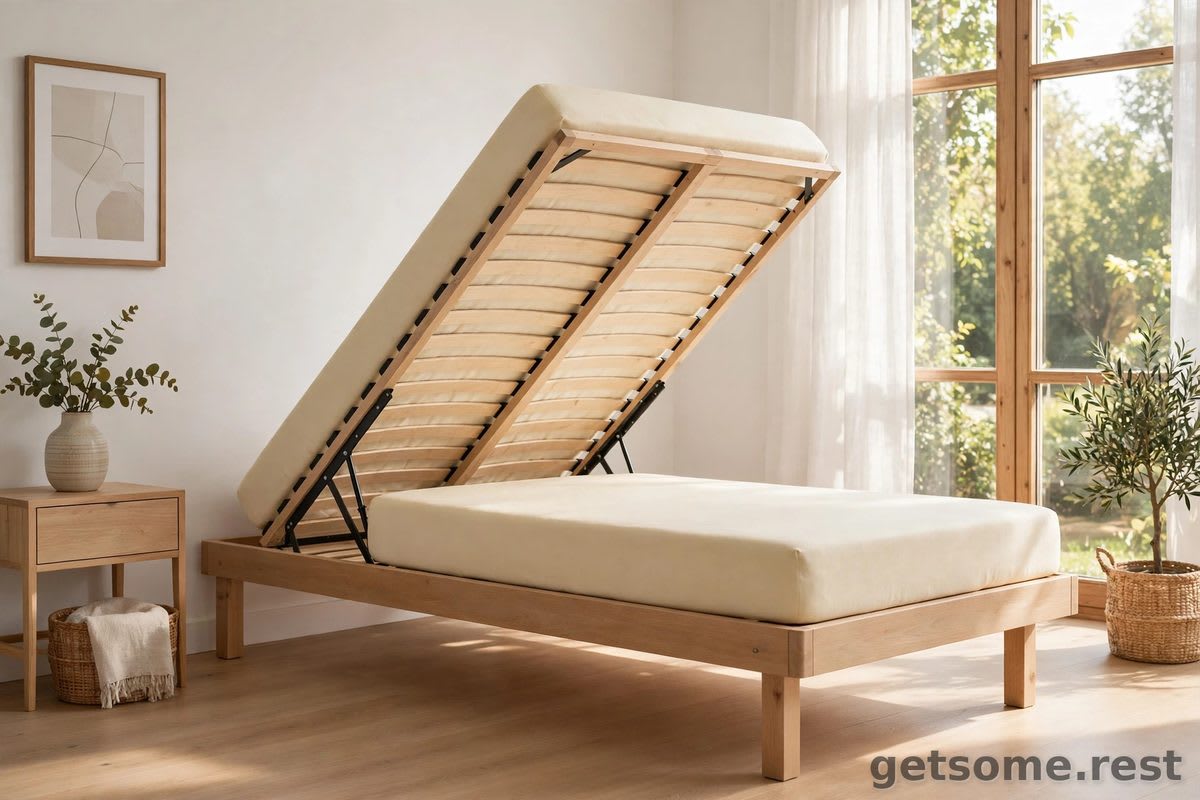
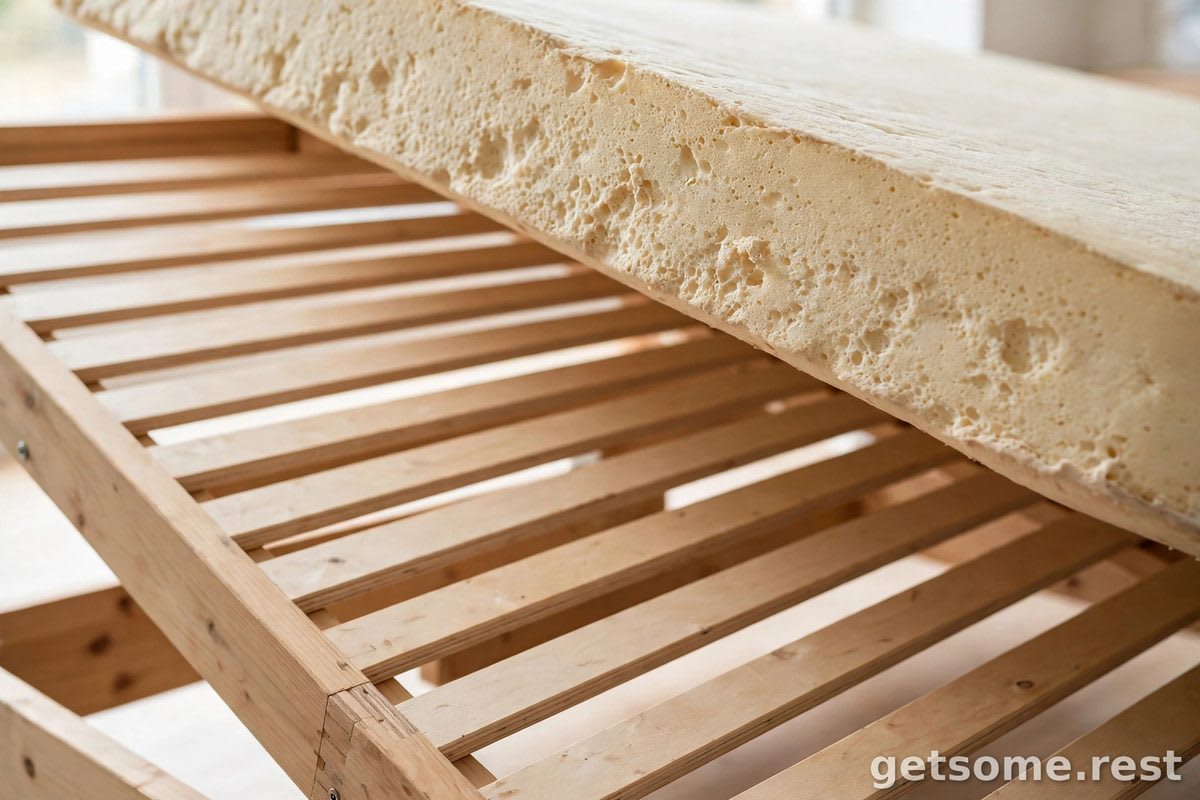
- Support: 18 slats spaced 1.5 inches apart for airflow and stability, with a 1,200-pound weight capacity.
- Warranty: 10 years.
- Siblings: the Incline Sleep 500 adds head and foot adjustment, and a foam incline wedge fits under an existing mattress for people who want to try the slope first.
The design difference is easy to picture. A hinged base folds your mattress at the waist; the 100 lifts the whole bed like a ramp. For a latex mattress that weighs a lot and resists bending, that is not a minor detail — it is the difference between a base you can use and one you cannot.
How to Choose: Tilt, Hinge or Wedge?
Start with your mattress. If you sleep on latex — natural or blended — or on a luxury mattress with a rigid build, a hinged adjustable base is a bad match: the fold in the middle stresses the materials and can void the warranty. The Incline Sleep 100 exists for exactly that mattress. If your mattress is a standard foam or hybrid that bends happily, a hinged base gives you more positions for less money, and the tilt-only design buys you nothing.
Next, think about how you sleep. Side sleepers need a flat surface under their hips and shoulders, and a hinged base takes that away the moment the head rises — the bend lands right where your hips are. The Incline Sleep 100 keeps the surface flat at every height, which is why the announcement calls out side sleepers alongside back sleepers. If you mostly sleep on your back and want head-up reading and TV positions, a hinged base is the more flexible tool.
Then consider the experiment. Inclined sleeping is a real adjustment: some people love it from night one, others find the slope strange and slide down the bed. Incline Sleep's own foam wedge is the cheap way to find out — it slides under your existing mattress and gives you the slope without the purchase. If a week on the wedge feels good, the 100 is the permanent, adjustable version. If it does not, you have spent wedge money, not base money.
Finally, wait for the price. No price has been published, and a base with a motor, a remote and a 10-year warranty will not be cheap. Until Incline Sleep lists it, the honest comparison is against hinged bases you can buy today — and on value alone, a good hinged base wins for most sleepers. The 100 wins only where the flat tilt matters: latex, luxury builds, and side sleepers who want elevation without a bend.
Incline Sleep 100 Specs, Side by Side
Here is how the Incline Sleep 100 compares with the other ways to raise the head of your bed. Prices are as listed on November 8, 2026.
| Option | Price | How it raises the bed | Mattress stays flat | Adjustable |
|---|---|---|---|---|
| Incline Sleep 100 | Not published yet | Whole-surface tilt, 0–12 in, remote | Yes | Yes, any height 0–12 in |
| Incline Sleep 500 | Not published yet | Tilt plus head and foot adjustment | Partly — head/foot hinge | Yes |
| SweetNight SenseSync base | See our guide | Hinged head and foot | No — folds in the middle | Yes |
| Foam incline wedge | Budget, under-mattress | Fixed foam slope | Yes | No — fixed angle |
The table makes the trade-off plain. The 100 is the only adjustable option that keeps the mattress completely flat, which is its whole reason to exist. The 500 trades some of that flatness for head and foot movement — the better pick if you want both the tilt and the usual adjustable positions. A hinged base like the SweetNight SenseSync is the flexible, proven choice for mattresses that bend, and a foam wedge is the cheap, fixed-angle way to test whether inclined sleeping suits you at all.
Two details worth knowing: the 18 slats are spaced 1.5 inches apart, which matters for latex — wide slat gaps let a heavy latex mattress sag between them, and 1.5 inches is tight enough to support it evenly while leaving room for air to move underneath. And the 1,200-pound capacity covers the mattress plus two sleepers with room to spare, so the motor is not working near its limit on a normal bed. See incline wedges on Amazon if you want to try the slope cheaply before committing to a base.
Our Verdict: Who Should Buy It
The Incline Sleep 100 solves a narrow problem very cleanly. If you own a latex or luxury mattress that cannot bend, and you want the head of your bed raised without folding the mattress, there is almost nothing else that does this: hinged bases fold, wedges are not adjustable, and stacking pillows is not a system. A flat 0-to-12-inch tilt, a remote, 18 slats for airflow and support, and a 1,200-pound capacity is a thoughtful spec sheet for that job.
The case against buying it now is the missing price and the narrow use. A tilt-only base gives up the head-and-foot positions that make adjustable bases useful for reading, watching TV and relieving pressure — and if your mattress bends fine, a hinged base does more for less. The 10-year warranty is reassuring, but it covers a first-generation product from a small company, and there are no reviews yet to say whether the motor is quiet or the remote is reliable.
Our take: if you sleep on latex, sleep on your side, and want elevation without a bend, put the Incline Sleep 100 on your shortlist and wait for the price — then compare it against a good hinged base before you commit. If you are unsure inclined sleeping will suit you at all, buy the foam wedge first and try the slope for a week. And if your mattress bends, skip the tilt entirely: a hinged base is the better buy.
What Early Coverage Says
Coverage so far is the announcement itself, syndicated widely: MarketersMedia carried the release on November 4, 2026, and it was picked up by regional news wires the same day. The release is the only source, so every specification in this article traces to it — there are no reviews, no hands-on tests and no independent measurements yet.
What the release establishes is the design idea. Unlike hinged adjustable beds that fold the mattress in the center, the base tilts the entire sleeping surface, with a remote control that sets the elevation anywhere from 0 to 12 inches. The mattress stays flat as the base tilts, so the foundation can be used by both side and back sleepers. It has 18 slats spaced 1.5 inches apart for airflow and stability, and it supports up to 1,200 pounds.
The release also frames the context: bed elevation remains a common recommendation for people with conditions like nighttime acid reflux or sleep apnea. That framing is the company's, and it is the reason the product exists — but it is not a medical claim we can verify, and it is not a reason to buy the base without checking with a clinician if that is your situation. The honest summary is that the Incline Sleep 100 is a well-specified first product with a clear idea, and until it ships and reviewers sleep on it, the idea is all there is to judge.
How We Reported This Story
We have not tried the Incline Sleep 100 — it was announced on November 4, 2026, and no price, size list or hands-on review exists yet. This article is based on the announcement distributed by NewsNetwork and carried by MarketersMedia and its syndication partners, and on InclineSleep.com.
Where the announcement is silent — price, sizes, motor noise, assembly — we say so plainly rather than guessing. The note about bed elevation being recommended for conditions like nighttime acid reflux or sleep apnea is the announcement's framing, reported here, not medical advice; if you are considering inclined sleeping for a health reason, talk to your clinician. We do not take payment for placement, and our rankings are never for sale. Disclosure: GetSome Rest contains affiliate links. If you buy through them, we may earn a commission at no extra cost to you.
Frequently asked questions
How much does the Incline Sleep 100 cost?
No price has been published yet. The announcement on November 4, 2026 gave the specifications — 0 to 12 inches of tilt, 18 slats, 1,200-pound capacity, 10-year warranty — but no price and no size list. Incline Sleep's site is the place to check: the price should appear there first when the base goes on sale. We will update this article when it does.
What is incline bed therapy?
Incline bed therapy means sleeping with the whole bed raised at the head end, so your body rests on a gentle slope rather than flat. The announcement notes that bed elevation is a common recommendation for people with conditions like nighttime acid reflux or sleep apnea — that is the manufacturer's framing, not medical advice. If you are considering inclined sleeping for a health reason, talk to your clinician first. As a comfort choice, the appeal is simpler: some people find a slight incline more comfortable for breathing, reading and relaxing before sleep.
How is the Incline Sleep 100 different from a normal adjustable base?
A normal adjustable base hinges in the middle: the head rises and the mattress folds at the bend, which latex and some luxury mattresses do not tolerate well. The Incline Sleep 100 tilts the entire sleeping surface as one flat plane, from 0 to 12 inches, so the mattress never bends. That is why it is aimed at latex and luxury mattresses — and at side sleepers, who need a flat surface under their hips and shoulders even when the bed is raised.
Will the Incline Sleep 100 work with my mattress?
It is designed for latex and luxury mattresses, which are usually the ones that cannot bend on a hinged base. The base has 18 slats spaced 1.5 inches apart, which support the mattress evenly and leave gaps for airflow, and it supports up to 1,200 pounds including sleepers. If your mattress is a standard hinged-base-compatible model, a regular adjustable base with head and foot movement will give you more positions for less money — the Incline Sleep 100's advantage is specifically the flat tilt.
What else does Incline Sleep make?
Two things worth knowing about. The Incline Sleep 500 adds head and foot adjustment on top of the tilt, for people who want both the incline and the usual adjustable positions. And a foam incline wedge fits under an existing mattress, for people who want to try inclined sleeping first without buying a base. If you are unsure the slope will suit you, the wedge is the cheap experiment; the 100 is the permanent version.
Key Takeaways
- The Incline Sleep 100, announced November 4, 2026, is a tilt-only adjustable base that raises the whole sleeping surface from 0 to 12 inches by remote control.
- Because the surface tilts as one flat plane, the mattress never folds — which suits latex and luxury mattresses that a hinged base can damage, and side sleepers who need a flat surface.
- It has 18 slats spaced 1.5 inches apart for support and airflow, supports up to 1,200 pounds, and carries a 10-year warranty.
- No price or size list has been published yet — check InclineSleep.com for the price when the base goes on sale.
- The Incline Sleep 500 adds head and foot adjustment on top of the tilt; a foam wedge under your existing mattress is the cheap way to try inclined sleeping first.
- Inclined sleeping is commonly recommended for nighttime acid reflux or sleep apnea, per the announcement — if that is your reason for buying, talk to your clinician first.