Sleeping With the Light On and Your Heart (2026)
A Tulane study of 11,071 people linked sleeping with more than 3 lux of light to thicker heart walls and higher heart risk. What it means for your bedroom.
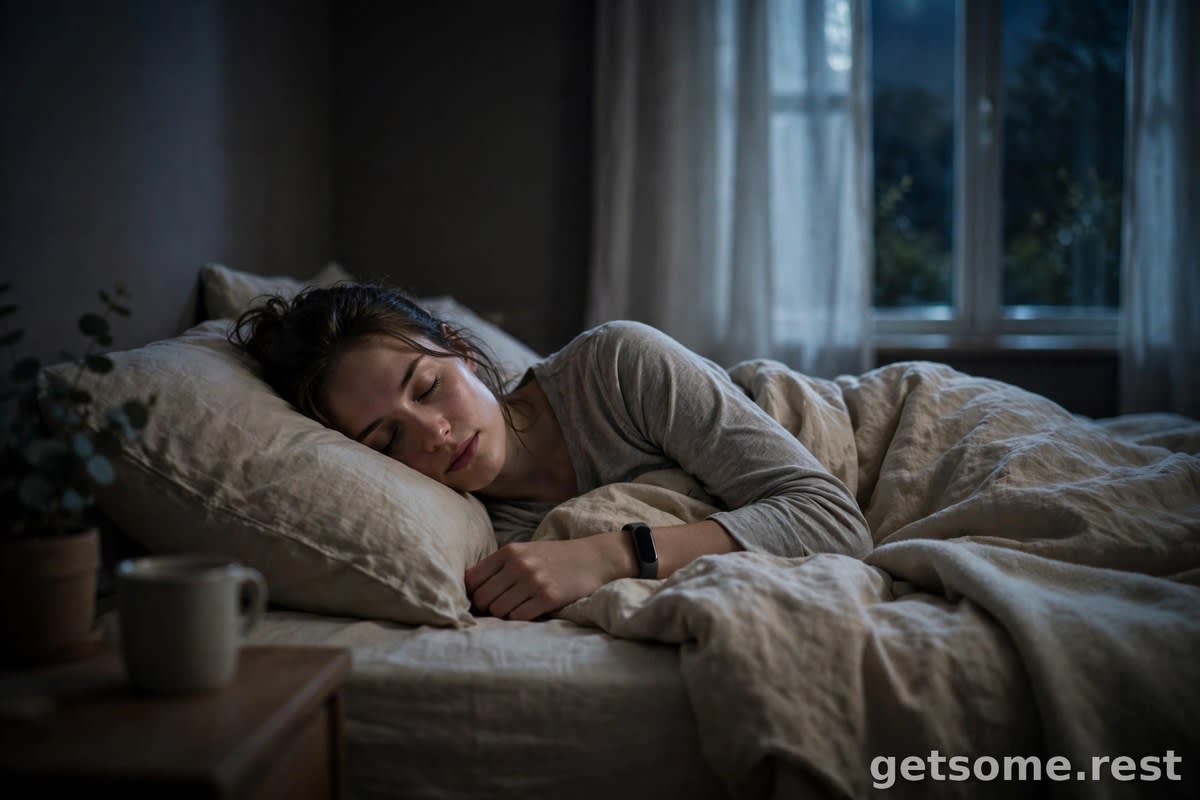
Sleeping with a light on feels harmless — a hallway bulb left burning, a streetlamp through thin curtains, a phone charging across the room. A large new study suggests the heart notices. Researchers at Tulane University tracked nighttime light exposure in more than 11,000 UK adults and, about three years later, scanned their hearts. People who regularly slept with more than a whisper of light — just 3 lux — showed small but measurable changes in heart structure, and in a much larger group followed for up to a decade, higher nighttime light was linked to higher rates of heart attack, stroke and heart failure. The study is observational, so it cannot prove light causes the damage. But it is the first to connect bedroom light directly to the structure of the heart — and the change it points to costs nothing.
Contents
What the Tulane Study Actually Found
The study, published September 9, 2026 in the European Heart Journal, comes from a team led by Professor Lu Qi at Tulane University's Celia Scott Weatherhead School of Public Health and Tropical Medicine. It is, by the authors' own description, the first study to look at what nighttime light does to the heart's structure over time — not just to sleep quality or to next-morning blood pressure, but to the muscle itself.
The team drew on 11,071 participants from the UK Biobank, a long-running British health study. Each person wore a light sensor on their wrist for seven consecutive days, giving researchers an objective, minute-by-minute record of how much light reached them overnight — no questionnaires, no guessing. Roughly three years after that week of measurement, participants had a cardiac MRI, a detailed scan of the heart's structure and function.
The comparison was stark in its simplicity: people exposed to more than 3 lux of light at night against people exposed to almost none. The higher-exposure group showed several small but consistent differences, all pointing the same way.
| What the MRI showed | Higher-light group vs near-dark group |
|---|---|
| Left-ventricle wall thickness | 1.5% greater on average |
| Left-ventricular mass (the heart's main pumping chamber) | 2.4% greater on average |
| Heart muscle flexibility | Reduced — an early sign the muscle is stiffening |
| Right ventricle and left atria | Measurable structural changes |
| Overall size of the differences | Mostly 1% to 3% — small for any one person |
Lead author Lu Qi described the pattern as cardiac remodelling: the heart muscle thickening and stiffening in response to a long-term exposure. A thicker left-ventricle wall leaves less space inside the chamber, and a stiffer muscle squeezes less efficiently — both are early changes that, in cardiology, show up years before disease is diagnosed. That is the finding that makes this study different from earlier light-and-sleep research: it found the change in the organ, not just in the night's sleep.
Two things are worth holding on to before the numbers get dramatic. First, the differences are small — 1% to 3% — and far short of clinical heart damage for any individual. Second, the study is observational, and everything that follows has to be read with that in mind.
How 3 Lux Became the Line
Lux is a measure of how much visible light reaches a surface. It is the unit that makes this study concrete — and also the unit that makes it surprising, because 3 lux is barely any light at all.
- 0 lux: a fully dark room, no light source at all.
- About 1 lux: a moonlit night.
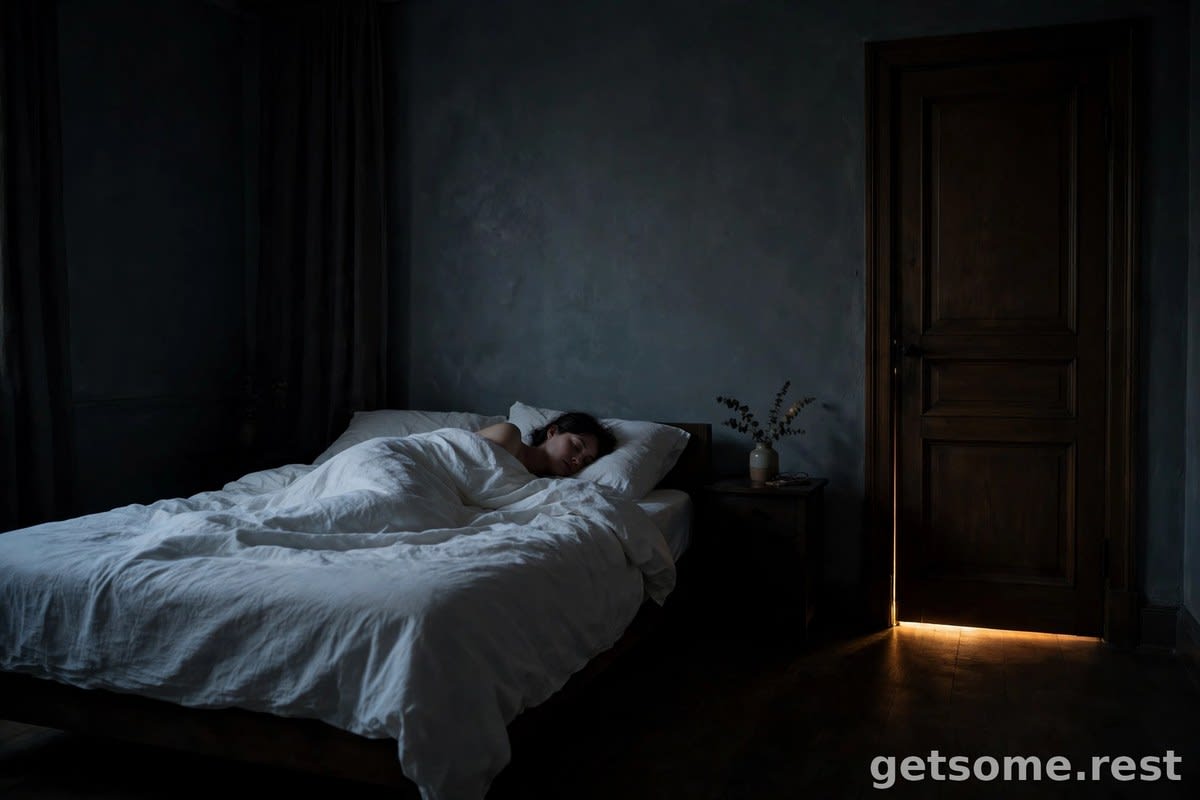
- 3 lux: the study's threshold — roughly a strip of light under a closed door, or moonlight through an uncurtained window.
- 10 to 30 lux: a dim hallway, or a bedside lamp on its lowest setting.
- Around 100 lux: a normally lit room at night.
- 300 to 500 lux: a bright office or kitchen.
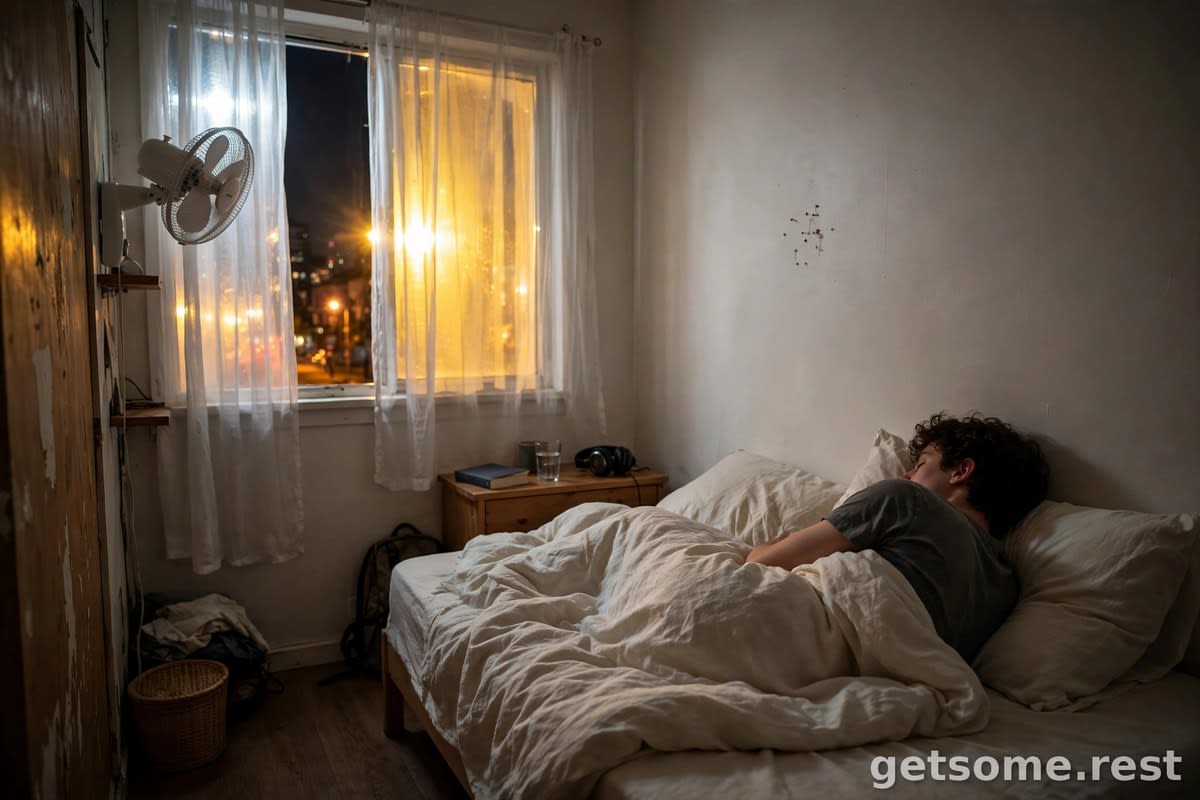
The researchers did not pick 3 lux because it is a round number. It is the level that separated people who slept in near-darkness from people whose nights carried a steady, low glow — the kind of glow that comes from a hallway light, a streetlamp outside the window, a neighbour's security light, or a device charging on the nightstand. That is why the finding landed the way it did: the exposure it flags is not a floodlight in the bedroom. It is ordinary, everyday light that most people would not think twice about.
The measurement method matters too. Wrist sensors record light for a full week, night after night, which smooths out one unusual evening. But a wrist is not an eye: a sensor on the wrist can read light that never reaches the retina, and a blanket over the arm can hide light that does. The authors acknowledge this — it is one of the study's real limitations — and it means the 3-lux line is best read as a useful marker of a dark-versus-not-dark bedroom, not as a precise dose.
For context, this is not the first study to tie light at night to the body. A 2022 Northwestern lab study, published in PNAS, had healthy adults sleep one night under moderate room light (100 lux) and found a higher nighttime heart rate, lower heart-rate variability and more insulin resistance the next morning than after a night in dim light. The Tulane study takes that short-term signal and asks what it looks like after years — and finds the heart itself has changed.
The Heart Changes, in Plain Terms
Cardiac remodelling sounds alarming, so it is worth translating the MRI findings into what they do — and do not — mean for a person sleeping in a lit room tonight.
Thicker walls, less room inside. The left ventricle is the heart's main pumping chamber. Its wall was 1.5% thicker, on average, in the higher-light group, and the chamber's total mass was 2.4% greater. A thicker wall squeezes the space inside the chamber, so each beat moves slightly less blood — the heart compensates by working a little harder.
Less flexibility. The scans also showed reduced muscle flexibility, which cardiologists read as an early sign of dysfunction. A healthy heart muscle stretches and recoils; a stiffer one does not, and over years that stiffness is one of the paths toward heart failure.
More than one chamber. The changes were not confined to the left ventricle. The right ventricle and the left atria showed measurable differences too, which suggests a whole-heart effect rather than a quirk of one measurement.
Small, but consistent. Every difference the team found was in the 1% to 3% range. For a single person, a 2.4% heavier left ventricle is not a diagnosis and would not show up as a symptom. Its importance is at population level: when a small shift appears across 11,000 people, and it appears in the same direction on several independent measures, it is unlikely to be noise. And small structural changes that persist for years are exactly how chronic heart disease begins — silently, long before anyone feels unwell.
That framing is also why the study's second, much larger analysis matters. The MRI group shows the mechanism; the follow-up group shows the outcome.
The Bigger Picture: 73,286 People, 10 Years
Alongside the MRI group, the researchers followed a broader set of 73,286 UK Biobank participants for roughly eight to ten years, comparing the highest nighttime-light exposure with near-zero exposure. The relative risks they reported are the numbers that travelled furthest in the coverage — and the ones that need the most careful reading.
| Condition | Relative risk, high vs near-zero nighttime light |
|---|---|
| Heart attack | +24% |
| Stroke | +33% |
| Heart failure | +29% |
| Atrial fibrillation | +15% |
| Dying of heart disease | +26% |
Relative risk is not personal odds. A 33% higher risk of stroke does not mean a 33% chance of having one — it means that, in this population, the stroke rate was about a third higher in the high-light group than in the near-dark group. For a healthy adult, the absolute risk of any of these events in a given year is low, so a third more of a small number is still a small number. What makes the pattern hard to dismiss is that it is consistent: every condition moved in the same direction, and the MRI findings give it a physical explanation.
It also puts the Tulane study in a growing line of bedroom-environment research. Our coverage of the 2026 Penn State study found bright, hot, noisy bedrooms hurt sleep quality in 372 young adults, and the 2026 Portland study of older adults found bedroom light was the strongest environmental predictor of total sleep time. Tulane adds the heart to that picture: light is not only a sleep problem, it may be a cardiovascular one too.
Why Shorter Sleep May Explain Part of It
The researchers did not stop at the association. They asked how much of it runs through sleep itself — and the answer was a substantial share. Shorter sleep duration statistically accounted for 24% to 49% of the link between nighttime light and the heart changes, depending on the measure.
That is a plausible chain, and it fits what sleep science already knows. Light at night suppresses melatonin and pushes the body clock later, which shortens and fragments sleep. Short sleep, in turn, is one of the most consistent predictors of cardiovascular risk in the literature — our article on irregular sleep timing covered a separate 2026 study linking erratic bedtimes to 20–23% higher heart risk, and the mechanism there is the same family of circadian disruption.
But sleep explains only part of the Tulane link — roughly a quarter to a half. The rest may run through pathways that have nothing to do with how long you sleep: light at night can raise nighttime heart rate and blood pressure directly, blunt the normal overnight dip in blood pressure, and disturb the autonomic nervous system that governs the heart's rhythm. The Northwestern 100-lux experiment found exactly those overnight changes after a single night. If a bedroom stays lit night after night, the argument goes, the heart never gets its full overnight rest.
None of this is settled. The mediation analysis is statistical — it estimates how much of the link disappears when sleep duration is accounted for — and it cannot prove the chain runs in that order. But it does give the finding a shape: part of the risk is the sleep you lose, and part of it may be the light itself.
What the Study Cannot Prove
Good reporting on a study like this spends as much time on its limits as on its findings. Here they are, plainly.
- It is observational. People were not randomly assigned to dark or lit bedrooms. The researchers adjusted for known factors, but people who sleep with more light may differ in ways the data cannot see — shift work, stress, housing, neighbourhood lighting, or health habits that also affect the heart.
- Light was measured for one week. The wrist sensors ran for seven days, years before the MRI scans. A single week is a reasonable snapshot, but it may not capture a person's usual bedroom, and bedrooms change — new curtains, a move, a different season.
- The wrist is not the eye. Sensors on the wrist measure light reaching the arm, not the retina. Blankets, sleeves and sleeping position all change the reading. Eye-level measurement would be more precise, and no large study has done it yet.
- No trial has tested the fix. Nobody has run a randomised trial that darkens some bedrooms and not others and then scans hearts years later. Until that happens, darkening your bedroom is a reasonable, low-cost environment change — not a proven way to reverse the changes this study found.
- Absolute risk stays small. Next to blood pressure, smoking, cholesterol and diabetes, bedroom light is a minor contributor for any one person. The study's authors and the accompanying editorial — The dark night as a cardiovascular vital sign, by Münzel, Kuntic and Daiber — frame darkness as a public-health signal, not a personal emergency.
Cardiologists who commented on the study made the same point: this is not proof that a hallway light causes heart disease, and nobody should lie awake worrying about it. The useful reading is simpler — darkness is part of what a bedroom is for, and this study gives that old advice a measurable reason.
Sources: Dai J, Dai W, Heianza Y, Qi L, Nighttime light exposure and cardiac structure and function, European Heart Journal, September 9, 2026, DOI 10.1093/eurheartj/ehag563; Tulane University press release, September 14, 2026; Münzel T, Kuntic M, Daiber A, editorial, European Heart Journal, September 9, 2026; Northwestern University PNAS 2022 light-exposure experiment for context.
Frequently asked questions
How much light at night is too much?
In this study, the line was 3 lux — a very dim level, roughly moonlight or a strip of light under a closed door. People above 3 lux at night showed the heart changes; people near zero did not. A normally lit room is around 100 lux, so most bedroom light sources sit far above the threshold the researchers used.
Does sleeping with the light on cause heart disease?
This study cannot say that. It is observational: it found an association between nighttime light and heart changes, not proof that light caused them. People who sleep with more light may differ in other ways — shift work, stress, neighbourhood lighting — that also affect the heart. What the study adds is a plausible mechanism and a measurable change in the heart itself, which earlier studies did not have.
What does 3 lux look like in a real bedroom?
About as bright as moonlight through a window, or the glow slipping under a bedroom door from a lit hallway. A bedside lamp is far brighter, typically 50 to 100 lux at the pillow. A phone screen face-up on a nightstand can also clear 3 lux easily. The practical test is simple: if you can read the time on a clock across the room without switching anything on, your bedroom is probably above the threshold.
Will blackout curtains actually help?
They cut the biggest and most controllable source of bedroom light: the window. The study did not test whether darkening a bedroom reverses the heart changes — no trial has done that yet — so curtains are a sensible environment change, not a proven treatment. If streetlight or an early sunrise reaches your bed, blackout curtains or a sleep mask are the two cheapest fixes, and our guide to the best blackout curtains for shift workers covers what to look for.
What about a night light or a phone charging nearby?
A dim, warm night light is far better than a bright white one, and a phone face-down or charging outside the bedroom removes a common glow source. The study measured total light reaching the wrist, not individual sources, so it cannot rank night lights against streetlights. The general principle it supports is simple: the darker the room, the lower the exposure it measured.
Key Takeaways
- 3 lux is the line. In 11,071 UK adults, sleeping with more than 3 lux of nighttime light — about moonlight, or light under a door — was linked to a thicker left-ventricle wall and a heavier heart on MRI three years later.
- The long-term numbers are real but relative. In 73,286 people followed 8–10 years, high nighttime light was tied to 24% higher heart-attack risk and 33% higher stroke risk — relative increases on a low absolute risk.
- Sleep explains part of it. Shorter sleep accounted for 24–49% of the link, which points to two levers: less light, and the longer sleep that follows.
- It is a link, not proof. The study is observational, light was measured for one week on the wrist, and no trial has shown that darkening a bedroom reverses the changes.
- The fix is free. Blackout curtains, a closed door, dim warm night lights instead of white ones, and devices charging face-down or outside the bedroom — the same steps in our blackout curtain guide and our bedroom environment research roundup.
Disclosure: this article contains affiliate links. If you buy through them, we may earn a commission at no extra cost to you.