Latest smart mattresses with built-in sleep tracking compared
The newest smart beds track your sleep with no wearable — then change the temperature, firmness, or position while you sleep. We compare the three that matter, with real 2026 prices.
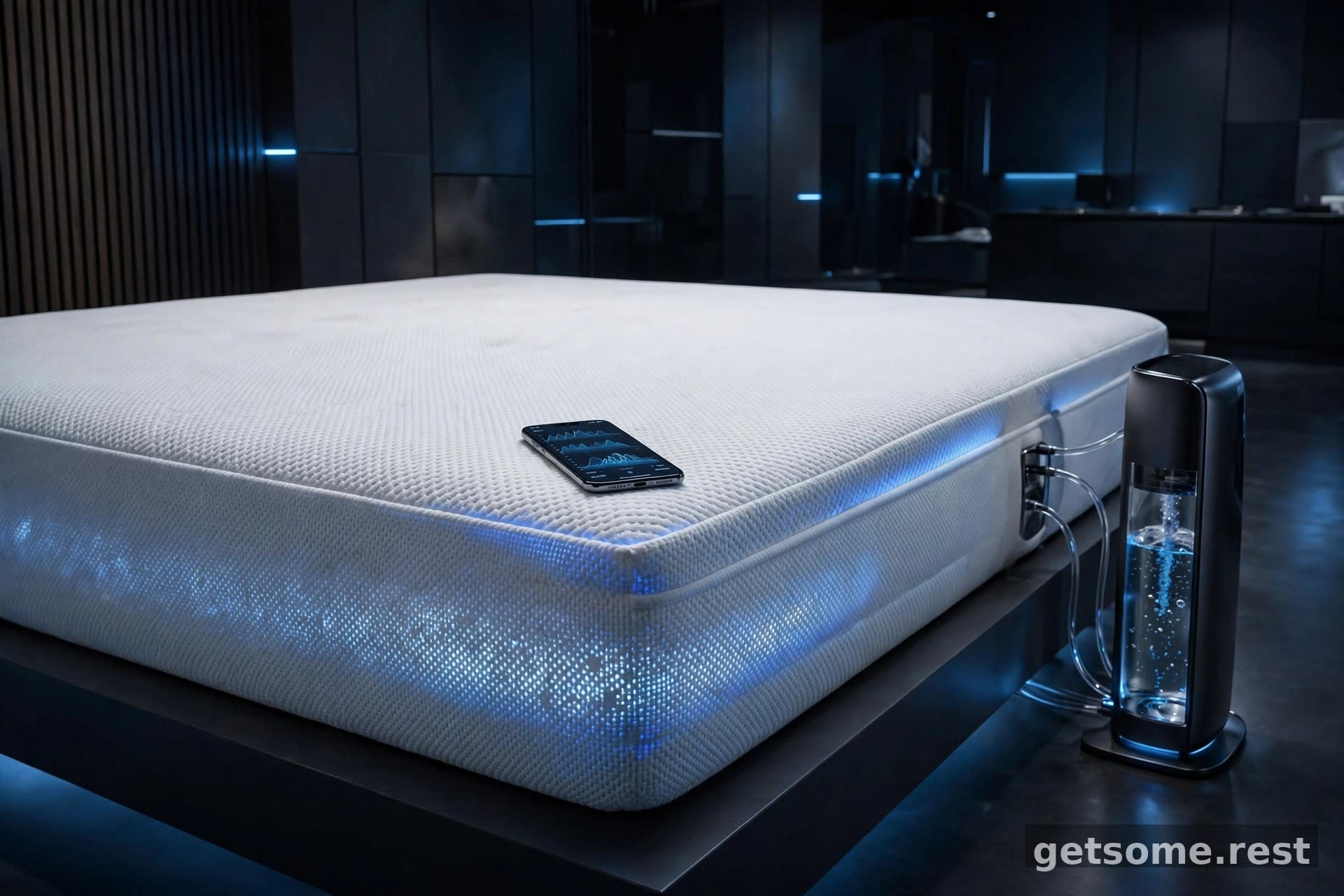
Smart mattresses have quietly become the most interesting corner of sleep tech: beds that track your sleep with no wristband, then adjust temperature, firmness, or position while you sleep. Three products define the category right now.
Contents
Our top picks at a glance
Here is how our three picks compare. Each name links to its full write-up further down the page.
| Product | Best for | Price | Rating |
|---|---|---|---|
| Eight Sleep Pod 6 | Active cooling + deepest tracking | $2,899 (Queen) | 4.5 out of 5 |
| Sleep Number Climate360 | Luxury per-side climate + firmness | $9,999 (Queen) | 4.4 out of 5 |
| Tempur-Pedic TEMPUR-Adapt | Pressure relief without the tech | $2,299 (Queen) | 4.6 out of 5 |
Prices last checked October 13, 2026 and may change. Ratings reflect our own testing and research. Eight Sleep prices are for the Standard Pod 6; membership is required and priced separately.
How built-in sleep tracking actually works
A mattress cannot measure your pulse the way a watch does, so smart beds listen to your body instead. The main technique is ballistocardiography: ultra-sensitive sensors in the mattress or cover detect the tiny mechanical vibrations each heartbeat sends through the body. From those vibrations, software derives heart rate, heart-rate variability, respiratory rate, and movement — enough to estimate sleep stages, sleep onset, and wake-ups with reasonable accuracy.
Sleep Number takes a different route with its air-chamber design. The 360 smart beds measure pressure changes inside the air chambers on each side of the bed, using those fluctuations to track average heart rate, average breathing rate, and body motion. Its SleepIQ system then converts that data into sleep scores and, more interestingly, automatic responses: the bed can adjust firmness overnight and, on the Climate models, run active cooling or warming per side.
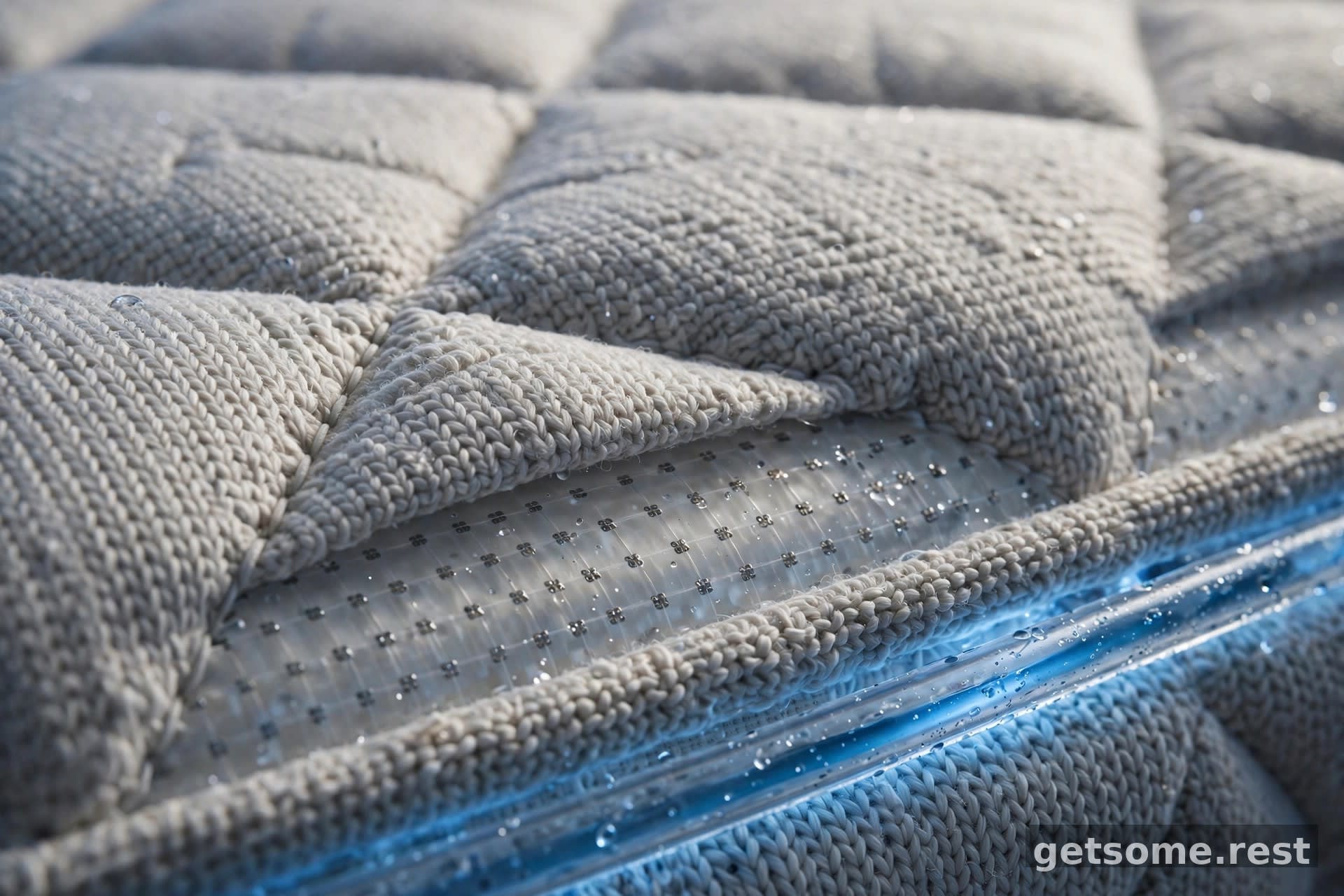
Eight Sleep's approach is the most sensor-dense. The Pod is a fitted cover with a water-circulation system woven through it — the same system that heats and cools each side independently — plus biometric sensors that track heart rate, HRV, respiratory rate, sleep stages, and even snoring. Its Autopilot software uses that data in real time: cooling you down as you fall asleep, warming you slightly before your alarm, elevating the head when it detects snoring, and playing white noise through the base. It is less a tracker and more a closed loop — measure, respond, measure again.
Tempur-Pedic is the odd one out, and we include it deliberately. The TEMPUR-Adapt mattress itself contains no sleep-tracking sensors; it is a pressure-relieving memory foam (or hybrid) mattress, full stop. Tracking enters the picture only if you pair it with the TEMPUR-Ergo smart base, which includes Sleeptracker-AI sensors in the base. That honesty matters: if "built-in sleep tracking" is your requirement, the Adapt qualifies only as part of a system — which is exactly how we have rated it.
What to check before buying a smart mattress
The sticker price is only the opening bid. Run through these checks before you commit — they are where smart-mattress purchases most often go wrong.
- Price: add the membership to the mattress. Eight Sleep's Pod 6 requires an Autopilot membership from $17/month or $199/year — over five years that adds roughly $1,000 to the $2,899 Queen price. Sleep Number's Climate360 includes its tracking with no subscription. A budget mattress under $300 plus a wearable can do 80 percent of the job for a tenth of the money, so be honest about what you are buying.
- Tracking depth: decide what data you actually want. If you want sleep stages, HRV trends, and respiratory rate, you need Eight Sleep or Sleep Number. If you mainly want to know how long you slept, a far cheaper setup works — see our guide to the best sleep trackers without a subscription.
- Trial period: smart mattresses need longer trials than ordinary ones because the learning curve is real — the software needs weeks to calibrate to you. Sleep Number offers 100 nights; Tempur-Pedic offers 90; Eight Sleep offers 30 nights on the Pod, which is short for the price, so read the terms carefully.
- Warranty and returns: at these prices, the warranty is part of the product. Eight Sleep ties its warranty to the membership tier (2 years on Standard, 5 on Enhanced and Elite); Sleep Number offers a 15-year mattress warranty; Tempur-Pedic offers 10 years. Note who pays for return shipping and whether there are restocking or return fees — Sleep Number charges a $250 return fee on some models.
- Compatibility: the Eight Sleep Pod is a cover that fits over your existing mattress, so check your mattress size and type first. The Climate360 is a complete bed with its own smart adjustable base. The TEMPUR-Adapt needs the TEMPUR-Ergo base for tracking, and split-king setups add configuration complexity everywhere.
Eight Sleep's newest cover starts at $1,999 for the Solo size — but every Pod requires an Autopilot membership, so the sticker price is never the whole price.
Source: Eight Sleep Pod 6 launch announcement (September 2026)
Matching the mattress to how you sleep
Tracking is only half the product; you still have to sleep on the thing. Hot sleepers should weight the cooling side of the decision heavily — Eight Sleep's active water cooling and the Climate360's per-side climate control are in a different league from passive cooling foams, as our memory foam vs. hybrid comparison for hot sleepers explains. If pressure relief is your priority, the TEMPUR-Adapt's dense TEMPUR material remains the benchmark, and our best mattresses for back pain under $500 shows how far non-smart options go on comfort alone.
Our picks in detail
Each pick below includes a one-line verdict, the current price, and the main pros and cons from our testing and research.
Best overall
Eight Sleep Pod 6
The deepest sleep tracking you can buy — plus active per-side cooling and heating on the mattress you already own.
$2,899 Queen, at time of writing — Autopilot membership from $199/yr required
Pros
- Active water-based cooling and heating per side — the real fix for hot sleepers, not just breathable foam
- Tracks heart rate, HRV, respiratory rate, sleep stages and snoring, then acts on the data: temperature shifts, elevation, white noise
- Fits over your existing mattress, so you keep the comfort you like and add the tech on top
Cons
- Every Pod requires a paid Autopilot membership — add ~$1,000 over five years to the sticker price
- Only a 30-night trial, short for a purchase this expensive; water unit adds noise and bulk beside the bed
 Best luxury
Sleep Number Climate360
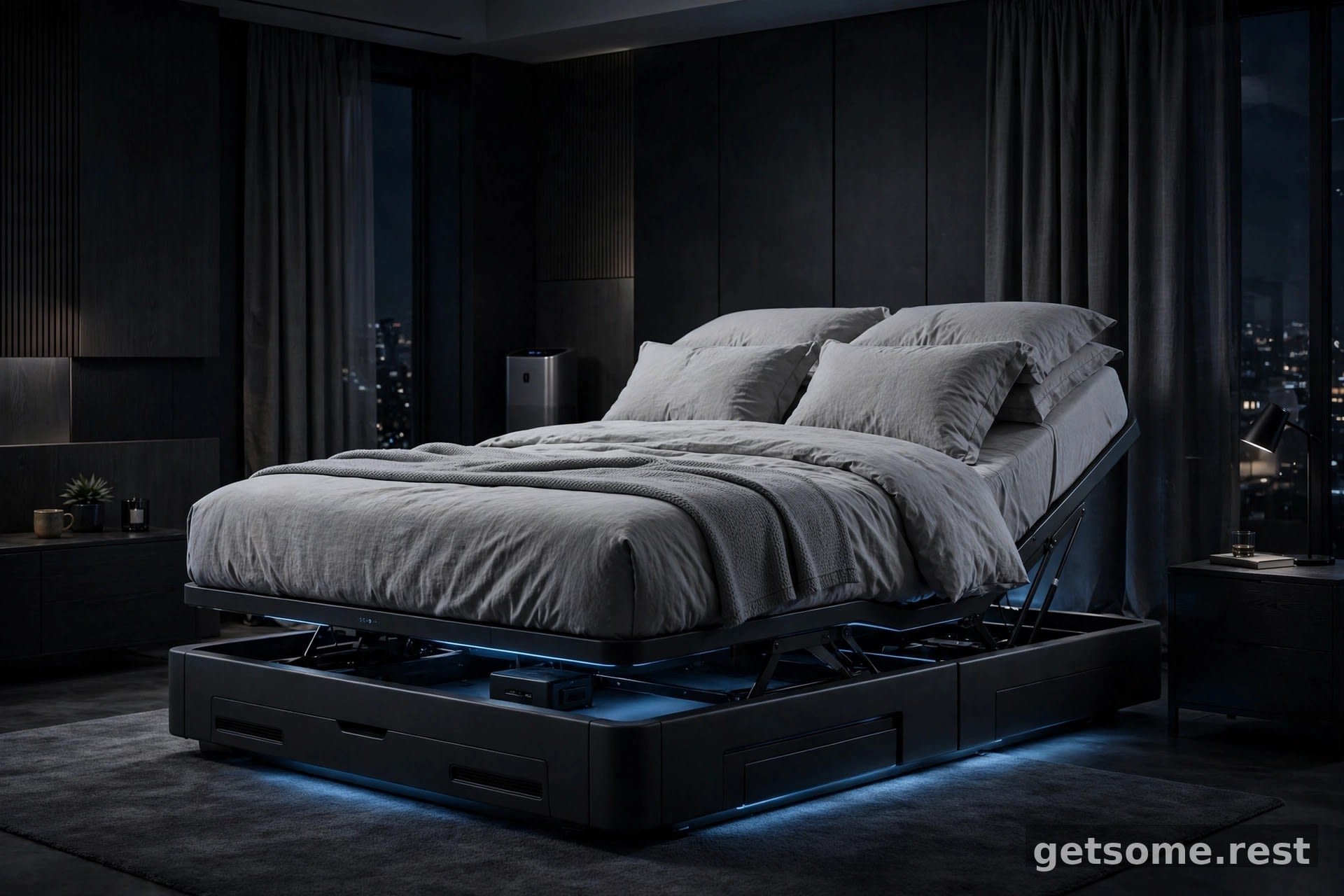
A complete luxury smart bed: per-side climate control, adjustable firmness, and a smart base included in the price.
$9,999 Queen, includes smart adjustable base, at time of writing
Pros
- Active per-side cooling and warming plus 20 firmness settings — the most personalized comfort in the category
- SleepIQ tracking (heart rate, breathing rate, motion) included with no subscription, tied to automatic adjustments
- Smart adjustable base with Partner Snore response, zero-gravity position and under-bed lighting included
Cons
- Five figures for a bed — the price of a used car, with a $250 return fee if it doesn't work out
- Air-chamber feel is not for everyone; foam and hybrid sleepers should try it in a store first
Best comfort
Tempur-Pedic TEMPUR-Adapt Medium Hybrid
The pressure-relief benchmark — superb comfort, but built-in tracking needs the TEMPUR-Ergo smart base add-on.
$2,299 Queen, currently $2,099 on tempurpedic.com, at time of writing
Pros
- Outstanding pressure relief and motion isolation from proprietary TEMPUR material plus 1,000+ coils in the hybrid
- No subscription, no app required — it is a mattress first, with 10-year warranty and 90-night trial
- Pairs with the TEMPUR-Ergo smart base for adjustable positioning and Sleeptracker-AI sleep data when you want the tech
Cons
- No built-in sleep tracking on the mattress itself — the "smart" part costs extra via the base
- Sleeps warmer than the active-cooling options above; hot sleepers should look at the Pod or Climate360
Do you still need a wearable?
For sleep data alone, a smart mattress largely replaces the wristband. Under-mattress sensors capture the same core metrics — sleep timing, stages, heart rate, respiratory rate — with the considerable advantage that there is nothing to wear, charge, or remember. Eight Sleep and Sleep Number both produce morning reports that stand up well against mid-range wearables, and neither asks you to sleep with plastic on your wrist.
The gap is daytime. A mattress knows nothing about your workout, your steps, or your stress through the afternoon. If your interest in sleep data is really an interest in recovery and training, the wearable still earns its place — the mattress covers the night, the band covers the day. For the wearable side of that equation, see our roundup of new sleep gadgets for 2026.
One more consideration: data ownership. Your nightly heart rate, respiratory patterns, and restlessness live in the mattress company's cloud — data that is valuable to them. Eight Sleep's tracking is inseparable from its paid membership; Sleep Number's is included but still lives in their ecosystem. Read the privacy policy with the same care you read the trial terms.
The honest costs
Smart mattresses are sold on monthly-payment math, so do the total-cost math instead. A Queen Eight Sleep Pod 6 at $2,899 with the Standard Autopilot membership at $199/year costs roughly $3,900 over five years — before any add-ons like the Blanket or Pillow Cover. The Sleep Number Climate360 at $9,999 with no subscription costs $9,999 over five years, full stop. The Tempur-Pedic TEMPUR-Adapt at $2,299 (currently $2,099) costs that and nothing more — but buys you no tracking at all.
None of these is a value purchase. A quality non-smart mattress plus a cooling topper and a subscription-free tracker delivers most of the measurable benefit for well under $1,000. What the smart beds buy you is automation: temperature that adjusts itself, firmness that responds to your body, snoring answered while you sleep. For hot sleepers who have tried everything else, the Pod's active cooling does something no passive product can. For everyone else, start cheaper and upgrade only if the data tells you to.
How we test
We never accept payment for rankings. Every product is judged against the same five checks:
- Price
- We record the real price at checkout, include required subscriptions and memberships, and note regular discounts.
- Materials
- We read the fabric, fill and build details, and note anything the brand doesn’t make clear.
- Sleep trials
- We check how long you can try the product at home and whether the trial has conditions.
- Warranty
- We compare warranty length and what it actually covers, in plain language.
- Return policy
- We look at how returns work, who pays for shipping, and how refunds are handled.
Frequently asked questions
Which smart mattress has the best built-in sleep tracking?
It depends on what you mean by tracking. Eight Sleep's Pod 6 tracks the most biometrics — heart rate, HRV, respiratory rate, sleep stages — and acts on them in real time by adjusting temperature, elevation, and sound. Sleep Number's Climate360 tracks heart rate, breathing rate, and motion through its SleepIQ system and ties the data to automatic firmness adjustments. Both are genuinely good; Eight Sleep leans toward performance optimization, Sleep Number toward comfort personalization.
Do smart mattresses need a subscription to track sleep?
Sometimes. Eight Sleep's Pod 6 requires an Autopilot membership (from $17/month or $199/year), which covers the tracking software, automatic adjustments, and warranty. Sleep Number includes its SleepIQ tracking with the bed at no extra charge. Tempur-Pedic's TEMPUR-Adapt has no built-in tracking at all — sleep data comes only if you add the TEMPUR-Ergo smart base. Always add the subscription cost to the sticker price before comparing.
Is the Eight Sleep Pod worth it?
For hot sleepers and data-driven optimizers, it is the most capable option: active water-based cooling and heating per side, snore-mitigating elevation, and deep biometric tracking in one cover that fits your existing mattress. The math to do is the total cost — a Queen Pod 6 at $2,899 plus an Autopilot membership from $199/year — against how much you value waking up at the right temperature. If you sleep fine on a regular mattress, it is a luxury, not a necessity.
Can a smart mattress replace a wearable sleep tracker?
For nighttime data, mostly yes — under-mattress sensors from Eight Sleep and Sleep Number capture sleep stages, heart rate, and respiratory rate without anything on your wrist. What they cannot do is track your daytime: workouts, steps, daytime heart rate, and stress all stay the wearables' territory. If you only care about sleep, a smart mattress can retire the wristband; if you want 24-hour data, keep both. Our guide to the best sleep trackers without a subscription covers the wearable side.
Do smart mattresses work with adjustable bases?
Yes, with caveats. Eight Sleep's Pod is a cover that fits over most standard mattresses, so it works with adjustable bases and even adds its own elevation control. Sleep Number's Climate360 ships with a smart adjustable base included in the $9,999 Queen price. Tempur-Pedic's TEMPUR-Adapt works with the TEMPUR-Ergo adjustable base, which also adds sleep tracking. Check your specific base's compatibility before ordering, especially for split-king setups.
Key takeaways
- The Eight Sleep Pod 6 ($2,899 Queen + membership) is the best all-around smart mattress: active per-side cooling and the deepest tracking.
- The Sleep Number Climate360 ($9,999 Queen, base included, no subscription) is the luxury pick for per-side climate and automatic firmness.
- The Tempur-Pedic TEMPUR-Adapt (Queen from $2,299, currently $2,099) wins on comfort but has no built-in tracking without the Ergo base.
- Always add subscriptions to the sticker price — the membership is where smart-mattress math most often goes wrong.
- A mattress plus a cooling topper and a tracker covers most of the benefit for under $1,000; buy automation, not data.