Best Sleep Tracker Without a Subscription
Tired of paying a monthly fee for your own sleep data? We tested the best sleep trackers that work fully with a one-time purchase — no subscription required.
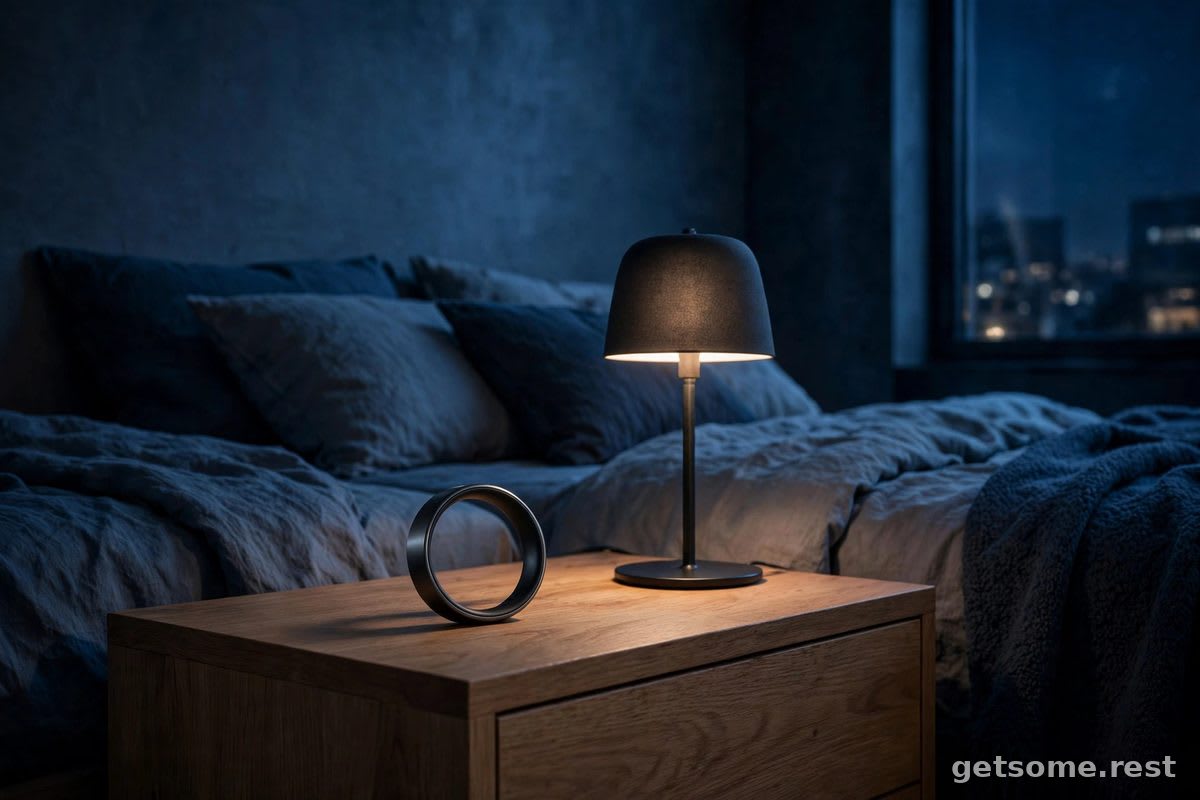
Choosing a subscription-free sleep tracker is much easier once you know what to compare. The biggest names in sleep tracking — Oura, Whoop and Fitbit — all lock their best insights behind a monthly fee, but a smaller group of excellent trackers hands you the full picture for the price of the device alone. We researched and tested the options so you can focus on the few details that really change how useful a tracker is night after night.
Contents
Our top picks at a glance
Here is how our three favorites compare. Each name links to its full write-up further down the page.
| Product | Best for | Price | Rating |
|---|---|---|---|
| Withings Sleep Analyzer | Wrist-free overnight tracking | $129.95 | 4.6 out of 5 |
| Garmin Vivosmart 5 | Wrist band with deep sleep data | $149.99 | 4.4 out of 5 |
| Xiaomi Smart Band 9 | Budget sleep basics | $32.99 | 4.3 out of 5 |
Prices last checked October 11, 2026 and may change. Ratings reflect our own testing and research.
How to choose a subscription-free sleep tracker
In this guide, a subscription-free sleep tracker means a sleep tracking device whose full core features work with a one-time purchase — no monthly or annual subscription required to see your sleep stages, heart rate and trends. Most buying mistakes come from skipping the same few checks, so run through the list below before you compare prices.
- Price: compare the real checkout price, including shipping, not just the list price. Add up the true cost over two or three years — a $130 device with no subscription beats a $300 ring plus $6 a month before the first year is out.
- Materials: look for clear details about fabrics and fill instead of vague marketing terms. For wearables, this means the band material and sensor layout; for under-mattress mats, it means the fabric cover and sensor type.
- Trial period: a longer home trial makes it easier to return something that doesn’t suit you. Sleep trackers need a few weeks to prove themselves, since one or two nights of data rarely tell the full story.
- Warranty and returns: read the terms, including who pays for return shipping. Withings includes a two-year quality guarantee in many regions, while most wrist bands ship with a standard one-year warranty.
Roughly one in three U.S. adults regularly sleep less than the recommended seven hours a night.
Source: Centers for Disease Control and Prevention (CDC)
Setting up the rest of the room
A tracker tells you what happened, but it cannot fix a bedroom that works against sleep. A tracker pairs naturally with a calming sleep environment: many readers combine one with our guide to the best white noise machine for light sleepers, since consistent background sound masks the noises a tracker would otherwise log as wake-ups. And if your tracker shows you are waking up overheated night after night, our comparison of cooling mattress toppers for night sweats shows what actually helps versus what is just marketing.
Price and value
The most expensive option is rarely the best fit. We look at what each product costs per year of expected use, and we note when a cheaper alternative gets you most of the way there. Do the subscription math: Oura Ring Gen 3 starts at $299 plus about $6 a month, so after two years you have paid roughly $443. The Withings Sleep Analyzer costs $129.95 once, full stop. For a closer look at how sleep gear fits different budgets, see our guide to the best sunrise alarm clock for heavy sleepers, and for evening habits that pair well with a tracker, read our memory foam vs hybrid mattress comparison for hot sleepers.
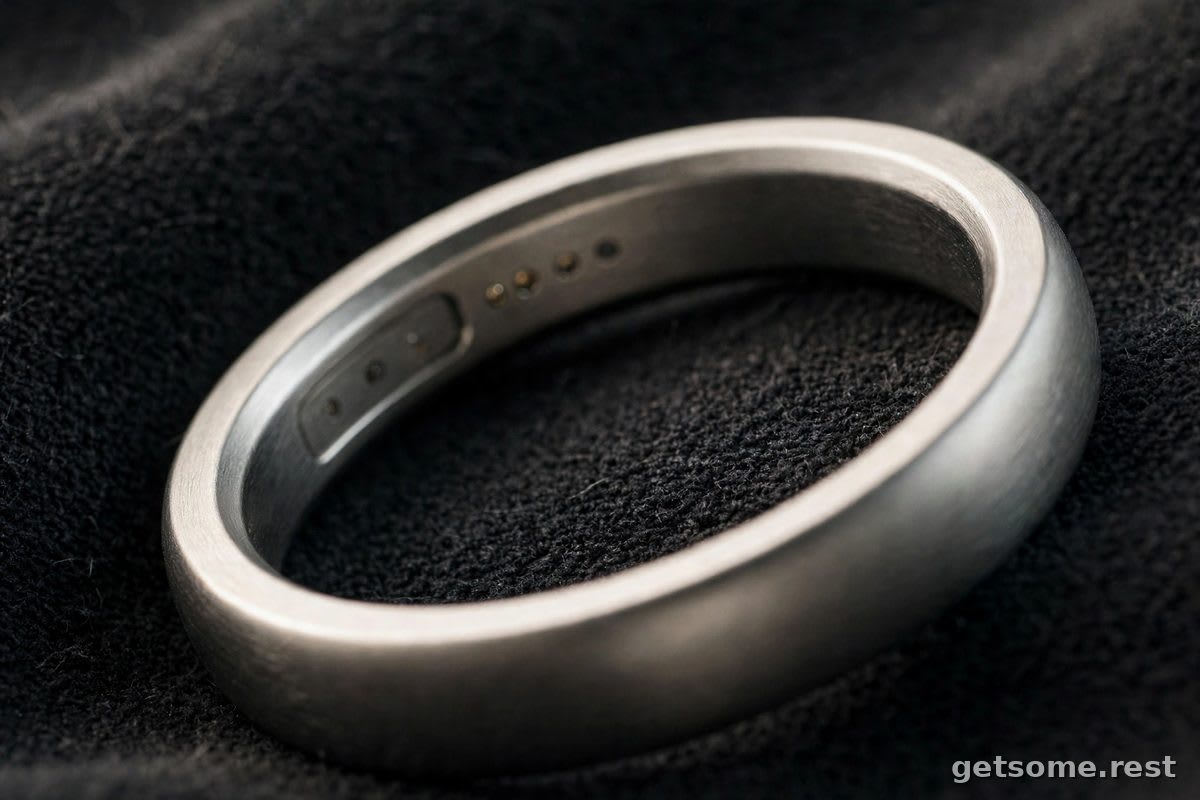
What you give up — and keep — without a subscription
The subscription model did not appear because sleep tracking is expensive to compute. It appeared because cloud storage, app maintenance and coaching content cost money, and companies like Oura and Whoop found that recurring revenue is more attractive than one-off sales. The sensors in a $33 band and a $300 ring measure the same green light reflecting off your wrist. The difference is what the company chooses to show you afterwards.
Here is what subscription trackers typically lock behind a paywall, and what our picks give you for free. Sleep stages, sleep score, heart rate trends, respiratory rate and multi-night history are free on all three of our picks — the Withings Sleep Analyzer, the Garmin Vivosmart 5 and the Xiaomi Smart Band 9. What you do not get is the premium layer: AI-generated coaching plans, deep correlation analysis (for example, how alcohol shifts your HRV), and long-range export tools. Garmin reserves a small set of advanced training insights for its optional Connect+ tier, and Withings offers an optional Withings+ membership for AI coaching — but neither gates your core sleep data.
There is one more thing subscription brands rarely advertise: data portability. When you stop paying, some services degrade or hide your own history. The three devices in this guide sync to Apple Health or Google Fit, so your sleep history lives in an ecosystem you control rather than inside one company's retention strategy. If you ever switch brands, your baseline trends come with you instead of sitting behind a cancelled account.
Finally, be honest about what you will actually use. In our experience, most people check two things: how long they slept and what their sleep score says. Both are free on every device here. If you are the kind of person who genuinely follows a six-week training plan built from nightly HRV data, a subscription service may earn its fee. For everyone else, a one-time purchase covers 90 percent of the value at a fraction of the lifetime cost.
How to actually improve your sleep with a tracker
A tracker does not improve sleep on its own — it is a measuring tape, not a personal trainer. The owners who get real value from one follow the same simple process. First, wear or use it for at least a week without changing anything, so you have an honest baseline. Sleep quality varies night to night; five to seven nights of data smooth out the noise and show your actual pattern, including the bedtime drift that creeps in on weekends.
Second, change one variable at a time. The sleep score is an outcome, not a lever, so the interesting metrics are the boring ones: how consistent your bedtime is, how long it takes you to fall asleep, and how much time you spend awake after sleep onset. If your sleep onset is consistently over thirty minutes, that is actionable — it points at evening light, caffeine timing or a wind-down routine. If your deep sleep reads low one night, do not chase it; look at the weekly trend instead. Bedtime consistency, sometimes shown as a sleep consistency or regularity score, is the single most useful number most trackers report, and improving it costs nothing.
Third, know where the data is weakest. Wrist trackers can mistake lying still while reading for light sleep, and under-mattress mats can count time in bed reading as sleep. If a morning score looks wrong, check the timeline: did it log you as asleep while you were awake? A quick mental correction is fine. Finally, avoid score obsession. Checking your sleep score every morning and worrying about a bad number is counterproductive — stress is terrible for sleep, and a single night's data is not a verdict on your health. Use the trends, ignore the blips, and revisit the numbers weekly rather than daily. That is how a $33 band ends up doing more for your sleep than a $300 ring ever will.
Our picks in detail
Each pick below includes a one-line verdict, the current price, and the main pros and cons from our testing.
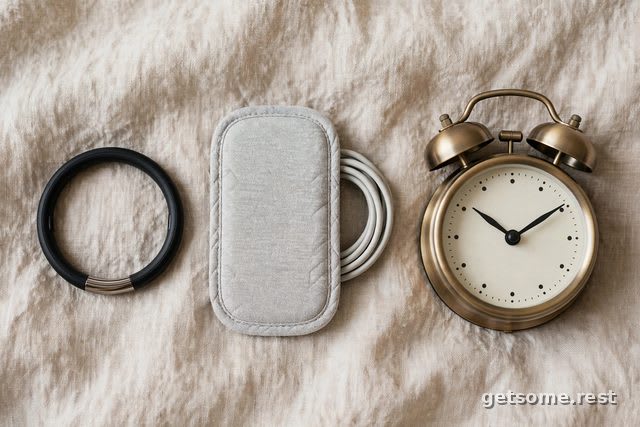 Best overall
Withings Sleep Analyzer
The most accurate sleep tracker you never have to wear — it slides under your mattress and quietly logs everything.
$129.95 at time of writing
Pros
- Nothing to wear, charge or remember — tracking is fully automatic every night
- Sleep stages, continuous heart rate, snoring duration and breathing-disturbance detection, all with no subscription
- Wi-Fi syncs automatically to the free Withings app, which also shares data with Apple Health and Google Fit
Cons
- No daytime activity or workout tracking — it only knows you in bed
- Optional Withings+ membership nags inside the app for AI coaching extras
Best wrist band
Garmin Vivosmart 5
Garmin's most advanced sleep features in a slim band, with every insight included free through the Garmin Connect app.
$149.99 at time of writing
Pros
- Advanced sleep monitoring with sleep score and personalized insights, no subscription required
- Up to 7 days of battery life, plus Body Battery, Pulse Ox, stress and heart-rate tracking around the clock
- Syncs to the free Garmin Connect app and exports easily to Apple Health and Google Fit
Cons
- Monochrome display looks dated next to AMOLED rivals at this price
- No built-in GPS — it borrows location from your phone on outdoor workouts
Best budget
Xiaomi Smart Band 9
Shockingly complete sleep tracking for the price of a pizza — the best value in the entire category.
$32.99 at time of writing
Pros
- Full sleep stages, heart rate and SpO2 tracking through the free Mi Fitness app — no paywalled features
- Excellent battery life (up to 21 days claimed) and a bright 1.62-inch AMOLED display
- Costs a quarter of the Withings mat, making it the cheapest way to start tracking sleep seriously
Cons
- Heart-rate accuracy dips during intense exercise and restless nights
- The companion app is less polished than Garmin Connect or Withings Health Mate
How we test
We never accept payment for rankings. Every product is judged against the same five checks:
- Price
- We record the real price at checkout, note regular discounts, and recheck prices when we update the guide.
- Materials
- We read the fabric, fill and build details, and note anything the brand doesn’t make clear.
- Sleep trials
- We check how long you can try the product at home and whether the trial has conditions.
- Warranty
- We compare warranty length and what it actually covers, in plain language.
- Return policy
- We look at how returns work, who pays for shipping, and how refunds are handled.
Frequently asked questions
Can I get a good sleep tracker without paying a monthly fee?
Yes. Several trackers give you full core sleep features with a one-time purchase. The Withings Sleep Analyzer tracks sleep stages, heart rate and snoring with no subscription, and Garmin's Vivosmart 5 delivers advanced sleep scoring through the free Garmin Connect app. Xiaomi's Smart Band 9 also unlocks all of its sleep features through the free Mi Fitness app.
Why do so many sleep trackers require subscriptions?
Subscriptions fund the ongoing costs of cloud storage, app development and personalized coaching features. Brands like Oura and Whoop use the model because it produces steady revenue. It is a business choice, not a technical requirement — plenty of devices process your sleep data on your phone or the device itself at no recurring cost.
Are subscription-free sleep trackers less accurate?
Not necessarily. Accuracy depends on sensors and algorithms, not on billing models. The Withings Sleep Analyzer was tested against clinical polysomnography, and Garmin's sleep staging is widely considered among the best for wrist wearables. A subscription buys you coaching features and trend analysis, not fundamentally better raw data.
Do I need to wear something on my wrist to track sleep?
No. The Withings Sleep Analyzer is a thin mat that slides under your mattress and tracks sleep automatically, with nothing to wear or charge. Under-mattress trackers are the easiest option if you dislike wearing a device at night, though wrist trackers like the Garmin Vivosmart 5 add daytime activity and heart-rate context.
Will a subscription-free tracker still sync with my phone?
Yes. All three of our picks sync wirelessly to free apps on iOS and Android: Health Mate for Withings, Garmin Connect for the Vivosmart 5, and Mi Fitness for the Xiaomi Smart Band 9. They also share data with Apple Health and Google Fit, so your sleep history is not locked inside one company's ecosystem.
Key takeaways
- Our top pick for most people is the Withings Sleep Analyzer; the Xiaomi Smart Band 9 is the better choice on a tighter budget.
- Compare real checkout prices, materials, trial length, warranty and return terms before you buy.
- Subscriptions fund coaching extras and cloud features — they are a business model, not a requirement for accurate sleep data.
- Rankings on GetSome Rest are never for sale, and we update our guides weekly.