Amazon Echo Time Explained (2026)
Amazon's Echo Time, launched October 28, 2026, is a $199.99 spherical smart alarm clock with a 3.2-inch circular touchscreen, ultrasound sleep sensing and a smart alarm that wakes you in light sleep — no wearable, no camera.
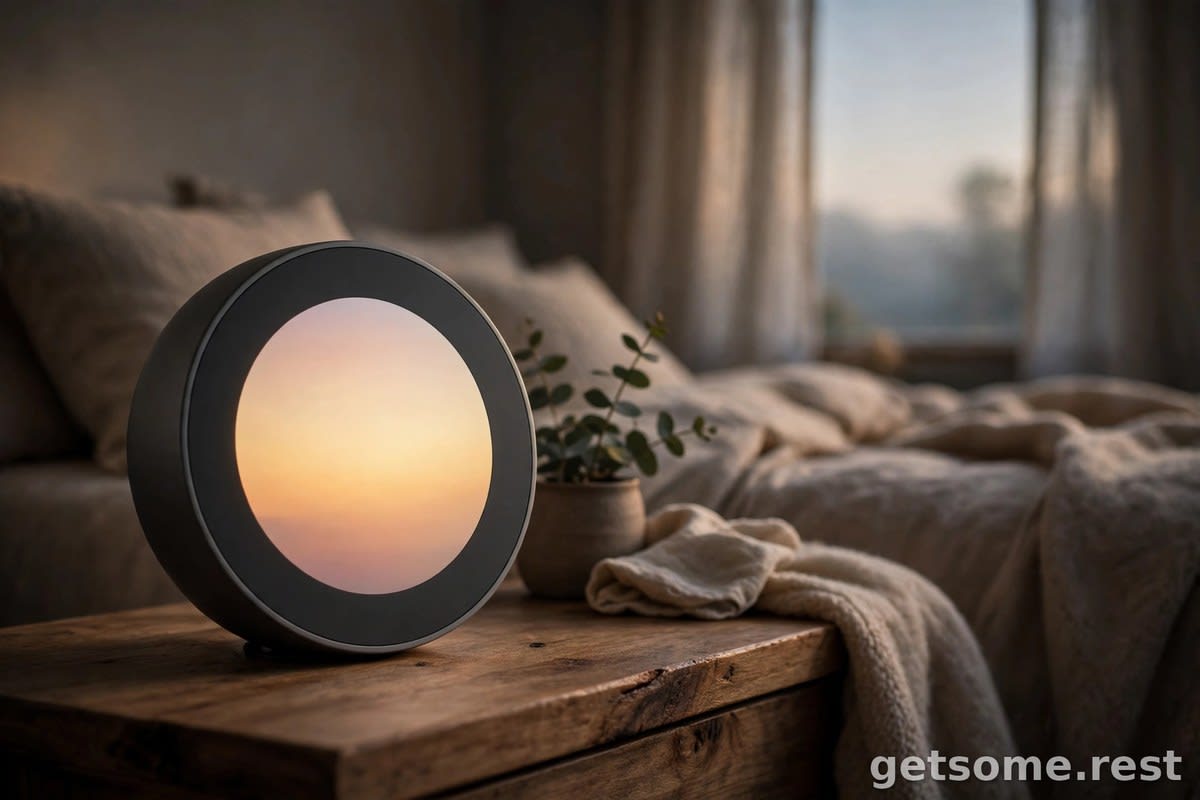
The bedside alarm clock has quietly become one of the most contested spots in the smart home: Hatch, Loftie and Philips all want it, and Amazon has now joined them with a device that does something none of them can. The Echo Time, launched October 28, 2026 for $199.99, is a spherical smart alarm clock with a 3.2-inch circular touchscreen — and, hidden inside, ultrasound sensors that watch your breathing through the night and wake you during light sleep, with no wearable and no camera. It is also a full Alexa speaker and smart-home hub. Here is what it does, what it costs, and how it stacks up against the sunrise clocks it is trying to replace.
Contents
At a Glance: The Echo Time
Amazon has sold bedside Echo devices before — the Echo Spot has sat on nightstands for years — but the Echo Time is a different proposition. It is bigger, fully circular, and built around sleep: ultrasound sensors that track your breathing, a smart alarm that waits for light sleep, and a screen designed to be set by touch in the dark. Underneath, it is also the new Echo Dot's hardware, so it works as a smart-home hub without any extra equipment.
- Price: $199.99 in Graphite, Glacier White or Coral Pink. Optional matching adjustable stand, $39.99. Amazon Kids Echo Time, $209.99, includes one year of Amazon Kids+. You can check the current price on Amazon.
- Screen: 3.2-inch circular touchscreen in a spherical body, with hundreds of customizable clock faces including Harry Potter and Batman. Dims below 0.3 nits at night. No camera.
- Sleep sensing: Omnisense sensor fusion — ultrasound detects breathing and proximity, room-temperature sensors and presence detection learn your sleep routine. No wearable needed. Opt-in; switch it off in the Alexa app or via the mic mute button.
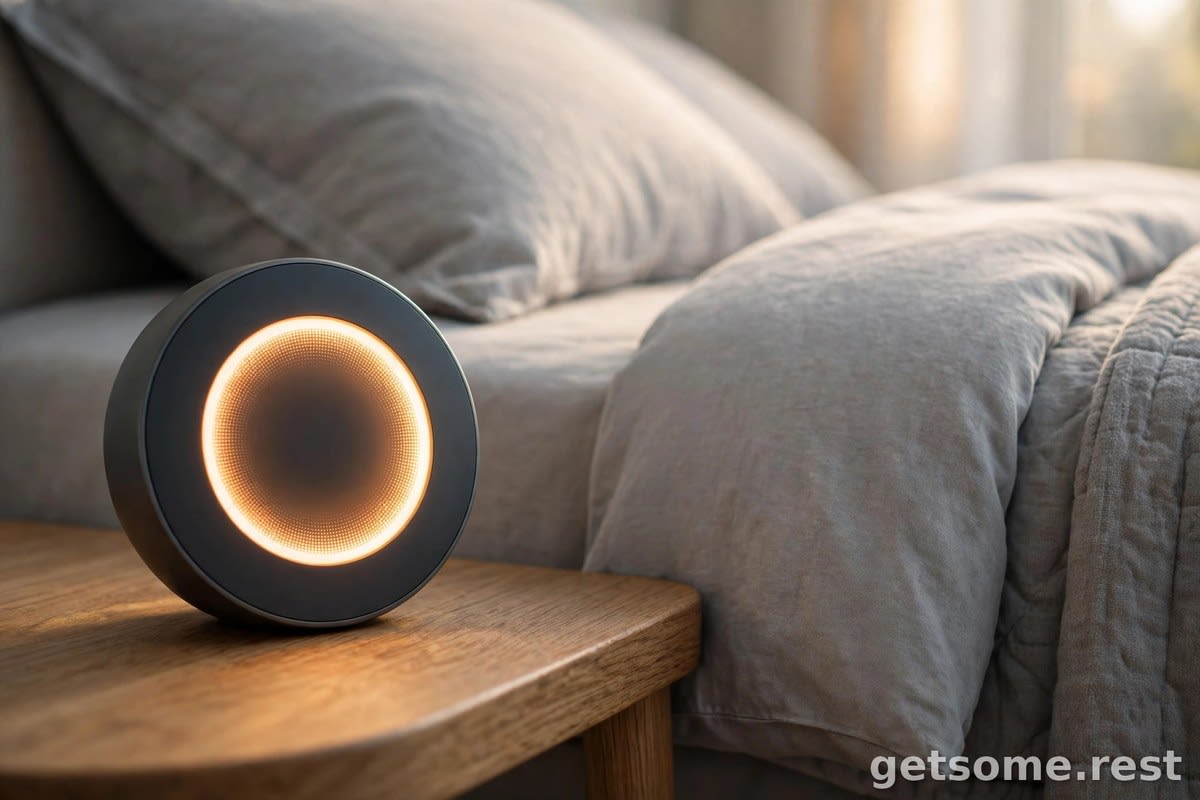
- Smart alarm: wakes you during lighter sleep anywhere inside a 10-to-60-minute window before your set alarm. The screen brightens gradually, sunrise-style, and the volume ramps up. Alarms can be set on the touchscreen without voice.
- Alexa+: natural conversation, clarifying questions and multi-step requests. Free with Prime; $19.99 a month for non-Prime members. Some Echo Time functions require Alexa+ — Amazon has not itemized which.
- Smart home: built-in hub with Zigbee, Thread and Matter support, sharing hardware with the new Echo Dot.
It went on sale in the US on October 28, 2026, the same day it was announced. A European price of €214.99 has been reported, but Amazon has not confirmed launch timing outside the US.
How to Choose: Echo Time, Hatch or Loftie?
Start with the question that decides this purchase: do you want your clock to know how you slept? If the answer is yes — or even maybe — the Echo Time is the only device in this comparison that does it, and it does it without asking you to wear anything or point a camera at your bed. The ultrasound sensing and the light-sleep alarm are genuinely new in a bedside clock, and they are the reason to spend $199.99 instead of $169.99 on a Hatch or a Loftie.
If the answer is no, the choice flips. The Hatch Restore 3 has a stronger sunrise light — about 250 lux at 18 inches — and a 60-night trial, which the Echo Time does not offer. Its wind-down routines and light-based wake-up are more developed, and it asks nothing of your sleep data. The Loftie Clock is the simplest of the three: a two-phase audio alarm, no screen to glow at night, and no app ecosystem to manage. Both are better picks if you want a clock that does less, quietly, and you do not want a microphone on your nightstand.
Three practical checks before ordering. First, Prime: some Echo Time features require Alexa+, which is free with Prime and $19.99 a month without it — and Amazon has not itemized which features those are, so a non-Prime buyer should confirm the details on the product page. Second, the screen: the 3.2-inch display dims below 0.3 nits, which The Verge's hands-on called suitably dark for a bedroom, but if you are sensitive to any glow at night, a screenless Loftie may suit you better. Third, privacy: sleep sensing is opt-in and can be switched off, but Amazon has not said whether breathing data is processed on-device or in the cloud, or how long it is kept. If that matters to you, switch sensing off and use the Echo Time as a plain smart alarm clock.
Also worth knowing: the spherical body shares hardware with the new Echo Dot, including a smart-home hub with Zigbee, Thread and Matter support — so if your bedroom already runs on smart bulbs or a smart thermostat, the Echo Time can control them directly, no separate hub needed.
Echo Time Specs, Side by Side
Here is how the Echo Time compares with the two sunrise clocks it competes with most directly. Prices are as reported in November 2026.
| Clock | Price | Sunrise light | Sleep sensing | Smart alarm | Trial |
|---|---|---|---|---|---|
| Amazon Echo Time | $199.99 | Screen brightens gradually | Yes — ultrasound (Omnisense) | Yes — 10–60 min light-sleep window | Not stated |
| Hatch Restore 3 | $169.99 | Yes — ~250 lux at 18 in | No | No — fixed time | 60 nights |
| Loftie Clock | $169.99 on offer ($199.99 list) | No — separate Loftie Lamp | No | Two-phase audio alarm | Not stated |
The table tells the story: the Echo Time is the only one that senses sleep and wakes you in light sleep, and the only one that is also a full smart speaker and smart-home hub, with Zigbee, Thread and Matter built in. The Hatch wins on sunrise brightness and on its 60-night trial; the Loftie wins on simplicity and on having no screen glowing in the bedroom. The Echo Time's optional adjustable stand costs $39.99 extra, and the kids' version at $209.99 adds a year of Amazon Kids+.
One number that matters for light sleepers: the display dims below 0.3 nits, which is dimmer than most phone screens at their lowest setting. If you are sensitive to bedroom light, that is a meaningful detail — and it is one of the few specifications Amazon published in full.
Our Verdict: Who Should Buy It
The Echo Time is the most capable bedside clock Amazon has ever made, and the first one that earns its place by what it knows about your night rather than by what it plays in the morning. If you want sleep sensing without a wearable, a smart alarm that works with your sleep cycles instead of against them, and a full Alexa speaker and smart-home hub in one spherical device, $199.99 is a fair price for the package — especially since the screen, the hub and the speakers would cost more bought separately.
It is not the right pick for everyone. If you want the brightest sunrise light, the Hatch Restore 3 does it better and offers a 60-night trial. If you want the simplest, darkest bedroom — no screen, no microphone, no sleep data leaving the room — the Loftie Clock is the calmer choice. And if you do not have Prime, the $19.99-a-month Alexa+ question needs an answer before you buy, because Amazon has not said exactly what sits behind that paywall.
Our take: buy it for the sleep sensing and the smart alarm, which no rival offers. Treat the rest — the clock faces, the speaker, the hub — as a strong bonus. And switch the sensing off if you are not comfortable with a microphone and ultrasound watching your breathing; the Echo Time is still a very good alarm clock without it.
What Early Hands-On Coverage Says
The first impressions are encouraging, with one consistent caveat: nobody has slept with one yet. The Verge's Jennifer Pattison Tuohy went hands-on at Amazon's New York launch event on October 28, and liked the touchscreen alarm-setting, the large readable clock and the absence of a camera — calling the Echo Time better suited to a bedroom than an Echo Show. Engadget and Notebookcheck filed launch coverage the same week, and a provisional review synthesizing their findings rated the device 3.5 out of 5 — explicitly a provisional score, based on announcement details rather than a unit used at home.
Three things the coverage keeps returning to. First, the design: the spherical body and fully circular 3.2-inch display are a clear step up from the older Echo Spot's smaller semicircular screen, and the hundreds of customizable clock faces — including Harry Potter and Batman — make it feel personal rather than generic. Second, the alarm-setting experience: tapping a time on a touchscreen, silently, without speaking and without waking a partner, is a small interaction that reviewers singled out as genuinely useful. Third, the unanswered questions: no independent accuracy figures exist for the light-sleep detection, no reviewer has tested the smart alarm over weeks, and Amazon has not clarified the data-processing details.
One more distinction worth noting: the Echo Time is SleepMark certified by the National Sleep Foundation. That is a design and evidence-standards certification — it says the product was built to a recognized standard — not a validation study of how accurately it detects sleep stages. Do not read it as proof the sensing works; read it as a sign Amazon took the sleep claims seriously enough to certify them.
How We Reported This Story
We have not lived with the Echo Time — no reviewer has used one at home for weeks yet. This article is based on Amazon's October 28, 2026 announcement, hands-on coverage from The Verge at Amazon's New York launch event, and launch coverage from Engadget, Notebookcheck, 9to5Toys and Digital Trends.
Prices are list prices as reported in late October and early November 2026 and were verified on November 7, 2026. Where Amazon has not published a figure — independent accuracy data for the light-sleep alarm, on-device versus cloud processing of breathing data, and which features require Alexa+ — we say so plainly rather than guessing. We do not take payment for placement, and our rankings are never for sale. Disclosure: GetSome Rest contains affiliate links. If you buy through them, we may earn a commission at no extra cost to you.
Frequently asked questions
How much does the Amazon Echo Time cost?
The Echo Time costs $199.99 in Graphite, Glacier White or Coral Pink, with an optional matching adjustable stand for $39.99. A kids' version, Amazon Kids Echo Time, costs $209.99 and includes one year of Amazon Kids+. It went on sale in the US on October 28, 2026; a European price of €214.99 has been reported, but Amazon has not confirmed launch timing outside the US.
How does the Echo Time track sleep without a wearable?
It uses Omnisense, Amazon's sensor-fusion system: ultrasound detects your breathing and proximity, room-temperature sensors and presence detection learn your sleep routine over time. There is no camera and nothing to wear. Sleep sensing is opt-in — you can switch it off in the Alexa app or with the mic mute button — and Amazon has not said whether breathing data is processed on-device or in the cloud, or how long sleep-routine data is kept.
What is the smart alarm, and how is it different from a normal alarm?
Instead of sounding at a fixed minute, the smart alarm wakes you during lighter sleep at any point inside a 10-to-60-minute window before your set alarm time. The screen brightens gradually like a sunrise and the alarm volume ramps up, rather than jolting you awake. You can also set alarms on the touchscreen itself, without speaking, so you never wake a partner to set a wake-up time.
Do I need Alexa+ or Prime to use the Echo Time?
The clock works as an alarm clock and smart-home hub without them, but some features require Alexa+, Amazon's more conversational assistant. Alexa+ is free with a Prime membership and costs $19.99 a month for non-Prime members. Amazon has not itemized exactly which Echo Time functions need Alexa+, so check the product page if you do not have Prime.
Is the Echo Time better than a Hatch Restore 3 or a Loftie Clock?
It depends on what you want from a bedside clock. The Echo Time is the only one of the three that senses sleep and wakes you in light sleep, and it doubles as a full Alexa smart speaker and smart-home hub. The Hatch Restore 3 ($169.99) has a stronger sunrise light and a 60-night trial but does not track sleep. The Loftie Clock ($169.99 on offer) has a two-phase audio alarm but no sunrise light and no sleep tracking. If sleep sensing is the priority, the Echo Time wins; if you want the brightest sunrise or the simplest device, look at the other two.
Key Takeaways
- The Amazon Echo Time launched October 28, 2026, priced $199.99, with an optional $39.99 stand and a $209.99 kids' version.
- Its 3.2-inch circular touchscreen sits in a spherical body with no camera, and the display dims below 0.3 nits for the bedroom.
- Omnisense ultrasound sensing detects breathing and learns your sleep routine, with no wearable — opt-in, and switchable off in the Alexa app.
- The smart alarm wakes you during lighter sleep inside a 10-to-60-minute window, with a gradually brightening screen and ramping volume.
- Some features require Alexa+, free with Prime or $19.99 a month otherwise; Amazon has not itemized which ones.
- It is SleepMark certified — a design and evidence-standards certification, not a validation study of sleep-stage accuracy.
- No independent accuracy testing or long-term review exists yet; the Hatch Restore 3 still wins on sunrise brightness and trial length.