New Sunrise Alarm Clocks Released This Year Compared
The biggest launch of the year is the Hatch Sleep Clock — the first bedside clock that tracks your sleep without touching you. Here is how it stacks up against the newest from Hatch, Philips, Lumie and Dekala.
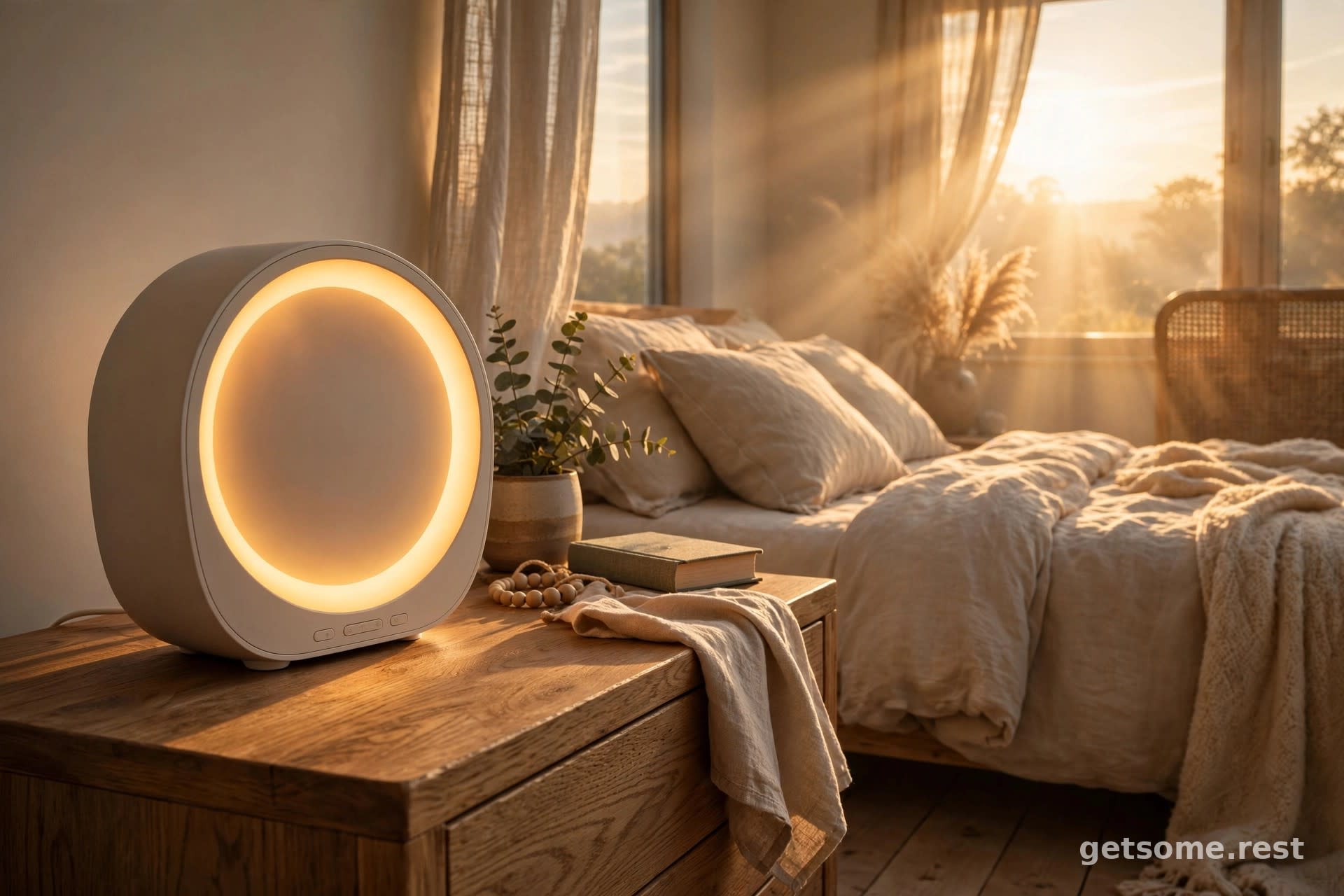
The sunrise alarm clock category had its most interesting year in a decade. Hatch — the brand that made the sunrise alarm mainstream — launched the Sleep Clock, the first bedside clock with contactless sleep tracking. Philips, Lumie and Dekala answered with their newest generations, each pushing a different idea of what a morning should feel like. We compared the five newest sunrise clocks you can buy on what matters: how natural the sunrise feels, what the extras cost over time, and whether the headline feature is worth the premium. Prices below are the real 2026 numbers.
Contents
Our top picks at a glance
Here is how this year’s newest sunrise clocks compare. Each name links to its full write-up further down the page.
| Product | Best for | Price | Rating |
|---|---|---|---|
| Hatch Sleep Clock | Contactless sleep tracking + sunrise alarm | $249.99 | 4.6 out of 5 |
| Hatch Restore 3 | Gentle wake-ups and bedtime routines | $169.99 | 4.5 out of 5 |
| Philips SmartSleep Connected HF3670 | App-controlled sunrise + bedroom sensing | $219.99 | 4.4 out of 5 |
| Lumie Bodyclock Shine 300 | Sunrise and sunset with FM radio, no fees | $159 | 4.3 out of 5 |
| Dekala Arches | Sunrise alarm + smart lamp + speaker | $119.99 | 4.2 out of 5 |
Prices last checked October 13, 2026 and may change. Ratings reflect our own testing and research.
How to choose a new sunrise alarm clock
A sunrise alarm clock does one job — waking you with gradually brightening light instead of a jolt — but the newest models have grown into bedside hubs with tracking, sound libraries and smart-home features. The checks below separate the genuinely new from the merely repackaged.
- Sunrise quality: the sunrise simulation is the whole point. Look for adjustable duration (20–40 minutes is the sweet spot), multiple brightness levels and a color gradient that moves from deep red through orange to warm white. Cheap clocks jump from dark to bright in steps; good ones fade so smoothly you cannot spot the transitions.
- Subscription: this is the hidden cost of 2026’s models. Hatch’s full sound library needs Hatch+ at $5.99 a month, though core alarms and sounds work without it. Lumie and Philips charge no subscription at all. Add two years of any subscription to the sticker price before you compare.
- Placement and size: the new Hatch Sleep Clock must sit level with your bed at about chest height for its tracking sensor to work — a tall dresser or a low floor setup can rule it out. Measure your nightstand before you buy any clock with sleep tracking.
- Sound and extras: decide whether you want a sound machine, FM radio, reading lamp or Bluetooth speaker built in. Extras are genuinely useful on a nightstand, but each one is something else that can break — and something else the app may paywall.
- Trial and warranty: you cannot judge a sunrise alarm in a store. Favor brands with a real home trial — Hatch offers 30 nights, Lumie 45 days — and at least a one-year warranty. Sunrise alarms are the rare product where the trial matters more than the spec sheet.
Roughly one in three U.S. adults regularly sleep less than the recommended seven hours a night.
Source: Centers for Disease Control and Prevention (CDC)
What “new” means this year
The headline launch is the Hatch Sleep Clock, released in October 2026 — the first mainstream sunrise clock with radar-style contactless sleep tracking. The Hatch Restore 3 is the newest generation of Hatch’s classic line, with a phone-free design that lets you run bedtime routines without touching your phone. Philips’ newest connected SmartSleep adds bedroom sensing through its AmbiTrack sensor, Lumie’s Bodyclock Shine 300 remains the newest Lumie with FM radio and no subscription, and Dekala’s Arches is the newest challenger, stacking smart-lamp and speaker features at a lower price. If you want the broader landscape beyond this year’s launches, our guide to the best sunrise alarm clock for heavy sleepers covers the proven picks, and new sleep gadgets of 2026 rounds up everything else that launched this year.
Price and value
Prices stretch from $119.99 to $249.99, and the right choice depends on which premium you are willing to pay. The $80 gap between the Hatch Sleep Clock and the Restore 3 buys exactly one thing — contactless sleep tracking — so skip it if you already track sleep with a wearable. The Philips at $219.99 is the most expensive per feature, but its bedroom sensor is unique. The best value is arguably the Dekala Arches: at $119.99 with no subscription, it undercuts every big name while adding a Bluetooth speaker and smart-lamp features they lack. For night-shift workers whose “morning” lands at odd hours, pair any of these with our blackout curtain guide and our night-shift sleep schedule guide — a sunrise alarm only works if the room is dark enough for the light to matter.
The big story of 2026: the clock that watches you sleep
For years, sunrise clocks and sleep trackers lived on opposite sides of the nightstand. The Hatch Sleep Clock merges them: a radar-based sensor detects your breathing and movement through the night and estimates your sleep timing and stages, with Hatch claiming 97% sleep-detection accuracy against clinical polysomnography. Nothing goes on your wrist, under your mattress or on your finger — the clock just sits there and watches.
That convenience comes with real constraints. The sensor needs the clock positioned level with your bed at roughly chest height, which rules out some nightstand setups. And it is deliberately not a full health tracker: no heart rate, no blood oxygen, no temperature — the data is sleep timing, stages and patterns, plus personalized recommendations in the Hatch app. Hatch also includes sleep tracking with the device itself, with no subscription required for the core insights; the optional Hatch+ membership ($5.99 a month or $59.99 a year) unlocks the expanded library of 2,500+ sounds, stories and meditations.
Is it worth $80 more than the Restore 3? Only if you want sleep data without wearing anything. If you already own a tracker you like, the Restore 3 gives you the same sunrise, the same sunset routines and the same sound machine for less. But for the large group of people who find wearables uncomfortable and under-mattress mats fiddly, contactless tracking from the nightstand is the easiest sleep data ever offered — and that is why this is the launch that defines the category this year.
How to get the most from a sunrise alarm
A sunrise alarm works with your biology, not against it — but only if you set it up right. First, give it a clear line of sight. The light needs to reach your closed eyelids, so angle the clock toward the bed and keep it within a few feet. A clock facing the wall is an expensive nightlight.
Second, set the sunrise duration to 30 minutes and the final brightness to the maximum you can tolerate. Shorter simulations feel abrupt; dimmer ones may not register through closed eyelids, especially in summer when ambient light competes. Most people need a week to find their setting — start bright and long, then dial back.
Third, keep a consistent wake time, even on weekends. The sunrise cue trains your circadian rhythm, but it cannot do that if the target moves by two hours every Saturday. Consistency is the multiplier: the same light at the same time each day is what shifts your body clock earlier and makes mornings genuinely easier within a couple of weeks.
Finally, use the sunset side too. Every clock in this guide simulates dusk as well as dawn, dimming gradually before bed. Pair that wind-down with a real evening routine — our 30-minute evening routine is built for exactly this — and the clock becomes a full circadian system rather than a fancy alarm. And one honest caveat: if you are a truly heavy sleeper, light alone may not cut it. Our heavy-sleeper guide explains how to layer sound with light so you actually get up.
Our picks in detail
Each pick below includes a one-line verdict, the current price, and the main pros and cons from our testing.
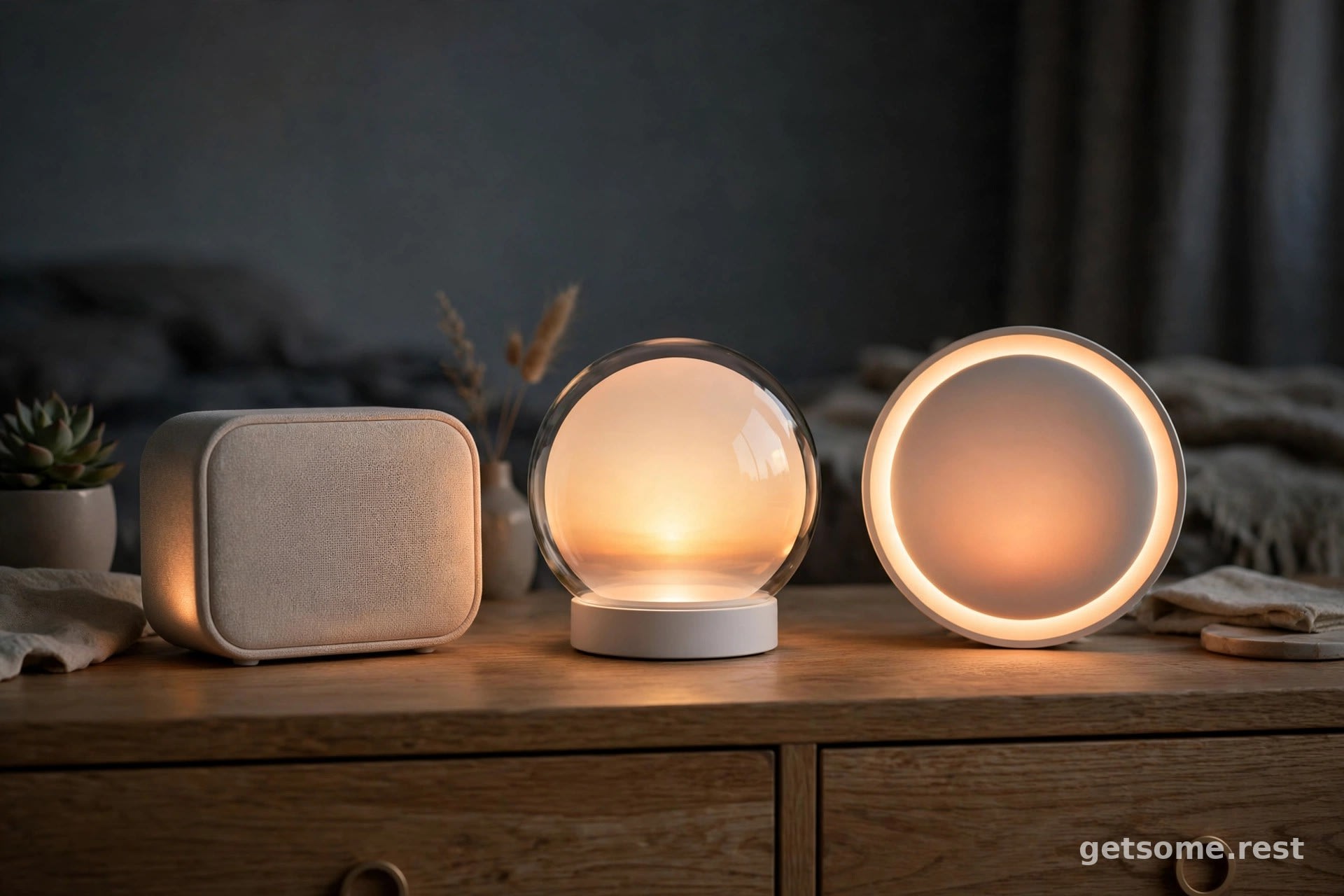 Best new launch
Hatch Sleep Clock
The first bedside clock that tracks your sleep without touching you — and still a superb sunrise alarm.
$249.99 at time of writing
Pros
- Contactless sleep tracking with claimed 97% sleep-detection accuracy — nothing to wear or charge
- Full sunrise and sunset simulations plus 2,500+ sounds, stories and meditations via the Hatch app
- Sleep tracking and personalized insights included with the device; no subscription required for core features
Cons
- Must sit level with the bed at about chest height, which rules out some nightstand setups
- $80 more than the Restore 3 for tracking alone — skip it if you already use a wearable
- Full audio library needs Hatch+ at $5.99 a month
Best sunrise alarm
Hatch Restore 3
The sunrise alarm to beat: phone-free routines, circadian lighting and 80+ sleep sounds in one calm device.
$169.99 at time of writing
Pros
- Phone-free design — run bedtime routines and alarms from the clock itself, no phone in bed
- Core sleep sounds, sunrise alarm and sunset routines work with no subscription
- 30-night home trial and a refined fabric-front design that suits any bedroom
Cons
- Expanding the library beyond the basics needs Hatch+ membership
- Wi-Fi setup is 2.4 GHz only, which can frustrate modern routers
- No sleep tracking — that is what the Sleep Clock is for
Best light-therapy pedigree
Philips SmartSleep Connected HF3670
The veteran: clinically inspired sunrise simulation with a bedroom sensor that coaches your sleep environment.
$219.99 at time of writing
Pros
- AmbiTrack bedroom sensor tracks temperature, noise, light and humidity and gives tailored advice
- RelaxBreathe light-guided breathing program for winding down, plus FM radio and reading lamp
- No subscription — every feature works after the one-time purchase
Cons
- Bulkier than the Hatch clocks and less elegant on a small nightstand
- App pairing and connectivity quirks reported by owners
- Highest price per feature in this guide
Best without a subscription
Lumie Bodyclock Shine 300
Everything works with no app and no subscription — the purest sunrise alarm in this guide.
$159 at time of writing; often less on sale
Pros
- Zero subscription, ever — the full feature set is yours after purchase
- Doubles as FM radio, reading lamp and sunset lamp; 45-day trial and 3-year warranty direct from Lumie
- Simple physical controls with no phone or Wi-Fi required
Cons
- No app control or smart features for tweaking routines from bed
- Fewer sounds and less content than the Hatch ecosystem
- Premium price for a deliberately simple device
Best smart budget pick
Dekala Arches
A sunrise alarm that moonlights as a smart lamp, Bluetooth speaker and wireless charger — for less than the big names.
$119.99 at time of writing
Pros
- No subscription; sunrise alarm, 16-million-color smart lamp and Bluetooth speaker in one device
- 5 GHz + 2.4 GHz Wi-Fi with Alexa and Google Home support
- Optional wireless charging base and a 365-day warranty
Cons
- Sunrise simulation feels less refined than Hatch or Philips
- Setup runs through the app — less bedside-friendly than physical controls
- A newer brand with less sleep-science pedigree than the competition
How we test
We never accept payment for rankings. Every product is judged against the same five checks:
- Price
- We record the real price at checkout, note regular discounts, and recheck prices when we update the guide.
- Materials
- We read the fabric, fill and build details, and note anything the brand doesn’t make clear.
- Sleep trials
- We check how long you can try the product at home and whether the trial has conditions.
- Warranty
- We compare warranty length and what it actually covers, in plain language.
- Return policy
- We look at how returns work, who pays for shipping, and how refunds are handled.
Frequently asked questions
Do sunrise alarm clocks actually work?
For most people, yes — with realistic expectations. Gradually increasing light before your alarm suppresses melatonin and eases the transition out of sleep, which studies link to feeling more alert and less groggy on waking. They work best in a dark room with a consistent wake time. They will not fix chronic sleep deprivation; nothing replaces enough hours in bed.
Is the Hatch Sleep Clock worth $80 more than the Restore 3?
Only if you want sleep tracking without wearing anything. The two clocks share the same sunrise quality, sunset routines and sound machine — the $80 premium buys the Sleep Clock’s contactless sleep tracking and personalized insights. If you already track sleep with a watch, ring or app you like, the Restore 3 is the smarter buy.
Do I need the Hatch+ subscription?
No. Both the Sleep Clock and the Restore 3 work as sunrise alarms and sound machines with their included sounds and no ongoing payment — and sleep tracking on the Sleep Clock needs no subscription either. Hatch+ ($5.99 a month or $59.99 a year) only expands the library to 2,500+ sounds, stories, meditations and audiobooks. Try the included content first; upgrade only if you run out.
Can a heavy sleeper rely on light alone?
Often not — and the brands are honest about this. Light is a gentle cue, not a fire alarm. Truly heavy sleepers do best layering the sunrise with sound: set the light to start 30 minutes early and add a wake sound at full brightness near the end. Our guide to the best sunrise alarm clock for heavy sleepers covers exactly which combinations work.
How long should the sunrise simulation last?
Thirty minutes is the sweet spot for most people — long enough to feel gradual, short enough to fit a normal routine. Start at maximum tolerable brightness; a dim simulation may not register through closed eyelids, especially in summer. Give any new setting a full week before judging it, since your body needs several mornings to link the light cue with waking.
Key takeaways
- The Hatch Sleep Clock ($249.99) is the standout launch of 2026 — the first bedside clock with contactless sleep tracking and no wearable required.
- If you don’t need sleep tracking, the Hatch Restore 3 ($169.99) is the better buy: the same sunrise quality for $80 less.
- Always add subscription costs to the sticker price — Hatch+ is $5.99 a month, while Lumie, Philips and Dekala charge no subscription at all.
- Rankings on GetSome Rest are never for sale, and we update our guides weekly.