Best Fitness Tracker for Sleep Tracking Without a Subscription: Charge 6 vs Vivoactive 5
Fitbit Charge 6 vs Garmin Vivoactive 5 compared as subscription-free sleep trackers: sleep stages, battery, comfort, and true cost in 2026.
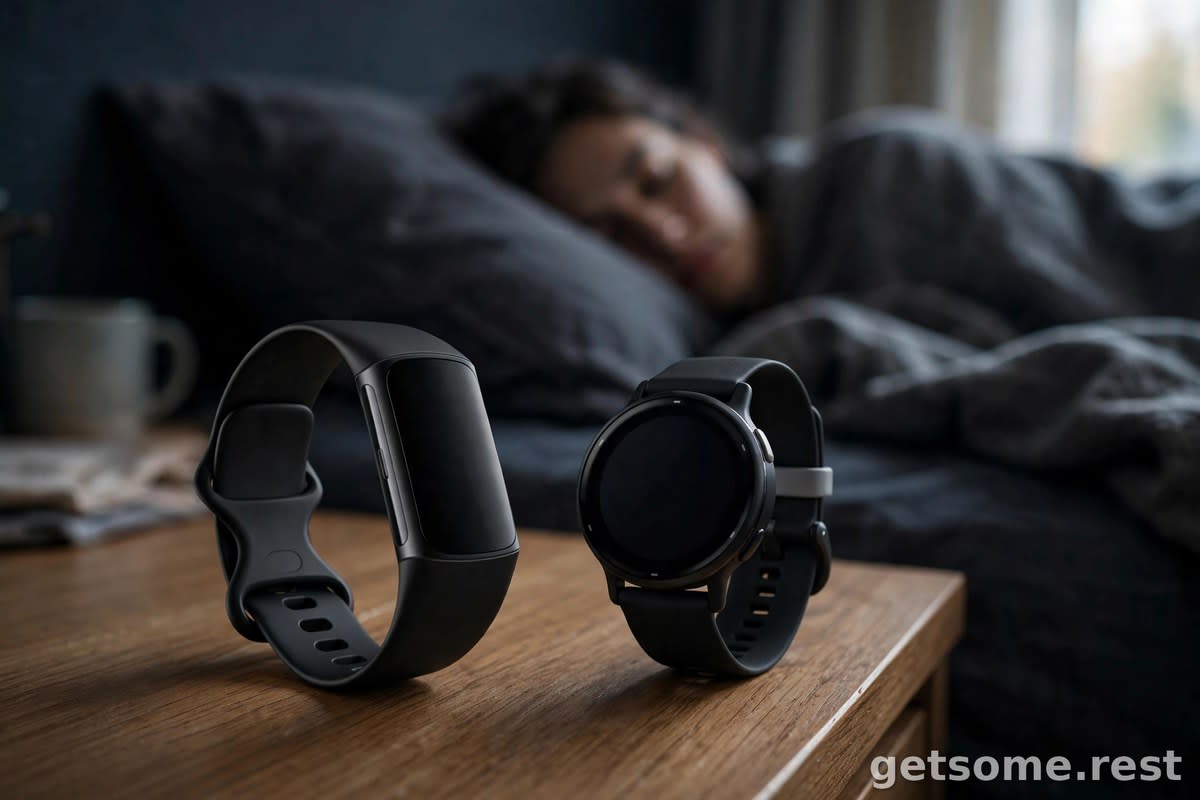
The Fitbit Charge 6 and the Garmin Vivoactive 5 are two of the most popular wrist trackers on the market, and they take opposite approaches to your money. Fitbit sells a cheaper device and keeps its smartest insights behind a $9.99/month Premium paywall. Garmin charges more upfront and gives you every metric free, forever. We compared their sleep tracking, battery life, comfort, and true one-year cost to find the best sleep tracker you can own without a subscription.
Contents
At a glance: Charge 6 vs Vivoactive 5
These two trackers sit at the center of the subscription debate in wearables. The Fitbit Charge 6 (typically ~$150–$160) is a slim band with Google built in — YouTube Music controls, Google Maps, and Google Wallet — and genuinely good sleep basics for free. The Garmin Vivoactive 5 (typically ~$190–$200 on sale) is a full AMOLED smartwatch with up to 11 days of battery and a philosophy Garmin has never wavered from: every metric, free, no subscription tier. Here is the short version.
| Fact | Fitbit Charge 6 | Garmin Vivoactive 5 |
|---|---|---|
| Typical price | ~$150–$160 | ~$190–$200 on sale (MSRP $299.99) |
| Subscription | Fitbit Premium $9.99/mo ($79.99/yr) for the best insights | None — everything included |
| Sleep tracking free | Sleep score, stages, 30-day history | Stages, sleep coach, naps, Morning Report |
| Battery | Up to 7 days | Up to 11 days |
| Form factor | Slim band, barely-there at night | 42mm smartwatch |
| Best for | Band lovers and Google-ecosystem users | Subscription-free sleep data, long battery |
Prices checked October 2026. The Vivoactive 5 discounts frequently to the $190–$200 range, which is when it becomes the clearest value pick in this comparison.
What makes a fitness tracker good for sleep (without a subscription)
A fitness tracker earns a place on your wrist overnight only if three things are true: the sleep data you actually care about is free, the battery survives the night without charging anxiety, and the thing is comfortable enough that you forget it. Everything else — GPS accuracy, workout modes, app polish — is a bonus when sleep is the goal.
Here is what to check before buying either of these trackers:
- What sleep data is free vs paywalled. Both give you a sleep score and sleep stages without paying. But “no subscription required” is not the same as “everything is free.” Fitbit reserves Daily Readiness, Sleep Profile, and deep stress trends for Premium. On the Garmin, there is no tier at all — free means free.
- Multi-day battery that you never think about. A tracker that dies overnight is a tracker you stop trusting. Anything over about 5 days of real-world battery is comfortable; 7+ is forget-about-it territory.
- A form factor you can sleep in. Slim bands disappear on the wrist. Smartwatches can feel bulky for stomach and side sleepers, no matter how light the spec sheet says they are.
- The trial trap. The Charge 6 includes a 6-month Fitbit Premium trial. When it ends, features vanish from your dashboard — Daily Readiness, Sleep Profile, and advanced trends go dark unless you pay. Know what you are losing before the trial expires.
- Phone compatibility. Both work with iPhone and Android. The Charge 6 leans into Google services (Wallet, Maps, YouTube Music controls), which matters more on Android.
The question is not which tracker has the best sleep data — it is which tracker gives you the sleep data you want without a monthly bill.
Source: our subscription-free wearables checklist
Sleep score vs sleep stages vs recovery scores
Both trackers produce a nightly sleep score, break the night into light, deep, and REM stages, and track heart rate and HRV overnight. Where they diverge is the morning-after layer: Garmin gives every user Body Battery (a personal energy gauge), a Morning Report, sleep coaching with a personal sleep history, and automatic nap detection. Fitbit gives free users the score and stages, but the readiness interpretation — “should I push today or rest?” — lives in Premium. If you want the tracker to interpret your night rather than just record it, and you will not pay monthly, that difference decides the purchase. For a broader look at trackers that ask for nothing monthly, see our roundup of the best sleep tracker without a subscription.
Battery, comfort, and the wear-it-every-night test
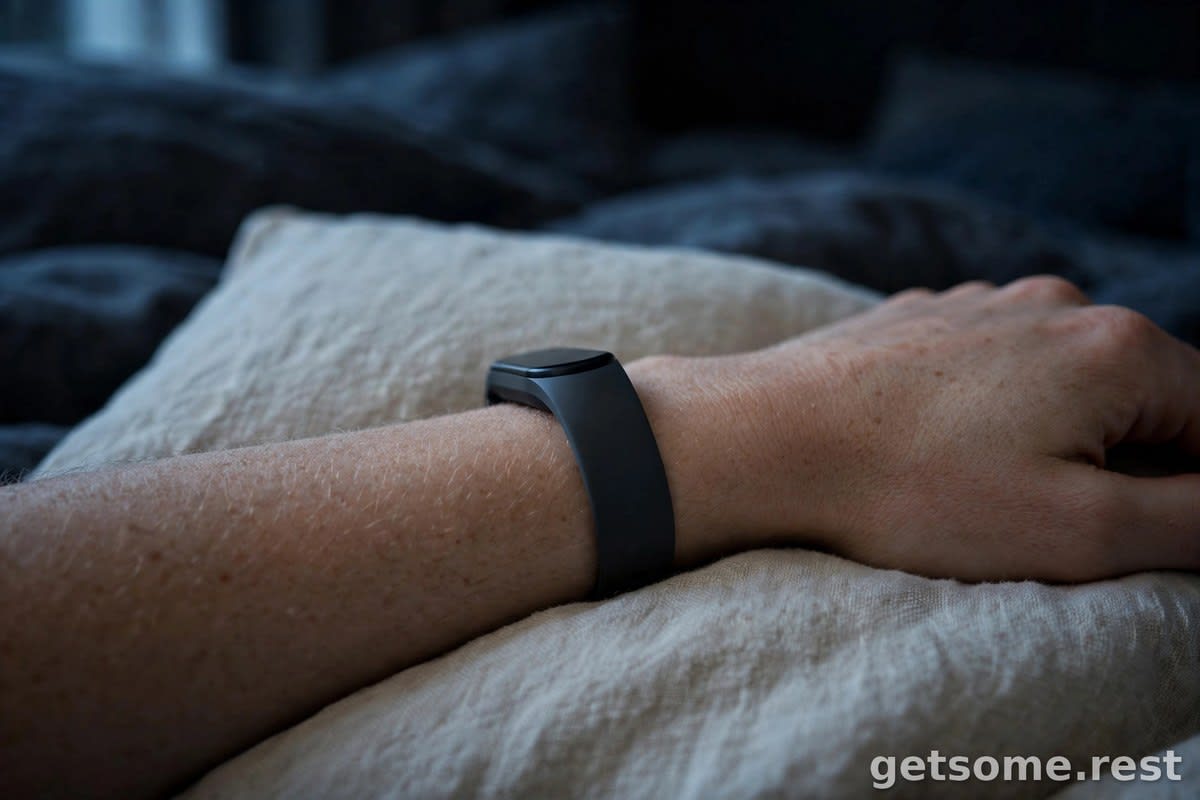
Sleep tracking only works if the device is actually on your wrist at bedtime — which means charging cadence and comfort are sleep features, not specs. The Vivoactive 5's 11-day rating means charging roughly every week and a half; the Charge 6's 7-day rating means once a week. Both are fine, but Garmin's margin absorbs heavy GPS days without threatening your sleep log. On comfort, the Charge 6's slim band is the easier all-night wear for most people, while the Vivoactive 5 is one of the lighter full smartwatches at 42mm — noticeable, but not objectionable, for most back sleepers. If apps and AI interpretation interest you more than wrist hardware, our AI sleep app comparison covers what software alone can do.
Charge 6 vs Vivoactive 5 specs, side by side
On paper the Vivoactive 5 is the bigger device in every sense — larger screen, longer battery, more sensors, more sports modes — and it usually costs more. The Charge 6 counters with a lower price, a slimmer body, and Google's ecosystem. The table below covers the specs that matter for a sleep-first buyer.
| Feature | Fitbit Charge 6 | Garmin Vivoactive 5 |
|---|---|---|
| Typical price | ~$150–$160 | ~$190–$200 on sale (MSRP $299.99) |
| Subscription | Premium $9.99/mo or $79.99/yr (6-month trial included) | None |
| Battery life | Up to 7 days | Up to 11 days |
| Display | Color AMOLED touchscreen | 1.2-inch AMOLED touchscreen |
| GPS | Built-in GPS + GLONASS | Built-in GPS, GLONASS, Galileo |
| Sleep tracking | Sleep score, stages, Smart Wake; Daily Readiness & Sleep Profile need Premium | Stages, sleep coach, Morning Report, nap detection — all free |
| Recovery metrics | Daily Readiness (Premium), HRV, SpO2 | Body Battery, HRV status, Training Readiness, sleep debt — all free |
| Extras | ECG, EDA stress sensor, Google Wallet/Maps/YouTube Music | Wheelchair mode, safety features, music storage (on-device) |
| Water resistance | 5ATM (swim-proof) | 5ATM (swim-proof) |
| Best for | Slim-band comfort and Google integration on a budget | Subscription-free sleep and recovery data |
Prices last checked October 2026. The Vivoactive 5's street price moves a lot — at its ~$190 sale price it undercuts the Charge 6 + one year of Premium. Fitbit Premium trials and pricing are set by Google and can change.
Our verdict: who should buy which tracker
Buy the Garmin Vivoactive 5 if you want the best subscription-free sleep tracker. It is the honest answer to this article's question. Every sleep and recovery metric Garmin offers — sleep stages, sleep coaching, Body Battery, Morning Report, nap detection, HRV status — is free in Garmin Connect, with no tier to unlock and no trial that expires. The 11-day battery means you charge it about twice a month, and on sale (~$190–$200) it costs less than a Charge 6 plus a year of Premium. The tradeoff is the watch form factor: if you hate sleeping in a watch, no spec sheet fixes that.
Buy the Fitbit Charge 6 if you want the slimmest band and live in Google's ecosystem. At ~$150–$160 it is cheaper upfront, the band form factor is genuinely easier to sleep in, and Google Wallet, Maps, and YouTube Music controls are conveniences Garmin does not match. Its free sleep tier — score, stages, 30-day history — is solid. Just go in with open eyes: the 6-month Premium trial ends, and when it does, Daily Readiness and Sleep Profile disappear unless you pay $9.99/month. If you are fine with the free tier forever, it is a perfectly good sleep tracker. If you will miss the insights, the Garmin was cheaper all along.
Fitbit Charge 6 and Garmin Vivoactive 5 in detail
Two devices, two philosophies. Prices below are typical prices at the time of writing and shift often — check the live listing for the current number. Links are plain — no affiliate tags attached yet.
Best no-subscription pickGarmin Vivoactive 5
The subscription-free champion: every sleep and recovery metric free, up to 11 days of battery, no trial to expire.
$190–$200 on sale at time of writing (MSRP $299.99)
Pros
- No subscription — sleep stages, coaching, Body Battery, Morning Report all free
- Up to 11-day battery life
- Automatic nap detection and sleep debt tracking
- Bright 1.2-inch AMOLED display, 5ATM swim-proof
- Works with iPhone and Android
Cons
- Watch form factor — bulkier in bed than a band
- Smaller app/smartwatch ecosystem than Apple or Google
- Full price ($299.99) is steep; buy on sale
Slimmest band optionFitbit Charge 6
The comfort pick: a barely-there band with good free sleep basics, Google apps built in, and Premium as an optional upgrade.
$150–$160 at time of writing
Pros
- Slim, light band — the easiest all-night wear here
- Sleep score and stages free; 30-day history included
- Google Wallet, Maps, and YouTube Music controls
- ECG and EDA stress sensor at this price
- 6-month Premium trial included
Cons
- Best insights (Daily Readiness, Sleep Profile) need $9.99/mo Premium
- Premium trial expiry removes features you got used to
- 7-day battery trails Garmin's 11 days
How we researched this comparison
We don't run a sleep lab — and this article isn't medical advice. Our goal is narrower: figure out which tracker gives you the most sleep insight without a monthly bill, by comparing documented specs, real-world pricing, and the patterns in owner feedback. Here is exactly what went into this comparison.
- Spec sources
- Core specifications (battery ratings, sensor lists, display, water resistance, dimensions) come from Fitbit/Google and Garmin's published product pages, cross-checked against major retailer listings.
- Subscription audit
- We mapped exactly which sleep and recovery features sit on the free tier vs the paid tier for each device, including what the Charge 6's 6-month Premium trial unlocks and what disappears when it lapses.
- Price checks
- We tracked typical street and sale prices across recent weeks. The Vivoactive 5 discounts deeply and often, so we report its sale range (~$190–$200) alongside MSRP rather than a single-day snapshot.
- Sleep-first criteria
- We weighted free-tier sleep data, multi-night battery, overnight comfort, and the honesty of the “no subscription” claim above workout modes and smartwatch features.
- Independence — no affiliate tags
- Every Amazon link in this article is a plain search URL with no affiliate tag attached, so our verdicts aren't influenced by commission. That policy applies to every review we publish.
Frequently asked questions
Does the Fitbit Charge 6 track sleep without Fitbit Premium?
Yes, the essentials are free. Sleep score, sleep stages (light, deep, REM), sleep duration, and a 30-day sleep history all work without Premium. What you lose is Daily Readiness Score, the detailed Sleep Profile (monthly animal-character report), and advanced stress and wellness trends — those need the $9.99/month subscription.
Does the Garmin Vivoactive 5 require any subscription?
No. Every metric on the Vivoactive 5 — sleep stages and coaching, Body Battery, Morning Report, nap detection, training load, and HRV status — is included free in the Garmin Connect app with no subscription tier at all. The higher upfront price (typically ~$190-$200 on sale) is the whole cost of ownership.
How long does the battery last on each tracker?
Garmin rates the Vivoactive 5 at up to 11 days in smartwatch mode. Fitbit rates the Charge 6 at up to 7 days. Real-world battery on both drops with heavy GPS use, but for overnight sleep tracking alone both comfortably last several nights between charges — Garmin just lasts about half again as long.
Which is more comfortable to wear all night?
The Fitbit Charge 6 is a slim band that many sleepers forget they are wearing. The Vivoactive 5 is a 42mm smartwatch — light for a watch, but still a watch. If you toss and turn or dislike wearing a watch in bed, the Charge 6 wins on comfort; side sleepers especially tend to prefer the band form factor.
What does each cost over the first year?
The Charge 6 typically sells for ~$150-$160, plus $9.99/month (or $79.99/year) for Premium if you want the full experience — roughly $230-$280 in year one with Premium. The Vivoactive 5 typically sells for ~$190-$200 on sale with nothing else to pay, so its year-one cost stays at the purchase price.
Key takeaways
- The Garmin Vivoactive 5 is the best fitness tracker for sleep tracking without a subscription: every metric is free, and the battery lasts up to 11 days.
- The Fitbit Charge 6 is cheaper upfront (~$150–$160) and more comfortable in bed, but its best insights need $9.99/month Fitbit Premium — and the 6-month trial will end.
- On sale (~$190–$200), the Vivoactive 5 costs less than a Charge 6 plus one year of Premium. Buy the Garmin on sale; buy the Fitbit only if you are happy with the free tier forever.
- If you would rather not wear anything at all, our subscription-free sleep tracker roundup includes bedside and under-mattress options.
- Curious what AI does with the data once you have it? Our AI sleep coach tests put the coaching claims to the test.