Best Light Therapy Lamps for Dark Winter Mornings (2026): Philips vs Lumie vs Hatch
Best light therapy lamps for dark winter mornings (2026): Philips SmartSleep vs Lumie Bodyclock Shine 300 vs Hatch Restore 3. Real prices, dawn simulation compared.
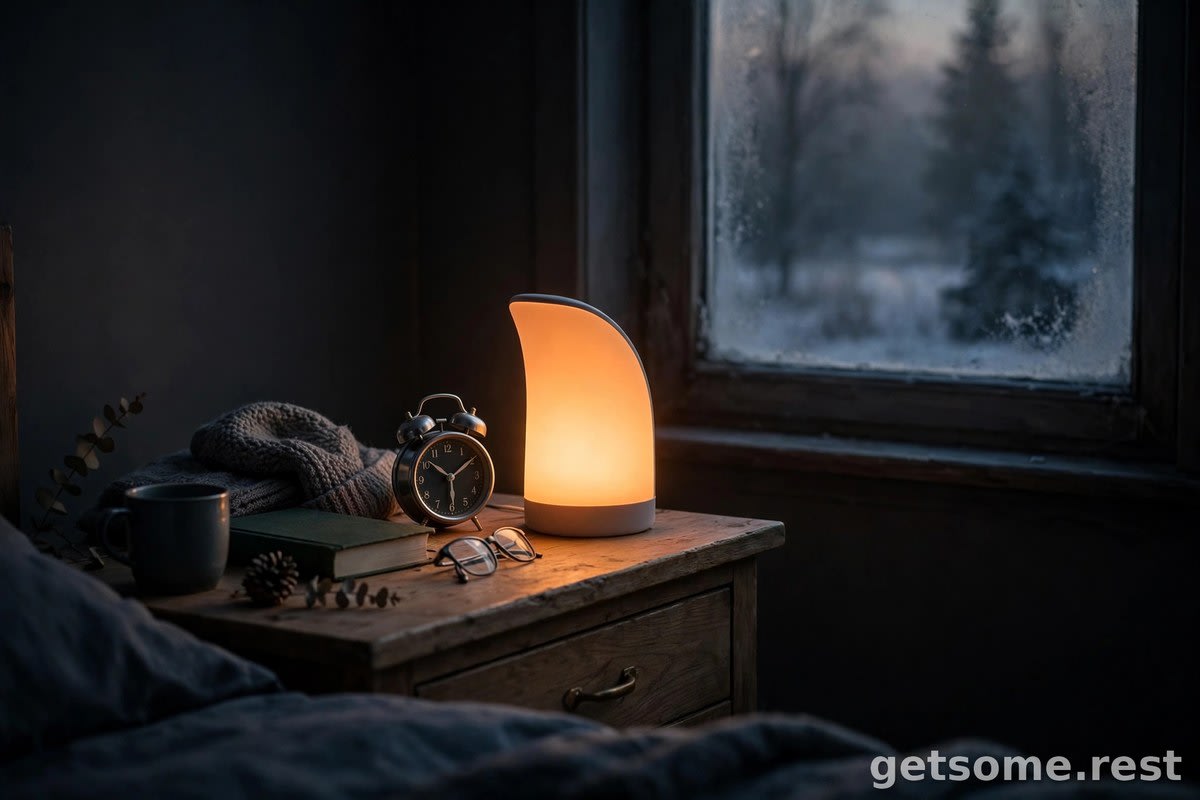
When winter steals the sunrise, your wake-up suffers. A dawn-simulating light therapy lamp gradually brightens your bedroom over 20 to 40 minutes before the alarm, nudging your body toward wakefulness the way real daylight does. We compared the three benchmarks — Philips SmartSleep HF3520, Lumie Bodyclock Shine 300, and Hatch Restore 3 — on dawn quality, sound, extras, and real October 2026 prices, so you can pick the right one for your dark mornings.
Contents
Top Picks at a Glance
Three dawn simulators, three philosophies: simple and proven, refined and warranty-backed, or a full bedtime routine. The two-minute version:
- Philips SmartSleep Wake-up Light HF3520 — best overall. Around $100–$110. The decade-long benchmark: excellent sunrise quality, 20 light intensities, sunset fade, five natural sounds, FM radio, tap snooze — no app or Wi-Fi required.
- Lumie Bodyclock Shine 300 — best for light quality. $159. The most refined dawn curve of the three, low-blue sunset, tap snooze, and a 3-year warranty — the longest here.
- Hatch Restore 3 — best full routine. $169.99. Sunrise and sunset alarms plus a deep sound library, guided meditations, and 190 light colors via the app; the premium content needs a subscription.
| Pick | Street price (Oct 2026) | Sunrise length | Sound | App / subscription | Warranty |
|---|---|---|---|---|---|
| Philips SmartSleep HF3520 | ~$100–$110 | 20–40 min, 20 intensities | 5 natural sounds + FM radio | No app, no sub | 2 years |
| Lumie Bodyclock Shine 300 | $159 | 15–90 min, refined curve | Sound library + radio options | No app needed, no sub | 3 years |
| Hatch Restore 3 | $169.99 | Customizable sunrise | 190+ sounds, stories, meditations | App; premium content ~$5/mo | 1 year |
How to Choose a Dawn-Simulation Lamp
A dawn simulator is not about brightness specs; it is about how naturally the light convinces your body that morning is arriving. Here is what actually differentiates the three.
Sunrise quality and length. The Philips steps through 20 intensity levels over up to 40 minutes; the Lumie offers an unusually granular 15–90 minute range with what reviewers call the most natural ramp of the three. The Hatch’s sunrise is fully customizable in the app. If you sleep very deeply, longer and brighter is better.
Sunset matters too. Falling asleep under gradually dimming warm light — instead of scrolling your phone — is half the value of these devices. All three do a sunset fade; the Hatch turns it into a guided wind-down with sounds and stories, which suits people whose evenings are the real problem. For more on evening routines, see our sunrise alarm clock roundup.
Simplicity vs. ecosystem. The Philips and Lumie are appliances: you press buttons and they work forever. The Hatch is a platform: app control, routines, schedules per day, and content that keeps updating — at the cost of a subscription if you want the full library. Decide which personality you are before comparing specs.
Room-darkening note. Dawn simulators need contrast to work. If streetlight or a partner’s lamp keeps your room bright at night, the gradual brightening will not register as “morning arriving.” Blackout curtains or a sleep mask make any of these work noticeably better — see our blackout curtain guide.
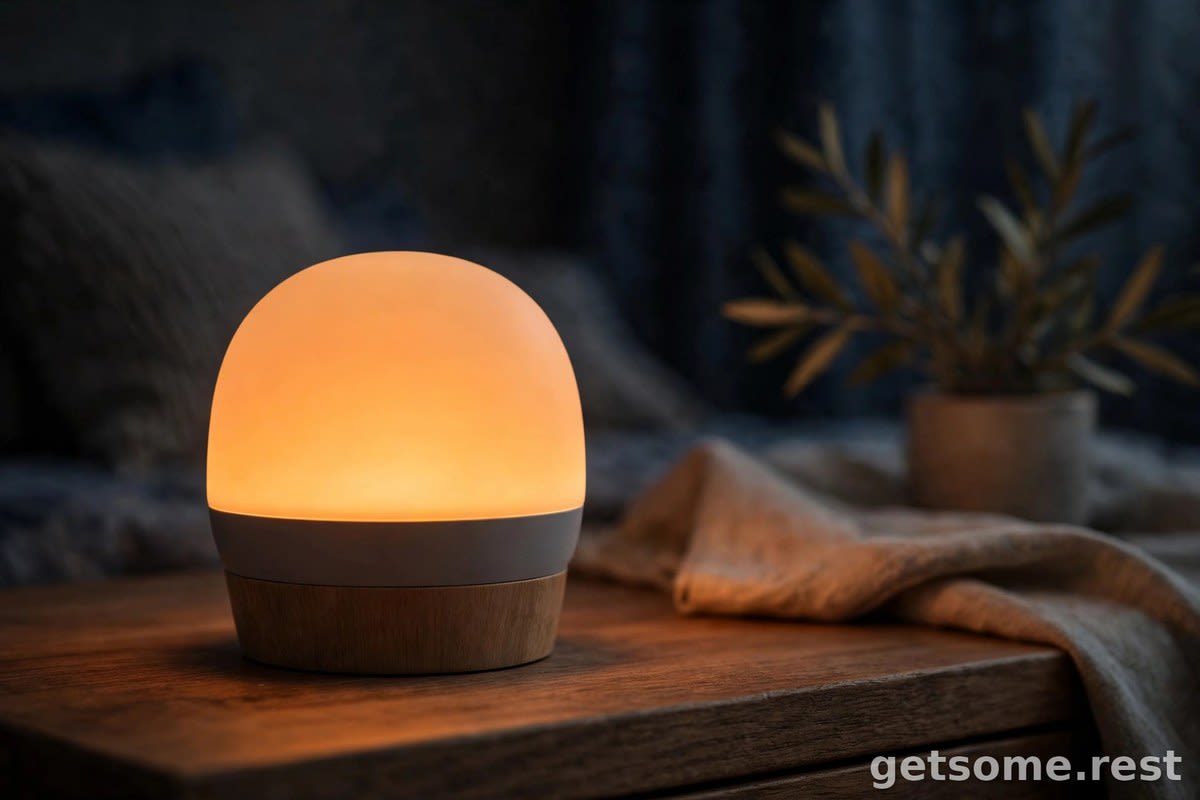
Full Spec Comparison
Figures come from the brands’ own listings and current retailer prices, checked October 2026. Street prices — what shoppers actually pay — not MSRP.
| Spec | Philips SmartSleep HF3520 | Lumie Bodyclock Shine 300 | Hatch Restore 3 |
|---|---|---|---|
| Price | ~$100–$110 | $159 | $169.99 |
| Sunrise duration | 20, 25, 30, 35 or 40 min | 15–90 min, adjustable | Customizable via app |
| Light intensities | 20 levels | Graduated curve | Customizable, 190 colors |
| Sunset / fall-asleep | Fading sunset timer | Low-blue fading sunset | Sunset + guided wind-down |
| Sounds | 5 natural + FM radio | Sound library + radio (model-dependent) | 190+ sounds, stories, meditations |
| Controls | On-device buttons + tap snooze | On-device + tap snooze | App + on-device controls |
| Wi-Fi / app | No | No (not required) | Yes (setup & content) |
| Subscription | None | None | Hatch+ ~$5/mo or ~$50/yr for premium content |
| Warranty | 2 years | 3 years | 1 year |
Our Winners: Best for Every Morning
Best overall: Philips SmartSleep Wake-up Light HF3520. This is the reference product for a reason: the sunrise is genuinely convincing, the 20-step ramp is smoother than cheaper lights, the sunset fade is a real sleep aid, and it needs no app, no account, and no subscription — ever. Around $100–$110, it does the core job as well as anything costing more. The main misses are the lack of app scheduling and color customization. Check the Philips SmartSleep HF3520 on Amazon.
Best for light quality: Lumie Bodyclock Shine 300. If the dawn experience itself is the whole point, the Lumie’s 15–90 minute ramp is the most finely tuned here, and the low-blue sunset is thoughtfully designed for evenings. The 3-year warranty is the longest of the three. You pay $159 for craft over features. Check the Lumie Bodyclock Shine 300 on Amazon.
Best full routine: Hatch Restore 3. The only one here that treats mornings and evenings as one system: customizable sunrise, guided sunsets, a big sound and story library, and app schedules that differ by day. At $169.99 it costs the most and keeps the best content behind a subscription — but for people whose problem is really “too much phone in bed,” it is the most complete answer. Check the Hatch Restore 3 on Amazon.
In-Depth Reviews
Philips SmartSleep Wake-up Light HF3520 — 9/10, the benchmark
Philips has been iterating on this design for over a decade, and it shows in the details. The dawn builds from a deep red glow to warm white over your chosen 20–40 minutes; the light feels directional enough to register through closed eyelids without blasting the room. Five natural sounds (bird song to waves) layer over the sunrise, the FM radio works for radio-alarm loyalists, and tap snooze is satisfying. The sunset — fading light with optional sounds — is genuinely useful for people who read in bed. Strengths: best sunrise quality per dollar, no app, proven reliability, 2-year warranty. Weaknesses: no app scheduling, no color play, the design looks a bit medical. Check price on Amazon.
Lumie Bodyclock Shine 300 — 8.5/10, the connoisseur’s pick
Lumie invented much of this category, and the Shine 300’s sunrise is its crown jewel: reviewers consistently describe it as the most natural ramp available, adjustable from 15 to 90 minutes — a range nobody else offers. The low-blue fading sunset is designed to avoid evening blue light, and tap snooze keeps things simple. You give up color customization and apps entirely. Strengths: the finest sunrise curve, widest duration range, 3-year warranty. Weaknesses: fewer extras for the price, the interface is deliberately minimal. Check price on Amazon.
Hatch Restore 3 — 8.5/10, the routine machine
The Restore 3’s bet is that your problem is not the alarm but the whole bedtime ritual. Setup happens in the app, where you build sunrise and sunset routines from 190+ light settings and a large library of sounds, stories, and meditations. The hardware is handsome and the light quality is genuinely good — this is not an app compensating for bad hardware. Strengths: deepest feature set, day-by-day scheduling, elegant design. Weaknesses: premium content behind ~$5/month, 1-year warranty, needs the app for setup. Check price on Amazon.
For a head-to-head against its closest rival, read Hatch Restore 3 vs Loftie; and if your mornings are fine but your evenings need work, our sunrise alarm guide covers the simpler end of the market.
How We Compared These Lamps
We took no paid placement. Criteria: sunrise realism (ramp smoothness, intensity steps, duration range), sunset quality (fading behavior, blue-light handling), sound library, subscription burden, and ownership costs over five years (price + warranty). Prices and specs were verified against the brands’ own listings and current retailer prices in October 2026. We treated these strictly as dawn simulators for winter mornings — not as clinical light therapy devices, which are a different product category with different evidence.
Frequently asked questions
Are dawn-simulator wake-up lights the same as SAD light therapy lamps?
No, and the distinction matters. Wake-up lights like the Philips SmartSleep, Lumie Bodyclock, and Hatch Restore simulate a sunrise on your nightstand over 20 to 40 minutes to ease you awake; their brightness is modest, roughly comparable to a bedside lamp. Dedicated SAD light therapy lamps deliver 10,000 lux of full-spectrum white light that you sit in front of for 20 to 30 minutes after waking. They solve different problems: dawn simulators fix groggy winter mornings, SAD lamps address low-light mood symptoms. This article covers dawn simulators. If you are considering light therapy for mood symptoms, talk to a healthcare professional first.
How long should the sunrise last on a wake-up light?
Most models let you set 20 to 40 minutes, and the consensus from testing is that 30 minutes suits most sleepers. The light starts very dim — barely a glow — and builds to full brightness just before your alarm time. Your eyes detect the gradual brightening through closed eyelids and begin suppressing sleep signals before you are fully awake, which is what makes waking feel gradual instead of jarring. People who sleep deeply or keep a dark bedroom may prefer 40 minutes; light sleepers who wake at the slightest change often do well with 20.
Do I need a subscription for these wake-up lights?
Only the Hatch asks for one. The Philips HF3520 and Lumie Bodyclock Shine 300 are fully functional out of the box with no app, no account, and no subscription — you pay once and own everything. The Hatch Restore 3 works without a subscription too, but its larger sleep-story, meditation, and sound libraries sit behind Hatch+, which runs about $5 a month or $50 a year after a six-month trial. The core sunrise and sunset alarms never require it. If you dislike subscriptions on principle, the Philips and Lumie are the safer picks.
Can a wake-up light replace my phone alarm?
Yes for the waking part, and that is one of the strongest arguments for buying one. A phone alarm trains you to keep the phone in the bedroom, which trains you to scroll at night. The Philips and Lumie are fully standalone — no phone required at all — and many owners report that their phones now charge in another room. The Hatch Restore 3 needs the app for initial setup but can run its alarms phone-free afterward. Pair the switch with our sunrise alarm clock guide if you want the full phone-free setup.
What is the difference between the Philips HF3520 and the newer HF3670?
The HF3520 (around $100–$110) is the classic: dawn simulation, sunset fade, five natural sounds, FM radio, tap snooze — no app, no Wi-Fi. The newer HF3670 SmartSleep Connected (around $170–$180) adds app control, room-sensor features, and a deeper sound library. For most buyers the HF3520 does everything that matters; the HF3670 is for people who want app scheduling and sleep-environment feedback. This guide focuses on the HF3520 because it remains the best-selling and best-value model in the line.
The Takeaway
- Best overall: Philips SmartSleep HF3520 — ~$100–$110, the benchmark sunrise, no app or subscription ever.
- Best for light quality: Lumie Bodyclock Shine 300 — $159, the most refined dawn curve, 3-year warranty.
- Best full routine: Hatch Restore 3 — $169.99, sunrise plus guided sunsets; the best content needs ~$5/month.
- Remember: dawn simulators ease winter waking; they are not 10,000-lux SAD therapy lamps. And any of them works better in a room that is genuinely dark at night.