Best Sleep Routine for Rotating Shift Workers (2026)
Rotating shifts can't be adapted to — but a routine can protect your sleep. Anchor sleep, light, naps and bedroom setup, checked Nov 26, 2026.

Rotating shifts are the hardest schedule to sleep on, and the reason is simple: your body clock never gets a chance to settle. A fixed night worker can gradually shift their sleep to the daytime. A rotating worker flips between days, evenings and nights, and every flip resets the clock. The American Academy of Sleep Medicine's 2025 guideline says it plainly — for rotating or frequently changing shifts, circadian adaptation is not a realistic goal. So this routine is not about adapting. It is about damage control: one fixed anchor sleep block, light and naps used on purpose, and a bedroom built for day sleep.
Contents
The Short Answer: The Rotating-Shift Routine
Rotating shifts cannot be adapted to, so the routine is built around protection, not resynchronisation. Four things do most of the work: a fixed anchor sleep block, deliberate light exposure, planned naps, and a bedroom that behaves like night.
The routine in brief: keep one anchor sleep block of 3–4 hours at the same clock time every day, whatever shift you are on, and add a second flexible block to reach at least seven hours in 24; rotate forward (day to evening to night) when you can, and avoid weekly flips; get bright light in the first half of night shifts and wear wraparound blue-light-blocking glasses on the way home; take a long 1.5–3 hour nap before the first night shift and a short 15–30 minute nap during it; stop caffeine 3–6 hours before sleep; eat your main meal before the shift and keep midnight-to-6 a.m. food light; and make the bedroom dark, cool and quiet for day sleep.
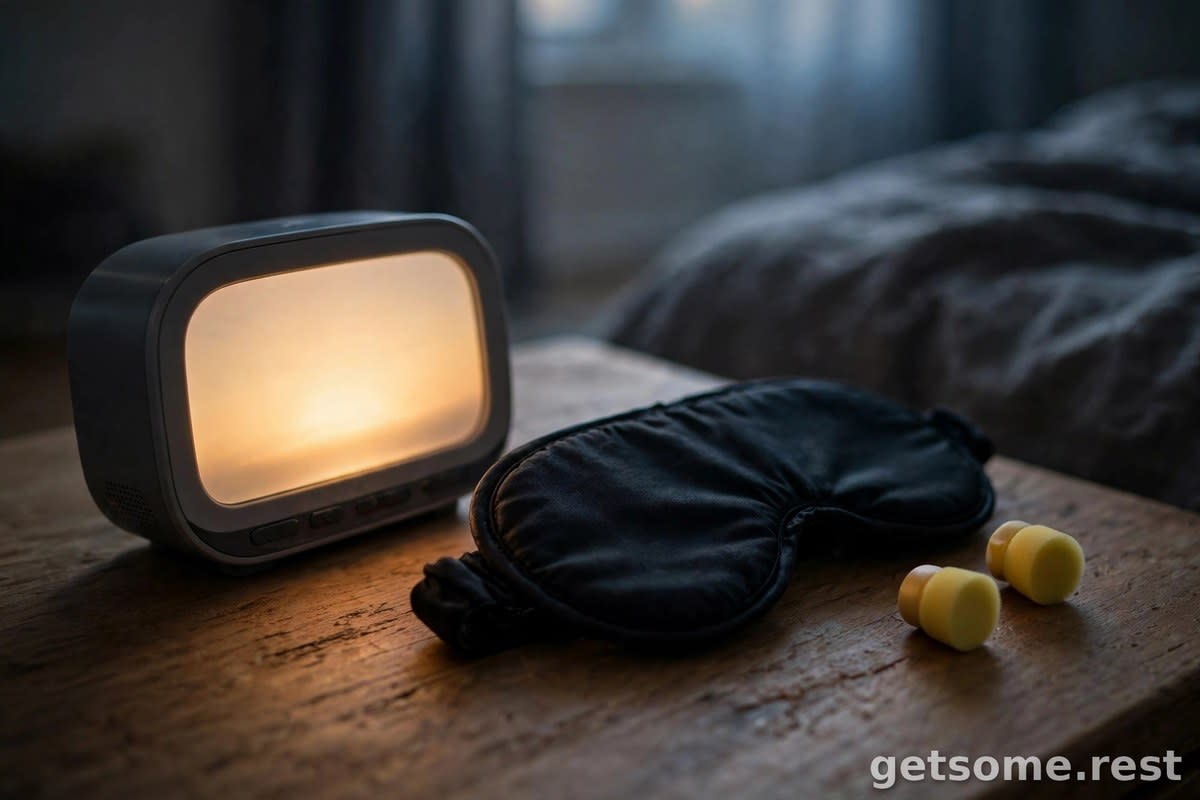
The kit that supports it is small and cheap: a contoured blackout mask, a white noise machine, wraparound glasses, and a sunrise alarm for irregular wake times. Everything below is built on CDC/NIOSH guidance and the AASM's 2025 guideline.
Why Rotating Shifts Are Harder Than Fixed Nights
A fixed night worker has one problem: sleeping in the day. A rotating worker has three: sleeping in the day, flipping the clock back and forth, and never knowing which version of the schedule the body is on. That is why the AASM's 2025 guideline treats rotating shifts differently — adaptation is not a realistic goal, so the treatment is sleep protection, not resynchronisation. The CDC's figures show the scale: 44 percent of night-shift workers reported sleeping six hours or less a day, against 28.8 percent of day workers, and in health care and social assistance the figure for night workers was 52.3 percent.
Rotation direction: forward beats backward
If your roster lets you choose, forward (clockwise) rotation — day, then evening, then night — is easier to adjust to than backward rotation. The AASM guideline conditionally recommends clockwise over counterclockwise, and a cohort of 144 nurses working both directions found the forward group less sleepy with better sustained attention. The body clock runs slightly longer than 24 hours, so delaying sleep (going to bed later) is easier than advancing it. If you are stuck on a backward rotation, the anchor-sleep method below matters even more.
Rotation speed: avoid the weekly flip
Weekly rotation — one week of days, then one week of nights — is the most difficult speed, according to CDC/NIOSH, and is best avoided. US researchers generally favour slow rotations, changing every two weeks or more so the circadian system has time to adjust; some European researchers favour fast-forward rotations, where you spend less time misaligned and less time isolated from family life. NIOSH is honest that it is not clear which is best for healthcare workers. What matters most is what you can control: at least 11 hours between two shifts, no quick changeovers like an evening shift ending at 11:30 p.m. followed by a day shift at 7 a.m., and one to two full rest days after a run of shifts.
Transition days: the flip is the danger zone
The worst sleep usually happens on transition days, not in the middle of a block. Going into nights, take a long prophylactic nap of 1.5 to 3 hours in the afternoon or evening before the first night shift — CDC/NIOSH cites studies showing it significantly improves alertness in the last half of that shift. Coming off nights, go to bed as soon as you get home and use the first day off to re-anchor, not to flip fully back to a daytime schedule if nights return within days. Keep the anchor block in place through the transition: that fixed 3–4 hours is what stops the clock from free-falling.
The Rotating-Shift Routine at a Glance
One anchor block, kept at the same clock time every day, plus a second flexible block. The table below shows how the same routine bends around each shift type — the anchor never moves.
| Shift | Main sleep | Anchor block | Nap | Light | Last caffeine |
|---|---|---|---|---|---|
| Day shift | Night, 7+ hrs | Same 3–4 hrs | None needed | Morning daylight | 6 hrs before bed |
| Evening shift | After midnight | Same 3–4 hrs | Short, before shift | Dim before bed | 6 hrs before bed |
| Night shift | Morning, 7+ hrs | Same 3–4 hrs | 1.5–3 hrs before; 15–30 min during | Bright first half; glasses home | 3–6 hrs before sleep |
| Day off | Anchor + 2nd block | Same 3–4 hrs | As needed | Normal daylight | 6 hrs before bed |
Two numbers matter most. First, at least 11 hours between two shifts — below that, the anchor cannot hold. Second, at least seven hours of sleep time in every 24, split between the anchor and the flexible block. If a roster makes either impossible, the schedule is the problem, not your routine.
The Anchor-Sleep Method: One Fixed Block Every Day
The single most useful technique for rotating workers is anchor sleep: one fixed block of sleep at the same clock time every day, whatever shift you are on, plus a second flexible block to reach at least seven hours in 24. The US Navy's shift-worker handout recommends a 3–4 hour anchor plus a second 3–4 hour block, and that 3–4 hour figure is where the sources converge.
Here is how it works in practice. Pick your anchor — for a night worker, 9 a.m. to 1 p.m. is a common choice — and keep it on work days and days off alike. On a night shift, you sleep 9 a.m. to 4 p.m. (anchor plus a second block). On a day off, you sleep 9 a.m. to 1 p.m., then take a second block in the evening if you need it. The anchor never moves, even when the rest of the schedule flips. That fixed block is what keeps your body clock from resetting every time the roster changes, and it is the difference between a rotating schedule that is hard and one that is unmanageable. Protect it first, and build everything else — light, naps, caffeine — around it.
The Routine, Step by Step
1. Light: bright early, dark late
Light is the strongest signal your body clock reads, and on a rotating schedule you have to use it on purpose. During a night shift, get bright light in the first half to stay alert, then reduce it in the second half so sleep comes more easily at home. Before leaving work, put on wraparound blue-light-blocking glasses — the Uvex Skyper S1933X costs about $20–$26 — and keep them on until you are in darkness in the bedroom. One safety rule: wear dark glasses on the commute home only if someone else is driving.
2. Naps: long before, short during
Two different naps do two different jobs. Before the first night shift, take a long prophylactic nap of 1.5 to 3 hours in the afternoon or evening — the evidence NIOSH cites shows it improves alertness late in the shift. During the shift, keep naps to 15–30 minutes on a break, ideally around 2–4 a.m.; a field study of 109 nurses found a scheduled 30-minute nap at 4 a.m. lowered sleepiness for the rest of the shift. Naps of 30–90 minutes risk waking from deep sleep, which leaves you groggy, so leave a wake-up buffer before driving.
3. Caffeine: early in the shift, never late
Caffeine takes about 30 minutes to work and has a half-life of five to six hours, so count backwards from your intended sleep, not forwards from the shift start. If you plan to sleep at 8 a.m., your last caffeine should be before about 2 a.m. — a 3–6 hour cutoff window, with NIOSH suggesting a switch to water, juice or herbal tea at least four hours before sleep. The AASM guideline recommends caffeine before and during the shift, and warns that caffeine close to bedtime disrupts sleep onset and quality.
4. Meals: eat before, snack during
Keep a three-meals-per-24-hours pattern where possible, and avoid or reduce food between midnight and 6 a.m. Eat your main meal before the shift — protein, starchy food, vegetables or fruit — and keep the shift itself to light foods: vegetables, salads, soups, fruit, yogurt, eggs, nuts. Heavy, fatty or spicy foods and sugar-rich snacks can increase sleepiness. Avoid large meals one to two hours before your main sleep episode. The AASM guideline agrees: a snack, or no food, rather than a full meal during the night shift.
5. The bedroom: dark, cool, quiet
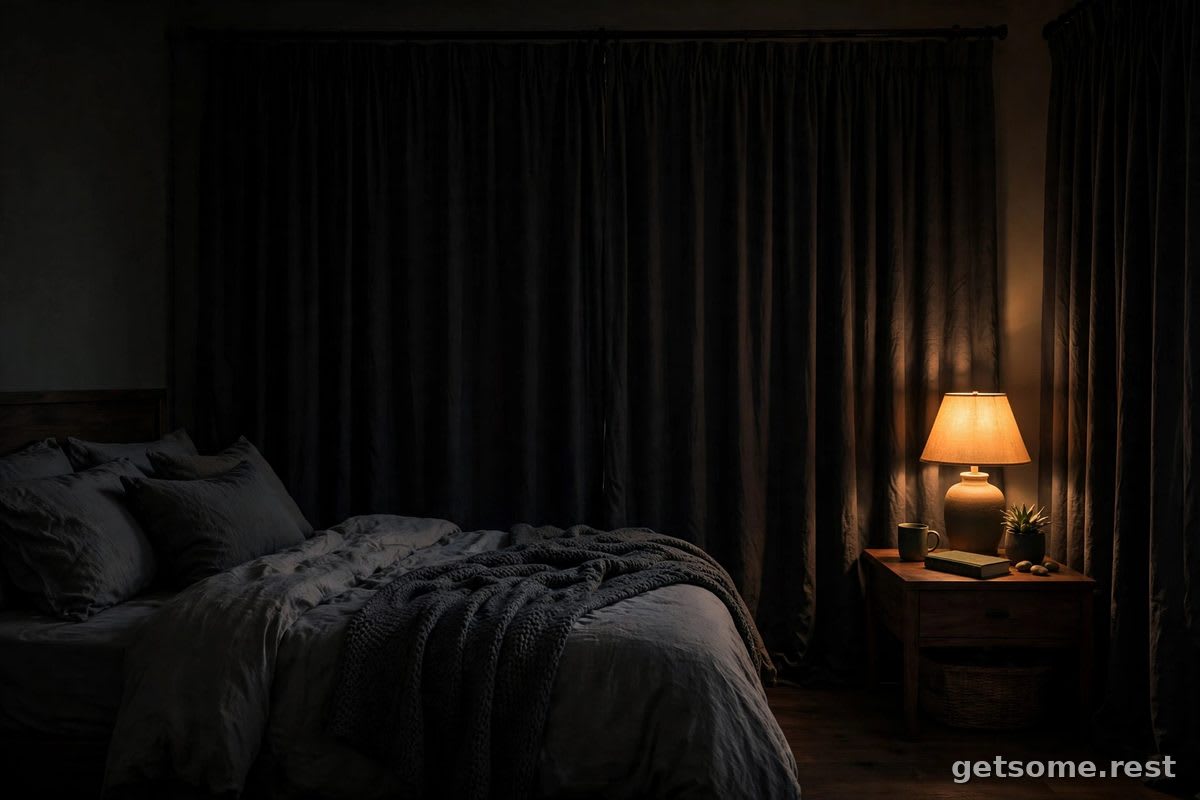
Day sleep needs a bedroom that behaves like night. Dark first: blackout curtains or a contoured mask — the Manta Sleep Mask Pro is $68 on sale (list $85) and its C-shaped eye cups suit side sleepers — plus tape over LED indicators and no lit clock, phone or TV. Cool second: around 65–68 degrees Fahrenheit. Quiet third: a white noise machine like the Yogasleep Dohm (about $39.99, list $49.99) masks daytime traffic and neighbours, and the portable Dreamegg D11 Max (about $17.99, list $32.99) does the same for travel or a second room. For irregular wake times, a sunrise alarm like the Hatch Restore 3 ($169.99 list, about $135.99 on sale) lets you set different wake times per day in the app.
How We Reported This Story
We built this routine from primary guidance, not roundups: the CDC/NIOSH training modules for nurses on shift work and long hours, the American Academy of Sleep Medicine's 2025 clinical practice guideline on shift work disorder, and the CDC's 2012 MMWR analysis of short sleep among workers. Product prices were checked on November 26, 2026.
- Prices: Manta Sleep Mask Pro $68 on sale (list $85); Yogasleep Dohm about $39.99 (list $49.99); Dreamegg D11 Max about $17.99 (list $32.99); Hatch Restore 3 $169.99 list, about $135.99 on sale; Uvex Skyper S1933X wraparound glasses about $19.99–$25.75. Black Friday week prices will move — check the live listing.
- What we could not verify: the Manta Pro's $68 sale price on Amazon itself (confirmed via two price-tracking sites, not the live listing); the exact current Dreamegg price by colour variant; the 900–6,000 lux bright-light dose (from a 2024 meta-analysis via a secondary source); and accident-risk figures for night shifts, which come from NIOSH modules via secondary sites. Most AASM recommendations rest on low or very-low-certainty evidence — we say so where it matters.
- Disclosure: This article contains affiliate links. If you buy through them, we may earn a commission at no extra cost to you.
Frequently asked questions
Can you ever fully adapt to rotating shifts?
No — and that is the honest starting point. The American Academy of Sleep Medicine's 2025 guideline on shift work disorder states that for people on rotating or frequently changing shifts, circadian adaptation is not a realistic goal. Fixed-night workers can gradually shift their body clock; rotating workers flip back too often for that to work.
What is anchor sleep and how long should it be?
Anchor sleep is one fixed block of sleep at the same clock time every day, whatever shift you are on, plus a second flexible block to reach at least seven hours in 24. Sources converge on a 3–4 hour anchor: the US Navy's shift-worker handout recommends a 3–4 hour anchor plus a second 3–4 hour block.
Should I nap before or during a night shift?
Both, but they are different naps. A long prophylactic nap before the first night shift — 1.5 to 3 hours in the afternoon or evening — measurably improves alertness in the last half of the shift, according to CDC/NIOSH guidance. During the shift, keep naps short: 15 to 30 minutes on a break, ideally around 2–4 a.m. Beware sleep inertia: naps of 30–90 minutes can leave you groggy for half an hour or more, so leave a wake-up buffer before driving or safety-critical work.
How do I sleep during the day after a night shift?
Go to bed as soon as you get home — the window for easy daytime sleep closes as the day goes on, and the CDC's guidance is that the more sleep you get before 2 p.m., the better rested you will be. Make the bedroom as dark as you can: NIOSH's standard is dark enough that you cannot see your hand, which means blackout curtains or a contoured mask like the Manta Pro, plus tape over LED indicators. Keep it cool, around 65–68 degrees, and mask daytime noise with a white noise machine or fan.
Is it safe to drive home after a night shift?
Often not, and you should plan for it. Being awake for 17 hours impairs performance about as much as a blood alcohol level of 0.05 percent, and 24 hours is roughly equivalent to 0.10 percent. If you feel too sleepy to drive, do not: take a short nap before driving, get a ride or a taxi, or use public transport. Wear dark glasses on the commute home only if someone else is driving — never compromise your own driving vision.
Key Takeaways
- You cannot adapt to rotating shifts: the AASM says so — protect sleep instead of chasing a flipped body clock.
- Anchor sleep first: one fixed 3–4 hour block at the same time every day, plus a second flexible block to reach seven hours.
- Rotate forward, not backward: day to evening to night is easier than the reverse; avoid weekly flips and keep 11 hours between shifts.
- Light is a tool: bright in the first half of night shifts, dim in the second, wraparound glasses on the way home.
- Nap on purpose: 1.5–3 hours before the first night shift, 15–30 minutes during it, with a wake-up buffer before driving.
- Caffeine early, meals light: last caffeine 3–6 hours before sleep; main meal before the shift, light food between midnight and 6 a.m.
- Bedroom like night: dark enough that you cannot see your hand, 65–68 degrees, white noise for daytime sound.