Do Weighted Blankets Actually Work? What the Latest Research Says
Weighted blankets are claimed to ease anxiety and improve sleep. Here's what randomized trials and reviews through 2025 actually found — plus Bearaby vs Gravity vs YnM compared on price, fill and washability. Prices checked October 2026.
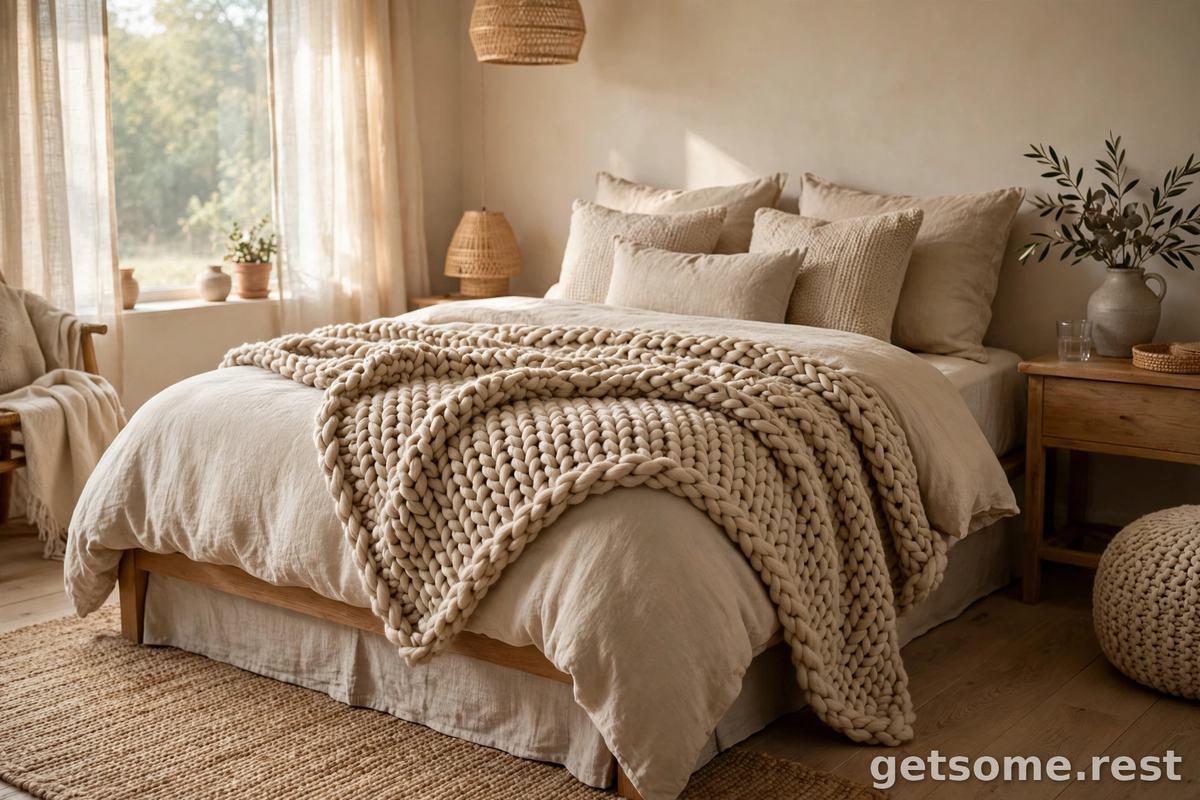
Walk any bedding aisle and you'll find weighted blankets promising calmer nights. The idea — gentle, even pressure that feels like a hug — is simple enough. But does it hold up in actual research? Over the past few years, randomized trials and systematic reviews have finally put the claims to the test. Here's what they found, and which blanket is worth your money.
Contents
What the research says, at a glance
The weighted blanket literature is still young, but it is no longer just marketing. These are the studies researchers keep citing — what was tested, who was tested, and what came out. The detailed verdict is further down.
| Study | Who | What they found |
|---|---|---|
| 2024 pilot randomized trial (Yu et al.) | 102 adults with insomnia, one month of nightly use | Better sleep quality scores, less daytime sleepiness, fatigue, anxiety, stress and bodily pain than a normal blanket; fewer nighttime awakenings on wrist actigraphy |
| 2024 systematic review (Dawson, Flinders University) | 18 studies of overnight use | "Significant evidence" for better sleep in adults, reduced sleep-medication use, and better mood and pain reports. Results were mixed for children with ADHD or autism |
| 2025 hospital study (Saint Luke's, Kansas City) | 54 acutely ill adults | 20 minutes under a 15-pound blanket lowered anxiety — and the drop persisted even after the blanket was removed |
| 2025 randomized crossover trial (Scientific Reports) | 40 adults, two 14-day periods | Better sleep efficiency, fewer awakenings, and less anxiety with the weighted blanket versus an identical-looking placebo blanket |
| 2025 mapping review (Lönn & Odéus) | 38 studies across populations | Positive signals but a small, heterogeneous evidence base — promising, not settled science |
Findings are summarized from the original publications — see the Sources section below. This article reports on research; it is not medical advice.
How to read weighted blanket research — and buy one that fits
The theory behind it is deep pressure stimulation — the same reason a firm hug feels calming. The research asks a narrower question than the marketing: in controlled studies, do people actually sleep better or feel calmer under the weight? Mostly, and modestly, yes — for adults.
Whether a specific blanket works for you depends less on the brand story and more on five practical details. Get these right and you will enjoy whatever blanket you buy; get them wrong and even the best-reviewed blanket becomes an expensive laundry problem.
- Weight: the 10% rule. Researchers and brands converge on the same guidance: choose a blanket around 10% of your body weight. Too light and the pressure effect vanishes; too heavy and you will fight the blanket all night instead of relaxing under it.
- Fill matters: glass beads vs knit. Most blankets use glass micro-beads sewn into a quilted grid; premium knit blankets like the Bearaby get their weight from the yarn itself, with no fill at all. The difference shows up in heat: quilts trap it, open knits breathe.
- Size: cover yourself, not the bed. Weighted blankets are sized to drape over your body, not to cover the whole mattress like a comforter. If you share a bed, each sleeper wants their own weight — one blanket for two people doubles the load unevenly.
- Heat: the honest trade-off. Extra layers plus extra weight equals extra warmth. Hot sleepers should look at open-knit builds first, and everyone should keep the room cool — our guide to the ideal bedroom temperature for sleep explains why.
- Washability. A 20-pound blanket is a workout. Knit blankets like Bearaby's are machine washable on cold; quilted blankets usually rely on a removable, washable cover over a spot-clean inner.
Weighted blankets seem to offer a tangible, non-drug intervention for improving sleep quality.
Source: Dr. Suzanne Dawson, Flinders University — review of 18 studies in the American Journal of Occupational Therapy (2024)
The 10% body-weight rule
Choosing a weight is simple arithmetic: a 150-pound sleeper lands on a 15-pound blanket; 200 pounds lands on 20. Brands sell 10, 15, 20 and 25 pound versions because those four cover most adults. First-time buyers should stay on the lighter side of the rule — you can always size up, but a blanket that feels oppressive on night one rarely gets a night two.
Glass beads vs knit: the heat question
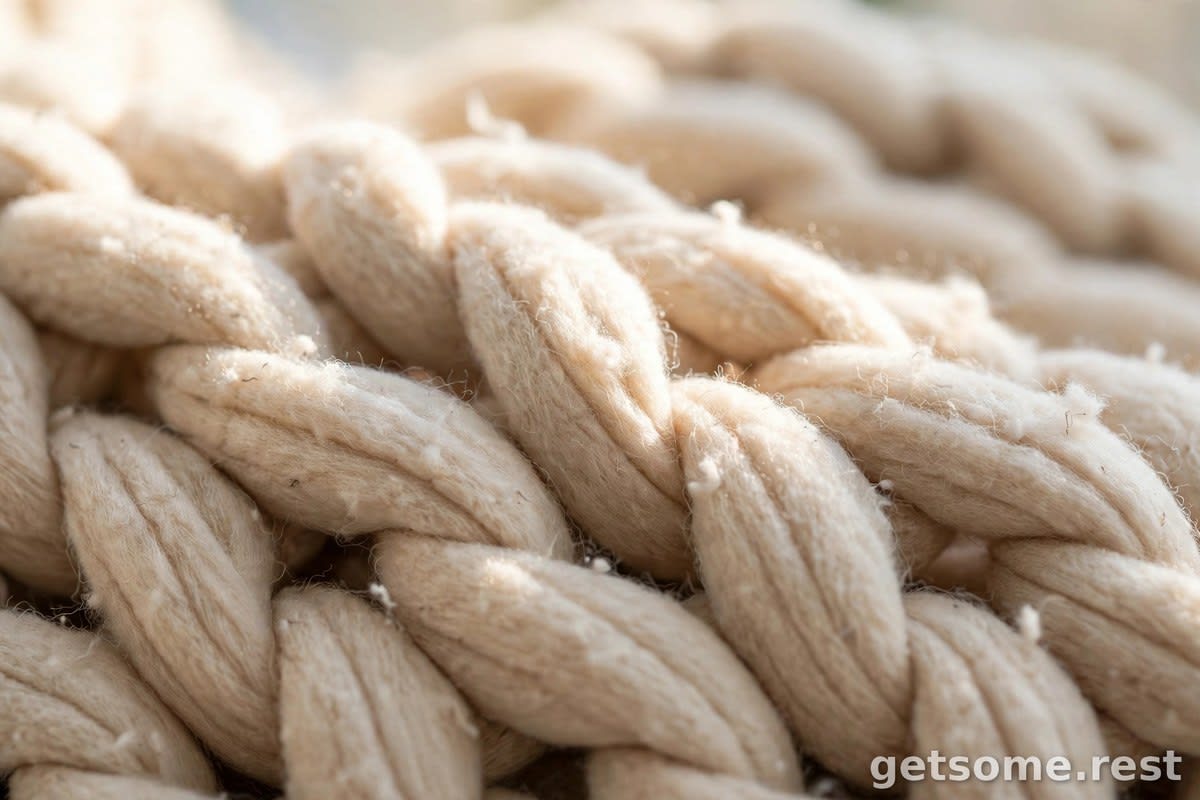
This is the real fork in the road. Glass-bead quilts (Gravity, YnM and most of the market) deliver even, clinical pressure and cost less — but the dense quilted construction holds heat. The Bearaby approach — a chunky hand-knit with no fill — distributes the weight through open yarn loops, so air moves through the blanket freely. It costs three to five times more, and the premium buys you exactly one thing: breathability. For a deeper look at sleeping cool in general, see our best cooling mattress toppers for night sweats.
What the research can't promise you
The honest reading of the literature: small trials, short durations, positive but modest signals — mostly in adults, mostly for perceived sleep quality and calm rather than objectively measured sleep architecture. Nobody has run the large, long trial that would settle this. So buy a weighted blanket the way you'd buy a very good pillow: for comfort, with realistic expectations, and from a brand with a sane return policy.
Bearaby vs Gravity vs YnM: the comparison
Three blankets, three philosophies: the Bearaby is the breathable premium knit, the Gravity is the quilted glass-bead classic that made the category mainstream, and the YnM is the budget workhorse that sells the same concept for a fraction of the price.
| Feature | Bearaby Cotton Napper | Gravity Weighted Blanket | YnM Weighted Blanket |
|---|---|---|---|
| Style | Hand-knit chunky cotton throw | Quilted duvet-style blanket | Quilted budget classic |
| Fill | None — weight comes from the organic cotton yarn itself | Fine-grade glass micro-beads in a grid | Glass beads in a quilted grid |
| Weight options | 10, 15, 20, 25 lb (plus queen/king sizes) | 15, 20, 25 lb | 5–30 lb (15 lb most popular) |
| Breathability | Excellent — open knit lets air through | Average — dense quilt holds warmth | Average — dense quilt holds warmth |
| Washability | Machine wash cold, delicate cycle | Removable duvet cover is washable; inner blanket spot-clean | Removable cover washable; inner blanket hand wash or spot-clean |
| Price | From $199 | Around $250 | Around $50 |
Prices last checked October 2026 and may change. Specs from manufacturer product pages.
Our verdict — and who should buy which
The research does not crown a brand; it supports the concept. So the buying decision comes down to comfort priorities. The Bearaby Cotton Napper is the one we recommend for hot sleepers and anyone who wants the pressure without the heat trap: the open hand-knit is genuinely the most breathable weighted blanket design on the market, it uses no plastic beads, and it is machine washable. The price — from $199 — is the obvious trade-off, and at 20+ pounds it is a genuine workout to launder.
Buy the Gravity Weighted Blanket if you want the classic quilted experience from the brand that defined the category: even glass-bead pressure and a removable duvet cover at around $250 — though like most quilts, it sleeps warm. Buy the YnM Weighted Blanket if you are trying the concept for the first time and refuse to spend $200 to do it: at around $50 it delivers the same deep-pressure idea, with a wide weight range and removable covers. The build is less refined, but it is the cheapest honest entry point in the category.
Our picks in detail
Each pick below includes a one-line verdict, the current price, and the main pros and cons from our research. Links are plain — no affiliate tags attached yet.
Most breathable
Bearaby Cotton Napper
Hand-knit organic cotton with no beads at all — the pick for hot sleepers who want the pressure without the heat trap.
from $199 at time of writing
Pros
- Open hand-knit weave breathes far better than any bead quilt
- No plastic beads — weight comes from the cotton yarn itself
- Machine washable on cold; Fairtrade organic cotton
Cons
- Three to five times the price of a budget bead blanket
- Heavy versions are a workout to wash and slow to dry
The classic
Gravity Weighted Blanket
The quilted glass-bead blanket that made the category mainstream — even pressure, removable duvet cover, polished feel.
around $250 at time of writing
Pros
- Even glass micro-bead distribution in a refined quilted grid
- Removable duvet cover in multiple fabrics, machine washable
- The reference design most research-adjacent blankets copy
Cons
- Sleeps warm — dense quilt construction holds heat
- Five times the price of the budget pick for the same core concept
Best value
YnM Weighted Blanket
The budget classic: glass-bead fill in a quilted grid for a fraction of the premium price — the cheapest honest way to try the concept.
around $50 15 lb version, at time of writing
Pros
- The lowest-risk way to find out if you like weighted sleep
- Wide weight range (5–30 lb) and plenty of cover options
- Thousands of long-term user reviews to learn from
Cons
- Less refined build — beads can shift in cheaper batches
- Holds heat like most bead quilts; not for hot sleepers
How we researched this
This article reports on published research — comfort and wellness framing only. It is not medical advice, and it does not diagnose or treat anything.
- Published research
- We read randomized controlled trials and systematic reviews published through 2025 — including Yu et al. (2024), the Flinders University review (2024), the Frontiers in Psychiatry review (2024), the Saint Luke's hospital study (2025) and the Scientific Reports crossover trial (2025). Findings are summarized; we make no health claims beyond what the papers report.
- Product specs
- Fill type, weight options, washability and materials are taken from the manufacturers' own product pages.
- Price
- We record real prices and recheck them when we update. Prices here were checked October 2026 and are approximate.
- Comfort framing
- We cover weighted blankets as a comfort product — like a very good pillow — not as a treatment for any condition. Where the research is thin or mixed, we say so.
- Independence
- We never accept payment for rankings. Product links in this article are plain — no affiliate tags attached.
Frequently asked questions
Do weighted blankets help with anxiety?
Small published studies report calmer feelings: a 2024 randomized trial found lower anxiety scores after a month of weighted blanket use, and a 2025 hospital study found that 20 minutes under a 15-pound blanket reduced anxiety, with the effect persisting after the blanket was removed. But these studies are small, so treat a weighted blanket as a comfort aid — not as a treatment for anxiety or any condition.
How heavy should a weighted blanket be?
The standard guidance used by researchers and brands alike is roughly 10% of your body weight: a 150-pound sleeper would choose a 15-pound blanket, and a 200-pound sleeper a 20-pound one. Going much heavier doesn't add benefit in the research — it mostly adds laundry-day regret.
Are weighted blankets safe?
Published studies report weighted blankets as well-tolerated by adults. They are not recommended for very young children, or for anyone who could not push the blanket off themselves. If you have breathing, circulation or sleep-related health concerns, talk to your doctor before using one — this article reports on research and comfort, not medical advice.
Will a weighted blanket make me sleep hot?
It depends on the build. Quilted glass-bead blankets can trap heat, while open-knit styles like the Bearaby breathe noticeably better — breathability is the main reason the Knit-style blanket earns its premium. If you sleep hot, a knit blanket plus a cool room is the safer combination; see our guide to the best cooling mattress toppers for night sweats for the rest of the heat picture.
Do weighted blankets work for children?
The evidence is mixed. A 2024 review of the research found limited sleep improvements for children with ADHD or autism spectrum disorder, although some parents reported better daytime functioning. Published guidance is cautious for young children — weighted blankets are best approached as an adult comfort product unless a clinician suggests otherwise.
Key takeaways
- Randomized trials and reviews through 2025 report that adults under weighted blankets often sleep better and feel calmer — but studies are small and the evidence base is still preliminary.
- Results are strongest for perceived sleep quality and calm in adults; evidence is mixed for children, and nobody has run the large long-term trial that would settle the science.
- Buy around 10% of your body weight; if you sleep hot, an open-knit blanket like the Bearaby breathes far better than any glass-bead quilt.
- Match the blanket to your budget: YnM (around $50) to try the concept, Gravity (around $250) for the classic quilted build, Bearaby (from $199) for breathability.
- This is a comfort product, not a treatment — and this article is not medical advice.