How to Fall Asleep Fast When Your Mind Won't Stop
Racing thoughts at bedtime? A proven 30-minute wind-down routine, simple breathing techniques, and a darker, quieter bedroom help you fall asleep faster.
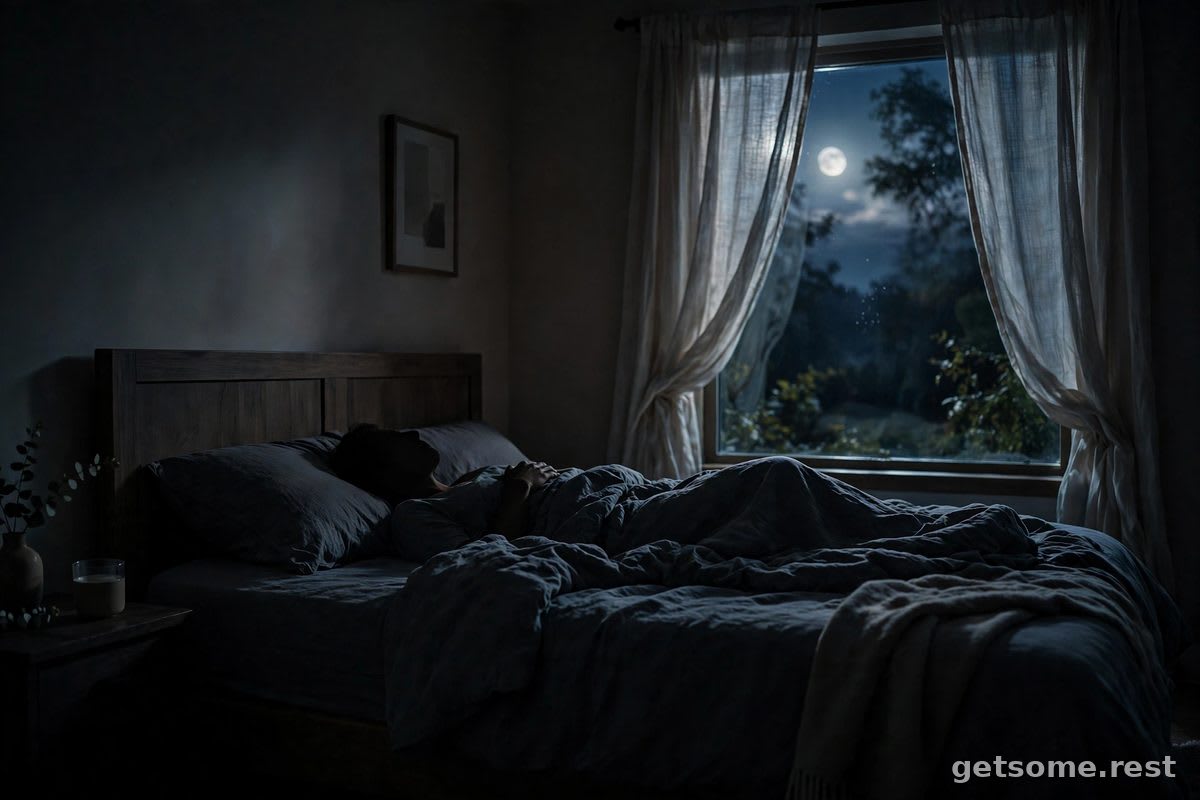
Lying awake while your brain replays the day is one of the most frustrating parts of modern sleep. The harder you chase sleep, the further it seems to run — because effort is the opposite of what your nervous system needs at night. The good news is that a racing mind responds well to routine. The techniques below give your brain an off-ramp, so your thoughts settle before your head ever hits the pillow.
Contents
Our top picks at a glance
Here is how our three favorites compare. Each name links to its full write-up further down the page.
| Product | Best for | Price | Rating |
|---|---|---|---|
| Manta Sleep Mask | Blocking light anywhere | $39 | 4.7 out of 5 |
| Mack's Pillow Soft Silicone Earplugs | Cheap, effective quiet | $7 | 4.3 out of 5 |
| Philips SmartSleep Wake-up Light HF3520 | Consistent wake times | $108.99 | 4.3 out of 5 |
Prices last checked October 11, 2026 and may change. Ratings reflect our own testing and research.
How to quiet a racing mind
In this guide, falling asleep with a racing mind means a wind-down routine plus bedroom adjustments that quiet mental chatter so sleep arrives faster. Most restless nights come from skipping the same few checks — run through the list below before you reach for any product.
- Your wind-down window: give yourself 30 to 60 unhurried minutes before bed. Rushing from email straight to the pillow is the most common reason minds stay switched on.
- Light and screens: dim the overheads and step away from bright screens. Light is the strongest signal telling your brain it is still daytime.
- The 20-minute rule: if you are awake after about 20 minutes, get up. Lying there frustrated teaches your brain the bed is for worry, not rest.
- Sound and temperature: a cool, quiet room removes two more sources of alertness. If you cannot control the noise, soft earplugs are the cheapest fix.
Insomnia is the most common sleep disorder: about 30% of adults experience short-term insomnia, and around 10% experience it chronically.
Source: National Sleep Foundation
Setting up the rest of the room
A calm routine works best in a calm room. If noise bleeds through your walls, our guide to the best white noise machines for light sleepers covers steady sound that masks sudden noises. If you wake up hot, our comparison of the best cooling mattress toppers for night sweats shows how a cooler surface helps you stay asleep.
Price and value
The most powerful tools in this guide are free — the routine itself costs nothing. If you buy gear, start cheap: moldable earplugs cost a few dollars, while a quality mask or sunrise clock is a bigger investment. For gentler wake-ups that support a consistent schedule, see our roundup of the best sunrise alarm clocks for heavy sleepers.

Why your mind races at bedtime
Bedtime is usually the first genuinely quiet moment of your day. For sixteen hours you have been answering messages, making decisions, and reacting to other people's priorities. The moment the lights go out, all the thoughts you deferred finally get their turn. That flood is your brain doing the processing it deferred all day.
The second problem is the missing transition: most of us go from full alertness to total darkness in ninety seconds. Your brain is not a light switch — skip the ramp-down and you carry daytime momentum straight into the pillow.
Then the trap: trying hard to sleep. Sleep is passive — you cannot force it. Thinking "I must sleep now" creates pressure, and pressure creates alertness. Add a bed your brain has filed under "stressful place" after too many tossing nights, and you have the full picture. The good news: all of it responds to routine, not willpower.
A 30-minute wind-down routine that works
A wind-down routine is a set of predictable, low-stimulation cues that tell your brain the day is over. Do the same steps in the same order each night, and within a week or two the routine itself starts making you drowsy.
T-minus 30 minutes: close the day on paper. Grab a notebook and spend five minutes writing down anything still on your mind — tomorrow's tasks, the email you forgot, the odd noise the car made. Your mind races partly out of fear of forgetting things; once a thought is captured, your brain can stop rehearsing it.
T-minus 25 minutes: dim everything. Turn off the overheads, switch to one dim lamp, and put screens in another room to charge. Light is the strongest time cue your brain receives, so this quiet step does real work.
T-minus 20 minutes: warm up your body. Take a warm shower or bath. The useful part happens afterward: as your body cools down, the temperature drop mimics the natural cooling your body performs before sleep — a physiological shortcut to drowsiness in about ten minutes.
T-minus 10 minutes: something calm and slightly boring. Read a paper book, listen to calm audio with a sleep timer, or do light stretching. Aim for slightly boring — engaging enough to displace worry, not gripping enough to keep you awake.
Lights out: slow your breathing. In bed, breathe slowly for two or three minutes — in through the nose, out through the mouth, with the exhale a little longer than the inhale. If thoughts intrude, notice them without arguing and return to the breath. Arguing with a thought is engagement; noticing it is dismissal.
Same order, roughly the same time, every night — soon the first step will trigger drowsiness on its own.
Breathing and relaxation techniques to try tonight
Slow breathing works because your breath is the one part of your stress response you can control directly. Slow it, and your heart rate follows, tension eases, and chatter usually quiets within minutes.
The 4-7-8 pattern
Breathe in through your nose for four counts, hold for seven, then exhale through your mouth for eight. Repeat three or four cycles. The long exhale is the active ingredient — extended exhales nudge your body toward rest. If the counts feel strained, halve them.
Box breathing
Inhale for four counts, hold for four, exhale for four, hold empty for four — tracing the four sides of a box. The even rhythm gives a busy mind something neutral to track: the same channel worry wants. Practice it by day so it feels natural at night.
The body scan
Move attention slowly from your toes upward, releasing tension in each area. Most of us store the day in our jaw, shoulders, and stomach. By the time you reach your shoulders, muscles have relaxed and your mind has spent ten minutes on sensation instead of tomorrow's meeting. Falling asleep halfway is success.
Mental imagery that displaces worry
Instead of fighting thoughts, replace them. Picture a calm, detailed scene — a familiar beach, a quiet path — and walk through it slowly, adding sensory detail. Rich imagery crowds out rumination; when it slides back to your to-do list, gently restart.
What to do when you are still awake after 20 minutes
Some nights the routine is not enough. What you do next matters — the wrong response can turn one bad night into a week of them.
Get up. Awake after around 20 minutes? Get out of bed and move to another dimly lit room. Read a paper book, listen to quiet music, do a puzzle. Keep the lights low and avoid screens — you are staying in the neighborhood of sleep, not starting a new day. Return only when genuinely drowsy.
Do not negotiate with the clock. Checking the time and calculating the hours left until your alarm spikes alertness fast. If the alarm is set, turn the clock away — the countdown math never helps; it only adds a deadline to a process that cannot be hurried.
Keep it boring and dim. A midnight snack, a quick email check, bright bathroom lights — all tell your brain the night is over. Keep lights low and avoid anything productive; your only job at 3 a.m. is to be pleasantly bored until drowsiness returns.
Do not borrow from tomorrow. One rough night does not require sleeping in or extra caffeine — those compensations disrupt the next night and start a cycle. Get up at your normal time and get some daylight. A single bad night is a blip; the overcorrection is what turns it into a pattern.
If restless nights happen most nights for weeks and start affecting your days, talk to a healthcare professional. Nothing here replaces that — but for ordinary racing-mind nights, the routine above resolves most of them.
Our picks in detail
Each pick below includes a one-line verdict, the current price, and the main pros and cons from our testing.
 Best overall
Manta Sleep Mask
Domed eye cups block 100% of light without touching your eyelids, making total darkness portable — ideal when stray light keeps your brain in daytime mode.
$39 at time of writing
Pros
- True blackout seal that adapts to different face shapes
- Zero pressure on eyes or eyelashes
- Eye cups slide to match your eye spacing
Cons
- Hand-wash only; machine washing deforms the cups
- Pricier than basic flat sleep masks
Budget pick
Mack's Pillow Soft Silicone Earplugs
Moldable silicone putty that seals out snoring and street noise for pennies a night — the cheapest meaningful upgrade to a quiet bedroom.
$7 at time of writing
Pros
- Molds to any ear shape for a custom seal
- 22 dB noise reduction rating
- Each pair lasts several nights
Cons
- Silicone can feel warm in hot rooms
- Needs regular replacing; not a buy-once product
Best for routines
Philips SmartSleep Wake-up Light HF3520
A sunrise-simulating alarm that eases you awake with gradually brightening light, anchoring the consistent wake time a calm mind depends on.
$108.99 at time of writing
Pros
- Colored sunrise simulation over 30 minutes
- Sunset mode helps you wind down at night
- Five natural wake-up sounds plus FM radio
Cons
- Premium price for an alarm clock
- Fairly large footprint on small nightstands
How we test
We never accept payment for rankings. Every product is judged against the same five checks:
- Price
- We record the real price at checkout, note regular discounts, and recheck prices when we update the guide.
- Materials
- We read the fabric, fill and build details, and note anything the brand doesn’t make clear.
- Sleep trials
- We check how long you can try the product at home and whether the trial has conditions.
- Warranty
- We compare warranty length and what it actually covers, in plain language.
- Return policy
- We look at how returns work, who pays for shipping, and how refunds are handled.
Frequently asked questions
Why does my mind race the moment I get into bed?
Bedtime is often the first quiet moment of the day, so unresolved plans and worries surface all at once. A racing mind is usually a sign of leftover daytime alertness, not a character flaw. Writing down tomorrow's tasks earlier in the evening and keeping a consistent wind-down routine gives your brain an earlier off-ramp, so thoughts do not all arrive at lights-out.
Does counting sheep actually help you fall asleep?
Simple counting can work as a mild distraction, but richer mental imagery tends to work better. Try picturing a calm, detailed scene — a quiet beach, a familiar walk — because it occupies the same mental bandwidth that worry uses. The goal is not to force sleep; it is to give your mind something boring to chew on while drowsiness builds.
Should I get out of bed if I cannot fall asleep?
Yes. If you have been awake for around 20 minutes, get up, move to another dimly lit room, and do something calm like reading until you feel drowsy. Lying awake trains your brain to associate the bed with frustration. Returning only when sleepy rebuilds the bed-sleep connection night after night.
Is using my phone in bed really that bad for sleep?
It can be. Bright screens and stimulating content keep your brain alert past bedtime, and late-night scrolling pushes your wind-down later. If you must use your phone, dim the screen, switch on night mode, and set a hard stop at least 30 minutes before bed. A paper book or an audiobook with a sleep timer is a calmer substitute.
Can a sleep mask really help a racing mind?
It helps indirectly. Even small amounts of light tell your brain it is daytime, which keeps alertness up. A contoured mask like the Manta Sleep Mask creates total darkness without pressure on your eyes, removing one more signal that keeps a busy mind awake. Pair it with a consistent bedtime for the best effect.
Key takeaways
- Our top pick for most people is Manta Sleep Mask; Mack's Pillow Soft Silicone Earplugs is the better choice on a tighter budget.
- Compare real checkout prices, materials, trial length, warranty and return terms before you buy.
- A 30-minute wind-down — dim lights, no screens, slow breathing — does more for a racing mind than any gadget.
- Rankings on GetSome Rest are never for sale, and we update our guides weekly.