Best Smart Sleep Masks for Light-Sensitive Sleepers (2026)
If even a sliver of light ruins your sleep, a flat drugstore mask won’t cut it. These five smart masks combine true blackout with Bluetooth audio — ranked for light-sensitive sleepers.
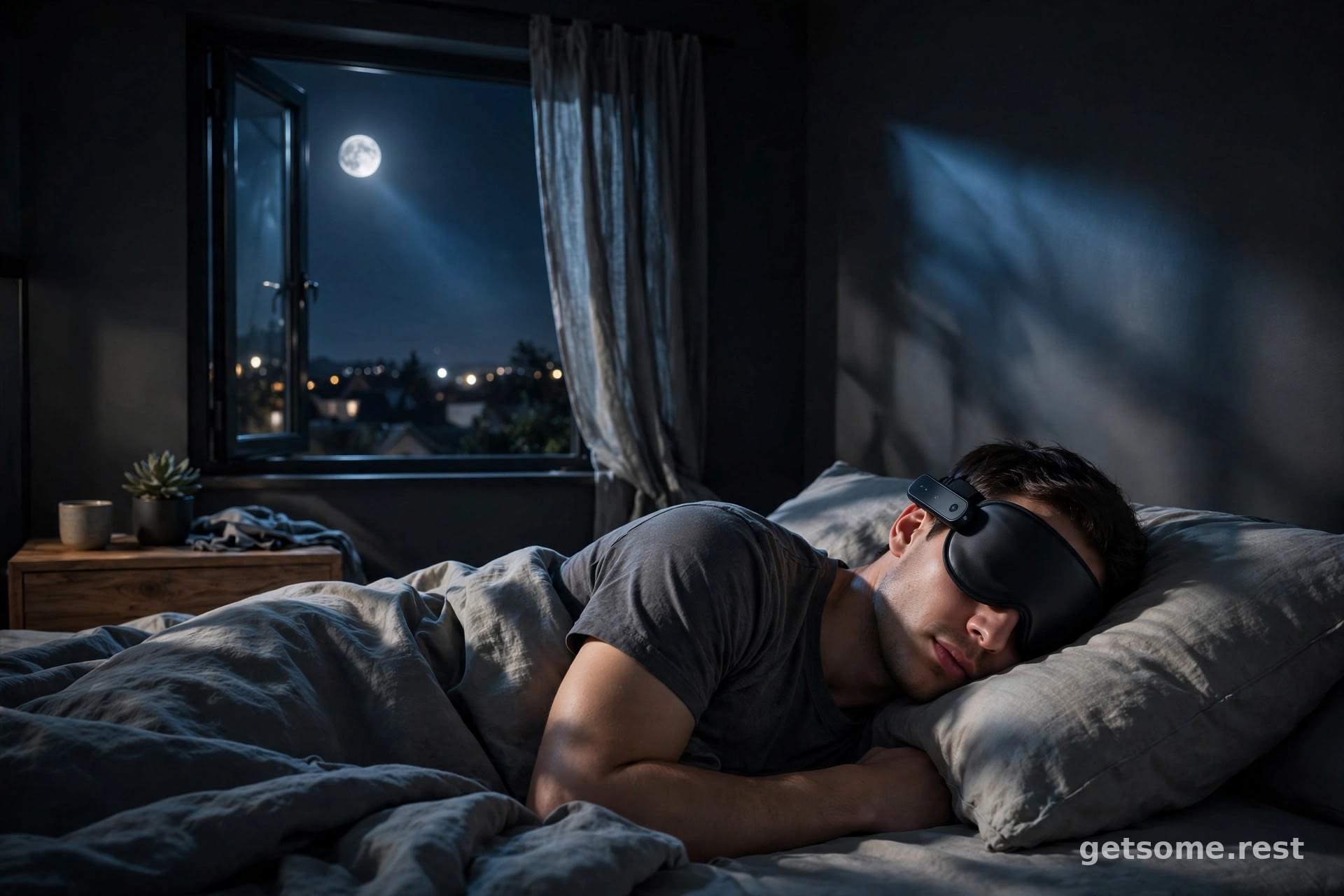
Light-sensitive sleepers live in a different world: a hallway LED, a phone charger glow, or dawn leaking around cheap curtains can fragment the whole night. A flat pharmacy mask helps a little, but it leaks at the nose, presses on the eyelids, and does nothing about a snoring partner. Smart sleep masks solve all three at once — contoured cups for true blackout, zero eye pressure, and built-in Bluetooth audio for white noise or sleep stories. We compared the five best you can buy in 2026, ranked for people who genuinely cannot sleep with light.
Contents
Our top picks at a glance
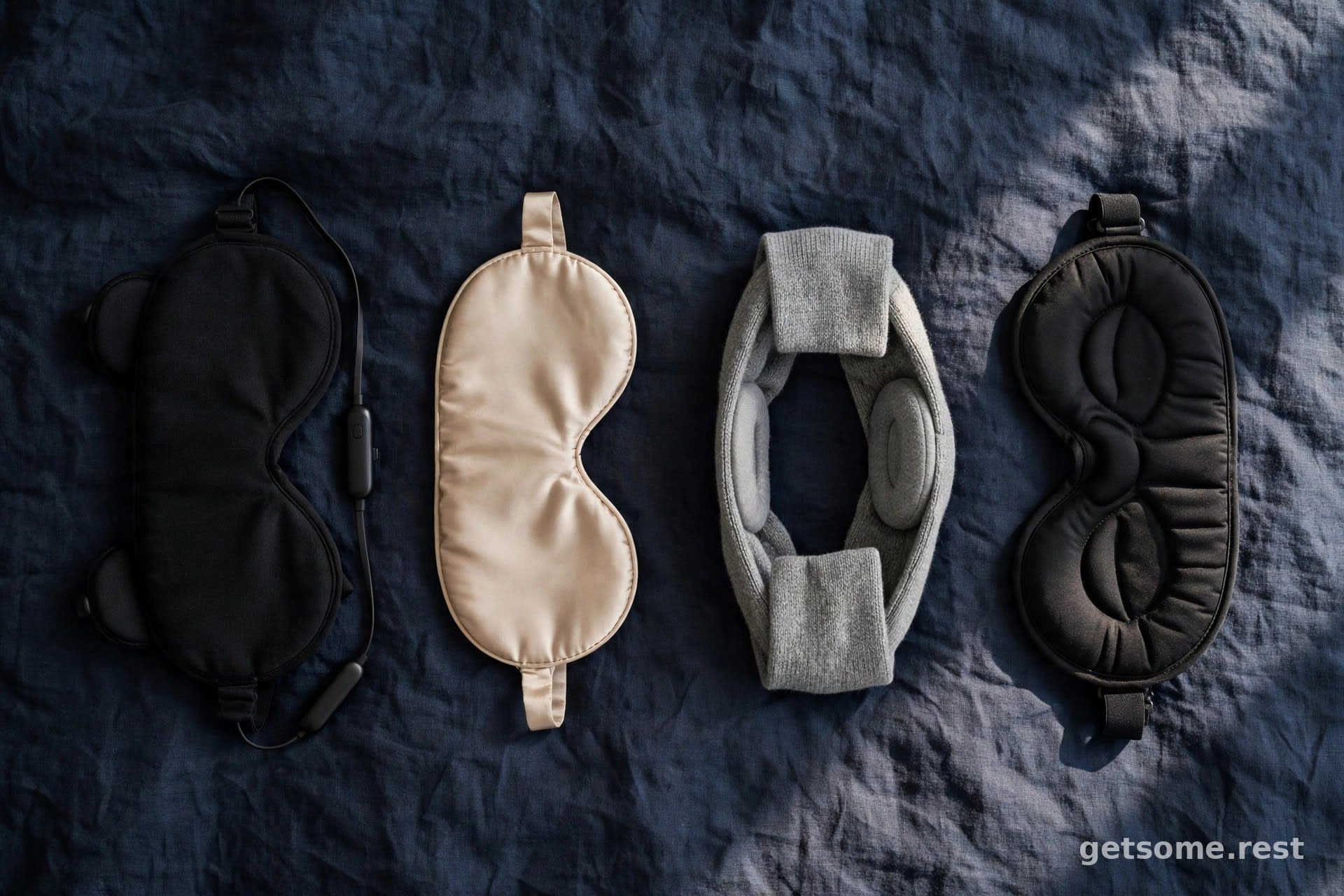
Here is how our five picks compare for light-sensitive sleepers. Each name links to its full write-up further down the page.
| Product | Best for | Price | Rating |
|---|---|---|---|
| Manta SOUND Sleep Mask | Total blackout + Bluetooth audio | $159 | 4.7 out of 5 |
| SleepPhones Wireless | Audio-first headband for side sleepers | $99.95 | 4.4 out of 5 |
| Manta PRO Sleep Mask | Maximum-comfort blackout | $85 | 4.6 out of 5 |
| Manta SILK Sleep Mask | Pure silk blackout comfort | $75 | 4.5 out of 5 |
| Musicozy Bluetooth Sleep Mask | Blackout + Bluetooth under $35 | $32.99 | 4.1 out of 5 |
Prices last checked October 13, 2026 and may change. Ratings reflect our own testing and research.
How to choose a smart sleep mask
For light-sensitive sleepers, a mask lives or dies on three things: whether light gets in, whether it hurts to wear, and whether you will still be wearing it at 3 a.m. Smart features are a bonus on top of those fundamentals. Run through the checks below before you compare prices.
- Blackout seal: the nose bridge is where cheap masks leak. Look for contoured, cupped designs that sit around the eyes rather than flat fabric pressed against them, plus an adjustable strap that seals without squeezing. “100% blackout” is a claim every brand makes; cupped eye chambers are how the good ones actually deliver it.
- Zero eye pressure: your eyelids need room to move — pressure on the eyes is uncomfortable and can disturb REM sleep. Every pick in this guide uses raised eye cups or a 3D contoured shape so nothing touches your lashes. If a mask flattens your eyelashes, it failed this test.
- Audio quality and battery: for Bluetooth masks, check speaker thinness more than sound specs — flat speakers you cannot feel matter more than bass response when your cheek is on a pillow. Battery life of 10+ hours covers a full night; anything less means charging anxiety. A physical button layout you can find in the dark is a quiet mark of good design.
- Side-sleeper fit: most people change position overnight, so a mask that only works on your back is a mask you will rip off at 2 a.m. C-shaped or tapered eye cups, slim speaker placement and a strap that does not cross the ears are what keep a mask in place when you roll over.
- Washability and warranty: you will sweat into this thing nightly. Check whether the electronics remove for washing and how the brand handles defects — Manta offers a 60-day money-back guarantee, SleepPhones a one-year warranty. A mask you cannot clean is a disposable mask.
Even moderate light exposure during sleep was linked to higher heart rate and poorer next-morning insulin response.
Source: Northwestern University, published in PNAS (2022)
The mask is only half the dark bedroom
A mask blocks light at your eyes, but the ideal is a bedroom so dark you barely need one. If streetlights or early sunrises are your problem, start with our guide to the best blackout curtains for shift workers — the advice applies to any light-sensitive sleeper. For the noise side, masks with Bluetooth handle audio, but a dedicated white noise machine for light sleepers fills the room more evenly, and our earplug guide for snoring partners covers the nights when even audio is not enough. Think of the mask as the last line of defense, not the whole fortress.
Price and value
The range here is wide — $32.99 to $159 — and unlike many categories, the price ladder is honest. The Musicozy at $32.99 genuinely delivers 3D blackout and Bluetooth; you are paying a fifth of the Manta SOUND’s price and getting perhaps 80% of the experience. What the extra money buys is refinement: thinner speakers you truly cannot feel, better materials, longer warranties and a fit tuned over years of iteration. Our advice for the light-sensitive: prioritize the blackout seal first, audio second. A $85 Manta PRO with perfect blackout will do more for your sleep than a $159 audio mask that leaks at the nose. And if a racing mind is part of your problem, our guide on how to fall asleep fast when your mind is racing pairs well with any Bluetooth mask — load a wind-down routine and let the mask deliver it.
What makes a mask “smart” — and what actually helps
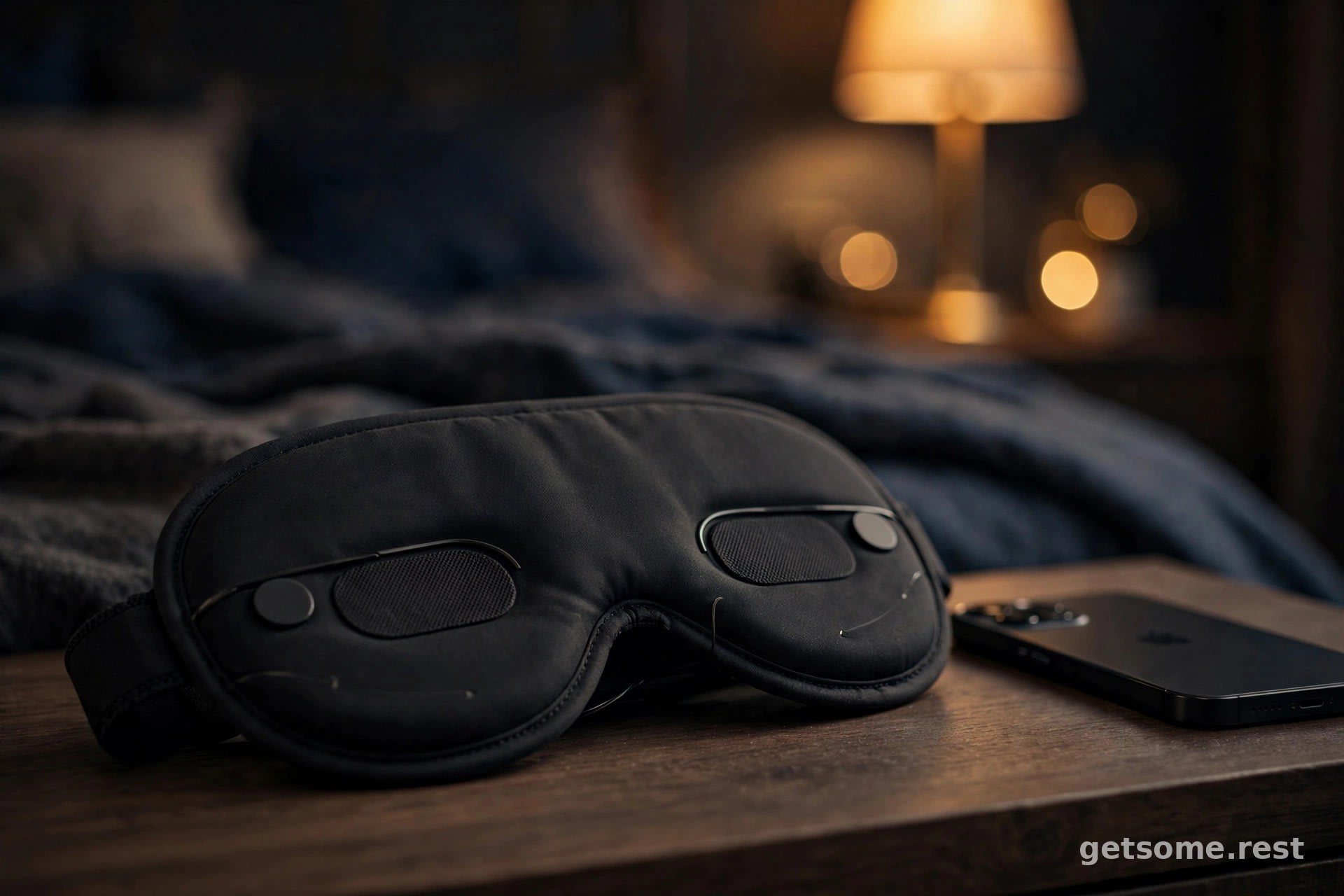
“Smart” in sleep masks means one thing in practice: Bluetooth audio built into the mask. There is no app-driven blackout or AI light sensing worth paying for — the intelligence that matters is in the ergonomics. Still, built-in audio changes what a mask can do for a light-sensitive sleeper, because light sensitivity rarely travels alone. The same people who wake at a sliver of dawn usually wake at a creaking floorboard too.
The best implementations, like the Manta SOUND, treat audio as a sleep tool rather than a headphone replacement: ultra-thin speakers positioned over the ears, tuned for spoken word and noise rather than music fidelity, with battery life measured in nights rather than hours. The SleepPhones approach goes further toward audio-first — a soft headband where the speakers are the product and light-blocking is secondary. Both beat earbuds for sleep, which press into the ear canal and fall out, and both beat a phone speaker, which your partner hears too.
What does not help: gimmicks. Masks with built-in “sleep tracking” via dubious sensors, app-required controls, or LED indicators that glow inside a product whose entire job is darkness. When you evaluate a smart mask, ask two questions. First, would this be a great blackout mask with the electronics removed? Second, can I operate it half-asleep in the dark? If the answer to either is no, the “smart” is marketing. Every pick in this guide passes both tests — the electronics serve the sleep, not the spec sheet.
How to sleep with a mask: fit, hygiene and habits
Most people who “can’t stand sleep masks” never actually fitted one. Start with the strap: it should be snug enough that the mask does not migrate when you turn, but loose enough to slide one finger underneath. Too tight causes morning headaches and strap marks; too loose leaks light at the nose the moment you shift. Adjust it while lying in your normal sleep position, not standing in front of a mirror.
Give yourself an adaptation week. The first two or three nights with any mask feel strange — your brain notices the new sensation and resists it. Wear it for the first half of the night only, then extend. By night five or six, most people stop noticing it entirely, and the payoff is real: consistent darkness stabilizes the melatonin signal that light pollution disrupts.
Hygiene matters more than buyers expect. Wash the fabric regularly according to the brand’s instructions — always removing Bluetooth modules first — and replace the mask when the elastic tires or the cups lose their shape, typically every 12 to 18 months of nightly use. A stretched-out mask that leaks light is worse than no mask, because it gives you the discomfort without the darkness.
Finally, keep the evening routine consistent. A mask works best as the last step of a wind-down: dim the lights, run your 30-minute evening routine, start your audio, mask on, lights out. Rituals cue the brain that sleep is coming, and the mask becomes part of that signal rather than a foreign object. One gentle note: a mask is a wellness tool, not a treatment. If you consistently cannot sleep despite a dark, quiet room — or you gasp, snore heavily or feel exhausted every morning — talk to a doctor rather than shopping for a better mask.
Our picks in detail
Each pick below includes a one-line verdict, the current price, and the main pros and cons from our testing.
 Best overall
Manta SOUND Sleep Mask
The complete package for light-sensitive sleepers: true 100% blackout with zero eye pressure, plus built-in Bluetooth audio side sleepers can actually wear.
$159 at time of writing
Pros
- True 100% blackout with zero eye pressure — the best light seal in this guide
- Ultra-thin Bluetooth speakers with 24-hour battery life; audio only you can hear
- C-shaped eye cups and breathable materials engineered for side sleepers, with a 60-day money-back guarantee
Cons
- The priciest pick — you pay for the refinement
- Speakers add slight bulk compared with non-audio masks
- Hand wash only, with the Bluetooth module removed
Best sleep headphones
SleepPhones Wireless
The original sleep headphones: a soft headband with flat speakers, ideal if sound matters more than total blackout.
$99.95 at time of writing
Pros
- Ultra-flat speakers you can sleep on — the most comfortable audio for strict side sleepers
- Up to 12 hours of battery and a machine-washable headband once the module is removed
- Designed by a physician, made in the USA, with a one-year warranty and US support
Cons
- Blocks less light than contoured cup masks — it is headphones first, mask second
- Headband sizing can be tricky if you fall between sizes
- Speakers can shift if you toss and turn a lot
Best for side sleepers
Manta PRO Sleep Mask
The most comfortable non-audio mask we tested: engineered for side sleepers with total blackout and zero pressure.
$85 at time of writing
Pros
- C-shaped eye cups, anti-slip strap and ventilated materials — disappears on side sleepers
- 100% blackout with zero eye pressure; modular straps and eye cups
- Premium build with a 60-day money-back guarantee
Cons
- No audio — pair it with a speaker or earbuds if you need sound
- Premium price for a non-smart mask
- Overkill if you only ever sleep on your back
Best luxury feel
Manta SILK Sleep Mask
Pure silk against the skin with Manta’s blackout engineering — the luxury pick for sensitive skin.
$75 at time of writing
Pros
- Pure silk is gentle on skin and eyelashes — the kindest fabric in this guide
- Full 100% blackout with Manta’s adjustable, zero-pressure fit
- Elegant look and feel that makes the nightly routine feel less clinical
Cons
- No Bluetooth audio option
- Silk needs careful hand washing
- Less breathable than the PRO for hot sleepers
Best budget
Musicozy Bluetooth Sleep Mask
A genuine 3D blackout mask with Bluetooth 5.4 and 14-hour battery for a fifth of the premium price.
$32.99 at time of writing; often on sale
Pros
- True 3D contoured blackout at a budget price — the value standout
- Bluetooth 5.4 with 14+ hour battery and a built-in mic for calls
- Side-sleeper-friendly shape with an adjustable strap
Cons
- Audio quality a clear step below Manta and SleepPhones
- Fit and finish less refined than the premium picks
- Amazon pricing swings often — buy when it dips
How we test
We never accept payment for rankings. Every product is judged against the same five checks:
- Price
- We record the real price at checkout, note regular discounts, and recheck prices when we update the guide.
- Materials
- We read the fabric, fill and build details, and note anything the brand doesn’t make clear.
- Sleep trials
- We check how long you can try the product at home and whether the trial has conditions.
- Warranty
- We compare warranty length and what it actually covers, in plain language.
- Return policy
- We look at how returns work, who pays for shipping, and how refunds are handled.
Frequently asked questions
Will a sleep mask really block 100% of light?
A well-designed contoured mask can, yes — the Manta masks in this guide use raised eye cups that seal around the eyes rather than pressing flat fabric against them, which is what stops the nose-bridge leak that ruins cheap masks. No mask can block light bouncing inside a bright room perfectly, which is why pairing a mask with blackout curtains gives the best result. If light still gets in, the strap is usually too loose.
Can side sleepers comfortably wear a smart sleep mask?
Yes, if you choose the right design. Look for C-shaped or tapered eye cups, ultra-thin speakers positioned away from pressure points, and a strap that does not cross the ears. The Manta SOUND and Manta PRO were specifically engineered for side sleeping, and the SleepPhones headband’s flat speakers are made to be slept on. Avoid bulky Bluetooth modules that sit over the ear.
Do Bluetooth sleep masks need charging every night?
No. The Manta SOUND runs up to 24 hours at full volume — several nights per charge — and the Musicozy manages 14+ hours. The SleepPhones Wireless lasts about 12 hours, roughly a night and a half. A quick top-up every few days is enough for all three; only all-night high-volume use demands nightly charging.
Are sleep masks safe to wear all night?
For most people, yes. Choose a mask with zero eye pressure — raised cups, not flat fabric — since pressure on the eyes overnight is uncomfortable and best avoided. Keep the strap snug but not tight, wash the mask regularly, and replace it when the elastic wears out. If you have glaucoma, recent eye surgery or an eye condition, check with your eye doctor before wearing any mask overnight.
Can I wash a Bluetooth sleep mask?
Yes, but always remove the electronics first. Every Bluetooth mask in this guide has a removable module or speakers — take them out, then hand wash or machine wash the fabric per the brand’s instructions and air dry. Never wash or submerge the Bluetooth module itself. Manta recommends hand washing; SleepPhones’ headband is machine washable once the module is out.
Key takeaways
- The Manta SOUND ($159) is our top pick for light-sensitive sleepers — true 100% blackout with zero eye pressure plus Bluetooth audio that side sleepers can actually wear.
- Prioritize the blackout seal over smart features: a perfectly sealing $85 mask beats a leaky $159 one every night.
- Side sleepers should look for C-shaped eye cups and slim speakers — flat masks and bulky audio are what end up on the floor at 2 a.m.
- Rankings on GetSome Rest are never for sale, and we update our guides weekly.