How to Nap at Work Without Waking Up Groggy
A short office nap can rescue your afternoon — if you time it right. The 20-minute work-nap protocol, the best desk gear, and how to wake up sharp, not groggy.
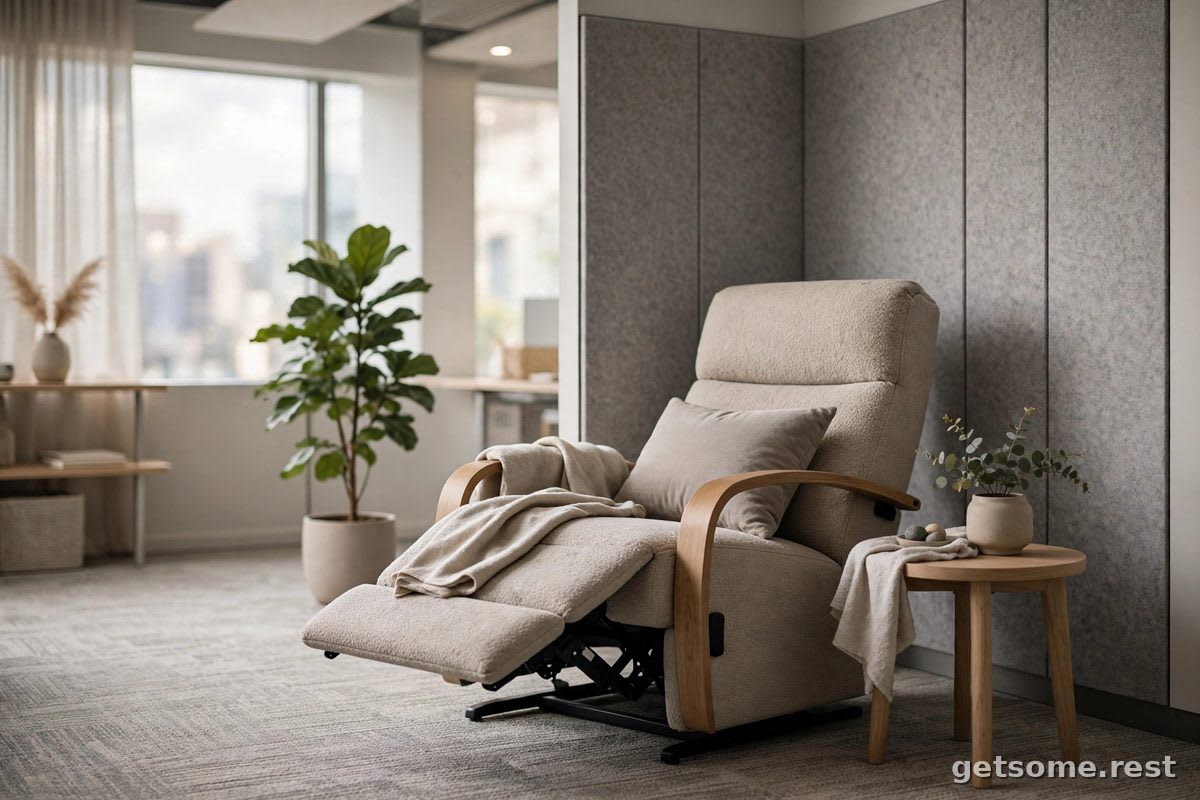
The 2 p.m. slump is universal: eyes heavy, focus gone, the afternoon stretching ahead like a desert. Most people fight it with coffee and willpower. A smarter move is a 20-minute nap — short enough to fit inside a lunch break, powerful enough to reset your whole afternoon. The catch is grogginess: nap wrong and you wake up worse than before. This guide gives you the protocol that experienced office nappers actually use.
Contents
Our top picks at a glance
Here is how our three favorites compare. Each name links to its full write-up further down the page.
| Product | Best for | Price | Rating |
|---|---|---|---|
| TRTL Pillow Plus | Napping upright | $59.99 | 4.5 out of 5 |
| Manta Sleep Mask | Bright offices | $39 | 4.7 out of 5 |
| Loop Quiet 2 Earplugs | Noisy offices | $24.95 | 4.5 out of 5 |
Prices last checked October 11, 2026 and may change. Ratings reflect our own testing and research.
How to nap without grogginess
In this guide, napping at work means a short, planned daytime nap — usually 15 to 25 minutes — taken in a dim, quiet spot with an alarm set. Most groggy work naps come from skipping the same few checks, so run through the list below before you close your eyes.
- Length: 15–25 minutes of sleep, alarm always set. This is the anti-grogginess rule — short naps stay in light sleep.
- Timing: early afternoon, ideally 1–3 p.m., inside your lunch break when the natural dip hits.
- Location: the dimmest, quietest spot you can claim regularly. Consistency beats perfection.
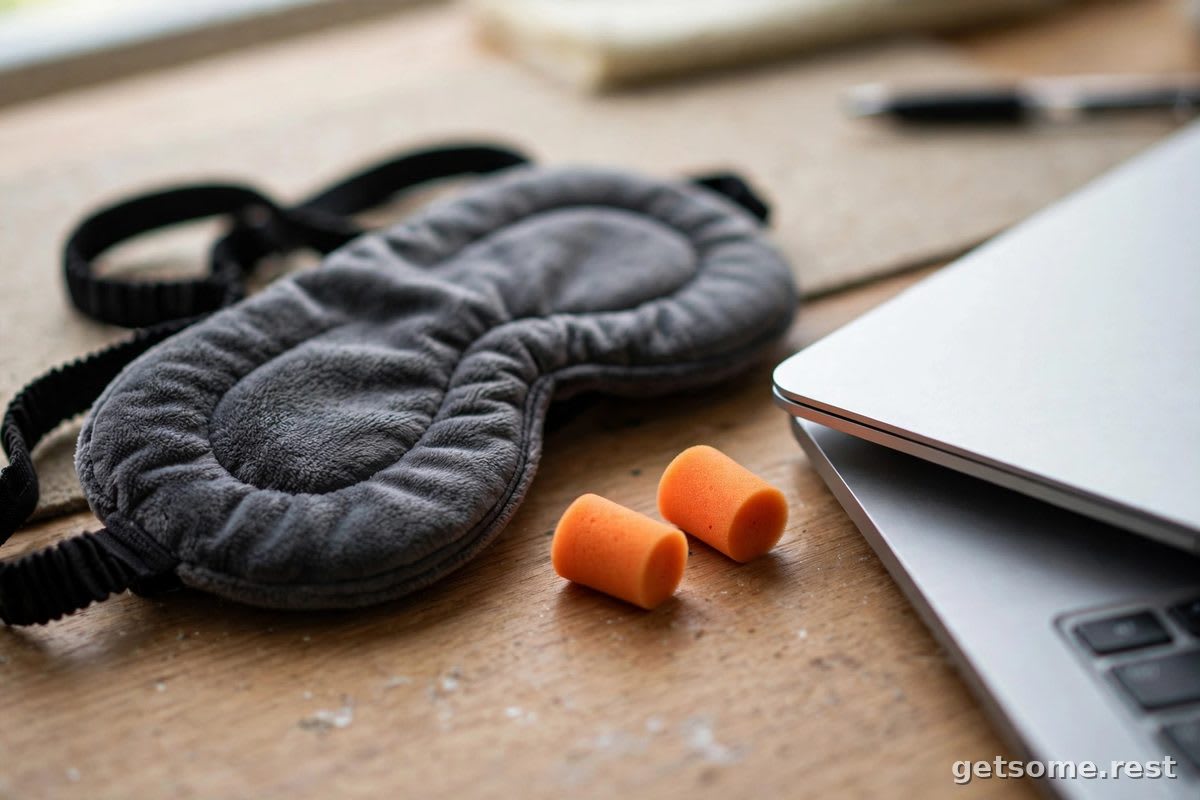
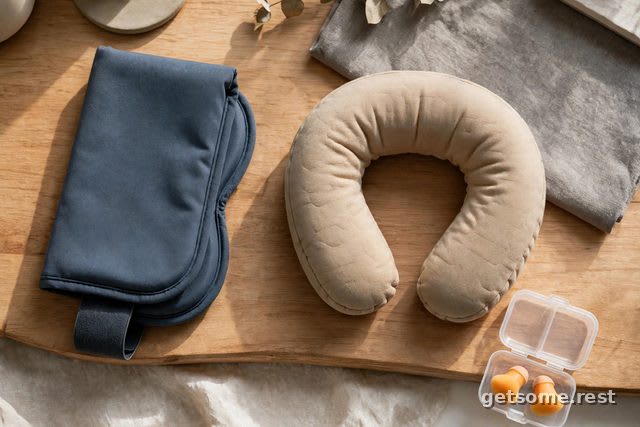
- The kit: a sleep mask, earplugs, and neck support in a desk drawer — small gear, big difference.
In a NASA study, pilots who took a planned 26-minute nap showed alertness improvements of up to 54% and performance improvements of 34%.
Source: NASA Ames Research Center
Setting up the rest of the room
Office naps fail on environment more than technique. If open-plan chatter breaks your rest, our guide to the best white noise machines for light sleepers covers steady sound that masks interruptions — a small desk unit works wonders. If you nap in your car, our guide to the best pillows for side sleepers helps you pick support that does not leave you stiff.
Price and value
The whole work-nap kit costs less than a week of fancy coffees: earplugs and a mask cover most situations, with a neck pillow for upright nappers. For waking reliably, see our roundup of the best sunrise alarm clocks for heavy sleepers, and for cooler rest at home, our comparison of the best cooling mattress toppers for night sweats.
Why work naps actually work
The afternoon slump is not a personal failing — it is biology. Alertness naturally dips in the early afternoon as part of your daily rhythm, which is why the hours after lunch feel so heavy even after a good night's sleep. A short nap works with that dip instead of against it.
A 20-minute nap stays entirely in light sleep, which is why it dodges grogginess. You get the alertness reset without ever descending into the deep sleep that makes waking up miserable. Research consistently shows short naps improving afternoon reaction time, focus, and mood — the NASA cockpit-nap study famously found a 26-minute rest improved pilot alertness by up to 54% and performance by 34%. An office is not a cockpit, but the underlying mechanism is the same.
The comparison that matters is nap versus coffee. Caffeine masks tiredness; a nap actually clears some of it. Many experienced nappers do both — the well-known coffee nap: a small coffee right before lying down, timed so the caffeine kicks in as the alarm goes off. But even without caffeine, twenty quiet minutes outperform forty minutes of heavy-eyed willpower.
The stigma is fading: dedicated rest spaces have appeared in offices across tech, healthcare, and manufacturing — not as perks, but as productivity infrastructure.
The 20-minute work nap protocol
Follow these steps in order and the nap practically runs itself. The whole thing fits inside a standard lunch break.
Step 1 — pick your window. Aim for 1–3 p.m., when the natural dip makes falling asleep easiest. Tell anyone who needs to know you are taking your break; a quick message removes the anxiety of being "caught," which alone can prevent sleep.
Step 2 — set up your spot. Mask on, earplugs in, neck support positioned. Dim whatever you can — close blinds, turn off your monitor, face away from windows. Put your phone on silent with only the alarm allowed through.
Step 3 — set the alarm for 25 minutes. Most people need about 5 minutes to drift off, leaving roughly 20 minutes of actual sleep. Use a gentle, gradually increasing alarm tone rather than a blaring one — jolting awake spikes stress and mimics grogginess. If your phone has a smart-wake feature, use it.
Step 4 — let go of the outcome. Do not try to fall asleep; try to rest. Slow your breathing, relax your jaw and shoulders, and let thoughts pass without engaging. Even if you never fully drop off, quiet rest in the dark restores meaningful alertness. Performance anxiety about napping "correctly" is the number-one reason first attempts fail.
Step 5 — wake actively. When the alarm goes off, sit up right away — no snooze, no "five more minutes," which is exactly how 20 becomes 50 and grogginess arrives. Bright light, a splash of cold water on your face, and a two-minute walk. Give yourself 5–10 minutes before anything demanding; that buffer lets the last traces of sleep inertia clear.
Where to nap at the office
The best nap spot is the one you can use every day without friction. Ranked from ideal to workable:
Your car. The classic for a reason: private, familiar, and you control the light, temperature, and recline. Park in shade, crack a window for air, recline the seat, mask on. Set two alarms — one gentle, one backup. The only real downside is weather extremes, so have a plan B for the hottest and coldest weeks.
A quiet room. Wellness rooms, unused meeting rooms, prayer rooms, even a large storage closet with a chair — many offices have nap-able space hiding in plain sight. Ask facilities or HR; you will often discover you are not the first to ask. A reclining chair beats a desk chair every time.
Your desk. The least ideal but the most available. Recline your chair as far as it goes, rest your head on the neck pillow rather than folding onto your arms (which compresses nerves and wakes you with dead hands), mask and earplugs on. A "do not disturb" signal — headphones, a small sign, a turned chair — helps enormously in open plans.
Nearby alternatives. A park bench in good weather, a library chair on your break, a gym with a quiet stretching area. The pattern is the same everywhere: dim, quiet, slightly reclined, uninterrupted. Scout two or three options so a occupied room never derails the habit.
Whatever you choose, use it consistently. Your brain learns places fast — after a week of napping in the same spot, you will start getting drowsy the moment you sit down. That conditioning is a feature, not a bug.
Waking up sharp, and when to skip it
Grogginess after a work nap has one cause almost every time: too much sleep. Sleep inertia — the heavy, disoriented feeling — comes from waking out of deep sleep, which typically begins around the 30-minute mark. The entire protocol above exists to keep you out of it: 20 minutes, alarm set, no snooze.
The wake-up sequence matters. Light is the fastest anti-grogginess tool — step into bright light or outside within a minute of waking. Cold water on the face and wrists helps. A short walk, even just to the far bathroom and back, gets blood moving. If your office has coffee, now is the time: caffeine after the nap, not instead of it, extends the alertness the nap created.
Give it ten minutes. Even a perfect nap leaves a few minutes of transition. Do not schedule the nap to end two minutes before a critical presentation. Block 30 minutes total: 25 for the nap, 5-plus to come back online. Your 2:30 self will be sharper than your 2:00 self was — but your 2:32 self will be sharper still.
When to skip the nap. If it is already late afternoon (after about 3:30–4 p.m.), a nap will likely push your bedtime back — take a walk instead. If your workplace genuinely forbids it and there is no discreet option, do not risk your job over a nap. And if you find that even short naps consistently leave you groggy despite following the protocol, your body may simply not be a napper — some people genuinely do better with movement and light instead. That is useful information, not failure.
Our picks in detail
Each pick below includes a one-line verdict, the current price, and the main pros and cons from our testing.
 Best overall
TRTL Pillow Plus
The office nap usually happens upright, and the TRTL's internal frame holds your head steady at your desk or in your car — no more waking with a crick in your neck.
$59.99 at time of writing
Pros
- Height-adjustable neck support
- Compact and lightweight for a desk drawer
- Machine washable fleece cover
Cons
- Takes practice to position well
- Can feel warm in hot offices
Best for bright offices
Manta Sleep Mask
Fluorescent lights and sunny windows are nap-killers; the Manta's domed cups seal out all of it without pressing on your eyes.
$39 at time of writing
Pros
- True blackout seal in bright rooms
- Zero pressure on eyes or eyelashes
- Adjustable cups fit different faces
Cons
- Hand-wash only
- Pricier than basic flat masks
Best for noisy offices
Loop Quiet 2 Earplugs
Reusable silicone earplugs that take the edge off open-plan chatter and keyboard clatter, with four tip sizes for a comfortable, secure fit.
$24.95 at time of writing
Pros
- 24 dB noise reduction rating
- Four ear tip sizes included
- Reusable, washable, with carry case
Cons
- Won't fully block very loud noise
- Small and easy to misplace
How we test
We never accept payment for rankings. Every product is judged against the same five checks:
- Price
- We record the real price at checkout, note regular discounts, and recheck prices when we update the guide.
- Materials
- We read the fabric, fill and build details, and note anything the brand doesn’t make clear.
- Sleep trials
- We check how long you can try the product at home and whether the trial has conditions.
- Warranty
- We compare warranty length and what it actually covers, in plain language.
- Return policy
- We look at how returns work, who pays for shipping, and how refunds are handled.
Frequently asked questions
How long should I nap at work?
15 to 25 minutes of actual sleep, with an alarm always set. That keeps you in light sleep, so you wake up clear-headed instead of groggy. Set the alarm for about 25 minutes to allow a few minutes to drift off. Longer work naps risk deep sleep and the heavy sleep inertia that ruins the rest of your afternoon.
Is napping at work unprofessional?
It depends on your workplace culture, but attitudes are shifting fast. Many companies now treat a short rest break like a coffee break — a productivity tool, not slacking. Keep it discreet: use your lunch break, nap somewhere private like your car or a quiet room, set an alarm, and be back on time. A sharp 3 p.m. you is a better look than a drowsy one.
What if I cannot fall asleep during my nap break?
Do not force it. Even quiet rest with your eyes closed in a dark, comfortable position restores some alertness — researchers call it restful wakefulness, and it still beats scrolling through your break. Keep the full 20 minutes, breathe slowly, and let go of the need to achieve sleep. Most regular nappers find sleep comes easier after a week of consistent practice.
What gear do I need to nap at the office?
Three small things that live in a desk drawer: a contoured sleep mask to block office light, soft earplugs to muffle open-plan noise, and a neck pillow or small cushion for upright support. That is the whole kit. A phone alarm handles timing. Start with the mask — light is the biggest barrier to falling asleep in a bright office.
Will a nap at work keep me up at night?
A short, early-afternoon nap usually will not. Keep it to 20 minutes and finish well before late afternoon — at least 6 to 7 hours before bedtime — and your nighttime sleep pressure stays intact. If you notice bedtime drifting later, shorten the nap or move it earlier rather than giving it up entirely.
Key takeaways
- Our top pick for most people is TRTL Pillow Plus; Manta Sleep Mask is the better choice in bright offices.
- Compare real checkout prices, materials, trial length, warranty and return terms before you buy.
- The alarm is non-negotiable: 20 minutes of sleep restores you, 40 minutes makes you groggy.
- Rankings on GetSome Rest are never for sale, and we update our guides weekly.