How to Sleep Better in a Dorm Room (2026): Noise, Light, and Shared-Space Fixes
A practical dorm-room sleep guide for 2026: block light and noise, agree quiet hours with your roommate, and fix thin dorm mattresses and bunk beds.
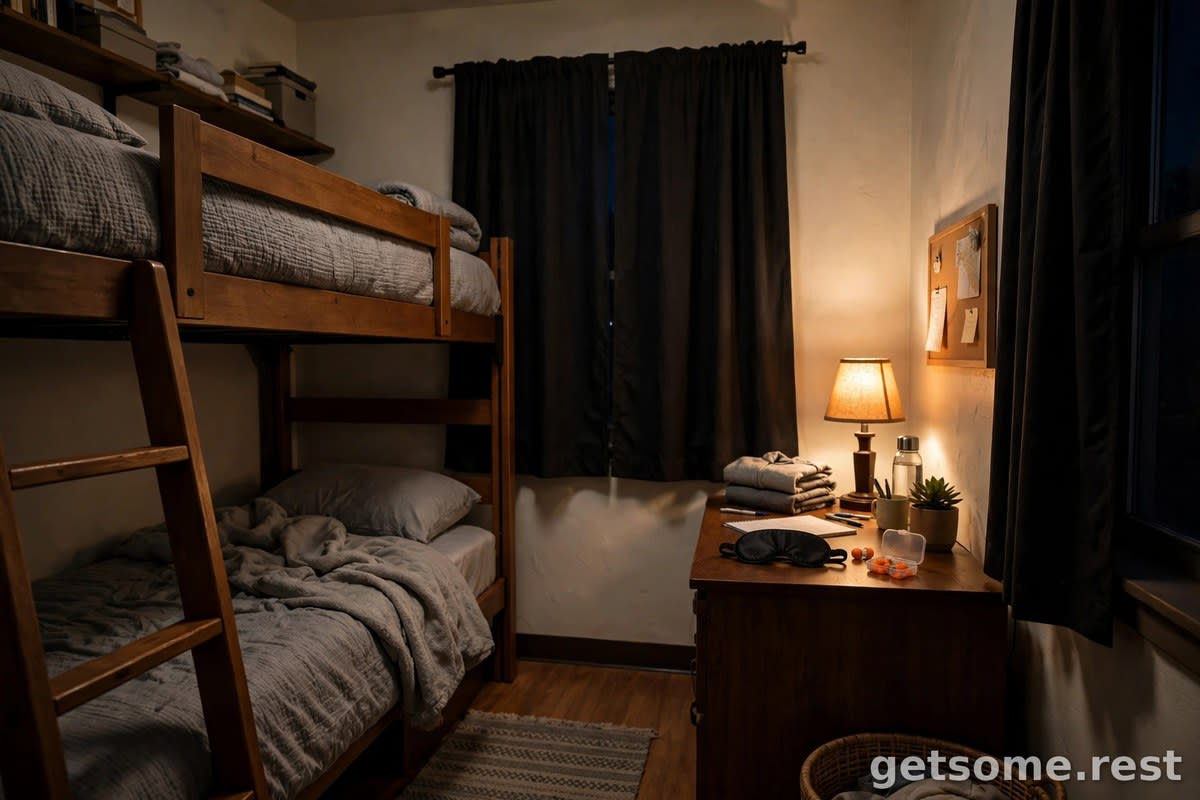
A dorm room is the hardest bedroom most people will ever sleep in: two people, two schedules, one thin wall, one overhead light, and a mattress chosen by a housing department, not by you. The good news is that dorm sleep problems are mostly environmental, and environmental problems have environmental fixes. This guide covers the ones that actually work in a shared room: blocking light without damaging the walls, masking noise, agreeing quiet hours with your roommate, and making a bunk bed and a thin mattress comfortable.
Contents
The Quick Fixes That Matter Most
Dorm sleep is a shared-space problem, not a willpower problem, so the fixes that work are the ones that change the room, not the ones that ask you to sleep harder. Start here, in this order.
- Block the light. A contoured sleep mask, such as the Manta Sleep Mask, handles desk lamps, hallway glow, and early sun in one move. Add a portable blackout curtain on a spring tension rod for the window itself; it needs no screws and leaves no damage at move-out.
- Mask the noise. Loop Quiet earplugs at around $24.95 cut snoring and alarms, while a Dreamegg D11 Max at around $25 smooths over hallway noise and door slams. Many dorm sleepers use both.
- Agree the rules. A written roommate agreement on lights-out, quiet hours, guests, and alarms prevents more lost sleep than any product. Write it in week one, while you still like each other.
- Fix the bed. A 2-inch foam topper transforms a thin dorm mattress, and a pillow that keeps your neck level beats a tall stack of flat dorm pillows. Check for Twin XL sizing before ordering.
- Cool the room. Dorm rooms run warm, especially top bunks. Light, layerable bedding and a small fan beat one heavy comforter.
The rest of this guide explains each fix in detail, including what to buy, what to agree with your roommate, and what to do when the agreement breaks down.
How to Choose Your Dorm Sleep Kit
Start with the problem that wakes you most, not with the product that looks best. Light sleepers who wake at every hallway sound need a different kit than light-sensitive sleepers who wake at the first glow of a desk lamp.
If noise wakes you: choose earplugs first. Loop Quiet earplugs cost around $24.95, are reusable, and sit flush enough for side sleepers. Mack's Pillow Soft earplugs are moldable silicone disposables that seal over the ear canal rather than going inside it, which suits people who find foam plugs uncomfortable. Buy a small pack of disposables first if you have never slept in earplugs, and only invest in reusables once you know the fit works.
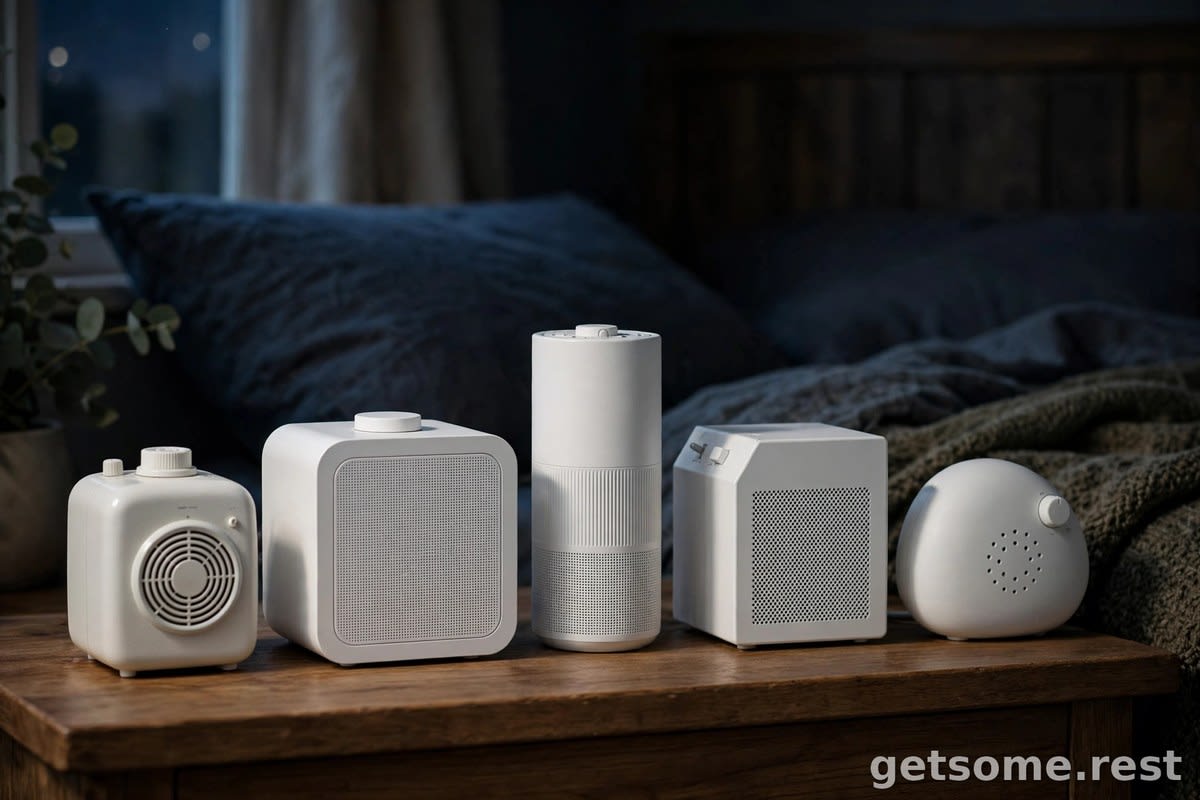
If unpredictable sound wakes you: add a white noise machine. The Dreamegg D11 Max costs around $25, is small enough for a dorm shelf, and plays continuous fan and white noise sounds that smooth over door slams, hallway laughter, and a roommate's alarm. A phone app can do the same job for free, but a dedicated machine keeps your phone out of the bed and avoids a notification waking you at 3 a.m.
If light wakes you: a contoured sleep mask is the single highest-impact purchase. The Manta Sleep Mask uses separate eye cups so nothing presses on your eyelids, which matters if you sleep on your side or open your eyes under the mask. Pair it with a no-drill blackout curtain on a tension rod for the window itself, and you have covered both the room light and the light that sneaks around the curtain edges.
If the bed wakes you: spend on a mattress topper before anything else. Dorm mattresses are thin, firm, and identical for everyone, which means they suit almost nobody. A 2-inch foam topper changes the feel of the bed far more than new sheets do, and it rolls up for summer storage. Check your dorm's mattress size first, since many dorms use Twin XL, not standard Twin.
The Dorm Sleep Kit, Side by Side
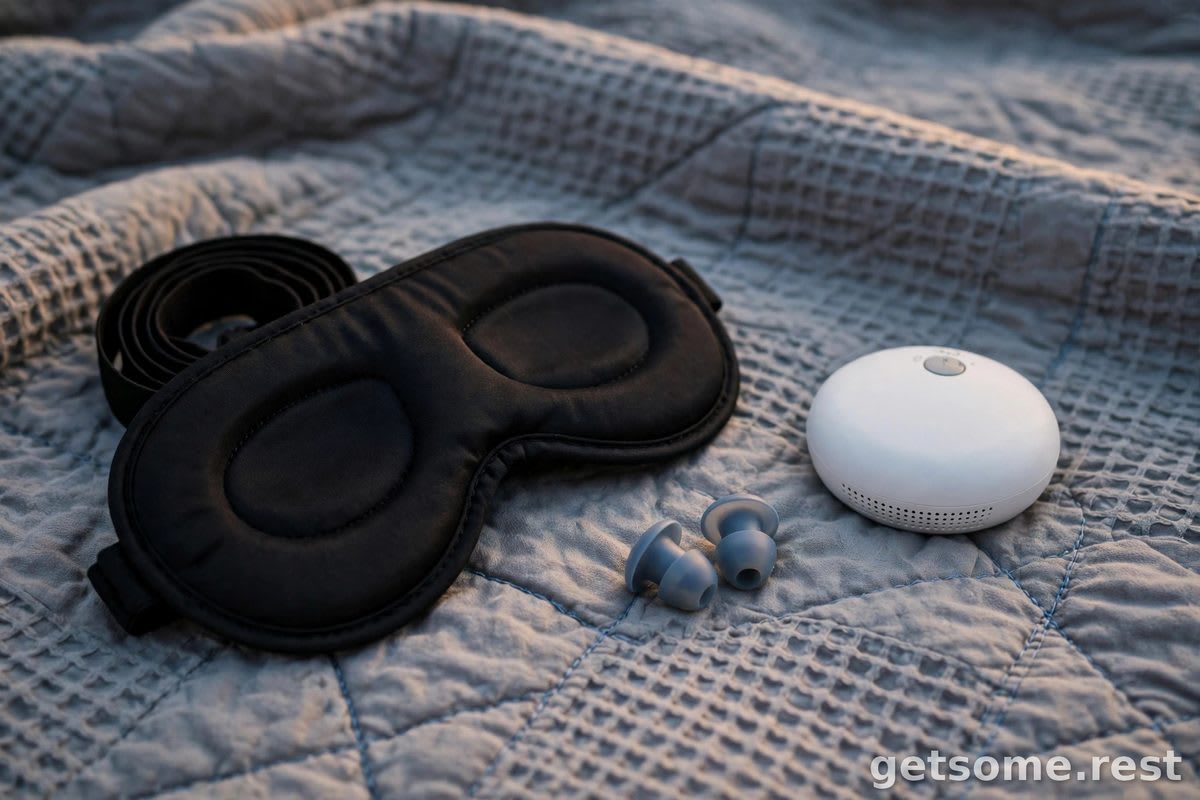
The four products mentioned in this guide, compared on the points that matter in a dorm: price, size, and what problem each one solves.
| Product | Approx. price | Solves | Dorm notes |
|---|---|---|---|
| Loop Quiet earplugs | ~$24.95 | Loud, close noise: snoring, alarms, typing | Reusable, low-profile for side sleepers |
| Mack's Pillow Soft earplugs | Budget disposable | General noise reduction | Moldable silicone seal; try before buying reusables |
| Dreamegg D11 Max white noise machine | ~$25 | Thin walls, hallway noise, sudden sounds | Compact for a dorm shelf; keeps your phone out of bed |
| Manta Sleep Mask | Varies by model | Window light, desk lamps, hallway glow | Contoured eye cups; nothing presses on eyelids |
Prices are approximate Amazon listings at the time of writing and will vary. If you buy one product first, make it the sleep mask: light is the easiest dorm problem to solve completely, and a mask works in every room you will ever sleep in, not just this one.
Our Recommended Dorm Setup
If you buy just four things, buy these. First, a contoured sleep mask such as the Manta Sleep Mask, because it blocks both window light and a roommate's desk lamp in one move. Second, earplugs you have actually tried for comfort: Loop Quiet at around $24.95 if you want reusables, or Mack's Pillow Soft disposables if you prefer a moldable seal. Third, a small white noise machine such as the Dreamegg D11 Max at around $25, placed on your side of the room and set to a steady fan sound at a low volume. Fourth, a 2-inch foam mattress topper in Twin XL, which turns a housing-department mattress into a bed you can actually relax on.
Add the free fixes around that kit and the setup is complete: a written roommate agreement on lights-out and quiet hours, a tension-rod blackout curtain for the window, a wind-down routine that moves screens out of the bed, and a room temperature on the cool side with light bedding you can layer. Total spend for the kit lands around $75 to $100, which is less than most students spend on coffee in a month, and it pays off every single night.
Skip the expensive gear until the basics are covered. A sunrise alarm clock, a smart sleep tracker, or a premium pillow will not help if hallway noise and a glowing desk lamp are still waking you at 2 a.m. Fix light, noise, and the mattress first, then upgrade.
The Roommate Agreement: The Fix No Product Replaces
Most dorm sleep conflict is a scheduling conflict, not a personality conflict. One roommate has 8 a.m. classes; the other works a late shift or games until 2 a.m. Neither is wrong, but without an agreement, both sleep badly and both resent it. Write the agreement down in the first week, while you still like each other, and cover four points.
Lights-out for the overhead light. Pick a time after which the big light goes off and only desk lamps stay on. Desk lamps still leak light, so pair this rule with a sleep mask for the earlier sleeper.
Quiet hours. Agree a window, such as 11 p.m. to 8 a.m., when calls move to the hallway, videos get headphones, and alarms get snoozed exactly once. The once-only alarm rule is the single most popular clause in any roommate agreement, for good reason.
Guests and late arrivals. Decide how late guests can stay and how quietly late arrivals come in. A roommate who tiptoes in at 1 a.m. is fine; a roommate who brings three friends and turns the light on is not.
Morning alarms. The early riser agrees to one alarm, placed across the room so it forces them up, and to get ready quietly or in the bathroom. The late sleeper agrees to earplugs or white noise rather than demanding silence until noon.
When a roommate keeps you up despite the agreement, use a polite, specific script rather than a general complaint. Name the behavior, name the effect, and name the fix: your alarm snoozed four times this morning and woke me up; could you move your phone across the room? If the same issue repeats after two calm conversations, go to your RA. A mediated agreement is not an escalation to fear; it is the normal next step, and RAs handle this exact conversation every semester.
Bunk-bed tips. Top bunk sleepers get more privacy and less desk-lamp light, but more heat and a climb down for every bathroom trip. Bottom bunk sleepers get a cooler spot and easy access, but more light and more shake from the sleeper above. On either bunk, a mattress topper matters more than the bunk choice, and a pillow that keeps your neck level, rather than stacked high, prevents morning stiffness. If you sleep on the top bunk, keep a small light clipped to the frame so you are not climbing down in the dark.
Wind down without screens. The last 30 minutes before bed are the cheapest sleep upgrade in this guide. Move the phone to charge across the room, read a paper book or stretch for ten minutes, and keep the room's light low.
Temperature and bedding basics. Dorm rooms run warm, especially top bunks and rooms with old radiators. Keep the room on the cool side if you can control it, use light layers you can kick off rather than one heavy comforter, and keep a spare blanket folded at the foot of the bed for cold nights. If your room has no thermostat control, a small fan pointed at the wall, not directly at your face, moves air without drying you out.
How We Put This Guide Together
This is an advice guide, not a lab test: nobody can run a controlled sleep study in your specific dorm room. Instead, we built it from GetSome Rest's own tested product coverage, including our earplug, sleep mask, and white noise machine guides, and from the fixes that work repeatedly in small shared rooms: light blocking, noise masking, roommate agreements, and mattress toppers. Prices quoted are the prices listed on Amazon at the time of writing and will change.
Where a tip depends on your dorm's rules, such as adhesive hooks or curtain rods, we say so, because a fix that costs you a housing fine is not a fix. If your dorm bans something suggested here, the sleep mask plus earplugs combination still works, and it needs no permission at all.
Disclosure: GetSome Rest contains affiliate links. If you buy through them, we may earn a commission at no extra cost to you.
Frequently asked questions
My roommate stays up much later than me. What actually helps?
Agree the basics in advance: a lights-out time for the overhead light, a quiet-hours window, and a rule that late-night work moves to a desk lamp or the library after that hour. Add your own defenses too: a contoured sleep mask for the lamp glow, earplugs or a white noise machine for typing and video calls, and a phone charger on your side of the room so a glowing screen is not parked next to your face. Most roommate sleep friction comes from unspoken expectations, not bad intentions, so putting the agreement in writing early prevents most of it.
How do I black out a dorm window without damaging the walls?
Use methods that leave no holes. A spring tension rod inside the window frame holds a portable blackout curtain without screws, and it comes down cleanly at move-out. If your dorm allows adhesive hooks, a blackout panel hung from removable hooks is another no-drill option. For the last slivers of light around the edges, a contoured sleep mask covers what curtains miss, and it travels with you to the library, a bus, or a friend's room. Check your housing rules before sticking anything to painted walls or window frames.
Should I get earplugs or a white noise machine for a dorm?
They solve different problems, and many dorm sleepers end up using both. Earplugs, such as Loop Quiet at around $24.95 or disposable Mack's Pillow Soft earplugs, reduce the volume of snoring, hallway noise, and a roommate's alarm. A white noise machine, such as the Dreamegg D11 Max at around $25, fills the gaps between sounds so a door slam or a laugh in the hall does not jolt you awake. If you can only buy one, pick earplugs for loud, close noise and a white noise machine for thin walls and unpredictable hallway sound. Try both for a few nights before deciding, since comfort varies a lot by ear shape and sleep position.
Is the top or bottom bunk better for sleep?
It depends on what bothers you most. The top bunk gets less light from a roommate's desk lamp and feels more private, but it is warmer, since heat rises, and climbing down half-asleep for a communal bathroom trip is a real annoyance. The bottom bunk is cooler and easier to get in and out of, but it catches more light and movement, and a restless sleeper above can shake the frame. Whichever you take, a mattress topper matters more than the bunk choice: dorm mattresses are thin and firm, and a 2-inch foam topper softens the surface noticeably. A pillow that keeps your neck level, rather than propped high, helps on either bunk.
What do I do if my roommate keeps waking me up?
Start polite and specific, not general. A script that works: 'Hey, your 6 a.m. alarm went off four times this morning and woke me up. Could you put your phone across the room so you have to get up to turn it off?' Offer a trade at the same time, such as keeping your own late-night calls out of the room. If the same issue repeats after two calm conversations, involve your RA. That is what RAs are for, and a mediated roommate agreement carries more weight than a third late-night argument. Keep the focus on the specific behavior and the specific fix, and keep a note of dates in case you need it.
Key Takeaways
- Block light with a contoured sleep mask plus a no-drill blackout curtain on a tension rod.
- Mask noise with earplugs for loud, close sounds and a white noise machine for thin walls and hallway noise.
- Write a roommate agreement in week one: lights-out time, quiet hours, guest rules, and a once-only alarm rule.
- Soften a thin dorm mattress with a 2-inch foam topper in Twin XL, and keep your pillow at a neck-level height.
- Top bunk means more privacy and heat; bottom bunk means cooler air and more light and shake.
- Wind down for 30 minutes without screens, and keep the room cool with light, layerable bedding.
- If a roommate keeps waking you, be polite and specific, then involve your RA after two calm conversations.