How to Sleep on a Long Haul Flight in Economy (2026)
Sleeping upright in economy is a gear and timing problem. The right pillow, earplugs and seat — plus a sleep window matched to your destination — can buy rest.
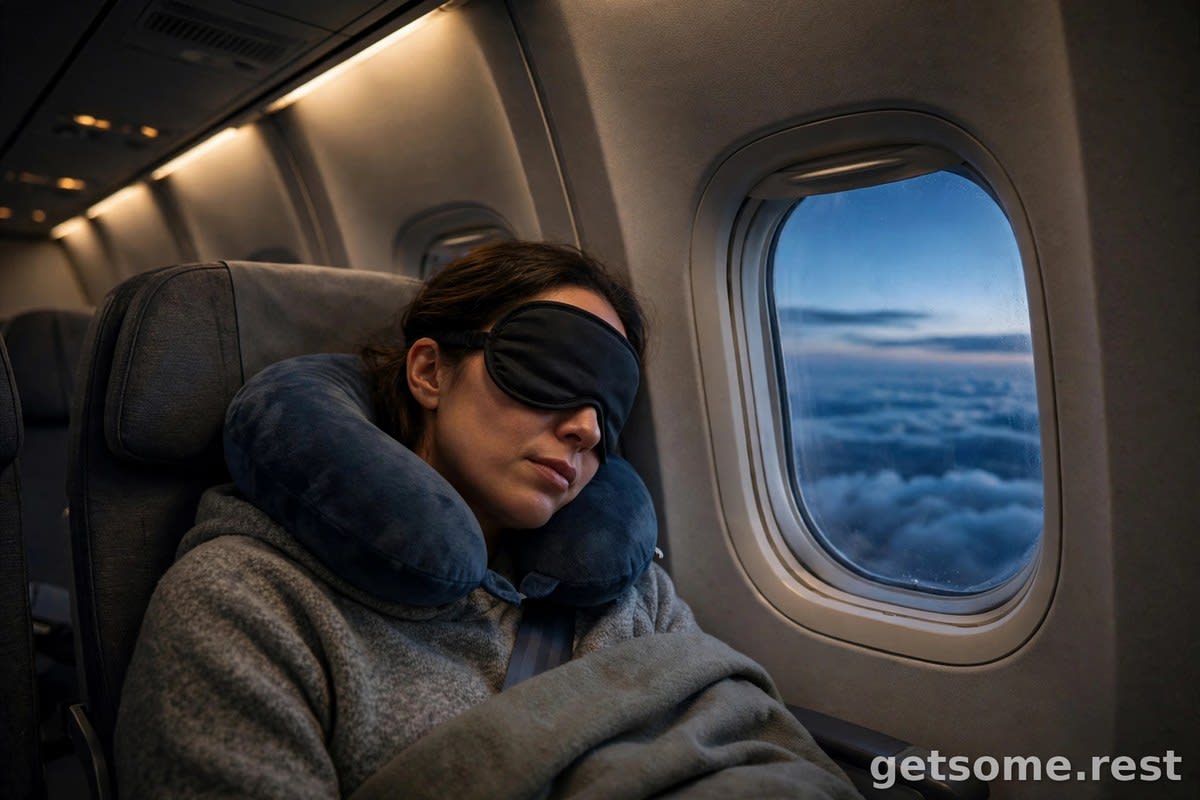
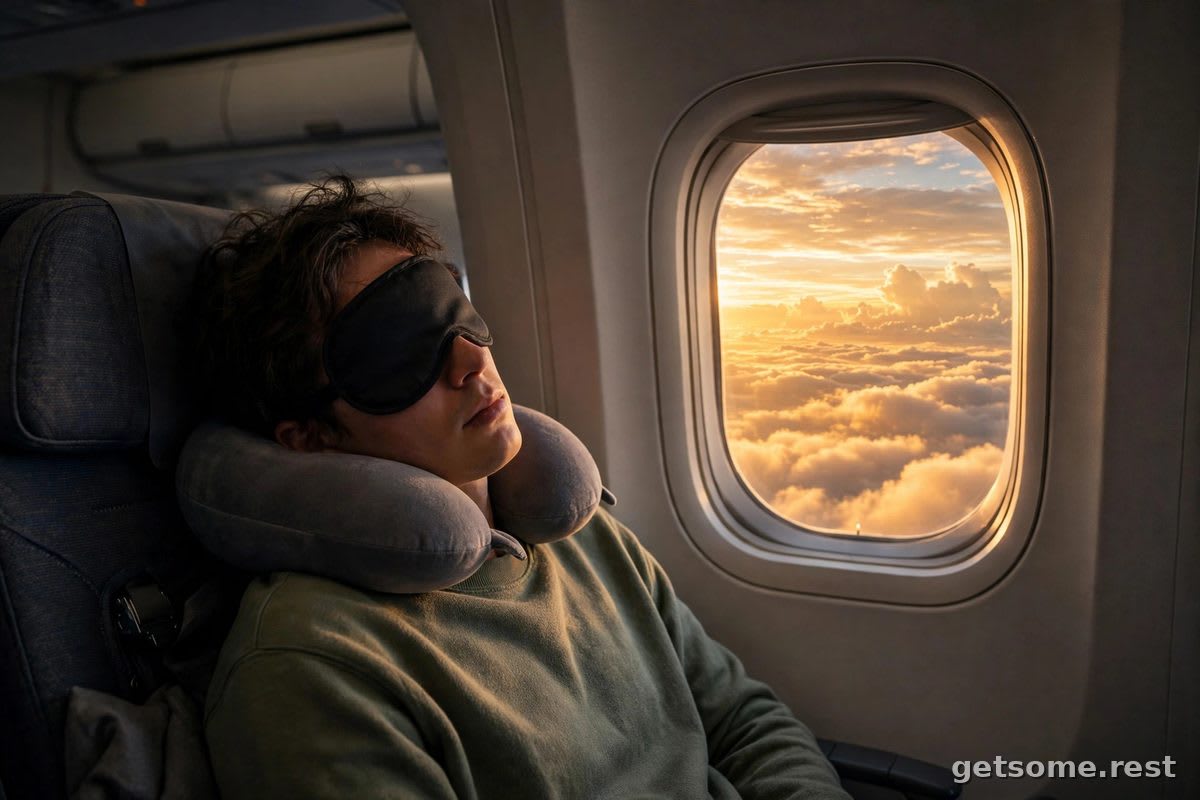
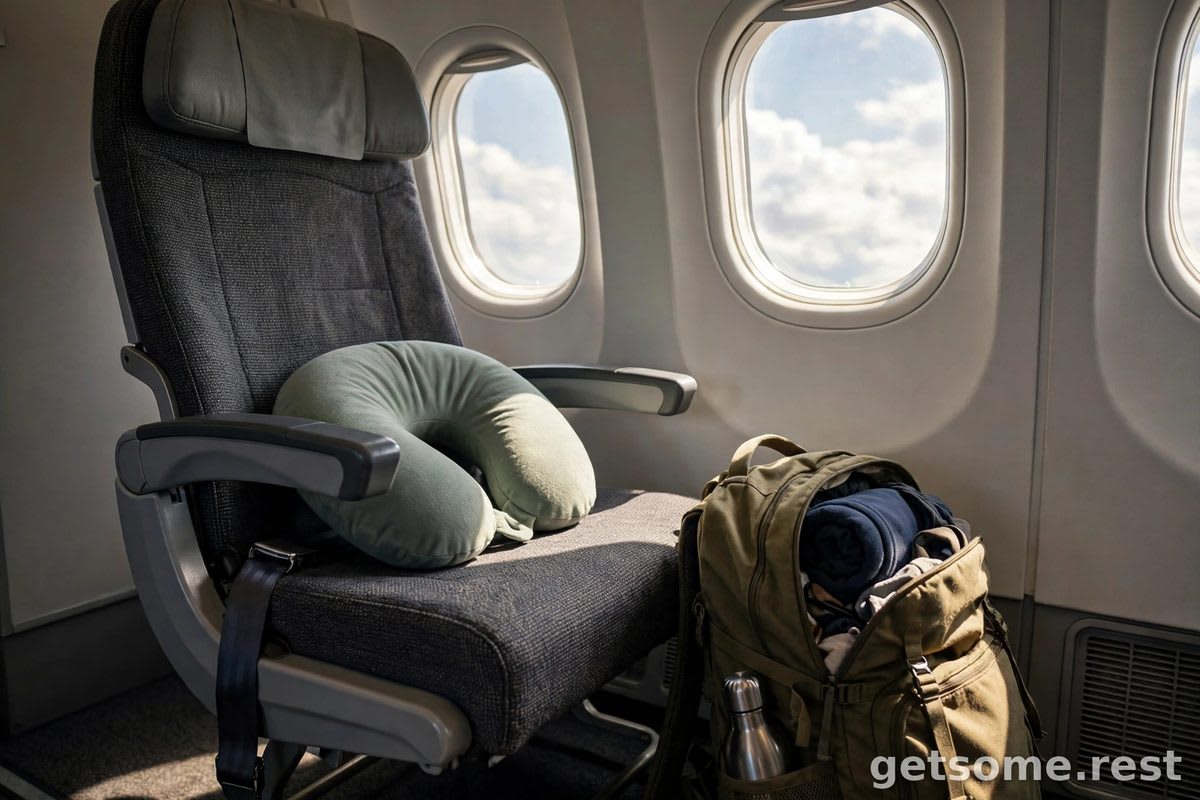
A 10-hour flight in economy is a bad bedroom: an upright seat, 75 to 85 decibels of engine drone, cabin air at 10 to 20% humidity, and light coming from every direction. Sleeping on the plane is mostly a setup problem, not luck. With the right seat, a pillow that actually holds your head up, something that blocks the noise and light, and a sleep window matched to your destination's night, most flyers can get several hours of real rest. This guide covers the gear that works, with prices checked November 20, 2026, and the seat and timing choices that cost nothing. It is general information about sleep environment, products and routine — not medical advice.
Contents
The Short Answer: Gear, Seat and Timing
Sleeping on a long-haul flight fails for three separate reasons, and you need to fix all three: your head has nothing to lean on, the cabin is loud and bright, and you try to sleep at the wrong time. Fix one and you still wake up every twenty minutes. Fix all three and most people get a few solid stretches of sleep, even in a 30-inch-pitch economy seat.
The three moves that matter most: first, support your head. A real travel pillow — the Trtl Pillow Plus at $74.99 list (often $52.49 on sale) or the Cabeau Evolution S3 at $39.99 — stops the head-bob that wakes you every time your neck gives out. Second, block the senses: Loop Quiet 2 earplugs at $24.95 cut the engine drone, and a Manta Sleep Mask at $39 shuts out the cabin light. Third, pick your moment: sleep during the hours that are night at your destination, not the hours that are night at home. The rest of this guide prices each piece and explains the seat and timing choices that cost nothing.
Which Seat Should You Pick to Sleep?
The window seat is the best seat for sleeping, and it is not close: a wall to lean against, control over the window shade so nobody wakes you by raising it, and nobody climbing over you during the night. If the window is taken, the aisle beats the middle — one open side, and you can get up without disturbing anyone.
Rows to avoid
Seat location matters as much as window versus aisle. Avoid rows near the galley — carts, crew conversations and light all night — and rows near the lavatory, where foot traffic and the door light never stop. Bulkhead rows look tempting for the legroom, but the armrests are fixed, there is no under-seat storage, and they are often bassinet positions. Exit rows are worse for sleep: the seats usually do not recline at all. The sweet spot is a window seat a few rows back from the middle of the cabin, far from both galleys — check the seat map for your aircraft before you pick.
Recline etiquette, briefly
Economy seats recline only a few inches, but those inches matter. Recline fully after the meal service, once the cabin lights go down. On overnight flights everyone reclines; on daytime flights, glance back first.
When to sleep: destination night, not home night
The biggest timing mistake is sleeping whenever you feel tired. Sleep during the portion of the flight that lines up with night at your destination, and stay awake for the first two to three hours if that stretch is daytime where you are landing — you arrive partway adjusted instead of landing exhausted at noon and wide awake at 3 a.m. If you fly east, go to bed about 30 minutes earlier each night for two or three days before departure; flying west, push bedtime 30 minutes later.
Travel Pillows and Sleep Gear Compared
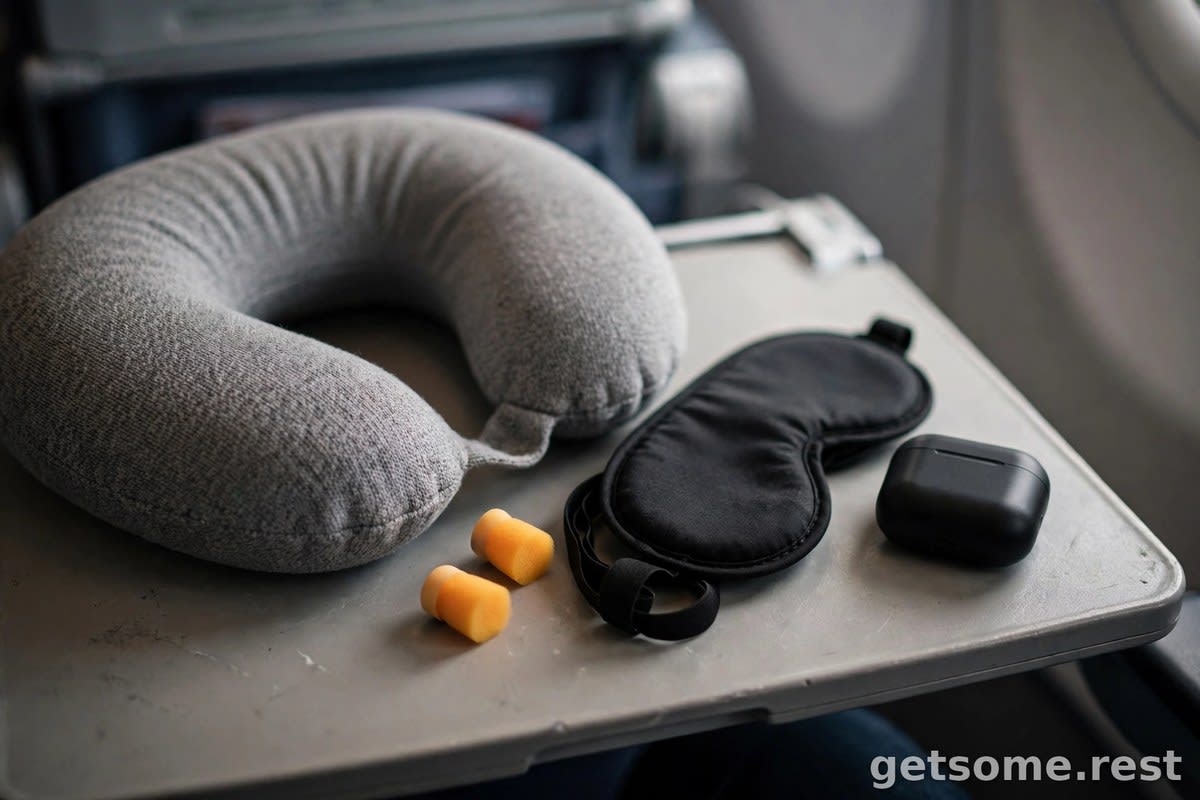
The short version: real products, current prices checked November 20, 2026, what each one does, and who it suits. Prices move with sales — the Trtl Pillow Plus lists at $74.99 but was $52.49 on sale when checked, and the Soundcore Sleep A20 lists at $179.99 but was $99.99 at Best Buy — so verify before you buy.
| Product | Price | What it does | Best for |
|---|---|---|---|
| Trtl Pillow Plus | $74.99 list, $52.49 on sale | Scarf wrap with adjustable internal support frame, ~9 oz | Side leaners, longer necks |
| Cabeau Evolution S3 | $39.99 | Dual-density memory foam, seat straps, chin support, 11.6 oz | Forward head-drop, best value |
| BCOZZY Travel Neck Pillow | $49.95 list, ~$42.46 on Amazon | Patented double support for head, neck and chin, washable | Forward-nodders, easy care |
| Soundcore Sleep A20 | $179.99 list, $99.99 at Best Buy | Tiny low-profile sleep earbuds with white-noise masking | Side sleepers who want audio |
| Loop Quiet 2 | $24.95 | Soft reusable silicone earplugs, 24 dB noise reduction (SNR) | Cheapest effective noise block |
| Manta Sleep Mask | $39 | Contoured eye cups, total blackout, adjustable strap | Light sleepers, no eye pressure |
Two notes: the Cabeau Evolution S3 also comes in a Deluxe version at $64.99 with a travel case and antimicrobial fabric — the standard $39.99 version sleeps just as well. And the Manta line goes up to the PRO at $89 and the SOUND at $159 with built-in speakers; for a plane, the $39 mask plus earplugs is the better buy.
Our Pick: The $115 Economy Sleep Kit
You do not need to spend $180 on sleep earbuds to sleep on a plane. The kit we would buy first costs about $115 and covers the three things that matter: head support, noise, and light. The Trtl Pillow Plus at $52.49 on sale ($74.99 list) is the pillow: a fleece wrap with an internal support frame you raise or lower with two dials, so it holds your head upright whether you lean sideways or doze straight ahead. It weighs about 9 oz, packs flat, and comes with a 100-day return window if the scarf style is not for you. If your head drops forward rather than sideways, swap it for the Cabeau Evolution S3 at $39.99 — dual-density memory foam with seat straps that tie it to the headrest — and the kit drops to about $104.
For noise, the Loop Quiet 2 at $24.95 is the best money in the kit: soft reusable silicone earplugs that cut the engine drone by 24 dB (SNR), small enough to lose in a jacket pocket. For light, the Manta Sleep Mask at $39 has contoured eye cups that block light completely without pressing on your eyelids, so you can blink and open your eyes under it. Add the free moves — window seat, recline after dinner service, sleep on destination time — and the $115 kit is everything most flyers need.
If you want to spend more, spend it on audio, not on a fancier pillow: the Soundcore Sleep A20 at $179.99 list (often $99.99 at Best Buy) are tiny earbuds designed to be slept in, with built-in white noise that masks the cabin drone without anything pressing into your ear. They are the right upgrade if earplugs alone do not cut it, or if you fall asleep to podcasts and white noise at home.
How to Fall Asleep and Stay Asleep Upright
Stop the head-bob first
The reason you keep waking up on planes is rarely the seat — it is your head falling forward or sideways every time your neck muscles relax. That is the whole job of a travel pillow, and it is why the cheap inflatable U-pillow from the airport rarely works: it supports the back of your neck and nothing else. The Trtl Pillow Plus works differently — the internal frame sits under your jaw and holds your head up, so your neck can actually relax. The Cabeau Evolution S3 works the other way: the memory foam ring plus the seat straps hold your head against the headrest, which suits people whose heads drop straight forward. Try the style on a short flight before a 12-hour one.
Block the light and the drone
Cabin noise runs 75 to 85 decibels, roughly a busy road, and it is constant — which is good news, because constant noise is easier to block than changing noise. Foam earplugs work, but the Loop Quiet 2 at $24.95 is more comfortable for hours and reusable across trips. If you prefer audio, the Soundcore Sleep A20 plays white noise or your own audio from earbuds small enough to sleep on your side in. For light, a contoured mask like the Manta beats the free airline mask: the eye cups sit away from your eyelids, so there is no pressure. Put the mask on before you feel sleepy.
Positions that actually work upright
The window lean is the gold standard: press your pillow or a bundled sweater against the window wall and lean into it — the wall carries your head instead of your neck. In an aisle or middle seat, the crossed-arms recline works: recline fully, cross your arms to stop yourself sliding forward, and tuck your chin into the pillow. The tray-table rest works for a 30-minute nap but strains your lower back over hours. Whatever position you pick, get your feet up — rest them on your bag under the seat in front. Feet flat on the floor is the position that goes numb first.
Build a 20-minute wind-down routine
Sleep on a plane works better as a routine than as a decision. After the meal service, change into what you will sleep in — compression socks, a layer you can add or remove, shoes off. Drink water before you try to sleep: cabin air at 10 to 20% humidity dries you out, and waking up thirsty is a needless interruption. Skip alcohol — it fragments sleep and makes jet lag adaptation slower, even if it feels like it helps you drop off. Put the earplugs in, the mask on, the pillow in place, and give yourself 20 minutes of doing nothing: no screen, no book, just the white noise.
How We Reported This Story
This guide is built from the manufacturers' own specifications and current prices, plus flight-sleep reporting from frequent-flyer guides — and from a deliberate boundary: it covers seat choice, environment, products and routine only. It does not cover sleep aids, supplements, medication or any treatment, and it does not claim any product treats a sleep disorder. If you have a medical sleep condition, talk to a doctor before a long-haul flight.
- The cabin numbers: cabin noise of 75 to 85 decibels, humidity of 10 to 20%, and cabin altitude equivalent to 6,000 to 8,000 feet come from long-haul flight guides (Longhaulist); the window-seat, row-avoidance and destination-night timing advice is consistent across frequent-flyer reporting.
- Prices: Trtl Pillow Plus ($74.99 list, $52.49 on sale) from trtltravel.com, checked November 8, 2026; Cabeau Evolution S3 ($39.99; Deluxe $64.99) from cabeau.com, verified November 19, 2026; BCOZZY Travel Neck Pillow ($49.95 list, $42.46 on Amazon) from Amazon price trackers, November 19, 2026; Soundcore Sleep A20 ($179.99 list, $99.99 at Best Buy) from soundcore.com and Best Buy; Loop Quiet 2 ($24.95) from loopearplugs.com; Manta Sleep Mask ($39; PRO $89; SOUND $159) from Manta and retailer listings. All prices checked November 20, 2026.
Frequently asked questions
What is the best seat to sleep in on a long-haul flight in economy?
A window seat a few rows back from the middle of the cabin. You get a wall to lean against, control over the window shade, and nobody climbing over you at night. Avoid rows near the galley or lavatory, bulkhead rows with fixed armrests, and exit rows — those seats usually do not recline at all. If the window is taken, the aisle beats the middle.
Which travel pillow is best for sleeping upright in economy?
If your head drops sideways, the Trtl Pillow Plus ($74.99 list, often $52.49 on sale) is the better pick — its internal frame sits under your jaw and holds your head upright. If your head drops straight forward, the Cabeau Evolution S3 ($39.99) suits you better, with memory foam and seat straps that hold your head against the headrest. The BCOZZY at about $42 on Amazon is a good third option for forward-nodders.
Are sleep earbuds worth it on a plane?
For most flyers, no — the Loop Quiet 2 earplugs at $24.95 block the engine drone, and they are cheap, tiny and reusable. Sleep earbuds are worth it if earplugs alone do not cut it, or if you fall asleep to audio at home: the Soundcore Sleep A20 ($179.99 list, often $99.99 at Best Buy) are small enough to sleep on your side in. Start with the $25 earplugs and upgrade only if you need to.
How do I time my sleep on a long-haul flight?
Sleep during the hours that are night at your destination, not night at home. Stay awake for the first two to three hours if that stretch is daytime where you are landing, then sleep through destination night and wake before local morning. Before an eastward flight, go to bed about 30 minutes earlier each night for two or three days; before a westward flight, push bedtime 30 minutes later.
Can you actually get real sleep in economy class?
Yes — real sleep, in stretches, not a full uninterrupted night. With a window seat, a pillow that holds your head up, earplugs and a mask, and a sleep window matched to destination night, most flyers get several hours of light to medium sleep on a 10-plus-hour flight. You will wake up a few times, and you will arrive tired — just much less tired than without the setup.
Key Takeaways
- Book the window, mid-cabin: a wall to lean on, control of the shade, nobody climbing over you — and stay away from galleys, lavatories, bulkhead rows and exit rows, which do not recline.
- Best value kit, about $115: a Trtl Pillow Plus on sale ($52.49) or a Cabeau Evolution S3 ($39.99), plus Loop Quiet 2 earplugs ($24.95) and a Manta Sleep Mask ($39).
- Fix the head-bob first: the Trtl holds your head up with an internal frame for side leaners; the Cabeau's seat straps hold it against the headrest for forward droppers. Try the style on a short flight first.
- Block both senses: earplugs or sleep earbuds for the 75–85 dB drone, and a contoured mask for the light — put them on before you feel sleepy, not after.
- Sleep on destination time: stay awake for the first two to three hours if that stretch is daytime where you are landing, then sleep through destination night.
- Build a wind-down: shoes off, a layer you can add or remove, water before sleep, no alcohol — and 20 minutes of nothing but white noise.
- What this guide does not do: it covers seat, environment, products and routine only. Sleep aids and medical sleep issues belong with a doctor, not a packing list.