Jet Lag Recovery: Eastward vs Westward Travel
Flying east always hits harder than flying west, and it is not your imagination. Here is why your body clock resists the change — and a practical plan for beating jet lag on both routes.
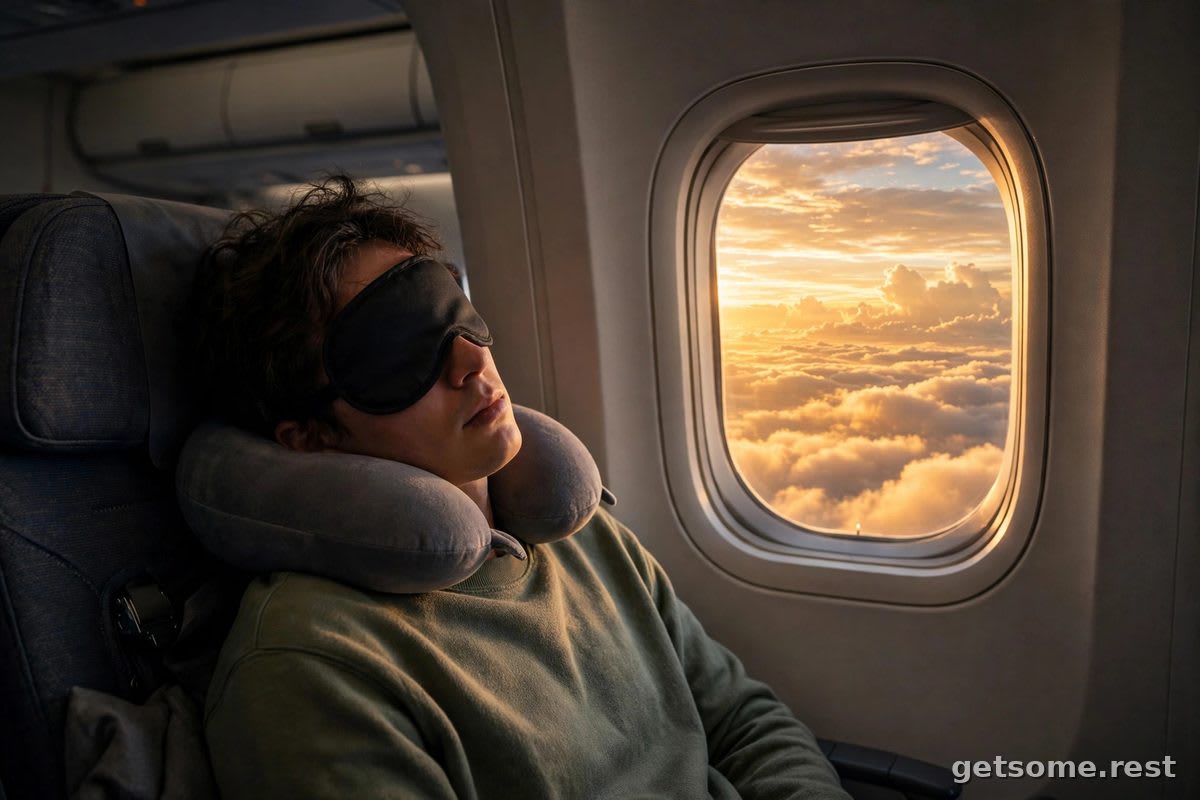
You fly from New York to London and spend three nights staring at the hotel ceiling until 3 a.m. You fly home on the same route and the same six-hour jump barely leaves a mark. Regular travelers know the pattern well: eastbound trips wreck you, westbound trips are manageable. It is not weakness or bad planning — your body clock is genuinely built to handle one direction better than the other. The good news is that the recovery strategy is simple once you know how the clock works.
Contents
Why eastward travel is harder
Everything starts with your circadian rhythm — the roughly 24-hour cycle that tells your brain when to be alert and when to feel sleepy. Left alone with no clocks or daylight, the human internal clock actually runs a little longer than 24 hours, around 24.5. That small quirk is the entire story of the east-west asymmetry.
When you fly west, your day gets longer. You gain hours, so your body clock has to delay — to shift later, which scientists call a phase delay. Because your clock already drifts later on its own, delaying is like rolling with the current. When you fly east, your day gets shorter. Your clock has to advance — shift earlier — which works against your natural drift. It is the difference between staying up late (easy) and falling asleep two hours early (nearly impossible).
This is not just folk wisdom. Physicists at the University of Maryland modeled circadian recovery using that 24.5-hour internal cycle and found the recovery math differs by direction: a three-time-zone trip took a little under four days to fully recover westward versus a little over four days eastward; six time zones took about six days westward versus about eight eastward; and nine time zones took under eight days westward versus twelve eastward. The symptoms differ too: eastbound travelers mostly struggle to fall asleep at local bedtime, while westbound travelers tend to wake up too early and fade by evening.
Staying up later comes naturally; falling asleep earlier fights your biology. That is jet lag in one sentence.
Source: GetSome Rest editorial analysis
The practical takeaway: give eastbound trips more respect in your schedule. If you have an important meeting or event at the destination, build in an extra recovery day when traveling east that you might not need traveling west.
Eastward vs westward at a glance
Here is how the two directions compare across the things that matter for your recovery plan.
| Factor | Eastward (e.g. New York → London) | Westward (e.g. London → New York) |
|---|---|---|
| What your clock must do | Phase advance — fall asleep and wake earlier | Phase delay — fall asleep and wake later |
| Why it feels harder | Compressing the day fights your ~24.5-hour natural drift | Stretching the day rides with your natural drift |
| Main symptom | Lying awake at local bedtime; groggy mornings | Waking before dawn; fading in the evening |
| Rule of thumb | About 1.5 days per time zone | About 1 day per time zone |
| Six time zones | Roughly 8 days to full adjustment | Roughly 6 days to full adjustment |
| Light to seek | Bright light in the morning | Bright light in the evening |
| Light to avoid | Bright light in the evening for the first two days | Bright early-morning light on arrival day |
Recovery figures are approximate and based on circadian modeling and sleep-medicine guidance; individuals vary, and age or prior sleep debt lengthens recovery.
Before you fly: shift your schedule
The cheapest jet lag fix starts three to five days before you leave. Shift your bedtime and wake time by 15 to 30 minutes each day toward your destination's time zone: earlier for eastward trips, later for westward trips. Small steps beat one big jump — moving an hour a night for three nights is far easier on your body than trying to leap six hours on arrival day.
Move your whole routine with the shift, not just bedtime. Eat meals a little earlier or later to match, and move your light exposure too: morning bright light helps you advance earlier for eastbound trips, while later evening light helps you delay for westbound ones. Keep exercising, but shift the timing so your activity cues match the direction you are going.
Most importantly, board the plane well rested. Starting a trip sleep-deprived makes every symptom of jet lag worse, and no amount of clever timing undoes an all-nighter before departure. If you know the trip is coming, treat the week before as a sleep-first week — our guide to shifting your sleep schedule covers the same gradual-adjustment mechanics in more detail.
Light exposure: your strongest reset tool
Light is the main signal your brain uses to set its clock. Getting light at the right time can shift your rhythm by hours per day; getting it at the wrong time can push your clock the wrong way and make jet lag worse. The simple version:
- Flying east: seek bright light in the morning at your destination, and avoid bright light in the evening for the first two days. A morning walk in daylight does this better than any indoor lamp.
- Flying west: seek bright light in the late afternoon or evening, and keep mornings gentler — wear sunglasses on an early-morning walk if you need to.
One caveat for very long hauls: if you have crossed more than about eight time zones, your body can confuse morning light with evening light, which shifts your clock the wrong way. Sleep-medicine guidance for those extreme trips says eastbound travelers should actually avoid morning light and seek late-afternoon sun instead, with westbound travelers doing the reverse. For the common 3-to-8-zone trip, the simple morning/evening rule holds.
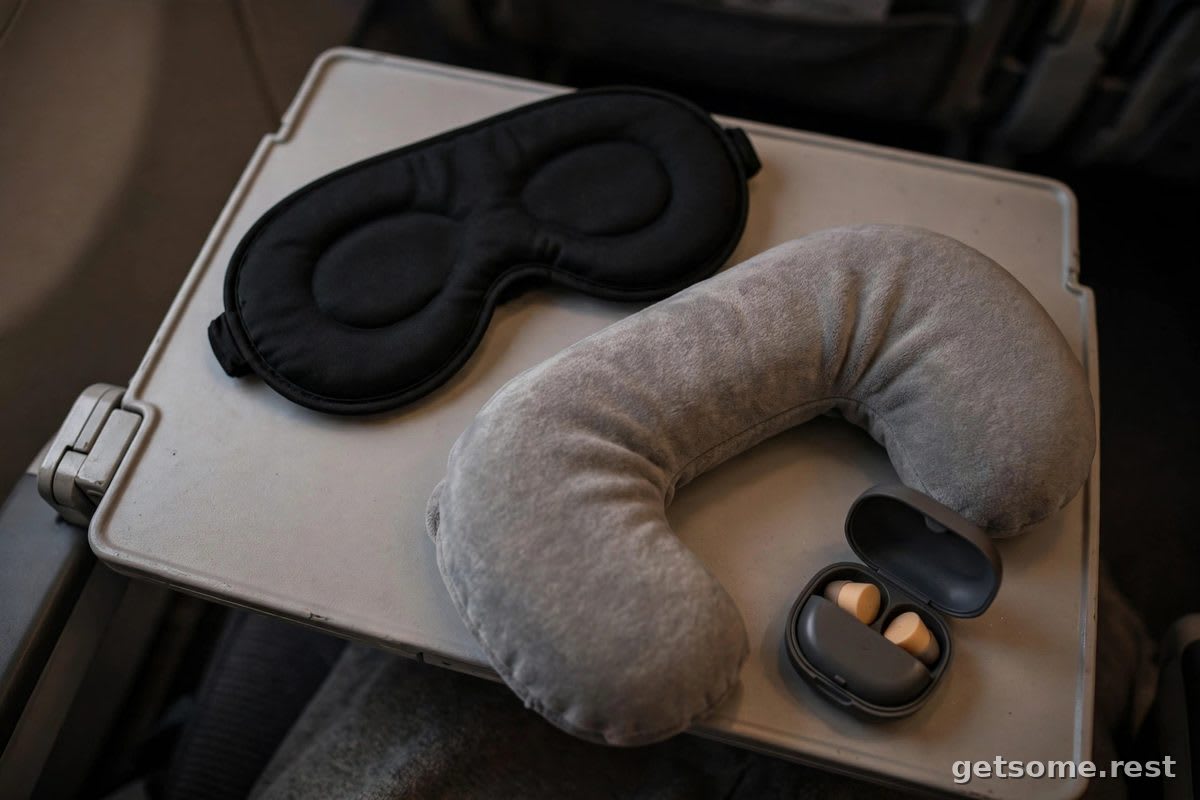
On the plane, use light and darkness the same way. Wear an eye mask during the hours that are nighttime at your destination, even if it is broad daylight outside the window. If your room or hotel lets in too much morning light before you want it, a contoured sleep mask solves the problem — see our roundup of the best smart sleep masks for 2026 — and good earplugs handle hallway noise and snoring cabin mates.
Dim evenings, bright mornings
Eastbound, your enemy on arrival is light in the hours before bed: screens, hotel lighting, bright street signs. Dim everything in the last two to three hours before your target bedtime, and let the morning light do the heavy lifting. Westbound, the pattern flips: keep evenings reasonably bright until you are ready to wind down.
The first 48 hours on arrival
The first two days set your recovery trajectory. Live on local time immediately, even if your body disagrees:
- Get outside in daylight within an hour of waking, in the direction your trip needs (morning for east, late afternoon for west).
- Stay up until local bedtime on arrival day. If you arrive exhausted, a short nap is allowed — see the strategy below — but resist going to bed at 7 p.m.
- Eat meals on local time, even if you are not hungry. Meal timing is a secondary clock-setter and it helps anchor the day.
- Hydrate well and keep alcohol light. Alcohol fragments sleep and dehydration worsens jet lag symptoms; both are common on travel days.
- Move your body — a walk, a jog, or light exercise in daylight doubles as a clock signal and a fatigue fighter.
If your trip is under three days, consider a different play: stay mostly on your home schedule instead. Keep your sleep hours, meals, and key meetings in your home-time sweet spots. Fully adjusting for a two-day trip means landing just as you adapt, then starting over on the way home.
Nap strategy when you are wrecked
Naps are jet lag's most misused tool. A well-timed nap on arrival day can carry you through to a real bedtime; a badly timed one steals the night and resets your recovery clock to zero. The rules are simple: keep naps short (20 to 30 minutes), take them in the early afternoon, and never nap after mid-afternoon local time.
Set an alarm — sleep inertia after a 60-minute accidental nap in a dark hotel room can leave you groggier than no nap at all. If you are traveling for work and need a tactical nap between meetings, our guide to napping without waking up groggy covers the technique, and how long a power nap should be explains why 20 minutes is the sweet spot. On arrival day, one short nap is a bridge to bedtime; by day two, try to drop the nap and let real nighttime sleep take over.
Caffeine timing
Caffeine is a fine jet lag tool in the first half of the day and a terrible one in the second half. As a rough rule, stop caffeine about eight hours before your target bedtime — for an 11 p.m. bedtime, that means nothing caffeinated after about 3 p.m. local time.
Eastbound, the temptation is to caffeinate through the evening because you are fading at 9 p.m. while your brain insists it is only 4 p.m. home time. Resist it: evening caffeine is the number-one reason eastbound travelers lie awake at 2 a.m. Get your caffeine before early afternoon, then switch to water. Westbound, the pattern is gentler — a morning cup helps you stay awake through a sunrise you were not ready for, and the early-day cutoff protects the evening sleep you will crave.
Day-by-day recovery expectations
Knowing what the arc looks like makes the rough days easier to sit through:
- Day 1 (arrival): the worst day for most people. Expect fragmented sleep, low focus, and odd appetite. Stay on local time, get your daylight, and push through to a real bedtime.
- Days 2–3: the turning point. Sleep starts to consolidate, and daytime alertness returns in chunks. Eastbound, falling asleep gets easier first; westbound, early waking eases first.
- Days 4–5: for trips under six time zones, most travelers feel close to normal here — with westbound trips usually arriving sooner.
- Days 6–8+: the long tail of big eastbound jumps. Six-plus zones eastward can take over a week to fully resolve, and that is normal, not a sign something is wrong.
Two things lengthen every stage: age and boarding the plane sleep-deprived. If you are traveling with kids or older family members, plan gentler schedules and protect naps for the little ones while keeping their core sleep hours consistent. And if jet lag hits hard enough to derail your evenings for weeks, that is worth a conversation with your doctor — persistent sleep timing trouble can have causes beyond travel.
Frequently asked questions
Why is eastward jet lag worse than westward jet lag?
Your body clock runs slightly longer than 24 hours, so stretching your day (flying west) comes naturally while compressing it (flying east) fights your biology. Eastbound travelers typically struggle to fall asleep; westbound travelers wake up too early. Models of circadian adjustment suggest recovery takes roughly a day per time zone crossed, and noticeably longer eastbound — about 8 days vs 6 days for a six-zone trip.
How many days does jet lag take to go away per time zone?
The standard rule of thumb is about one day of recovery per time zone crossed. For example, a five-hour shift usually takes around five days to fully adjust. Traveling east tends to need more time than traveling west, and older travelers or anyone who boarded the plane already sleep-deprived may need longer still.
What is the best time to get sunlight after flying east?
After an eastward flight, seek bright light in the morning at your destination and avoid bright light in the evening for the first two days. Outdoor daylight is ideal — a morning walk does the job well. For westward flights, flip it: seek light in the late afternoon or evening and keep mornings gentler.
Should I take melatonin for jet lag?
Melatonin is an option some travelers discuss with their doctor for jet lag, but timing matters a great deal — taken at the wrong time it can shift your clock in the wrong direction. We do not give dosing or medical recommendations in this guide. If you are considering it, talk to a healthcare professional first, and treat light exposure and sleep timing as your primary tools.
Should I sleep on the plane to beat jet lag?
Sleep on the plane only when it is nighttime at your destination; if it is daytime there, stay awake. A sleep mask and earplugs make cabin sleep much easier. Short naps on arrival day can help if you are truly wrecked, but keep them under 30 minutes and before mid-afternoon so they do not steal your first local night.
Key takeaways
- Eastward jet lag is harder because your body clock runs longer than 24 hours — delaying (west) rides with it, advancing (east) fights it.
- Start shifting sleep 15–30 minutes per day, 3–5 days before departure, in the direction of your destination.
- Light is your main tool: morning light after flying east, evening light after flying west; avoid light in the opposite window.
- Nap short (under 30 minutes) and early on arrival day, cut caffeine about 8 hours before bed, and budget roughly a day per time zone — more eastbound.