How to Sleep With a Partner Who Snores Loudly (2026)
Loud snoring can cost a bed partner an hour of sleep a night. Earplugs, white noise, sleep earbuds and bedroom changes that actually work — with real prices.
Loud snoring is not a small annoyance — it is a nightly sleep thief. Bed partners of habitual snorers lose around an hour of sleep a night, and research has found they are up to three times more likely to have trouble falling asleep or staying asleep. The good news is that you do not need to fix the snoring to fix your sleep: earplugs, white noise and a few bedroom changes can give you your night back tonight, while you work on the longer-term causes together. This guide covers what works, what it costs, and when the snoring itself needs a doctor's attention.
Contents
Why Snoring Steals Your Sleep
Snoring is a sound problem before it is anything else, and the numbers explain why it is so hard to sleep through. Snoring can reach 80–90 decibels — roughly as loud as a lawnmower running outside the window — and it is not steady. It comes in bursts, with quiet gaps between, and your brain is built to notice exactly that pattern: a sudden sound after silence. Research cited by sleep and dental sources puts the cost at around 62 minutes of lost sleep a night for the bed partner, more than 375 hours a year. The Sleep Apnea Association reports that bed partners of heavy snorers are up to three times more likely to have difficulty falling asleep or staying asleep.
The unfair part is that the snorer usually sleeps fine. The person making the noise is asleep; the person next to them is awake, listening, and getting more frustrated with every cycle — which makes falling back asleep harder. That is why the fixes in this guide work on your side of the bed first: you cannot control the noise, but you can control how much of it reaches you, and how your brain reacts to what does.
There are two different jobs here, and it helps to keep them separate. Tonight's job is to protect your sleep: earplugs, sound masking, and timing. The longer job is to reduce the snoring itself: sleep position, alcohol, congestion, and — when the signs point that way — a doctor. This guide covers both, in that order, because a good night's sleep tonight is what gives you the patience to work on the rest.
Tonight's Fix: Earplugs That Actually Work
Earplugs are the cheapest, fastest fix, and the evidence for them is better than most people expect. A clinical trial at Glasgow Royal Infirmary found that, for selected couples, earplugs were an effective short-term answer to the social effects of disruptive snoring — the researchers' words, and the most honest summary of what earplugs do: they do not fix the snoring, they fix your night.
The number to look for is the Noise Reduction Rating, or NRR. High-quality foam earplugs rated at 33 NRR cut ambient sound by around 15–20 decibels in real-world conditions — enough to drop a moderately loud snore into a range many people can sleep through. They cost almost nothing: a multi-pair pack of foam plugs runs under $10. The trade is comfort. Foam plugs press into the ear canal, and some people find them irritating after a few hours, especially side sleepers whose ear presses into the pillow.
Reusable silicone plugs solve the comfort problem for most people. The Loop Quiet 2 costs $24.95, softens sound by up to 24 dB (SNR), and sits almost flush in the ear, so it does not dig into the pillow when you sleep on your side. Our full comparison of the Loop Quiet 2 and Mack's Pillow Soft covers the two approaches in detail: Loop is the reusable, comfortable pick; Mack's silicone putty plugs are the cheap disposable alternative, also under $10 a pack, and they mould to the ear instead of going inside it. If you have never slept with earplugs, start with Mack's or a foam pack — if the idea works but the foam irritates you, the Loop Quiet 2 is the upgrade.
One honest limit: earplugs do not erase snoring, they turn it down. A snore that hits 80–90 decibels — about as loud as a lawnmower outside the window — comes through even good plugs as a dull, rhythmic sound. That is where the second layer comes in: white noise, which blurs what the plugs leave behind.
Sleep Earbuds and White Noise Machines Compared
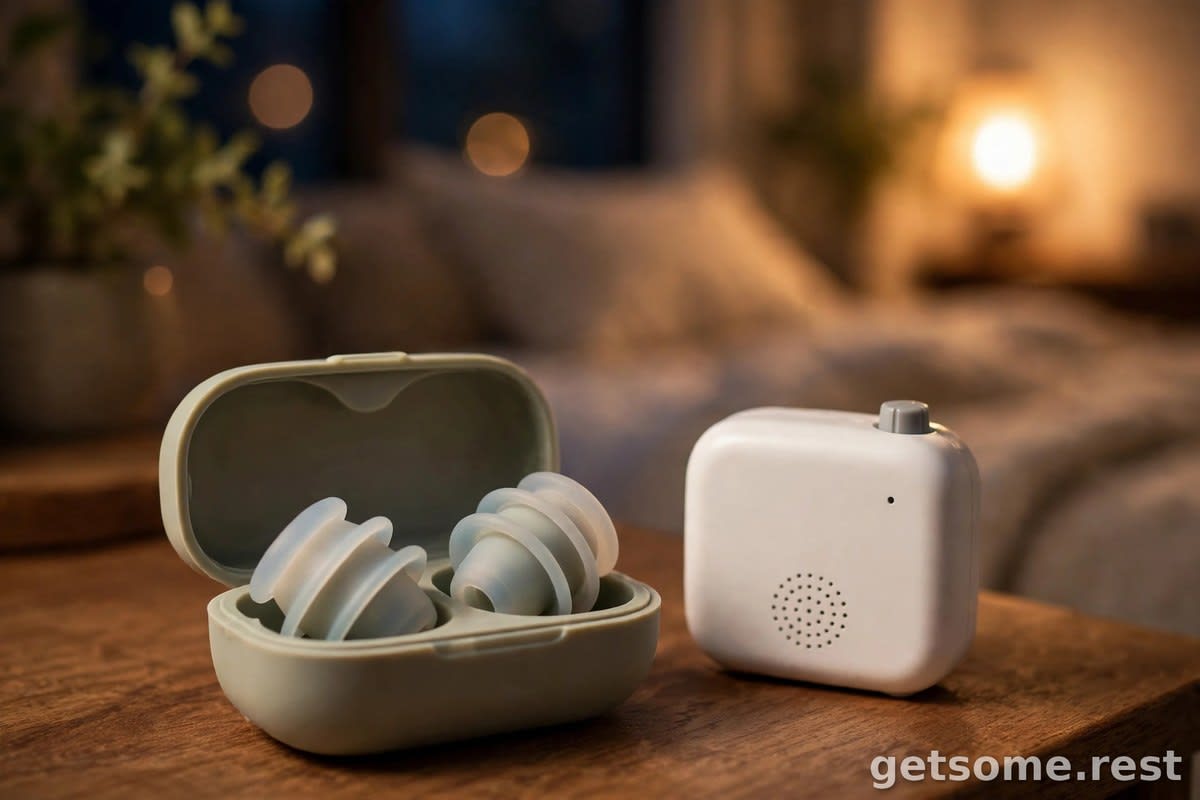
If earplugs are not enough, or you cannot stand them, the next step up is a device that plays sound rather than blocking it. Sleep earbuds and white noise machines work on the same principle — cover the snoring with a steadier sound.
| Product | Price | What it does | Best for |
|---|---|---|---|
| Loop Quiet 2 earplugs | $24.95 | Reusable silicone plugs, up to 24 dB softer | Side sleepers, first try |
| Mack's Pillow Soft earplugs | Under $10 a pack | Silicone putty, moulds to the ear | Cheapest test, sensitive ears |
| Soundcore Sleep A30 | $199.99 | ANC plus adaptive snore masking from the case | Loud snorers, side sleepers |
| Dreamegg D11 Max | About $25 | 21 sounds, battery-powered, portable | Budget white noise, travel |
| Yogasleep Dohm Nova | $99.99 | Real fan sound, adjustable tone | People who hate looped audio |
The Soundcore Sleep A30 is the standout for this exact problem, because it was designed for it. Its charging case listens for snoring in real time and plays adaptive masking audio through the earbuds — the snoring is covered by sound, not cancelled by noise cancelling, which handles low-frequency hum like traffic instead. Each bud weighs about 3 grams, the battery lasts about 9 hours per charge with 45 hours from the case, and the case needs to sit within 5 feet of the snorer to detect the sound. At $199.99 it is not cheap, but it is the only product here that reacts to the snoring as it happens. You can find the Soundcore Sleep A30 on Amazon, where listings often run below the $199.99 list price.
The Dreamegg D11 Max is the budget pick and the one to buy first if you have never tried a sound machine. It costs about $25, plays 21 sounds, runs on a rechargeable battery, and is small enough to travel with — our Dreamegg D11 Max review covers it in full. The Yogasleep Dohm Nova at $99.99 is the premium alternative: it makes its sound with a real spinning fan instead of a recording, so there is no audio loop to notice at 3 a.m. Our best white noise machine guide compares the whole field, and our best earplugs for snoring partners guide covers the plugs in depth.
For the earplugs themselves, you can find the Loop Quiet 2 on Amazon and Mack's Pillow Soft on Amazon, both with the getsomerest-20 tag. Prices change often, so verify before you buy — and buy the cheap plugs first. If they work, you have solved the problem for $25. If they do not, you have spent $25 learning what does not work, and the Sleep A30 is still there.
The Layered Setup: Earplugs Plus White Noise
For very loud snoring, one tool is rarely enough — and the combination that sleep guides keep coming back to is earplugs plus a white noise machine. The logic is simple: the plugs cut the volume, and the sound machine blurs what is left. A snore that punches through silence wakes you; the same snore arriving through a steady wash of brown noise, already softened by plugs, often does not. The two tools attack different parts of the problem — decibels and contrast — and together they cover more than either does alone.
Placement matters more than price. Put the white noise machine between you and your partner, not on the far side of the room, and set it to 60–65 decibels — loud enough to raise the room's sound floor, not so loud that the machine itself becomes the problem. Brown or pink noise works better than pure white noise for most people, because the deeper tone is easier to sleep through all night. A fan does the same job in a pinch, and a phone app works if you have a speaker that can play all night without buzzing.
The third layer costs nothing: go to bed 15–30 minutes before your partner. If you are already in deep sleep when the snoring starts, it wakes you far less often than if you are still drifting off.
Helping Your Partner Snore Less
Coping with the noise is tonight's job. Reducing the snoring is the longer project, and it is worth doing together, because the snorer's sleep is usually worse too. The changes that help most are unglamorous and mostly free.
Sleep position comes first. Back sleeping is one of the most reliable snoring aggravators: gravity lets the tongue and soft tissue fall back and narrow the airway. Side sleeping, particularly on the left side, opens the airway and reduces the vibration that makes the sound. A firm body pillow placed behind your partner's back makes rolling onto their back harder, and it is a $30 fix that works the first night. Elevating the head and upper body by 3–4 inches with a wedge pillow helps the same way, by keeping the airway more open.
Alcohol before bed reliably makes snoring worse. It relaxes the throat muscles, and the effect is dose-dependent — a drink with dinner is not the same as a nightcap at midnight. Cutting alcohol in the hours before bed is the single highest-impact lifestyle change in most snoring guides, and it costs nothing to test for a week. Nasal congestion matters too: a blocked nose forces mouth breathing, which is louder, so a clear nose — saline spray, a humidifier, treating a cold — can quiet a snore that is really a congestion problem.
Know when the snoring needs a doctor, not a gadget. Loud, chronic snoring that comes with gasping or choking sounds, pauses in breathing, or heavy daytime sleepiness is the pattern most often linked to sleep apnea — and that is a medical question, not a product question. Encourage your partner to talk to a doctor: the person snoring is the one whose breathing is being interrupted. If separate bedrooms are the answer for now, that is fine too — a practical arrangement, not a failure.
How We Reported This Story
We have not run a lab test of these products against a snoring partner, and no honest guide can claim to have done that in a controlled way. This article is built from the published sources below, the manufacturers' own specifications, and our site's existing hands-on comparisons of the earplugs and machines named here.
- The sleep loss figures: bed partners of heavy snorers are up to three times more likely to have difficulty falling asleep or staying asleep, per the Sleep Apnea Association. The figure of around 62 minutes of sleep lost per night comes from research cited in dental and sleep coverage of partner snoring.
- Earplugs: the Glasgow Royal Infirmary trial is Robertson et al. (2006), cited by Sleeplay. Foam plug performance of 15–20 dB in real use and the 33 NRR rating come from snoring and hearing-protection coverage. Loop Quiet 2 pricing ($24.95) and ratings (24 dB SNR, 14 dB NRR) come from Loop's own product page.
- Sleep A30: $199.99, triple noise reduction, snore detection by the charging case within 5 feet, and 3-gram earbuds, per Soundcore's product page and Crutchfield's listing. The masking-audio detail — the case detects snoring and the earbuds play masking sound, rather than ANC cancelling it — comes from Soundcore's own FAQ.
- White noise: the 60–65 dB placement guidance and the Dreamegg D11 Max price ($25, 21 sounds) come from our own published reviews and snoring guides. The Dreamegg figure is the price in our D11 Max review.
- What this guide is not: medical advice. It covers coping with noise — earplugs, sound masking, bedroom setup — not diagnosing or treating snoring. Loud, chronic snoring with gasping or daytime sleepiness is a reason to talk to a doctor.
Frequently asked questions
Can earplugs block snoring completely?
No, and no product honestly claims to. Foam earplugs with a 33 NRR rating cut about 15–20 decibels in real use, which turns a loud snore into a dull background sound most people can sleep through. Reusable silicone plugs like Loop Quiet 2 soften sound by up to 24 dB. For very loud snoring, earplugs plus a white noise machine work better than either alone.
What white noise is best for blocking snoring?
Brown or pink noise works best for most people, because the deeper tone is easier to sleep through all night than the hiss of pure white noise. Place the machine between you and your partner, at 60–65 decibels, so it raises the room's sound floor and blurs the sharp peaks of each snore. A $25 machine like the Dreamegg D11 Max does this as well as a $100 one.
Do sleep earbuds work for a snoring partner?
Yes, and the Soundcore Sleep A30 is built for exactly this: its charging case listens for snoring and plays adaptive masking audio through the earbuds, while active noise cancelling handles low-frequency hum. It costs $199.99 and suits side sleepers. The catch is comfort — some people cannot sleep with anything in their ears, and earplugs at $25 are the cheaper test of whether you can.
Is it OK to sleep in separate rooms?
Yes, and it is more common than people admit. Separate bedrooms are a practical answer when snoring is loud and persistent: both people sleep better, and the relationship usually improves with the sleep. It is a backup plan, not a failure — try the earplugs and white noise first, and keep the guest room as the safety net, not the first move.
When should loud snoring be checked by a doctor?
If the snoring is loud and chronic, and it comes with gasping or choking sounds, pauses in breathing, or heavy daytime sleepiness, encourage your partner to talk to a doctor. Those are the signs most often linked to sleep apnea. This article is about coping with the noise, not diagnosing anything — a doctor is the right next step for the snorer, not a sleep gadget.
Key Takeaways
- Start tonight: earplugs plus a white noise machine. Foam plugs rated 33 NRR cut 15–20 decibels in real use, and a sound machine at 60–65 decibels blurs what gets through.
- Cheapest first: foam or silicone earplugs under $10, then a $25 Dreamegg D11 Max. The $199.99 Soundcore Sleep A30 is the upgrade if plugs are not enough or you cannot stand them.
- Go to bed first: falling asleep 15–30 minutes before your partner means the snoring starts while you are already in deep sleep.
- Help the snorer: side sleeping, a body pillow, head raised 3–4 inches, no alcohol before bed, and a clear nose all reduce snoring — and they help your partner's sleep too.
- Know the line: loud chronic snoring with gasping, breathing pauses or heavy daytime sleepiness is a reason to talk to a doctor, not a reason to buy a better gadget.
- Separate rooms are fine: if nothing else works, sleeping apart is a practical arrangement, not a failure — both people sleeping well beats both people sleeping badly.