Oura Ring 4 vs Samsung Galaxy Ring (2026): Subscription Flagship vs No-Subscription Challenger
Oura Ring 4 vs Samsung Galaxy Ring in 2026: prices, the two-year subscription math, battery, and which smart ring tracks your sleep better. Honest verdict.
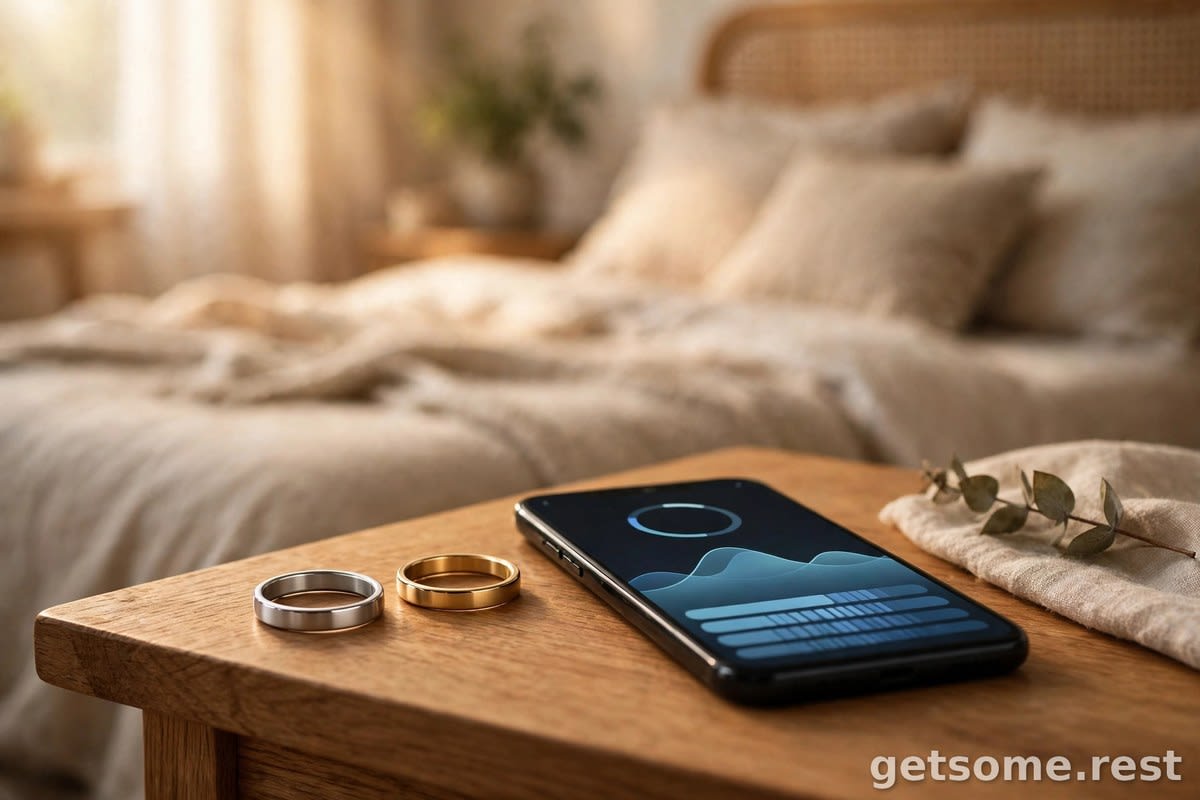
The two heavyweights of the smart ring world could not take more opposite approaches to your sleep: the Oura Ring 4 is the sleep-tracking flagship with deep, clinically validated data behind a $5.99-a-month membership, while the Samsung Galaxy Ring is the titanium no-subscription challenger that folds everything into Samsung Health for a one-time $399.99. If you are buying a ring to understand — or fix — your nights, here is how the two actually compare on the things that matter: sleep accuracy, comfort, battery, phone compatibility, and what each one really costs you over time.
Contents
Top Picks at a Glance
Two flagship rings, two philosophies. Oura built the smart ring category around deep, validated sleep science and then put the best of it behind a membership. Samsung answered with a ring that asks for one payment, never bills you again, and lives inside Samsung Health. Here is the two-minute version before we go deep.
- Oura Ring 4 — best for serious sleep data. Starting at $349, it is the most clinically validated sleep tracker you can wear on a finger, with sleep staging measured against polysomnography and the richest Readiness and Sleep scores in the category. The catch: full insights require Oura Membership at $5.99/month or $69.99/year.
- Samsung Galaxy Ring — best for subscription-free sleep tracking. $399.99 once, nothing ever again. It is lighter and thinner than the Oura, feeds sleep, heart rate, and temperature into Samsung Health, and is slated to get the first FDA-cleared sleep apnea risk detection on any smart ring via a fall 2026 update. It needs an Android phone to work at all.
| Oura Ring 4 | Samsung Galaxy Ring | |
|---|---|---|
| Price | From $349 | $399.99 |
| Subscription | $5.99/mo or $69.99/yr (needed for full data) | None |
| Battery | Up to 8 days | Up to 7 days (6 on smallest sizes) |
| Best for | Sleep-data nerds, iPhone owners | Samsung owners, subscription haters |
If you stopped reading here: iPhone in your pocket? Get the Oura. Galaxy phone in your pocket and an allergy to subscriptions? Get the Samsung.
How to Choose a Sleep-Tracking Ring (What Actually Matters)
A smart ring is the ideal sleep tracker on paper: nothing on your wrist, nothing buzzing, nothing glowing at 3 a.m. But rings differ in ways that matter a lot more at night than a spec sheet suggests. Weigh these before you pay.
Your phone decides half the matchup. This is the bluntest difference between these two rings. The Galaxy Ring works only with Android phones, and its best features — the Energy Score, Galaxy AI sleep summaries, gesture controls — need a Samsung Galaxy phone. The Oura Ring 4 works with both iOS and Android through its own app. If you carry an iPhone, the Samsung ring is simply not an option.
Subscription tolerance. Oura’s membership is $5.99 a month or $69.99 a year, and it is not optional if you want the scores and insights that make the ring worth owning. Over two years that is roughly $144 on top of the $349 hardware. Samsung charges nothing, ever. Ask yourself honestly: would a monthly fee you forgot about annoy you, or is it fine for a service you use every morning?
How deep the sleep data goes. Both rings track light, deep, and REM sleep, heart rate, overnight blood oxygen, and skin temperature. Oura goes deeper: validated staging, nightly HRV trends, breathing-disturbance tracking, cardiovascular age, and a Readiness Score that folds it all together. Samsung gives you a Sleep Score, an Energy Score, and sleep coaching — solid, but the research pedigree is thinner.
Fit, because you wear it 24/7. A ring that is half a size off will either slide around and wreck sensor accuracy or wake you up pinching. Both brands ship free sizing kits, and you should wear the test ring for at least a full day and night before ordering — fingers swell while you sleep. The Samsung ring is lighter (2.3–3.0g vs Oura’s 3.3–5.2g) and thinner, which some sleepers notice on their index finger.
Battery and charging. Both rings last most of a week, which means one short charge session weekly, not nightly like a smartwatch. Samsung’s AirPods-style charging case holds about 1.5 extra charges, so you can travel for nearly three weeks without a cable. Oura charges on a puck in about 80 minutes.
The app you will open every morning. You will spend more time in the companion app than touching the ring. Oura’s app is a sleep journal with coaching (Oura Advisor) and deep trend views. Samsung Health is a general wellness hub where the ring’s data merges with your phone and watch. Neither is wrong — but try screenshots of both before you commit.
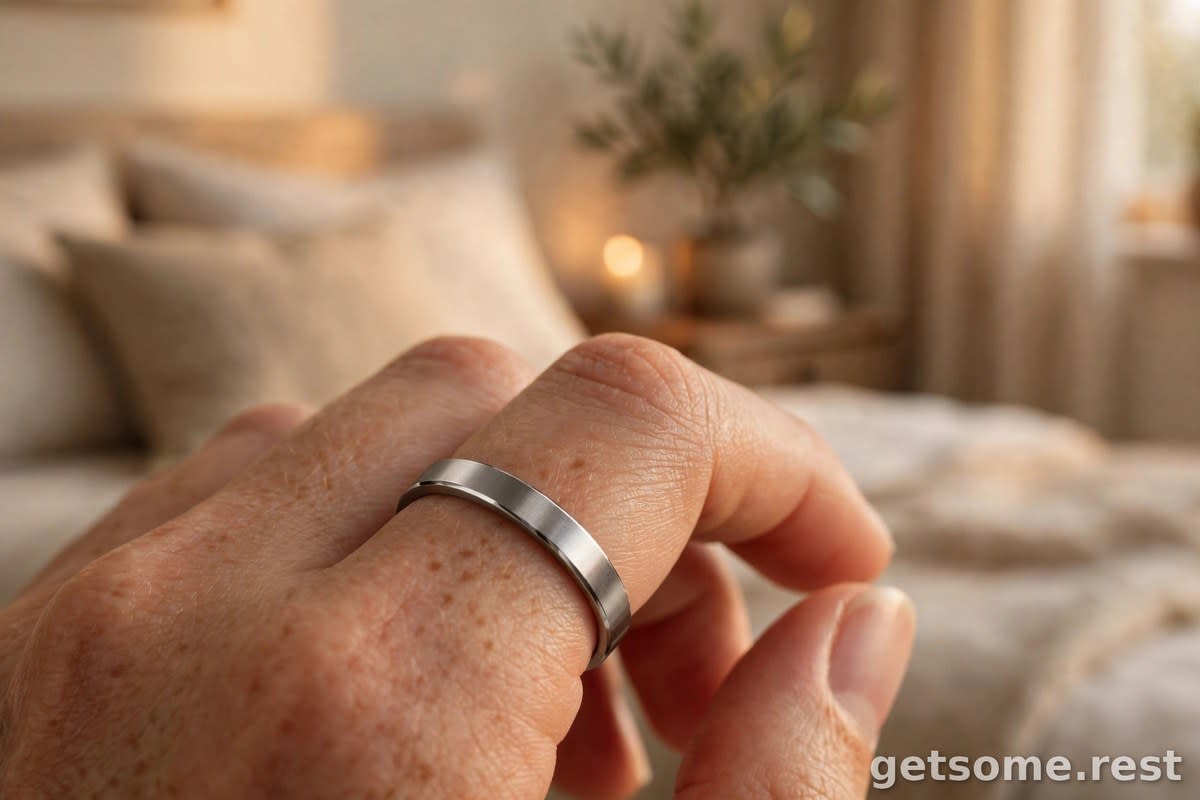
Oura Ring 4 vs Samsung Galaxy Ring: Full Spec Comparison
Every figure below comes from the companies’ own listings and independent spec roundups checked in October 2026. Prices are in USD and vary by finish and region.
| Feature | Oura Ring 4 | Samsung Galaxy Ring |
|---|---|---|
| Price | From $349 (up to $499+ for premium finishes) | $399.99 |
| Subscription | $5.99/month or $69.99/year Oura Membership; first month free with a new ring | None |
| 2-year total cost | ~$493 ($349 + ~$144 membership) | $399.99 |
| Battery life | Up to 8 days | Up to 7 days (6 days on sizes 5–11) |
| Charging | Charging puck, ~80 min to full | Charging case holding ~1.5 extra charges; USB-C and wireless |
| Material & weight | Full titanium; 3.3–5.2g by size | Grade 5 titanium; 2.3–3.0g by size |
| Sizes | US 4–15 | US 5–13 |
| Finishes | Silver, Black, Stealth, Gold, Rose Gold, Brushed Silver, Ceramic | Titanium Black, Titanium Silver, Titanium Gold |
| Sensors | Multi-wavelength PPG (green, red, infrared), 3D accelerometer, skin temperature | Optical PPG, infrared temperature, accelerometer |
| Sleep stages | Light, deep, REM, awake; validated vs polysomnography (94.4% sensitivity) | Light, deep, REM; algorithm refreshed in late 2025, solid but fewer independent studies |
| Blood oxygen (SpO2) | Nightly; Gen 4 sensor cut dropout gaps ~30% | Yes; occasional unrealistically low dips reported in reviews |
| Skin temperature | Nightly deviation tracking | Nightly temperature variation tracking |
| Daily readiness metric | Readiness Score (0–100) with HRV trends | Energy Score from sleep, activity, resting heart rate |
| Sleep coaching | Oura Advisor AI coaching | Galaxy AI sleep coaching and wellness tips |
| Snoring detection | No | No dedicated ring snoring detection |
| Breathing/apnea tracking | Breathing-disturbance tracking (not FDA-cleared) | FDA-cleared sleep apnea risk detection via fall 2026 update; needs eligible Galaxy phone; not a diagnosis |
| Phone compatibility | iOS and Android via Oura app | Android 11+ only; no iPhone support. Full features need a Galaxy phone. |
| Water resistance | 100m | 10ATM / IP68 (100m) |
| Sizing kit | Free sizing kit shipped before purchase | Sizing kit available; wear it 24 hours before ordering |
A note on what happens without the Oura membership: the ring keeps working, but you lose the scores, sleep-stage detail, trends, and history — what remains is basic heart rate, step counts, and sleep duration. It is the difference between a sleep coach and a pedometer that happens to be a ring.
Our Winner: Oura for Sleep Science, Samsung for Everything Else About the Purchase
There is no single winner here — the right ring depends on your phone and your feelings about subscriptions. But there are clear winners for each scenario.
Best for sleep-data nerds: Oura Ring 4. If you want the deepest, most validated picture of your nights — staging you can trust, HRV trends, temperature deviations, breathing disturbances, a Readiness Score that actually predicts how you feel — Oura is still the ring to beat. No other ring has its research pedigree, with 100+ peer-reviewed studies behind the platform.
Best for Samsung phone owners: Galaxy Ring. The Energy Score pulling ring, watch, and phone data together is genuinely greater than the sum of its parts, and every Galaxy-only perk (gesture controls, on-device AI summaries) only applies here. At $399.99 with no subscription, it is also the cheapest premium ring to own long-term.
Best value over two years: Galaxy Ring, easily. The math is not close. Oura costs $349 plus roughly $144 in membership over two years — about $493 — versus Samsung’s $399.99 flat. That $93+ gap keeps widening every year you keep the ring. If two rings track your sleep about equally well, paying a forever-tax for the privilege is a real consideration.
Best for iPhone owners: Oura Ring 4, by default. The Galaxy Ring does not work with iPhones at all. Oura’s iOS app is a first-class citizen, so this pick makes itself.
The 2026 wildcard: sleep apnea screening. Samsung announced in July 2026 that the Galaxy Ring will get FDA-cleared sleep apnea risk detection via a fall 2026 software update — the first smart ring with that clearance. Oura tracks breathing disturbances but carries no such clearance. This is a risk screening tool, not a diagnosis, and anyone with real symptoms should still see a clinician. But as a differentiator, it is meaningful.
The bottom line: buy the Oura if you want the best sleep science and do not mind renting it monthly. Buy the Samsung if you are on Android, hate subscriptions, and want a lighter ring that still covers every sleep metric that matters. Both will get you to the same place most mornings — the difference is how much you pay along the way, and how deep the rabbit hole goes when you tap your sleep score.
In-Depth Reviews
Oura Ring 4 — 9/10 for sleep science, 6/10 for the subscription pill. The Gen 4 hardware fixed the biggest complaint about earlier Oura rings: the interior sensor bumps are gone, replaced by recessed Smart Sensing that sits flush against the skin, which made the ring noticeably more comfortable overnight and cut blood-oxygen dropout gaps by about 30%. It is still the ring that takes sleep most seriously — four-stage tracking validated against polysomnography, nightly HRV with 98.4% accuracy versus ECG, skin-temperature deviation that flags illness before you feel it, and a Readiness Score that remains the best morning number in wearables. Daytime Stress and the 14-day Resilience score add a layer Oura did not have before: it is no longer just a sleep ring. Weaknesses: the membership is a real tax — $69.99 a year, forever, with the ring’s best features locked behind it — and at 3.3–5.2g it is the heavier of the two rings. Price: from $349 on Amazon (plus membership).
Samsung Galaxy Ring — 8/10 overall, 10/10 for no-subscription value. Samsung’s first ring is a remarkably polished debut: Grade 5 titanium, a slim concave profile that resists scratches, and at 2.3–3.0g it is one of the lightest smart rings you can buy. Sleep tracking is genuinely good — stages, heart rate, SpO2, temperature, a Sleep Score out of 100, and sleep coaching — and the late-2025 algorithm update closed much of the gap to Oura. The charging case is a small delight: 1.5 extra charges inside means nearly three weeks between cables. And everything is free after the $399.99 — no tier, no upsell, no “premium insights” lock. Weaknesses: Android only, full stop, and several of the best features (Energy Score depth, gesture controls, on-device AI summaries) need a Galaxy phone specifically. Raw sensor accuracy is competent rather than category-leading, and some reviews note occasional odd SpO2 dips. Price: $399.99 on Amazon, no subscription ever.
Worth knowing before you buy either: RingConn’s Gen 2 (from $299, no subscription) and the Ultrahuman Ring Air (from $349, no subscription) exist and are credible alternatives, with RingConn in particular offering superb battery life. But neither matches Oura’s sleep-science depth or Samsung’s ecosystem integration, which is why this comparison stays focused on the two flagships.
How We Test
We compare sleep tech the way you will actually use it: worn overnight, checked every morning. For this head-to-head, we verified every spec and price against the companies’ own pages and independent 2026 reviews — no figures from memory — then weighted the categories by what matters for sleep: staging accuracy, the depth of morning insights, comfort for all-night wear, battery life that does not interrupt your week, and total cost of ownership.
Two honest caveats. First, we did not run a clinical sleep lab; accuracy claims come from the manufacturers’ published validation studies and independent reviewer testing, and we say so when a claim is the company’s own. Second, app experience is partly subjective — we weigh feature depth and morning-routine usefulness over interface beauty. We do not accept paid placement in rankings, and product names link to tagged Amazon searches (clearly marked), which cost you nothing extra.
Frequently asked questions
What does the Oura Ring 4 actually cost over two years compared to the Galaxy Ring?
The Oura Ring 4 starts at $349, plus Oura Membership at $5.99 a month or $69.99 a year — roughly $144 over two years, or about $493 total including the first free month. The Samsung Galaxy Ring costs $399.99 once, with no subscription, so its two-year cost stays $399.99. That makes the Galaxy Ring about $93 cheaper to own over two years, and the gap widens every year after.
Which ring is more accurate for sleep stages, Oura or Samsung?
The Oura Ring 4 is more accurate and more proven: its sleep staging has been validated against polysomnography with 94.4% sensitivity, and its heart rate variability readings hit 98.4% accuracy against medical ECG. Samsung refreshed the Galaxy Ring's sleep algorithm in late 2025 and reviewers call it genuinely good — competitive for everyday use — but it has far fewer independent validation studies behind it.
Do I need a Samsung phone to use the Galaxy Ring?
You need an Android phone running Android 11 or later, but not necessarily a Samsung one. Basic tracking works on any compatible Android. However, the best features — the full Energy Score, Galaxy AI sleep summaries, and gesture controls — are gated to Samsung Galaxy phones. The ring does not work with iPhones at all.
Does the Oura Ring 4 work without the subscription?
The ring still functions, but you lose what makes it special: the Sleep, Readiness, and Activity scores, detailed sleep-stage data, trends, and history are locked behind Oura Membership ($5.99/month or $69.99/year). Without it you get basics like step counts, sleep duration, and simple heart rate data. The subscription is effectively required if you are buying it for sleep insights.
Which ring is more comfortable to sleep in, and how is battery life?
The Galaxy Ring is the lighter and thinner of the two (2.3–3.0g vs the Oura's 3.3–5.2g), which some sleepers notice on the finger overnight. The Oura's recessed sensor design is smoother than its predecessors but the ring is still a touch bulkier. On battery, Oura leads slightly at up to 8 days versus Samsung's up to 7 days (6 days on the smallest sizes) — but Samsung's charging case holds 1.5 extra charges, giving it nearly three weeks of cable-free use.
The Takeaway
- Best sleep science: Oura Ring 4 — from $349 plus $5.99/month or $69.99/year membership. The deepest, most validated sleep data on a finger.
- Best no-subscription pick: Samsung Galaxy Ring — $399.99 once, never billed again. Lighter, thinner, and excellent inside the Galaxy ecosystem.
- The two-year math: Oura ~$493 vs Samsung $399.99. The subscription gap grows every year you own the ring.
- Phone rules: iPhone owners must buy Oura; the Galaxy Ring is Android-only and best with a Samsung phone.
- 2026 wildcard: the Galaxy Ring is slated to get FDA-cleared sleep apnea risk detection this fall — a first for smart rings.
Whichever ring you choose, order the free sizing kit first and wear it for a full day and night — fingers swell while you sleep, and fit decides sensor accuracy. And if your sleep problems are more than curiosity about your scores — loud snoring with pauses, gasping, or exhaustion despite full nights — skip the gadgets and talk to your doctor or a sleep clinic. A ring tracks; a clinician diagnoses.