Oura Ring 4 vs Whoop MG: Which Sleep Tracker Is Worth It in 2026?
Oura Ring 4 vs Whoop MG in 2026: $349 ring + $69.99/yr vs $0 upfront + $359/yr. Sleep accuracy, battery, comfort, app AI, and 2-year costs compared.
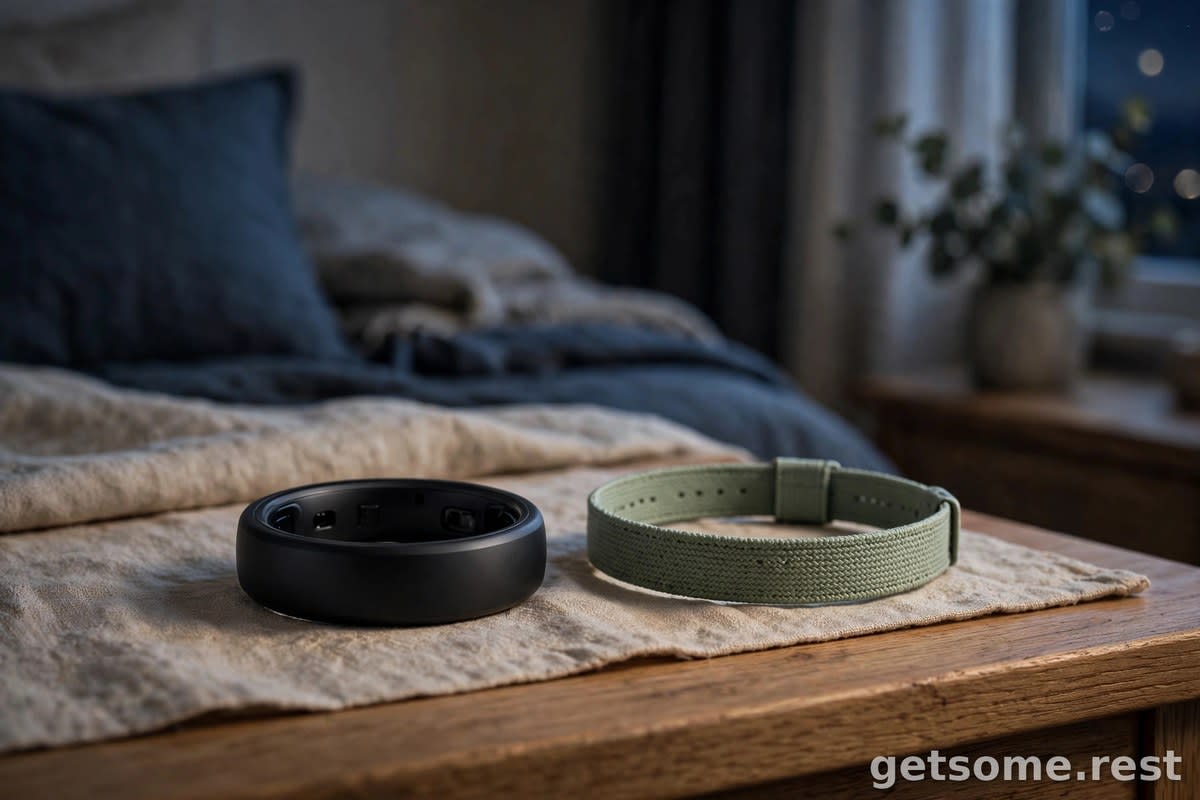
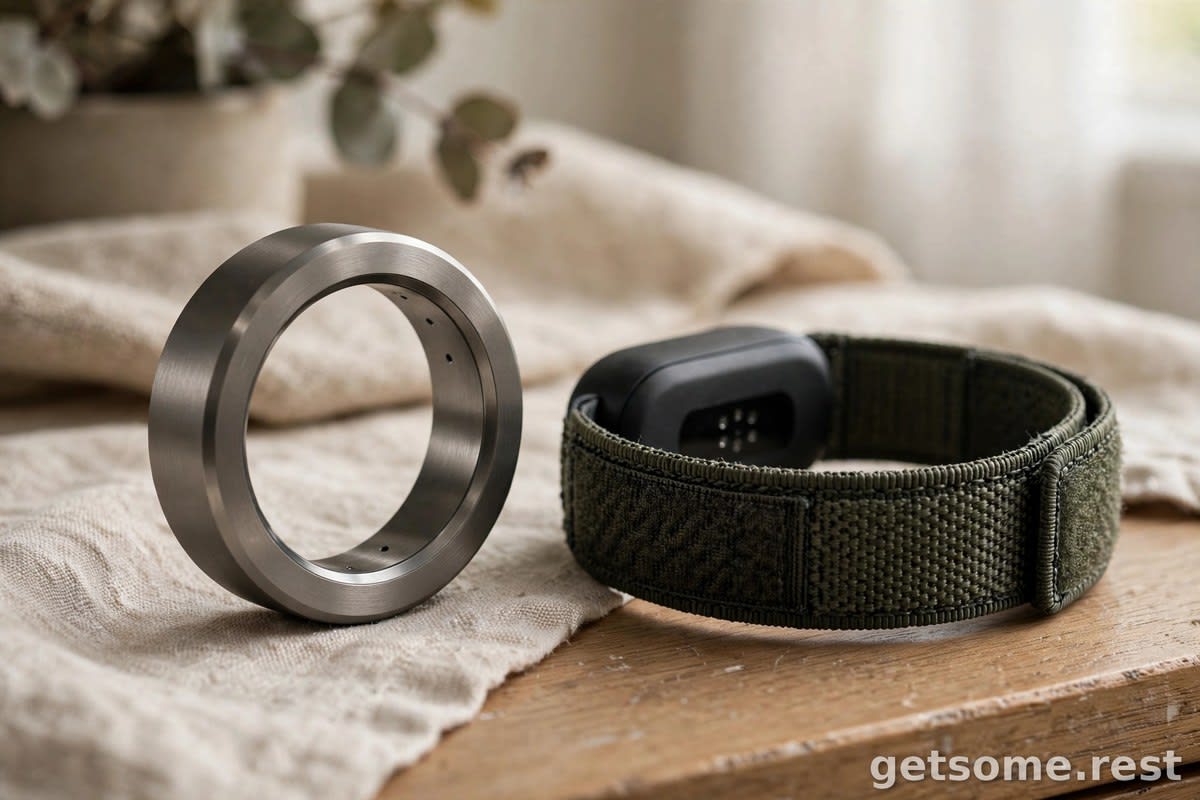
Oura Ring 4 and Whoop MG are the two names every sleep-tracking conversation comes back to in 2026 — and they are built on opposite business models. Oura sells you a $349 titanium ring and charges a small membership; Whoop charges a $359/year membership and hands you the MG band for free. We compared sleep accuracy, battery, comfort, app and AI features, and the real two-year cost so you can pick the right one for how you actually sleep and train.
Contents
At a glance: Oura Ring 4 vs Whoop MG
Oura Ring 4 and Whoop MG answer the same question — how did I sleep, and what should I do today? — from opposite directions. Oura is a titanium ring you buy once and barely notice; Whoop is a screenless wristband you never buy at all, renting it through a yearly membership instead. Here is the honest summary before the details.
| Fact | Oura Ring 4 | Whoop MG (Life tier) |
|---|---|---|
| Form factor | Titanium ring, ~2–4 g, worn 24/7 on a finger | Wristband, ~26.5 g; sensor moves into arm bands and Whoop apparel |
| Upfront cost | $349 (standard finishes; $499 gold/rose gold/ceramic) | $0 — hardware included with membership |
| Ongoing cost | $5.99/mo or $69.99/yr (first month free) | $359/yr (Life tier ships the MG) |
| 2-year total | ~$419–$639 depending on finish | ~$718 |
| Battery | ~8 days per charge | 14+ days; charges on your wrist |
| Water resistance | IP68 to 100 m | IP68 to 10 m |
| Standout sleep feature | Best-in-class sleep staging + temperature trends | Sleep Coach with nightly sleep-need target |
| Standout extra | Cycle and menopause insights, Natural Cycles integration | FDA-cleared ECG, blood-pressure estimates, strain score |
Prices last checked October 2026. Whoop also sells cheaper One ($199/yr) and Peak ($239/yr) tiers that ship the WHOOP 5.0 band instead of the MG — the MG is exclusive to Life. Oura's newer Ring 5 ($399) now exists alongside the still-sold Ring 4.
Two philosophies: sleep-first ring vs strain-first band
The Oura vs Whoop question is really a question about what you want measured. Oura answers “how rested am I?” Whoop answers “how hard did I go, and can I go again?” If your day is walks, yoga, and moderate gym work — with sleep as the main project — Oura's framing fits you. If your day is CrossFit, running, or heavy training and sleep is fuel for performance, Whoop's framing fits you. Neither is wrong; they optimize for different users.
Here is how to read the decision:
- Wearability is the feature that matters most. The best sleep tracker is the one you'll wear every night. A 2–4 g ring disappears on your finger; a 26.5 g wristband is comfortable for most people but still a thing on your wrist. If wristbands annoy you in bed, that alone can decide it — no sensor accuracy debate needed.
- Sleep staging accuracy favors Oura. Reviewers who wear both on the same nights consistently rate Oura's sleep staging and sleep score above Whoop's. Whoop is strong on sleep/wake detection and resting heart rate, weaker on fine stage precision — and every consumer wrist tracker still lags polysomnography.
- Training guidance favors Whoop. Strain score, Strength Trainer exercise logging, and live heart-rate broadcast to other devices make Whoop the better training partner. Oura auto-detects workouts and covers 40+ activity types, but detailed intensity tracking isn't its home turf.
- The subscription model flips who “owns” the device. Cancel Whoop and the band stops working. Cancel Oura's membership and the ring still works in a limited mode (daily scores only). If you hate renewal pressure, that structural difference matters more than $50 a year.
- Newer generations exist. Oura's Ring 5 ($399, 6–9 day battery) is out now alongside the Ring 4, and Whoop's MG is the medical-grade top tier of the 5.0 family. The Ring 4's $349 price is partly a “previous generation discount” — great value, same $69.99/yr membership.
The two-year math is the whole argument in one line: Oura Ring 4 at $349 plus membership runs about $419 over two years; Whoop MG on Life runs about $718. You're paying roughly $300 more for the strain-first model and medical-grade extras.
Source: official 2026 pricing, our calculation
Battery and charging
Whoop's 14+ day battery is the class leader, and the slide-on battery pack charges the band while you wear it — you never take it off. Oura's ~8 days is merely good, and charging means leaving the ring on its dock. For travel, Whoop's on-wrist charging is a genuine convenience edge; for nightly routine people, either works fine. If multi-week battery is the priority over everything else, our subscription-free tracker roundup covers the longest-running options.
Comfort, form factor, and the gym
The ring wins overnight comfort for most people: no strap, no bulk, nothing to catch on sheets. The band wins the gym: barbells and kettlebells beat up rings, while Whoop's pod slides into an arm band or into Whoop's own apparel. Women tracking hormonal shifts get more from Oura's Cycle and Menopause Insights; athletes chasing HRV, strain, and recovery trends get more from Whoop's coaching model.
App and AI: two different coaches
Both apps have grown an AI layer in 2026. Oura leans into readiness: sleep score, temperature trends, and cycle insights feed a “how recovered are you?” morning brief. Whoop leans into prescription: a Sleep Coach that tells you how many hours you need tonight, strain targets for tomorrow, and journal-driven insights. If you like being told what to do, Whoop; if you like understanding your body, Oura. For a deeper look at app-based coaching without hardware, see our test of AI sleep coaches.
Head-to-head: specs, pricing, and total cost
Both companies changed their lineups in 2026 — Whoop moved to three tiers (One $199/yr, Peak $239/yr, Life $359/yr) and Oura added the Ring 5 ($399) while keeping the Ring 4 at $349. The table below keeps the comparison to the two devices in this headline: Ring 4 vs the MG band on Life, with the cheaper Whoop tiers for context.
| Feature | Oura Ring 4 | Whoop MG (Life) | Whoop 5.0 (Peak, for context) |
|---|---|---|---|
| Upfront | $349–$499 | $0 | $0 |
| Annual membership | $69.99 | $359 | $239 |
| 2-year total | ~$419–$639 | ~$718 | ~$478 |
| 3-year total | ~$489–$559* | ~$1,077 | ~$717 |
| Form factor | Ring, ~2–4 g | Wristband, ~26.5 g | Wristband |
| Battery | ~8 days | 14+ days | 14+ days |
| Water resistance | IP68 to 100 m | IP68 to 10 m | IP68 to 10 m |
| Sleep staging | Best-in-class consumer | Good; weaker on stage precision | Good; weaker on stage precision |
| ECG | No | Yes, FDA-cleared, on-demand | No |
| Blood pressure | Nighttime dipping trends (no mmHg) | Daily estimate with cuff calibration | No |
| If you cancel | Ring keeps basic daily scores | Band stops working | Band stops working |
*Three-year Oura total varies with first-year promos and finish. Prices last checked October 2026; confirm on ouraring.com and whoop.com before buying. Links in this article are plain search links with no affiliate tags.
Our verdict: which tracker is worth it in 2026
Buy the Oura Ring 4 if sleep is the project. It's the better sleep tracker by consensus of same-night comparisons, it's dramatically more comfortable for 24/7 wear, its two-year cost is roughly $300 less than the MG, and the ring keeps working in a limited mode if you ever drop the membership. At $349 with the Ring 5 now out, the Ring 4 is arguably the best-value sleep wearable on the market right now. Sleep-focused adults who want jewelry, not a gadget, should start here.
Buy the Whoop MG (Life) if training is the project and you want the medical-grade extras. Daily strain targets, a Sleep Coach that tells you your nightly hours-needed number, Strength Trainer logging, live HR broadcast, plus FDA-cleared ECG and blood-pressure estimates — nothing else bundles all of that. The $359/year is steep, but if you're a serious athlete already spending on coaching, it reads as a rounding error.
Consider Whoop Peak ($239/yr) as the budget-athlete middle ground. Same 14+ day battery and strain/recovery coaching as Life, without the MG's ECG and blood-pressure features. Two-year cost ~$478 — much closer to Oura's territory while keeping Whoop's training-first model.
Skip both if you just want casual sleep tracking. A ~$159 tracker with no subscription, an Apple Watch you already own, or one of the best AI-powered sleep apps covers sleep/wake basics for a fraction of the cost. These two devices are for people who act on the data — if you won't change your bedtime because of a number, don't pay for the number.
What real-world testing found
The 2026 comparison landscape is unusually rich: several reviewers wore Oura and Whoop on the same nights for months, and their findings rhyme. HealNourishGrow's daily-wear comparison (Oura Ring 5 vs Whoop MG, updated October 2026) gave Oura the edge on sleep tracking, readiness, women's health, and all-day comfort, while Whoop took battery, workout tracking, live heart rate, ECG, and blood pressure. Almost everything in that comparison applies to the Ring 4 too, the reviewer notes — so it doubles as our Ring 4 verdict.
Best for sleepOura Ring 4
Best-in-class sleep staging in a ring you'll forget you're wearing — and the cheaper 2-year ownership.
$349 standard finish, at time of writing
Pros
- Superior sleep staging and readiness insights in same-night comparisons
- 2–4 g — the most comfortable 24/7 form factor
- ~8-day battery; IP68 to 100 m
- Ring keeps basic function without membership
- Strong women's health: Cycle + Menopause Insights
Cons
- $5.99/mo or $69.99/yr membership for full insights
- Weaker on workout intensity and live heart rate
- Ring can get in the way of heavy lifting
- Newer Ring 5 ($399) makes the 4 previous-gen
Best for athletesWhoop MG (Life tier)
The training-first system: strain targets, recovery coaching, ECG, and blood-pressure estimates — on a pricey $359/yr plan.
$359/yr Life membership, hardware included
Pros
- $0 upfront — hardware ships with the membership
- 14+ day battery with on-wrist charging
- Strain score, Sleep Coach, and recovery guidance built for athletes
- FDA-cleared ECG + blood-pressure estimates (MG only)
- Survives the gym: arm bands and Whoop apparel options
Cons
- ~$718 over two years; ~$1,077 over three
- Band stops working if you cancel
- Sleep staging weaker than Oura's
- Wristband still a thing on your wrist at night
The fine print from validation research: both devices' current-generation accuracy claims partly rest on manufacturer data, since newer hardware postdates most published validations. Independent work rates consumer wearables at 95%+ on sleep/wake detection but universally weak on sleep-stage precision vs. polysomnography — and a small slice of users develop “orthosomnia,” anxiety from obsessing over their sleep scores. Track the trends, not the digits. And if raw sleep scores aren't your thing, new sleep gadgets for 2026 covers the wider field.
How we compared the two
We don't run a sleep lab — and this article isn't medical advice. But unlike most gadget matchups, this one has a deep bench of same-night, wear-both comparisons from 2026, so we synthesized those alongside official pricing rather than running our own trial. Here is exactly what went in.
- Pricing
- Oura's $349–$499 hardware range and $5.99/mo / $69.99/yr membership, and Whoop's three 2026 tiers (One $199, Peak $239, Life $359/yr) with MG on Life, come from official pricing as reported by 2026 comparison coverage (August–October 2026). Two- and three-year totals are our calculations.
- Sleep accuracy
- Sleep staging and sleep/wake findings come from same-night wear-both reviews (HealNourishGrow, October 2026 update) and validation-study summaries (Canopy Press, RobbSutton), noting that current-generation hardware postdates most published validations.
- Battery, comfort, water resistance
- 14+ day vs ~8 day battery, on-wrist charging, 26.5 g vs ~2–4 g weight, and IP68 10 m vs 100 m ratings come from 2026 roundup tables and reviewer measurements.
- Feature set
- ECG, blood-pressure estimates, strain/Sleep Coach, and women's health features come from official feature lists as quoted in 2026 comparisons. Orthosomnia and JMIR accuracy context comes from Canopy Press's June 2026 analysis.
- Independence — no affiliate tags
- Every product link in this article is a plain search URL with no affiliate tag attached, so our verdict isn't influenced by commission. That policy applies to every article we publish.
Frequently asked questions
Is the Oura Ring 4 or Whoop MG better for sleep tracking?
The Oura Ring 4 is the stronger pure sleep tracker: reviewers and same-night comparisons consistently rate its sleep staging and readiness insights above Whoop's. Whoop tracks sleep well enough for its recovery score, but its app is built around training load and strain, not bedtime behavior.
How much does the Oura Ring 4 cost over two years?
About $419: $349 for the ring in a standard finish plus roughly $70/year for the membership after the free first month. Premium finishes (gold, rose gold, ceramic) push the ring to $499, raising the two-year total toward $639.
How much does Whoop MG cost over two years?
About $718 on the Life tier ($359/year), with the MG hardware included. There is no upfront hardware cost, but the band stops working if you cancel — unlike Oura, where the ring still functions in a limited mode without membership.
Does Whoop MG really measure blood pressure?
The MG band offers a daily blood pressure estimate that must be calibrated with a real cuff, plus an FDA-cleared on-demand ECG and AFib detection. These are health-adjacent features for trend tracking, not a replacement for a medical device or clinician.
Can I wear a Whoop band if I lift weights?
Yes — this is one of Whoop's real advantages. A wristband survives barbells and kettlebells far better than a ring, and the sensor pod can move into arm bands or Whoop clothing. Oura wearers often take the ring off for heavy lifting.
Key takeaways
- The Oura Ring 4 ($349 + $5.99/mo or $69.99/yr) is the better pure sleep tracker: superior sleep staging, a ring you'll forget you're wearing, and roughly $419 over two years.
- The Whoop MG on Life ($359/yr, hardware included) is the better training system: strain targets, recovery coaching, on-wrist charging with 14+ day battery, FDA-cleared ECG, and blood-pressure estimates.
- Watch the subscription tail: Whoop costs ~$718 over two years and dies if you cancel; Oura keeps basic scores without membership.
- Cheaper alternatives in the same families: Whoop Peak ($239/yr, ~$478/2 yrs) and Oura's newer Ring 5 ($399) if you want the current generation.
- Both devices' stage-level accuracy still lags lab-grade measurement — track trends, not digits, and watch for score anxiety (“orthosomnia”).
- If you won't act on the data, skip both: casual trackers or AI sleep apps cover the basics for far less.