Red Dot 2026 Sleep Tech Winners: Where Sleep Gadgets Are Heading
The Red Dot 2026 product design winners are out, and sleep tech stole an unusual amount of the spotlight: a neurostimulation headband, an AI temperature bed system, a sleep lab you wear as patches, and a softer CPAP mask. Here’s what won — and what the list says about where the industry is heading.
Share
10 min read
By GetSome Rest editorial team · Independent sleep product guides
Published · Last updated
Every year, the Red Dot Award for Product Design names the best-designed products on the planet. In 2026, a striking number of the winners live in the bedroom — gadgets that stimulate, cool, and diagnose your sleep.
Contents
The 2026 sleep winners at a glance
We combed the 2026 Red Dot product design results for everything sleep-related. Here are the winners that matter to anyone who cares about better rest, with the official jury reasoning summarized alongside.
Responsive sleep environment with intuitive, crafted design; also won the iF Design Award
from $2,195 (optional $250/yr app subscription)
Onera hPSG sensors
Patch-based wireless home sleep-study (polysomnography) system
Full clinical sleep diagnostics translated into a wearable, easy-to-use system — Onera’s third Red Dot win
Through clinical providers
ResMed AirTouch F30i
Full-face CPAP mask with fabric-wrapped frame
Won in the Innovative Design category for combining technology with comfort-focused material choices
Through CPAP providers (prescription required)
Also honored this year: the SynAura CPAP by Hefei Synaire Medical Technology and the RXiBreeze+ APAP/PAP systems by Resvent Medical Technology. Prices last checked October 2026 and may change.
What the Red Dot Award actually judges
The Red Dot Award for Product Design has run since 1955 and is one of the world’s most recognized design honors, with thousands of entries submitted from more than 60 countries each year. A jury of 40 independent experts evaluates every entry against four principles of good design: quality of function, quality of seduction, quality of use, and quality of responsibility. Past honorees include the Apple iPod, iPhone and iMac, Sony’s AIBO robot, and the Ferrari LaFerrari.
That framing matters for how you read this list. A Red Dot is a design award, not a clinical trial. It tells you a product is beautifully conceived, genuinely usable, and responsibly made — it does not by itself prove the device will improve your sleep. Keep that distinction in mind as we go through the winners, and check the clinical evidence behind any device before you buy.
Why so many sleep winners in 2026?
The concentration is not an accident. Sleep tech has spent the last five years professionalizing: moving from fitness-tracker approximations to clinical-grade sensors, from fixed heating pads to AI-driven temperature systems, and from clinic-only diagnostics to home use. The 2026 jury rewarded exactly that migration — products that take something complicated and medical and make it feel like furniture. If you want the broader launch landscape beyond the winners, our roundup of new sleep gadgets launching in 2026 covers what else is arriving this year.
Wearable comfort was a recurring jury theme in 2026: the Somnee headband’s pillowy all-night design helped it win.
Somnee Smart Sleep Headband
The Somnee Smart Sleep Headband is the most ambitious consumer sleep gadget to win in 2026. Co-founded with neuroscientist Dr. Matthew Walker of UC Berkeley — author of the bestseller Why We Sleep — the second-generation headband pairs clinical-grade EEG sleep tracking with personalized neurostimulation: gentle electrical pulses delivered in a 15-minute pre-bed session, tuned to your brain’s own sleep rhythms over a 21-night personalization period.
The 2026-winning hardware was redesigned around all-night wearability: a soft, pillowy fabric band, hydrogel electrodes that last about three nights before replacement, bone-conduction speakers for meditative audio, a phone-free one-button session start, and an AI companion app with lab-style sleep reports. The Red Dot jury specifically praised how the device translates neuroscientific findings into all-night comfort — exactly the kind of patient-centric design the 2026 sleep winners share.
What it does: 15-minute personalized neurostimulation before bed, plus overnight EEG-based sleep tracking and sleep efficiency scoring.
Price: from $389 for the headband alone; $489 bundles it with a 6-month membership. The membership is required to process your data and unlock personalized stimulation, and it auto-renews. Replacement electrodes are part of the membership.
Fine print: it’s HSA/FSA eligible in the US, and Somnee backs it with a risk-free trial. But be honest with yourself about headband sleep: some reviewers never get used to wearing it all night, and the personalization needs your sleep data to work.
One honest note on the subscription model: Somnee joins a growing club of sleep devices whose core features sit behind a membership. If subscription fatigue is your dealbreaker, our guide to the best sleep tracker without a subscription lists the options that work fully offline.
Red Dot 2026 winner
Somnee Smart Sleep Headband
4.2/5
A 2026 Red Dot winner: clinical-grade EEG plus personalized neurostimulation in a pillowy all-night headband — the most interventionist sleep wearable you can buy.
from $389 headband; membership required
Pros
Actively works on sleep onset with personalized neurostimulation, not just tracking
Clinical-grade EEG tracking with lab-style reports, co-developed with Dr. Matthew Walker
Bone-conduction audio, phone-free sessions, nap and middle-of-night modes
Cons
Membership required and auto-renews — the device is limited without it
Hydrogel electrodes need replacing every ~3 nights
Some sleepers never adapt to wearing a headband all night
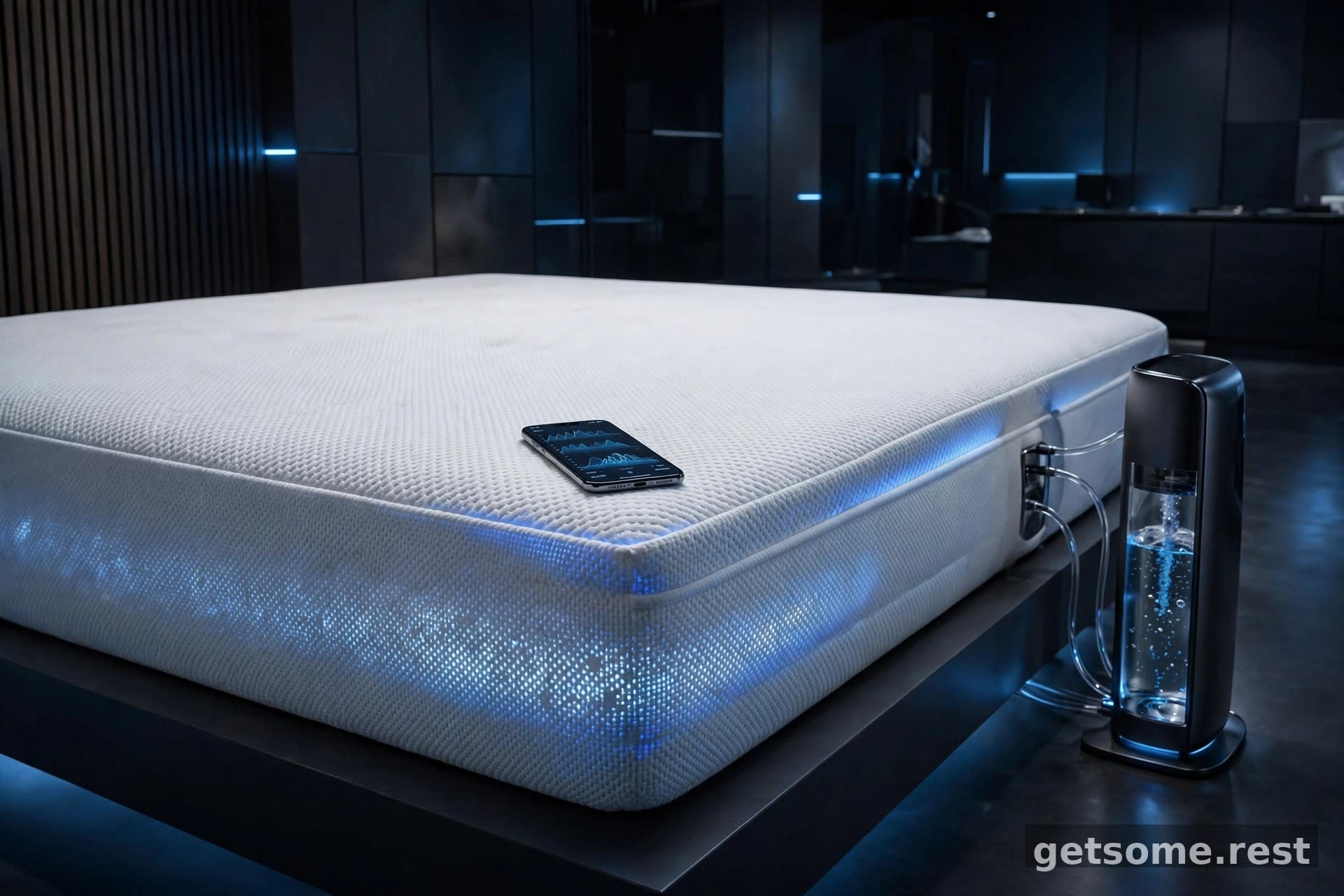
Orion Sleep, founded by Harry Gestetner, took home the 2026 Red Dot for its Smart Sleep System — an AI-powered, temperature-controlled mattress cover — having already won the iF Design Award. Winning both of the world’s major design honors in the same cycle puts the product in rare company, and the company has leaned into that hard.
The system itself is a mattress cover laced with water-circulating tubes, driven by a bedside control tower. Each side of the bed runs its own thermal loop across a 50°F to 113°F range, so couples can hold completely different temperatures without the classic thermostat compromise. Built-in sensors track sleep stages, breathing and movement, and the AI learns your thermal profile night after night to shift the cooling curve automatically. Setup takes about 30 minutes and roughly a gallon of water for the reservoir.
What it does: dual-zone active heating and cooling all night, with schedule-based automation out of the box and AI refinement on top.
Price: from $2,195, undercutting Eight Sleep’s Pod line on hardware. The optional Orion Intelligence subscription ($21/month or $250/year) unlocks deeper sleep insights, smarter scheduling and water purification tablets — but unlike Eight Sleep, the core temperature features work with no subscription at all.
Fine print: 30-night trial, 2-year warranty (extendable to 5 years), HSA/FSA eligible. The cover is spot-clean only, and the control tower does emit a low white-noise hum some reviewers noticed.
The sleep lab comes home: Onera, ResMed and the rest
The other 2026 winners tell the same story from the medical side. Onera Health won its third Red Dot for its hPSG sensors — patch-based, wireless sensors that capture full polysomnography data at home, moving the gold-standard sleep test out of the clinic. CEO Ruben de Francisco framed it as bringing the sleep lab to the patient’s bedroom, and the jury praised how the design translates complex diagnostics into a wearable, easy-to-use system.
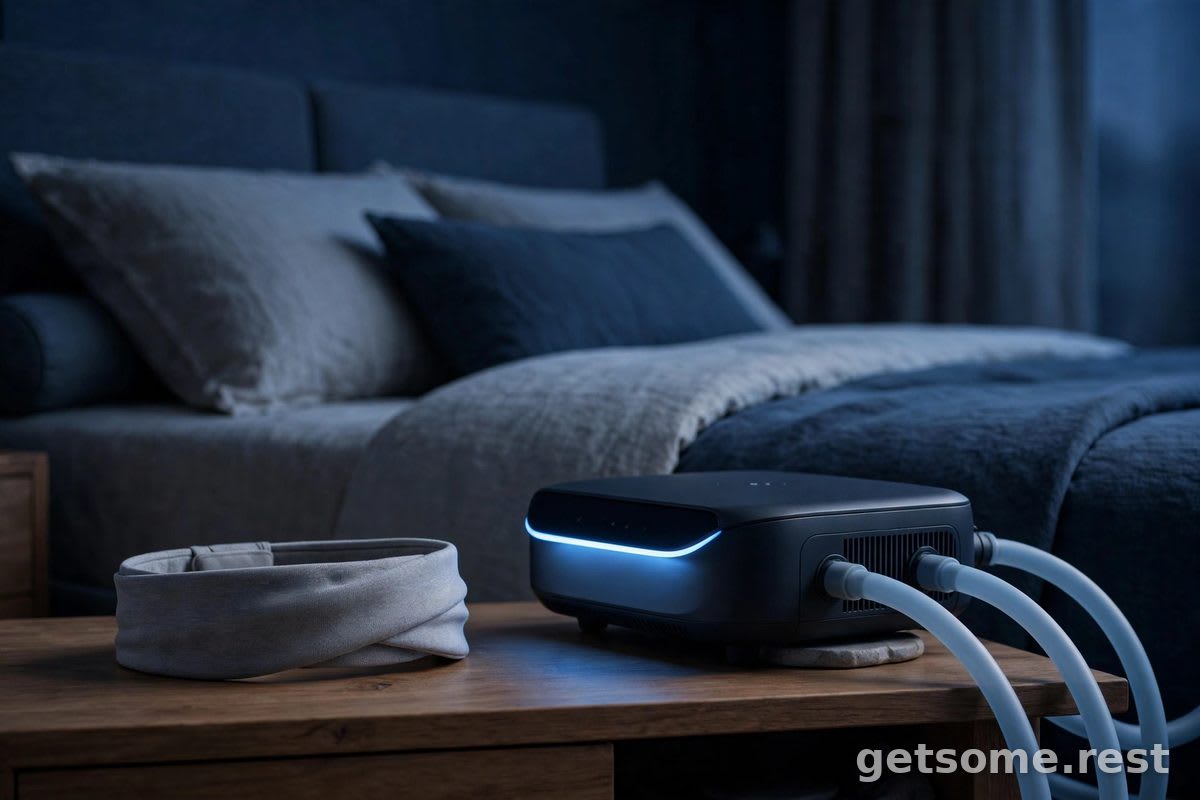
ResMed was recognized in the Innovative Design category for the AirTouch F30i, a full-face CPAP mask whose fabric-wrapped frame is designed to feel softer against the skin — the kind of comfort-first thinking that decides whether someone actually keeps using therapy night after night. Two more CPAP systems were honored as well: the SynAura CPAP from Hefei Synaire Medical Technology and the RXiBreeze+ APAP/PAP systems from Resvent Medical Technology.
We cover these as design news, not buying advice: CPAP therapy requires a prescription and a clinician’s guidance, and we don’t give medical advice. If snoring (rather than diagnosed sleep apnea) is the issue, our review of the Nora Gen 2 smart anti-snore pillow looks at a non-medical option.
The 2026 sleep winners share one design philosophy: take something clinical and complicated, and make it feel like furniture you’d choose to live with.
GetSome Rest, on the Red Dot 2026 sleep tech results
Three trends the 2026 winners reveal
Awards are a lagging indicator — but they’re a useful one. Here’s where the 2026 sleep winners say the industry is heading.
1. The lab is moving into the bedroom
Onera’s home polysomnography patches and Somnee’s clinical-grade EEG headband are the same idea from opposite ends: medical-quality sleep measurement without the medical building. Expect more “bring the clinic home” devices in 2027 — and expect the conversation to shift from tracking sleep to doing something about it, the way Somnee’s stimulation already does.
2. Temperature is the new frontier
Orion’s win — and the broader temperature-bed wars — confirm that active thermal control has become sleep tech’s main battleground. The interesting split: Eight Sleep locks its best features behind a mandatory membership, while Orion runs its core features subscription-free and charges only for advanced intelligence. How that pricing battle resolves will shape the whole category. For the passive (and far cheaper) side of the same idea, see our best cooling mattress toppers for night sweats.
3. Comfort is doing therapy’s heavy lifting
Fabric-wrapped CPAP frames, pillowy headbands, whisper-quiet towers: the 2026 jury kept rewarding products that people will actually tolerate all night. It’s an underappreciated insight — the best sleep technology in the world fails if you take it off at 2 a.m. Design, in this category, is efficacy-adjacent.
How we cover sleep tech
We never accept payment for rankings. When we cover awards and launches, we apply the same discipline as our buying guides:
Award reporting
We report what won and why the jury said so. A design award measures design excellence — not clinical proof — and we say so plainly rather than letting the trophy do the selling.
Price
We record real launch and list prices from official sources. Prices here were checked October 2026.
Subscriptions
We flag exactly what sits behind a paywall. Several 2026 winners need memberships for core features; we name which ones and what they cost.
Medical boundary
We don’t give medical advice and we don’t diagnose or treat sleep disorders. Prescription devices like CPAP are covered as news only.
No paid rankings
Manufacturers can’t buy placement in our coverage, and affiliate relationships never change what we recommend.
Frequently asked questions
What is the Red Dot Award?
The Red Dot Award for Product Design is an international design competition running since 1955, with thousands of entries from more than 60 countries each year. A jury of 40 independent experts judges entries on quality of function, quality of seduction, quality of use, and quality of responsibility.
Did the Somnee headband win a Red Dot in 2026?
Yes. The Somnee Smart Sleep Headband won the Red Dot Award for Product Design 2026. The jury praised the device for translating neuroscience research into an all-night-wearable design, combining clinical-grade EEG tracking with personalized neurostimulation.
How much does the Somnee Smart Sleep Headband cost?
The headband starts at $389 on its own; a $489 bundle includes a 6-month membership. The membership is required to unlock personalized stimulation and data processing, and it auto-renews after the included period — factor that into the real price.
Is the Orion Sleep System better than the Eight Sleep Pod?
They take different approaches. Orion (from $2,195) runs its core dual-zone temperature features with no subscription, charging $250/year only for advanced intelligence features. Eight Sleep’s Pod 6 requires a mandatory Autopilot membership ($199–$399/year) for the device to work at all. See our Eight Sleep Pod 6 price and subscription explainer for the full breakdown.
Do Red Dot winners actually sleep better?
A Red Dot is a design award, not a clinical trial: it proves a product is well-designed and usable, not that it improves sleep. Treat the win as a quality signal, then check the clinical evidence and trial terms behind any device before you buy.
Key takeaways
The 2026 Red Dot sleep winners are the Somnee Smart Sleep Headband, the Orion Sleep Smart Sleep System, Onera’s hPSG home sleep-study sensors, and ResMed’s AirTouch F30i CPAP mask.
The common thread: clinical-grade sleep science — EEG, polysomnography, thermal regulation — redesigned for the bedroom instead of the clinic.
A Red Dot is a design award, not proof a device works: check clinical evidence and trial terms before buying.
Watch the subscription split: Somnee and Eight Sleep lock core features behind memberships, while Orion’s core temperature features work subscription-free.
Filed under:New LaunchesSources: Sleep Review (2026 Red Dot sleep device winners), Business Wire/PR Newswire (Orion Sleep Red Dot 2026 announcement), somneesleep.com (headband pricing and membership terms), red-dot.org
 Red Dot 2026 winner