Alloop Trio Modular Sleep Wearable Explained (2026)
Alloop Trio is a $299 modular sleep wearable whose tiny Cube sensor moves from wristband by day to ring at night, launching on Kickstarter November 10, 2026.
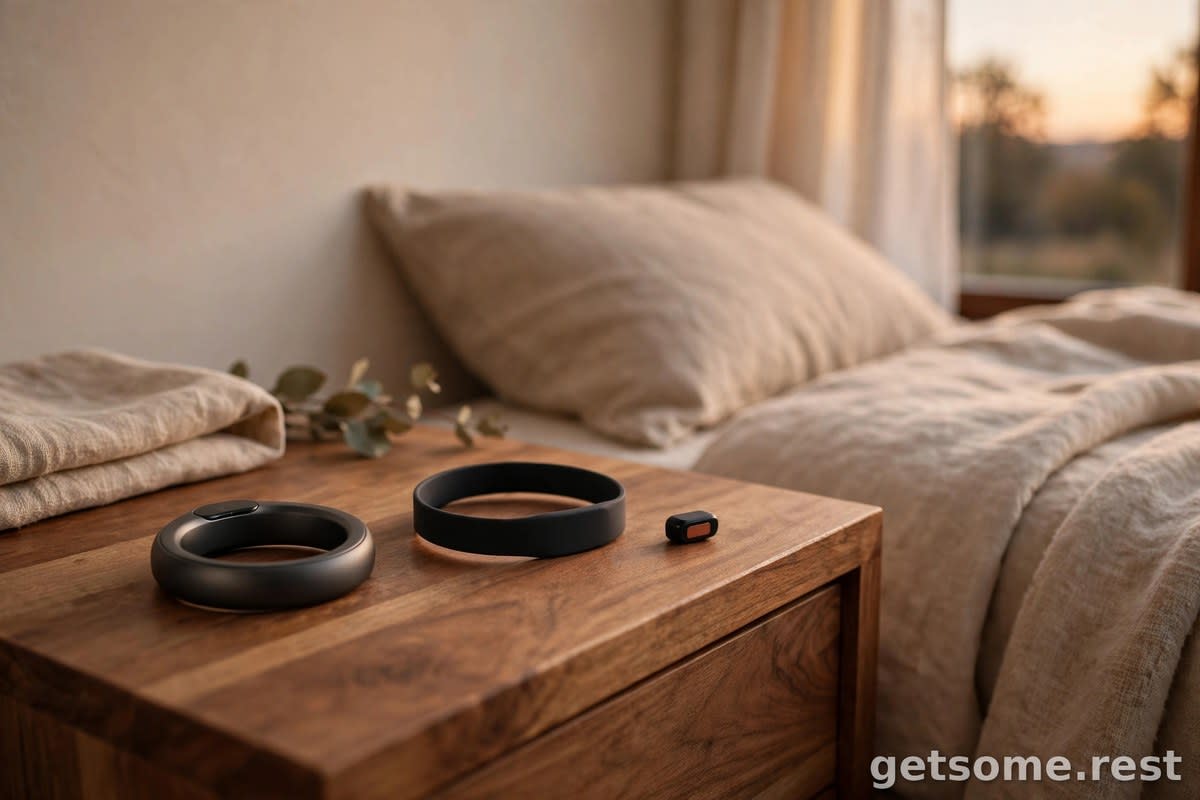
Most sleep wearables ask you to commit to a shape: a ring you wear all day, or a watch you sleep in. The Alloop Trio, unveiled in New York on October 21-23, 2026, by US startup Alloop, refuses that choice. Its whole design is built around one removable sensor, the 2.4-gram Cube, which clips into a wristband by day and a ring at night. The Kickstarter campaign opens November 10, 2026, at an early-bird price of $299, with shipments estimated for late December 2026 to early January 2027. It is an intriguing idea from a founder with a real track record in this exact category, and it is also, plainly, a crowdfunded product that has not shipped yet.
Contents
At a Glance: The Alloop Trio
Alloop is a US startup, and its first product tries to solve the most annoying compromise in sleep wearables: the device that is great on your wrist all day is often the device you least want on your wrist all night. The Trio's answer is to make the sensor itself the product, and everything else an accessory it clips into.
- The Cube: a removable 2.4-gram sensor using PPG optical sensing to track resting heart rate, heart rate variability (HRV), blood oxygen, breathing rate, and temperature.
- Three wear modes: wristband plus Cube plus Halo (full), wristband plus Cube (light), and Cube plus ring (most compact, best for sleep).
- Halo: the third module, adding tap-to-speak voice logging for meals and feelings, light patterns, vibration reminders, and extra battery that charges the Cube while worn.
- The app: produces sleep, recovery, and Bio Age scores, reads Apple Health and Google Health Connect data, and includes a built-in AI agent for voice logging.
- The price and catch: $299 early-bird on Kickstarter from November 10, 2026, with core features free and no mandatory subscription — but the product is crowdfunded, unshipped, and shown so far only as a pre-production prototype.
The founder is part of the story: Dr. Tony Wu co-founded RingConn and was its CEO, so this is not a first-time hardware team guessing at the category. That pedigree makes the Trio worth watching closely. It does not, on its own, make a crowdfunded prototype a safe buy.
How to Choose Your Wear Mode
The Trio offers three wear modes, and choosing between them is really about what you want the device to do at different times of day. Alloop's own framing is simple: wristband plus Cube plus Halo is the full setup, wristband plus Cube is the light setup, and Cube plus ring is the most compact setup and the best for sleep.
Wear the full setup (wristband + Cube + Halo) when you want everything the Trio can do: daytime activity and recovery tracking, tap-to-speak voice logging for meals and feelings, vibration reminders, and the longest time between charges, since Halo charges the Cube while you wear it. This is the daytime power-user mode, and it is also the bulkiest, so it suits people who do not mind a wristband with an extra module attached.
Wear the light setup (wristband + Cube) when you want daytime tracking without the extra module. You lose the voice logging, light patterns, vibration reminders, and Halo's extra battery, but you keep the core sensor readings in a familiar wristband form. This is the sensible default for workdays and workouts, where a slim band stays out of the way.
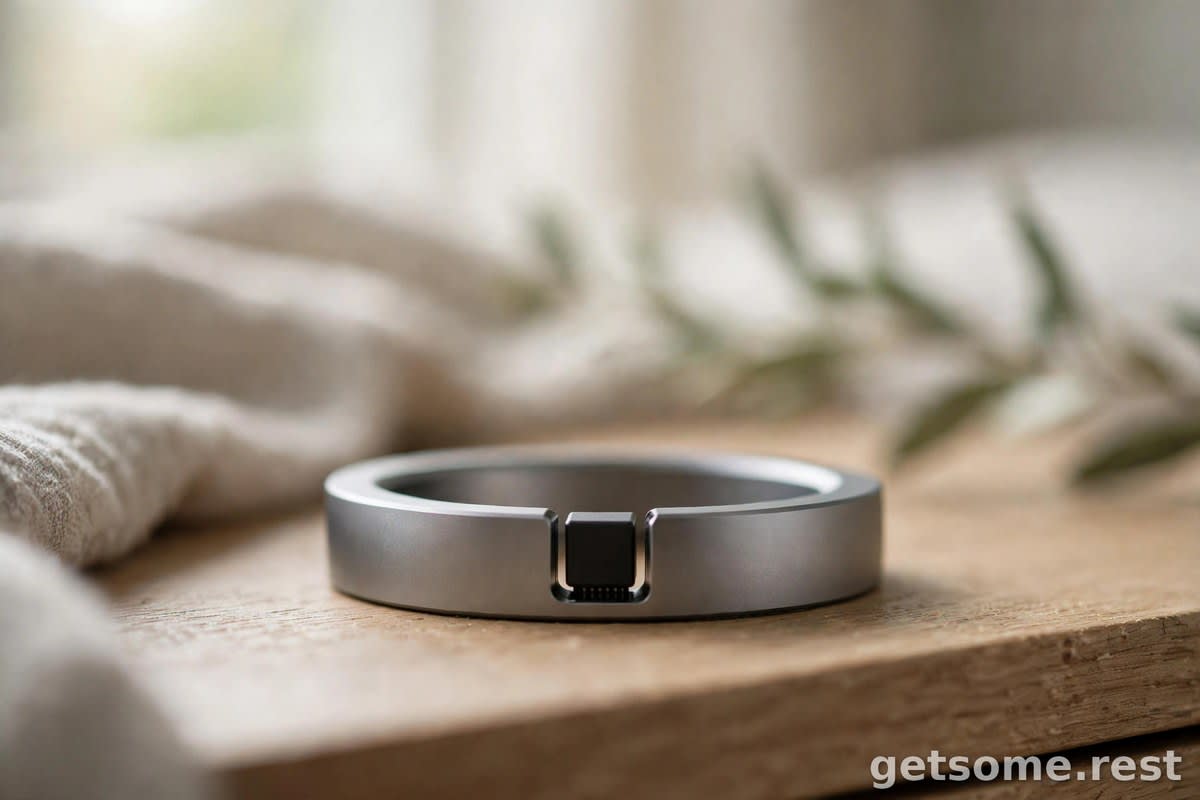
Wear the ring setup (Cube + ring) at night. This is the mode the Trio is really selling. A 2.4-gram sensor in a ring is far less noticeable in bed than a wristband, and finger-based optical sensing is where most sleep rings live for a reason: the finger moves less than the wrist during sleep, and a snug ring keeps the sensor in steady contact. If you buy the Trio mainly as a sleep tracker, expect to spend most nights in this mode and most days in one of the band modes.
One honest caveat, stated plainly: Alloop has published no accuracy data, and optical readings can differ between the wrist and the finger. The company has not shown that a reading taken on the wrist in the morning and a reading taken on the finger at night are directly comparable, so treat cross-mode trends with caution until independent testing exists. If consistent, comparable nightly readings matter most to you, a dedicated ring you never move may be the safer bet for now.
Trio Specs, Side by Side
Everything announced about the Alloop Trio, in one table. Unannounced or unconfirmed details are marked as such — we do not fill gaps with guesses.
| Feature | Alloop Trio | RingConn Gen 2 (shipping rival) | Samsung Galaxy Ring (shipping rival) |
|---|---|---|---|
| Form factor | Modular: Cube sensor moves between wristband, ring, and Halo | Smart ring | Smart ring |
| Sensor | Cube, 2.4 grams, PPG optical sensing | PPG optical sensing | PPG optical sensing |
| Tracks | Resting heart rate, HRV, blood oxygen, breathing rate, temperature; sleep, recovery, and Bio Age scores | Sleep and recovery tracking | Sleep and energy tracking |
| Battery | Cube up to 7 days per charge; Halo charges Cube while worn | Up to 10-12 days per charge (per manufacturer) | Up to 7 days per charge (per manufacturer) |
| Water resistance | Cube 5 ATM (swim as ring or band); Halo IP68 | 5 ATM (per manufacturer) | 10 ATM (per manufacturer) |
| Ring sizes | Small (6, 7, 8), medium (9, 10, 11), large (12, 13, 14); kit includes three rings | Multiple sizes via sizing kit | Multiple sizes via sizing kit |
| Voice logging | Yes, via Halo tap-to-speak plus built-in AI agent | No | No |
| App compatibility | Reads Apple Health / Google Health Connect data | Apple Health / Google Health Connect | Samsung Health |
| Subscription | Core features free, no mandatory subscription; optional paid AI add-ons | No subscription | No subscription |
| Price | $299 early-bird on Kickstarter, subject to change | $299 | $399.99 |
| Availability | Kickstarter opens Nov 10, 2026; shipments est. late Dec 2026 to early Jan 2027; NOT on Amazon | Shipping now | Shipping now |
| Accuracy data | None published yet — unconfirmed | Published by manufacturer; independent reviews available | Published by manufacturer; independent reviews available |
Two rows in that table deserve emphasis. First, the Trio is Kickstarter-only for now: if you see it listed on Amazon, that listing is not from Alloop's launch. Second, the accuracy row is blank for the Trio and filled for its rivals, and that gap is the single biggest reason this article is an explainer rather than a recommendation.
Our Verdict: Who Should Wait, Who Should Back It
For most sleepers, the right move is to wait. The Trio's idea is genuinely clever, its $299 early-bird price undercuts the Samsung Galaxy Ring at $399.99, and its no-mandatory-subscription model matches the RingConn Gen 2 at $299, which is a shipping product you can buy today. But the Trio itself is crowdfunded, unshipped, and built on a pre-production prototype, with no published accuracy data. That combination means the first buyers are funding a promise, not buying a proven tracker, and the estimated late December 2026 to early January 2027 shipping window can slip, as crowdfunding timelines often do.
Who should consider backing it on November 10? Early adopters who like modular hardware, who already follow Dr. Tony Wu's work at RingConn, and who are comfortable with crowdfunding risk in exchange for the early-bird price and the three-ring kit. The three wear modes are a real convenience if you dislike sleeping in a wristband but want daytime band tracking, and the Halo's tap-to-speak voice logging is a genuinely different take on capturing meals and feelings without opening an app.
Who should buy something shipping today instead? Anyone who wants a sleep tracker this month, anyone who needs proven accuracy before trusting nightly trends, and anyone who dislikes the risk that a crowdfunded product ships late or changes before delivery. For those buyers, compare our RingConn Gen 2 vs Ultrahuman Ring Air guide and check RingConn Gen 2 on Amazon — a $299, no-subscription ring that is already on wrists and fingers, not on a Kickstarter page. The Trio may earn its place beside those products once it ships and gets tested; until then, it is a promising launch to watch, not a default recommendation.
What Alloop Is Really Betting On
Read the launch carefully and three bets stand out. The first is that one sensor can serve two jobs. Most wearables force a trade-off: rings are discreet at night but limited by day, while wristbands track days well but bother some sleepers at night. Moving a single 2.4-gram Cube between a band and a ring sidesteps that trade-off entirely, at least in theory. The open question is whether wearers will actually move the sensor every night and morning, or whether the Cube will quietly end up living in one module while the other gathers dust.
The second bet is on voice as an input, not just a gimmick. Halo's tap-to-speak logging lets wearers record meals and feelings by talking rather than typing, and the built-in AI agent is meant to turn those logs into something the app can use alongside sleep and recovery scores. Voice logging only works if it is fast and private enough to use daily, and Alloop has not yet shown how the AI add-ons will be priced, so this is the feature most likely to delight early backers or disappoint them.
The third bet is on the founder. Dr. Tony Wu co-founded RingConn and served as its CEO, so he has shipped a sleep ring before, at the same $299 price point the Trio is targeting. That history is the strongest reason to take this launch seriously, and it is also why the comparison matters: the RingConn Gen 2 is already a shipping, no-subscription product at $299, so the Trio has to prove its modular design is worth waiting for rather than simply matching its predecessor's price. A credible founder helps, but it does not replace shipped hardware, accuracy data, or independent reviews.
How We Reported This Story
This is a launch explainer, not a tested review. The Alloop Trio was unveiled in New York on October 21-23, 2026, its Kickstarter campaign does not open until November 10, 2026, and shipments are not estimated until late December 2026 to early January 2027. No independent testing exists yet, and the hardware shown at the unveiling was a pre-production prototype, so every specification in this article comes from Alloop's announcement and launch coverage, not from hands-on use.
We cross-checked the $299 early-bird price, the Cube's 7-day battery rating, the 5 ATM and IP68 ratings, the ring size ranges, and the no-mandatory-subscription claim against the announcement coverage, and we flagged every claim that comes from the manufacturer rather than from testing. Prices and dates are as announced and subject to change, which is normal for a crowdfunding campaign but worth remembering before you pledge. We will update this article when the campaign launches, when units ship, and when independent reviews with real sleep tracking appear.
Disclosure: GetSome Rest contains affiliate links. If you buy through them, we may earn a commission at no extra cost to you.
Frequently asked questions
What is the Alloop Trio?
The Alloop Trio is a modular health wearable from US startup Alloop, unveiled in New York on October 21-23, 2026, by co-founder Dr. Tony Wu, formerly CEO of RingConn. Instead of one fixed device, it is built around a single removable sensor called the Cube, which clips into a wristband for daytime wear and a ring for nighttime wear, with a third module, Halo, adding voice logging, light patterns, vibration reminders, and extra battery.
How does the Cube sensor work?
The Cube uses PPG optical sensing to track resting heart rate, heart rate variability (HRV), blood oxygen, breathing rate, and temperature. The companion app turns those readings into sleep, recovery, and Bio Age scores, can read data from Apple Health and Google Health Connect, and includes a built-in AI agent for voice-logging meals and feelings. These are wellness and recovery metrics for tracking trends, not medical measurements.
How long does the Alloop Trio battery last?
The Cube is rated for up to 7 days per charge, and the Halo module charges the Cube while it is being worn, so the full wristband plus Cube plus Halo setup can stretch further between plug-in charges. The Cube itself is rated 5 ATM water resistant, meaning it can be worn swimming as a ring or band, while Halo is rated IP68.
What ring sizes does the Alloop Trio come in?
The kit includes a band, the Halo module, and three rings, per Techlicious coverage of the launch. Ring sizes are offered in three ranges: small (sizes 6, 7, 8), medium (sizes 9, 10, 11), and large (sizes 12, 13, 14). That three-ring kit is part of the pitch: one purchase covers different fingers and some size changes over time.
How much does the Alloop Trio cost, and when can I buy it?
The Kickstarter campaign opens November 10, 2026, with an early-bird price of $299, subject to change. Shipments are estimated for late December 2026 to early January 2027. Core app features are free with no mandatory subscription, while optional paid AI add-ons will be offered. The Trio is Kickstarter-only for now and is not sold on Amazon, so be wary of any listing claiming otherwise.
Key Takeaways
- Alloop Trio is a modular wearable from US startup Alloop, unveiled in New York on October 21-23, 2026, by co-founder Dr. Tony Wu, formerly CEO of RingConn.
- One removable sensor, the 2.4-gram Cube, clips into a wristband by day and a ring at night; the Halo module adds voice logging, light patterns, vibration reminders, and extra battery.
- The Cube uses PPG optical sensing for resting heart rate, HRV, blood oxygen, breathing rate, and temperature, feeding sleep, recovery, and Bio Age scores in the app.
- Battery is rated up to 7 days for the Cube, with Halo charging it while worn; the Cube is 5 ATM water resistant and Halo is IP68.
- Kickstarter opens November 10, 2026, at a $299 early-bird price (subject to change); shipments are estimated for late December 2026 to early January 2027.
- Core app features are free with no mandatory subscription; optional paid AI add-ons are planned.
- Cautions: crowdfunded and unshipped, hardware shown was a pre-production prototype, no accuracy data published, and wrist-versus-finger readings are unproven.
- At $299 it competes with the shipping RingConn Gen 2 ($299, no subscription) and Samsung Galaxy Ring ($399.99, no subscription); the Trio is Kickstarter-only, not on Amazon.