The Best Wind-Down Routine for Night Owls: A 90-Minute Schedule That Works With Your Chronotype
A 90-minute wind-down routine built for night owls: dim-light rules, screen curfews and a minute-by-minute schedule that works with a late chronotype — plus three tools that make lights-out easier.
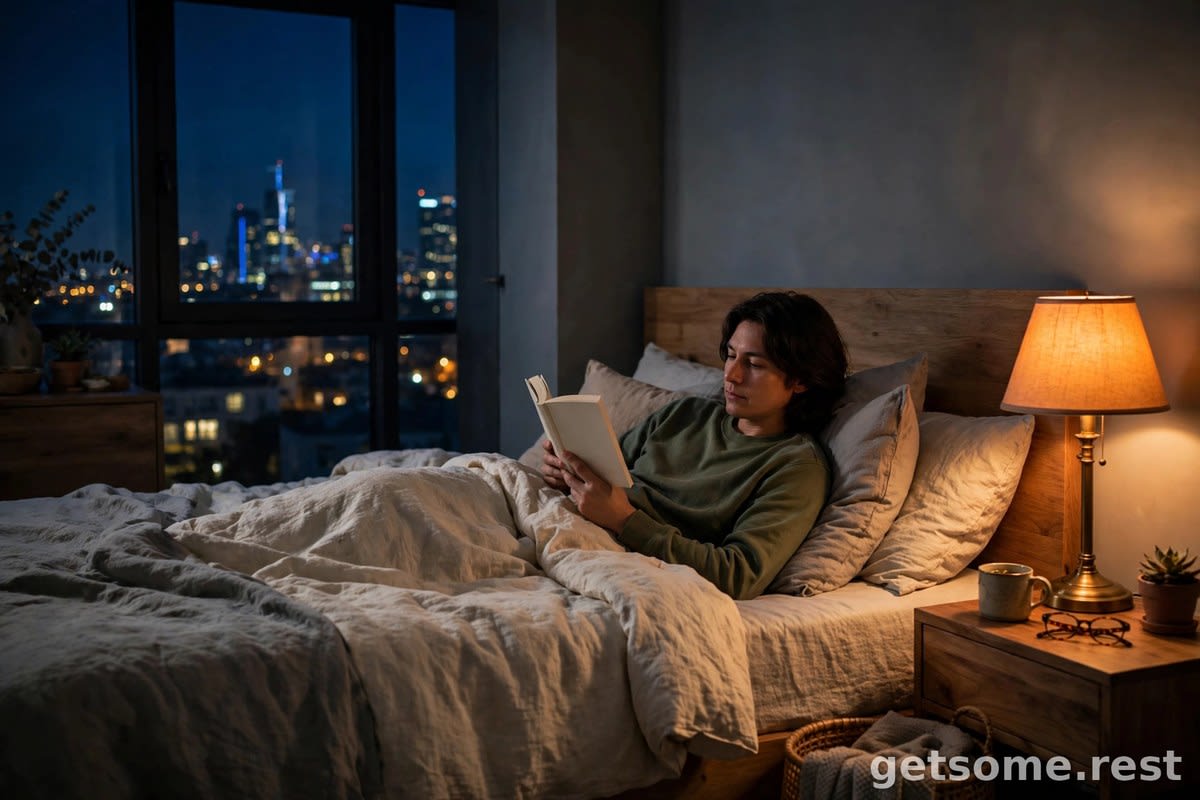
Night owls don't have broken sleep — they have late sleep. If your mind is sharpest at midnight, forcing a 10 PM bedtime just adds frustration to the tiredness. The fix isn't willpower; it's a routine built for a delayed clock: dim the light early, give your brain a real 90-minute runway, and protect your wake-up time like it matters. Here's the routine that works.
Contents
The routine at a glance
Every effective night-owl wind-down has the same four phases: cool the light, slow the stimulation, power down the mind, then give your body identical lights-out cues. Here is the whole routine on one table — the minute-by-minute version comes further down.
| Phase | When | What | Why |
|---|---|---|---|
| Cool down | 90–60 min before bed | Dim every light; close work apps; last caffeine was hours ago | Bright light and stimulants push a late clock even later — remove them first |
| Slow down | 60–30 min before bed | Screens off; warm shower or bath; water or herbal tea | Warmth followed by cooling mimics the body's natural pre-sleep temperature drop |
| Power down | 30–10 min before bed | Paper book, gentle stretching, or journaling in dim light | Low-stimulation, single-focus activity lets your rising melatonin do its work |
| Lights out | Final 10 min | Cool, dark, quiet room; slow breathing; same order nightly | Repeated cues train your body to recognize the sequence as "sleep is next" |
Example times assume a 1 AM target bedtime. Slide the whole schedule earlier or later to match yours — the spacing is what matters, not the clock.
Why night owls need a different wind-down
Roughly one in four people is an evening chronotype: your melatonin — the hormone that signals bedtime to the brain — simply rises later than it does for morning people. That is biology, not a character flaw. And it is exactly why generic advice like "be in bed by 10:30" fails night owls: you are being asked to fall asleep before your body has even started its bedtime signal.
The fix is not willpower. It is a routine that cooperates with a delayed clock: aggressive evening light management, a genuine 90-minute runway, and one non-negotiable anchor — the same wake-up time every day. Five principles make the whole thing work.
- Light is the strongest signal. Bright evening light — especially overhead LEDs — suppresses melatonin. Night owls, whose melatonin already runs late, pay the steepest price. Dimming is the single highest-leverage move in this routine.
- Anchor the morning, and the night follows. A fixed wake-up time (yes, weekends too) sets your circadian anchor more powerfully than any bedtime trick. Our guide on how to fix your sleep schedule in 3 days runs on the same principle.
- Caffeine has a long tail. Its half-life is roughly 5–6 hours, so a 4 PM coffee is still at quarter strength by 10 PM. If you are a night owl, set a noon caffeine cutoff — your late clock cannot afford the extra delay.
- Screens are a double hit. Alerting light plus engaging content: one pushes your clock later, the other keeps your brain revving. Phones off the nightstand is the cheapest upgrade in this article.
- The routine is the point, not the products. No gadget replaces dimming, consistency and a real runway. The three tools below only make the routine easier to keep.
Sleep researchers consistently recommend dimming lights in the evening because light exposure suppresses melatonin — the hormone that signals bedtime to the brain.
Source: Sleep Foundation (melatonin and light exposure guides)
Start with light, not willpower
Ninety minutes before your target bedtime, change the light in your home like you mean it: overheads off, lamps on low and warm, hallway dim. If you work late, bias everything toward dim, warm task lighting. This one change does more for a night owl than any supplement or app, because it lets your already-late melatonin rise happen at all.
Caffeine, screens and late meals
The three saboteurs of a late clock are caffeine, screens and heavy late meals. Caffeine: done by noon. Screens: off 60 minutes before bed — phone charging outside the bedroom. Meals: a big dinner at 10 PM keeps digestion busy for hours; keep it light after 8 PM and save the heavy meal for earlier. A small snack or herbal tea closer to bed is fine.
Keep it even on weekends
Social jetlag — the Monday-to-Friday schedule plus a weekend free-for-all — is hardest on night owls. Keep your wake-up time within an hour of your weekday time, even on weekends. Out late? Our 30-minute evening routine is a compressed version of this one for nights when the full 90 minutes are not on the table.

The 90-minute schedule, minute by minute
This is the routine in its full, follow-along form — times shown for a 1 AM target bedtime. Print it, screenshot it, or just read it once and let the rhythm sink in. Every step is deliberately low-effort: the point is to lower the activation energy of winding down, not to add a second job to your evening.
| Time | Do | Why it works |
|---|---|---|
| 11:30 PM (T-90) | Overheads off, lamps on low. Phone goes on a charger outside the bedroom. | Bright light this late tells your clock it is still daytime. |
| 11:40 PM | Warm shower or bath, 10–15 minutes. No podcasts, no scrolling. | The cooldown after warmth drops core body temperature — a classic sleepiness cue. |
| 12:00 AM (T-60) | Last screen off. Laptop closed, TV dark. | Screens are alerting light plus stimulating content — a double hit for late clocks. |
| 12:10 AM | Herbal tea, light stretching or slow breathing, 5–10 minutes. | Slow breathing lowers heart rate and quiets a racing mind. |
| 12:20 AM | Paper book or audiobook in dim light. | Low-stimulation, single-focus activity — the opposite of a feed. |
| 12:45 AM | Journal: dump tomorrow's to-dos and worries onto paper. | Offloading tomorrow stops midnight problem-solving in bed. |
| 12:55 AM | Lay out tomorrow's clothes, check the alarm, lock up. | Morning friction is tonight's stress — remove it now. |
| 1:00 AM | Lights out. Bedroom cool, dark and quiet. | Consistency is what teaches your body the sequence. |
Shift every time by the same amount to match your own target bedtime. The spacing between steps matters more than the exact clock times.
A sample night: 11:30 PM to 1 AM
Here is what the routine looks like in practice. At 11:30 you flip the apartment from stadium to campfire: overheads off, one warm lamp on, phone plugged in on the kitchen counter — not the nightstand. The shower at 11:40 is deliberately boring: warm water, no phone, just the feeling of the day washing off. By midnight the screens are dark, and the house goes quiet in a way that feels intentional rather than empty.
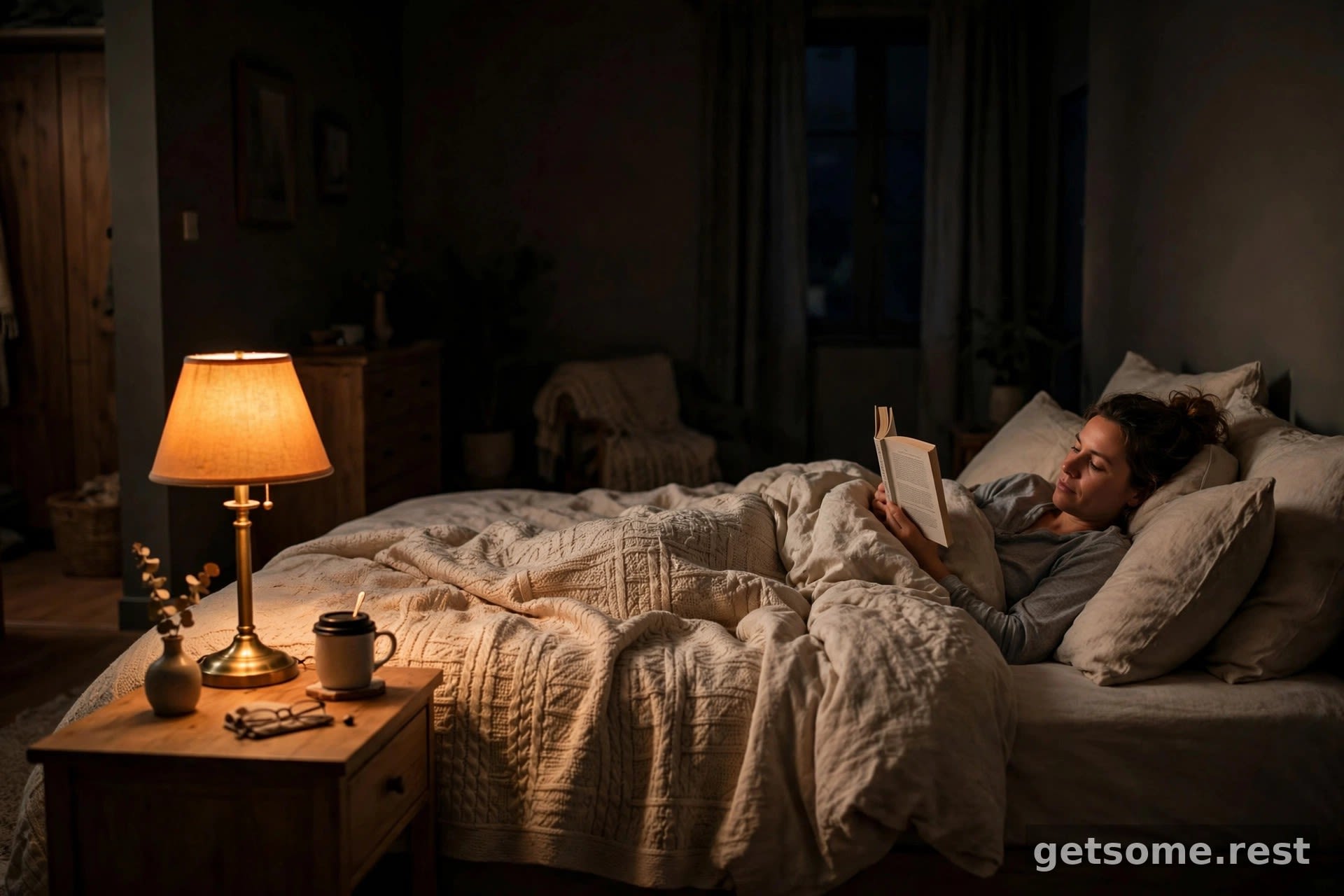
The last hour is the payoff. Tea, five minutes of slow breathing or stretching, then a book under the lamp. Around 12:45 you scribble tomorrow's chaos onto paper — work deadlines, errands, the thing you forgot to reply to — and close the notebook on it. Clothes laid out, alarm checked, lights out at 1 AM. Nothing heroic happened. That is the whole point: a routine so undemanding you will actually repeat it, which is the only way a routine works.
Three tools that make the routine easier
None of these are required — dimming and consistency do the heavy lifting. But each one removes a point of friction that derails night owls specifically: inconsistent wake-ups, light you cannot easily dim, and a noisy house when your brain finally quiets down.
Anchor your mornings
Sunrise Alarm Clock
A dawn-simulating alarm makes a fixed wake-up time actually stick — and the fixed wake-up is the anchor every late chronotype needs. Our sunrise alarm clock guide for heavy sleepers compares the best models in detail.
from around $40 at time of writing
Pros
- Gradual light mimics dawn and eases you awake without a jarring alarm
- Locks in the consistent wake-up time this whole routine depends on
- Doubles as a dim bedside lamp for the wind-down hours
Cons
- Won't fix the routine on its own — it only guards the morning anchor
- Cheaper models can be dim and slow to brighten
Dim the lights
Dimmable Warm Smart Bulb
The easiest way to take your evening light from stadium to campfire: schedule one or two lamps to fade to warm and dim at T-90, no rewiring required.
around $15 per bulb, at time of writing
Pros
- Automated dimming schedule — the routine starts itself
- Warm color temperatures that stay easy on melatonin
- Cheap enough to outfit the two lamps you actually use at night
Cons
- Setup app can be fiddly on some home networks
- Only helps if you actually install them where you spend evenings
Quiet the room
White Noise Machine
Masks the household noise that keeps night owls alert — late TV, street traffic, early-morning housemates. See our white noise machines for light sleepers guide for full comparisons.
from around $40 at time of writing
Pros
- Steady sound masks the intermittent noises that fragment sleep
- Non-looping mechanical models avoid the subtle repeat glitch
- Simple, screen-free, and works from the first night
Cons
- Cheap digital models can have an audible loop seam
- Won't help if the noise source is inside your own head — that's what the journaling step is for
How we built this routine
We don't give medical advice. This routine is built from published sleep-hygiene research and our own testing of the tools that support it:
- Chronotype science
- We started from the evening-chronotype literature: delayed melatonin timing, the role of evening light in suppressing it, and why fixed wake times anchor the circadian clock.
- Light physiology
- Every recommendation about dimming and screens traces back to the same well-established mechanism: light is the dominant time cue for the human circadian system, and evening light delays sleep.
- Routine design
- The 90-minute structure was assembled from widely used sleep-hygiene guidance and stress-tested for friction: each step is low-effort by design, because a routine you skip doesn't work.
- Price honesty
- Price ranges for the tools above were checked October 2026 and are approximate. We recommend the routine first and the tools second — dimming is free.
- Wellness framing
- This article covers routines and environment only. It is not medical advice, and it doesn't diagnose or treat any sleep disorder.
Frequently asked questions
What time should a night owl start winding down?
Count back 90 minutes from your realistic target bedtime — not an aspirational one. If you usually land in bed around 1 AM, start dimming the lights at 11:30 PM. The routine works because of the spacing between steps, so slide the whole schedule earlier or later to match your own target; what matters is that you protect the full 90-minute runway.
Can night owls train themselves to become morning people?
Only modestly. Chronotype is largely genetic — your melatonin rise simply runs later than a morning person's. Consistent bright morning light and a fixed wake-up time can shift your clock earlier by an hour or so, but a full conversion into a 6 AM riser is rarely realistic. The better play is to work with your clock: a real wind-down runway plus an anchored wake-up time.
Is it really that bad to scroll on my phone in bed?
It's a double hit: alerting screen light plus engaging content, both of which push sleep later. If you must use a screen, dim it to minimum, stick to something passive like an audiobook or calm video, and set a hard stop 30 minutes before bed. But a paper book in lamplight will always be the safer wind-down bet.
Does a warm shower before bed actually help you fall asleep?
Yes, and the mechanism is well understood: warm water raises your skin temperature, and the cooldown afterward drops your core body temperature — which mimics the body's natural pre-sleep signal. A 10 to 15 minute warm shower about 60 to 90 minutes before bed is the sweet spot.
What if I still can't fall asleep after 30 minutes in bed?
Don't lie there forcing it. Get up, go to a dim room, and read or stretch until you feel drowsy, then return to bed. This is the classic stimulus-control approach: it stops your brain from associating your bed with tossing and turning. If sleepless nights are frequent, that's worth a conversation with your doctor.
Key takeaways
- The best wind-down for night owls runs 90 minutes: dim the light, kill the screens, warm up then cool down, and finish with calm low-stimulation activity.
- Dimming is the highest-leverage move — night owls have the most to lose from bright evening light because their melatonin already runs late.
- Anchor a fixed wake-up time (weekends included) and set a noon caffeine cutoff; the routine only works if the anchors hold.
- The schedule adapts to your target bedtime — protect the spacing between steps, not the exact clock times.