How AI Is Changing Sleep Tracking (and What It Means for You)
AI sleep tracking explained: how Oura, WHOOP, Galaxy Ring, Apple Watch and Eight Sleep turn your heart rate and HRV into insights — and the real accuracy limits.
Your ring noticed the late coffee before you admitted it. In 2026, Oura, WHOOP, Samsung, Apple and Eight Sleep all sell "AI" as the reason their sleep numbers beat last year's — and the models genuinely do something new: they mine weeks of your heart rate, HRV, movement and temperature data for patterns no single night could reveal. They also oversell it. This guide separates what AI sleep tracking actually does from the marketing, so you know which numbers to trust.
Contents
At a glance: the AI sleep tracking landscape
Every major sleep tracker in 2026 now ships with an AI story. Oura has its Advisor, WHOOP has strain-and-recovery coaching, Samsung has Galaxy AI's Energy Score, Apple Watch has a Sleep Score plus a Readiness rating, and Eight Sleep's Autopilot literally changes your bed's temperature overnight based on what its sensors learned about you. Strip away the branding and they are all doing the same three jobs: turning raw sensor signals into sleep stages, turning those stages into morning scores, and turning weeks of scores into advice. Here is the current lineup before we unpack what the models actually do.
| Device | AI angle | Price | Subscription |
|---|---|---|---|
| Oura Ring 4 | Oura Advisor AI, Sleep/Readiness/Activity scores, long-term trend analysis | $349+ | $5.99/mo or $69.99/yr |
| WHOOP 5.0 | Recovery & strain coaching, Healthspan, AI coach | Included with plan | $199-$359/yr membership |
| Samsung Galaxy Ring | Galaxy AI Energy Score, sleep coaching | $399 | None |
| Apple Watch Series 12 | Sleep Score, Readiness rating, Siri AI | $399 | None for built-in features |
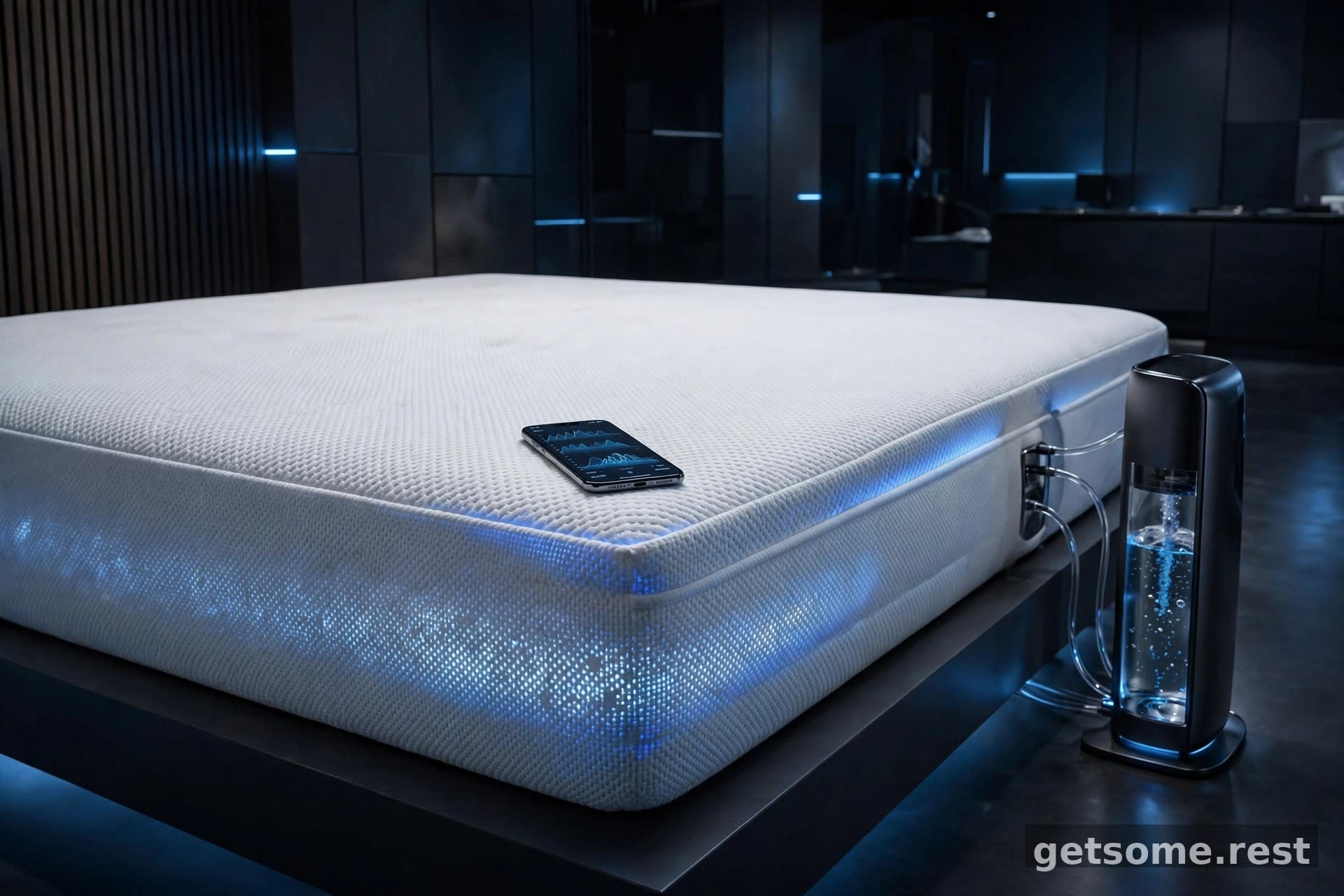
| Eight Sleep Pod 6 | Autopilot: AI adjusts bed temperature from 18 biometric sensors | $1,999-$2,999 | $199-$399/yr |
Prices checked October 2026. Subscriptions are the hidden cost of this category: an Oura Ring 4 costs about $560 over three years once you add the membership, while the $399 Galaxy Ring costs $399 total.
How AI sleep tracking actually works
"AI" on a sleep tracker is not one thing — it is three different machine-learning jobs stacked on top of each other. Understanding the stack is what lets you tell a genuinely useful insight from a marketing demo.
Job 1: turning signals into stages
No consumer device measures your brainwaves the way a lab does. Instead, the models learn the relationship between proxy signals — the shape of your pulse waveform from the optical heart-rate sensor, micro-movements from the accelerometer, skin temperature drift, breathing rate — and the sleep stages a lab would have scored. During training, companies (and researchers) pair thousands of nights of wearable data with simultaneous lab recordings, and the model learns patterns like "heart rate variability rising while movement drops usually means light sleep giving way to REM." Finger-worn devices have an advantage here: the finger gives a strong pulse signal and moves very little overnight, which is why rings like Oura consistently rank closest to lab equipment in independent testing.
Job 2: turning nights into scores
Readiness, Recovery, Energy Score, Sleep Score — these are weighted composites, not measurements. The model takes features like your overnight HRV trend, resting heart rate, temperature deviation from your personal baseline, accumulated sleep debt and yesterday's strain, and blends them into one morning number. The weights are tuned so the score moves sensibly: a short night plus alcohol plus a hard workout should drag it down. That is genuinely useful as a decision aid ("today is a rest day"), even though no single score is precise.
Job 3: turning weeks into insights
This is where the "AI" label earns its keep — and where older trackers were just dashboards. With weeks of your baseline, the models can do correlation work a human would never spot: late meals trending with lower HRV, your deep-sleep share dipping the week your bedtime drifted, illness-detection features that flag a temperature and heart-rate pattern before you feel sick. Oura's long-term trend tools are the most mature version of this; Eight Sleep takes it a step further and closes the loop by acting on the data, adjusting your bed temperature through the night. This layer only works with consistent wear — two nights a week gives the model nothing to learn from.
The models don't know what you were doing. They know what your pulse, movement and temperature looked like — and they are very good at finding what usually happened next.
Source: our read of the wearable validation literature
What the devices actually measure
All five platforms in our table read the same basic physiological signals. The differences are in sensor placement, how often they sample, and how much of the interpretation sits behind a subscription. Here is the signal-by-signal reality check.
| Signal | How it is sensed | What it is good at | What it can't tell you |
|---|---|---|---|
| Heart rate & HRV | Optical PPG sensor (green/red/IR light) | Overnight resting HR and HRV trends — among the most reliable wearable metrics | Why HRV changed (stress? illness? a heavy meal?) — the model only sees the number |
| Movement | Accelerometer / gyroscope | Detecting sleep vs. wake, restlessness, wake-ups | Lying still awake reads as sleep — trackers systematically underestimate wake time |
| Skin temperature | Infrared temperature sensor | Deviation from your personal baseline (illness, cycle, overheating) | Core body temperature — skin temp is a proxy, and the finger beats the wrist here |
| Blood oxygen | PPG with red/IR light | Nightly averages and dips as context | Clinical-grade readings — consumer SpO2 is trend data, not diagnosis data |
| Breathing rate | Derived from the pulse signal (or mattress sensors on Eight Sleep) | Overnight respiratory patterns | Anything about breathing quality or obstruction beyond rough trends |
The key takeaway from the table: no row is brain activity. Every sleep stage your app shows you is an educated inference from body signals, which is exactly why staging accuracy (60-85% in published studies) lags so far behind sleep/wake detection (85-95%). If you want a deeper dive into how trackers perform when you skip the subscription entirely, our guide to the best sleep trackers without a subscription ranks the no-fee options.
The honest verdict: what "AI insights" are actually worth
After digging through the specs, pricing and validation literature, here is our honest accounting — what the AI layer is genuinely good for, and what is mostly marketing shine.
Worth paying attention to: long-term pattern detection (the "your deep sleep drops when you eat after 9pm" class of insight), recovery guidance tied to your actual training load, consistency nudges like bedtime reminders, and early-warning features such as illness detection and cardiovascular-age estimates that get more useful the longer you wear the device. These improve with data, which is the real AI advantage.
Mostly marketing: any single night's stage breakdown presented with decimal-point confidence, daily score swings treated as verdicts on your health, and cross-device comparisons ("my ring says 82, my watch says 74 — which is right?"). Both are right, in the sense that both are estimates. Chasing one number up and down is the fastest way to make a sleep tracker make your sleep worse.
Who should buy what: pick by form factor and subscription tolerance, not by AI branding. Want the most mature sleep models and do not mind $5.99/month? Oura Ring 4. Train hard and want strain-based coaching? WHOOP 5.0 ($199+/year, device included). Android user who hates subscriptions? Galaxy Ring at $399 with no fees. iPhone owner who wants one device for everything? Apple Watch. And if you will not wear anything to bed and have the budget, Eight Sleep's Pod 6 is the only option that acts on its AI instead of just reporting it — at $1,999 plus $199-$399 a year. Our smart mattress tracking comparison covers the no-wearable route in more depth.
How the big platforms compare
Five platforms, five philosophies. Prices are typical US prices at the time of writing; subscriptions are the number that matters most in the total-cost math.
Best sleep modelsOura Ring 4
The most mature sleep algorithms in the category, with the deepest independent validation against lab equipment.
$349 plus $5.99/mo membership
Pros
- Sleep-staging and HRV algorithms repeatedly validated closest to lab equipment in independent testing
- Oura Advisor AI and long-term trend tools (cardiovascular age, resilience) are genuinely useful
- Up to 8-day battery; forget-you're-wearing-it titanium ring
Cons
- Subscription is effectively mandatory — about $560 over three years
- No screen, no real-time workout feedback
Best for athletesWHOOP 5.0
A recovery coach for people who train: strain targets and recovery guidance with 14+ day battery life.
$199/yr membership, device included
Pros
- Strain, recovery and sleep coaching built for training schedules
- 14+ day battery — the longest here
- No upfront hardware cost; band ships with the membership
Cons
- Stop paying and the device stops working entirely
- No screen; the three-year cost runs $597-$1,077
No subscriptionSamsung Galaxy Ring
Oura-style sleep tracking with Galaxy AI's Energy Score and zero ongoing fees.
$399 no subscription
Pros
- No subscription, ever — $399 is the total cost
- Lightest ring in the category (2.3-3g); strong Samsung Health integration
- Sleep staging updated in late 2025 and now competitive
Cons
- Android only, and best features need a Samsung phone
- Insights are less detailed than Oura's
Best all-rounderApple Watch Series 12
Sleep Score, sleep stages, overnight vitals and a Readiness rating — with no subscription and a full smartwatch attached.
$399 no subscription for sleep features
Pros
- Sleep Score (duration, consistency, interruptions) plus FDA-cleared sleep apnea notifications
- One device for workouts, notifications and sleep — no extra purchase
- SE 3 at $249 covers the same core sleep tracking for less
Cons
- ~24-hour battery means building a charging routine around sleep tracking
- Sleep insights are simpler than Oura's or WHOOP's
Acts on the dataEight Sleep Pod 6
18 biometric sensors and AI Autopilot that heat and cool each side of the bed through the night — no wearable required.
$1,999 Solo; $2,699-$2,999 Standard, plus $199-$399/yr
Pros
- Nothing to wear, nothing to charge — tracking is built into the mattress cover
- The only AI here that acts: temperature adjusts automatically from your biometrics
- Per-side zones for couples with different temperature needs
Cons
- Autopilot membership is mandatory for the first 12 months
- $1,999 minimum — an order of magnitude pricier than a ring
How we evaluated
We don't run a sleep lab — and this article isn't medical advice. Our goal is narrower: map what the AI in today's trackers actually does, check it against the published validation science, and price the real cost of ownership. Here is exactly what went into this guide.
- Spec sources
- Core specifications and pricing (Oura $349 + $5.99/mo, WHOOP $199-$359/yr tiers, Galaxy Ring $399, Apple Watch Series 12 $399, Eight Sleep Pod 6 $1,999+) come from each company's published product and support pages, cross-checked against current retail listings.
- Validation literature
- Accuracy ranges (sleep/wake 85-95%, staging 60-85%, ~20-30 minute total-sleep overestimation) come from peer-reviewed validation work: a 2025 meta-analysis of wrist-worn devices versus polysomnography (J Clin Sleep Med), a six-device performance validation (PMC, 2025), and a 2025 scoping review of finger-worn devices (pooled light/deep/REM accuracy 0.65/0.81/0.74).
- What "AI" means here
- We define the AI layer as the three jobs above — stage classification, score composition, and longitudinal pattern mining — and scored each platform on how mature each job is, not on marketing language.
- What we didn't do
- We did not conduct our own lab validation or wear every device for months; single-device accuracy claims in marketing materials were treated skeptically unless independent studies backed them.
- Independence — no affiliate tags
- Every Amazon link in this article is a plain search URL with no affiliate tag attached, so our verdicts aren't influenced by commission. That policy applies to every guide we publish.
Frequently asked questions
Is AI sleep tracking accurate?
For sleep versus wake, yes — published validation studies put modern wearables at roughly 85-95% agreement with lab equipment, though they tend to overestimate total sleep by about 20-30 minutes. For sleep stages (light, deep, REM), accuracy drops to roughly 60-85%. Treat your tracker as a trend-finder across weeks, not a judge of any single night.
Do I need a subscription for AI sleep insights?
It depends on the brand. Oura requires a $5.99/month membership for full analytics, and WHOOP only works with a membership ($199-$359/year) that includes the device. Samsung's Galaxy Ring, Apple Watch and most app trackers include their sleep features and AI-style insights with no subscription. Factor subscriptions into the true yearly cost.
What is a readiness score, really?
A readiness (or recovery, or Energy) score is a weighted composite: your overnight HRV trend, resting heart rate, temperature deviation, sleep debt and previous-day strain are blended into one morning number. It is useful as a directional trend — consistently low scores after late nights are a signal to ease off — not as a precise medical measurement.
Can a sleep tracker tell me I have a sleep disorder?
No consumer tracker can diagnose a sleep disorder. Some devices now offer FDA-cleared screening features — for example, Apple Watch models since the Series 9 can flag patterns consistent with moderate-to-severe sleep apnea over 30-day windows and suggest talking to a doctor. That is an awareness nudge, not a diagnosis. If you are worried, see a clinician.
Ring, watch, or mattress pad — which tracks sleep best?
Rings (Oura, Galaxy Ring) generally produce the cleanest overnight heart-rate, HRV and temperature data because the finger moves little during sleep — and they need charging only weekly. A smartwatch is the best all-rounder if you want one device for workouts, notifications and sleep, but it needs near-daily charging. Under-mattress systems like Eight Sleep track without anything on your body, but cost $1,999 and up.
Key takeaways
- AI sleep tracking does three jobs: classifying sleep stages from body signals, blending metrics into morning scores, and mining weeks of data for patterns.
- Trust the trends, not the nights: wearables detect sleep vs. wake at ~85-95% accuracy but stage light/deep/REM at only ~60-85% versus lab equipment.
- The real cost is the subscription: Oura and WHOOP charge ongoing fees, while Galaxy Ring, Apple Watch and most apps include AI-style insights free.
- Pick by form factor and fee tolerance, not AI branding — the underlying signals are nearly identical across devices.
- Curious about the coaching side of AI sleep tech? Our AI sleep coach test and AI sleep app comparison go deeper on what the advice is actually worth.