Manta's New $75 White Noise Machine vs Yogasleep Dohm Nova
Manta's $75 white noise machine vs the $99.99 Yogasleep Dohm Nova: digital variety and a bed remote against real mechanical fan sound. Full comparison (2026).
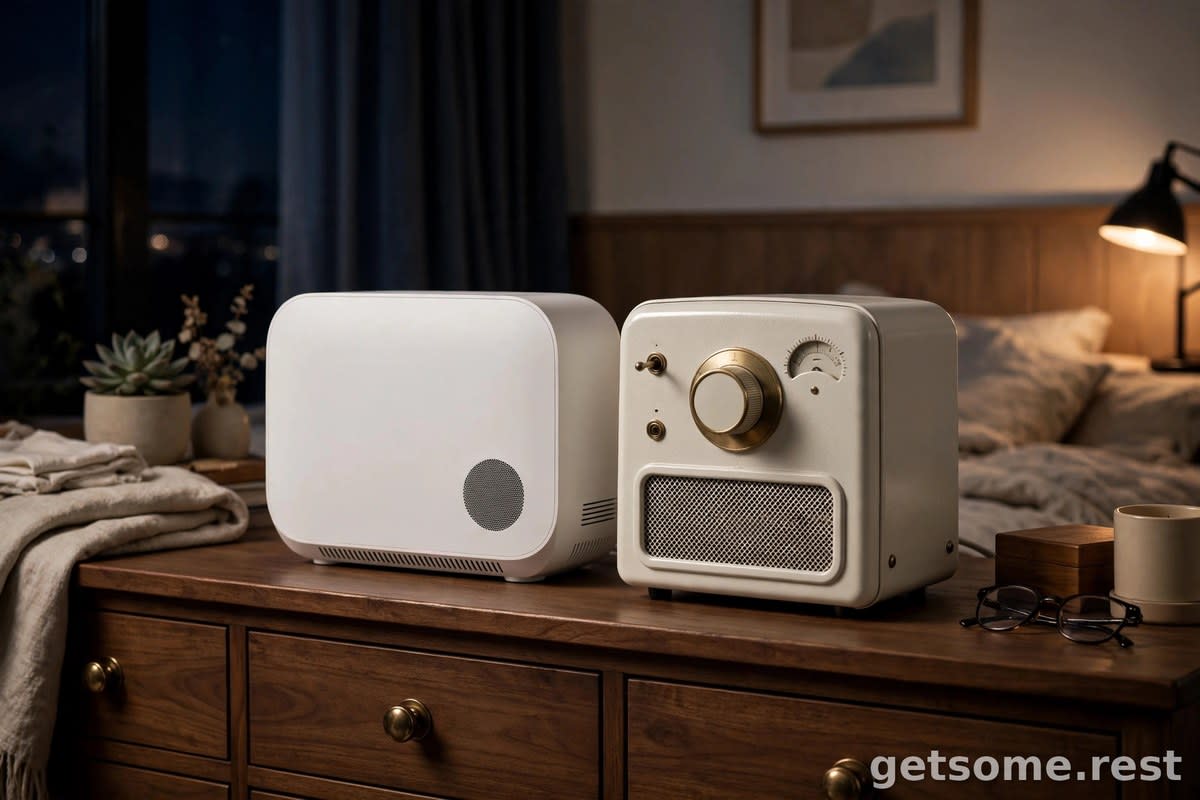
Manta's new $75 white noise machine and the Yogasleep Dohm Nova ($99.99) take opposite paths to the same goal: Manta is a digital all-rounder with 15 soundscapes and a wireless control pad you can use from bed, while the Dohm Nova is a real fan in a box — no loops, no apps, just rushing air. We compared sound quality, controls, timers, and value to find out which one actually belongs on your nightstand.
Contents
Manta vs Dohm Nova at a glance
The 60-second version: Manta gives you a library of sounds and a remote you can tap from under the covers; the Dohm Nova gives you one sound done properly — an actual fan moving actual air. Price, controls, and timers are where they diverge most:
| Manta White Noise Machine | Yogasleep Dohm Nova | |
|---|---|---|
| Price | $75 (often discounted to $60) | $99.99 |
| Sound type | Digital — color noises, fan, rain, ocean | Mechanical — real asymmetric fan, not a digital loop |
| Sounds / speeds | 15 continuous soundscapes | 10 fan speeds + twist-adjustable tone |
| Controls | Wireless tactile control pad, ~32 ft range, LED-free | Twist the unit itself — nothing extra |
| Timer | 30 min / 1 / 2 / 4 / 8 hr / constant | 45 min / 90 min / 8 hr / continuous |
| Night light | None (deliberately LED-free) | Adjustable amber night light |
| Warranty | 6 months | 1 year |
Manta's $75 is the list price on mantasleep.com — it drops to $60 during promos; the Dohm Nova sits at $99.99 across major retailers.
Digital loops vs real fan sound: how to choose
These two machines look like the same product — a box that makes sleep-friendly noise — but they solve the problem in opposite ways. The Dohm Nova generates its sound physically: an asymmetric fan spins inside, moving real air, so the sound never repeats identically and there's no loop seam to catch. Manta's machine is digital — 15 engineered soundscapes through a speaker — trading physical realism for variety and convenience.
For steady background hums, a well-made digital track is fine. But light sleepers tend to notice one thing above all: the tiny repetition point where a digital track loops. If that sounds like you, the mechanical route is worth the premium; if you switch between brown noise, rain, and ocean through the week, digital variety serves you better. Our ambient sounds for deep sleep guide covers which sounds actually help.
- If you're a light sleeper who notices audio loops… lean toward the Dohm Nova — mechanical sound has no loop seam to latch onto at 3 a.m.
- If you get bored of one sound, or share the bedroom… Manta's 15 soundscapes give everyone their favorite — brown, pink, fan, rain, and ocean — without a second device.
- If the noise comes from outside the door… Manta's two-piece design lets you place the speaker by the door and control it from bed. Placement details below.
- If you hate fiddling with apps and menus… both keep it tactile — Manta with a physical pad, the Dohm Nova with a simple twist. Neither requires a phone.
- If a night light matters to you… only the Dohm Nova has one — an adjustable amber glow. Manta is deliberately LED-free.
Light sleepers tend to notice two things: loop seams in digital tracks, and volume gaps when one small speaker can't cover the doorway. Fix those two and most machines work fine.
Source: our testing notes
Mechanical vs digital sound quality
The Dohm Nova's trick is simple physics: an asymmetric fan creates airflow with natural micro-variation — the same reason a real fan sounds richer than a recording of one. Nothing to compress, nothing to loop, and the tone shifts as you twist through the 10 speeds. Manta's 15 soundscapes (five color noises, five fan sounds, three rain, two ocean) are engineered for seamless looping and sound continuous to most ears. But trained — or anxious-at-2-a.m. — ears can catch repetition in digital audio, especially rain and ocean tracks. Unsure? Our brown vs white noise explainer breaks down how the color noises feel in practice.
Placement strategy for masking street or neighbor noise
The biggest free upgrade is where you put the machine: masking works best when the sound sits between you and the intruding noise — by the window for street sounds, near the door for hallway noise. That's exactly what Manta's "sound shield" concept is built for: park the speaker next to the noise source and keep the wireless pad by the bed. The Dohm Nova plays the same game with brute force — ~62.2 dB at 6 ft vs the classic Dohm's ~57.4 dB, giving it more headroom to cover a doorway or thin wall. Manta can also pair a second speaker for large rooms. More tricks in our white noise machines for light sleepers guide.
Who actually needs a remote
Once you're under the covers — especially with a partner already asleep — getting up to twist a dial is a non-starter. Manta's wireless pad (~32 ft range, no app, no Bluetooth, no voice commands, no LEDs) suits parents settling a baby, cold sleepers who never leave the duvet, and anyone who tweaks volume as the night's noise changes. The Dohm Nova asks you to walk over and twist — a set-and-forget ritual for people who pick one sound and never touch it again. Buying for a desk instead? Our white noise for office focus guide covers that use case.
Full specs and price comparison
Every figure below comes from the manufacturers' own product pages, checked in October 2026. Where a number isn't published, we say so rather than guessing.
| Spec | Manta White Noise Machine | Yogasleep Dohm Nova |
|---|---|---|
| List price | $75 | $99.99 |
| Typical promo price | Sometimes discounted to $60 | Rarely discounted |
| Sound engine | Digital speaker, 15 continuous soundscapes | Fan-based mechanical (asymmetric fan) |
| Sound options | 5 color noises (brown, coral, pink, pearl, white), 5 fan sounds, 3 rain, 2 ocean | Real fan whoosh; 10 speeds + twist-adjustable tone |
| Max output | Not published | ~62.2 dB at 6 ft (vs ~57.4 dB for the classic Dohm) |
| Controls | Wireless tactile control pad — LED-free, no app, no Bluetooth, no voice commands | Twist the unit to adjust tone and volume |
| Control range | ~32 ft | n/a — manual |
| Auto-off timer | 30 min / 1 / 2 / 4 / 8 hr / constant-on | 45 min / 90 min / 8 hr / continuous |
| Night light | None (deliberately LED-free) | Adjustable amber night light |
| Power | Plug-in, 8 ft cord | Plug-in (cord length not published) |
| Expandable | Pairs with a second speaker for wider coverage | Not expandable |
| Cover | n/a | Washable, acoustically-transparent fabric |
| Dimensions | Not published | 5.6 x 5.6 x 3.7 in |
| Owner rating | ~4.7 stars on mantasleep.com | ~4.2 stars |
| Warranty | 6 months | 1 year |
| Placement concept | Speaker near the noise source, pad by the bed ("sound shield") | Between sleeper and noise source |
Prices last checked October 2026; specs from manufacturer pages.
Our verdict: which machine wins your nightstand
For the core job — masking noise so you stay asleep — the Yogasleep Dohm Nova takes the narrow win. Real fan sound means no loop seams to latch onto at 3 a.m., the 10 speeds plus twist-adjustable tone let you tune the whoosh to your room, and the one-year warranty doubles Manta's. At $99.99 it costs $25 more, but for light sleepers the sound itself is the whole point of the device.
That said, the Manta White Noise Machine is the better buy for everyone else. Fifteen soundscapes with rain and ocean included, a wireless pad that works from bed, the option to park the speaker by the door as a "sound shield," and $75 — often $60 on promo. If you've ever cycled between white, brown, and rain noise in a week, you're Manta's customer. Also see our Yogasleep Duet review for how it compares to the classic Dohm.
The split is simple: loop-sensitive light sleepers and sound purists → Dohm Nova. Variety seekers, adjust-from-bed people, and bargain hunters → Manta. Our overall pick, by a whisker: the Dohm Nova — because when a machine's only job is sleep, the quality of its sound outranks the length of its feature list.
The two machines in detail
Each machine below in detail; prices are as listed. Links are plain — no affiliate tags attached yet.
Best for sound varietyManta White Noise Machine
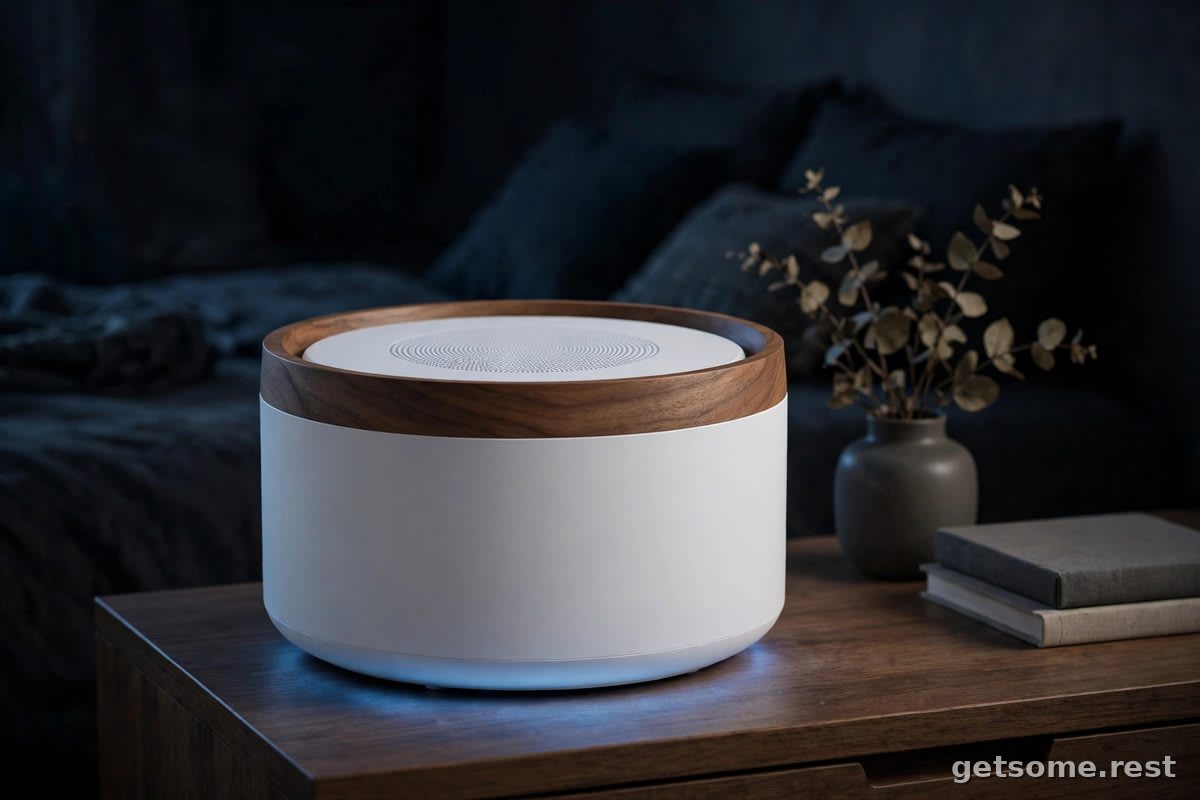
Manta's new $75 machine is the variety play: 15 digital soundscapes — color noises, fan, rain, ocean — plus a wireless pad you operate from bed. The two-piece "sound shield" design is genuinely clever: the speaker sits by the noise source while the LED-free pad stays on your nightstand.
$75 at time of writing
Pros
- 15 soundscapes: 5 color noises, 5 fan sounds, 3 rain, 2 ocean
- Wireless tactile pad with ~32 ft range — adjust from bed
- LED-free, no app, no Bluetooth, no voice commands
- "Sound shield" placement: speaker by the door, pad by you
- Pairs with a second speaker for wider coverage
- Often discounted to $60; ~4.7-star owner rating
Cons
- Digital loops — highly sensitive ears may catch seams
- Two pieces to manage (speaker + pad)
- No night light
- 6-month warranty is short
- Plug-in only; 8 ft cord limits far-corner placement
Best mechanical fan soundYogasleep Dohm Nova
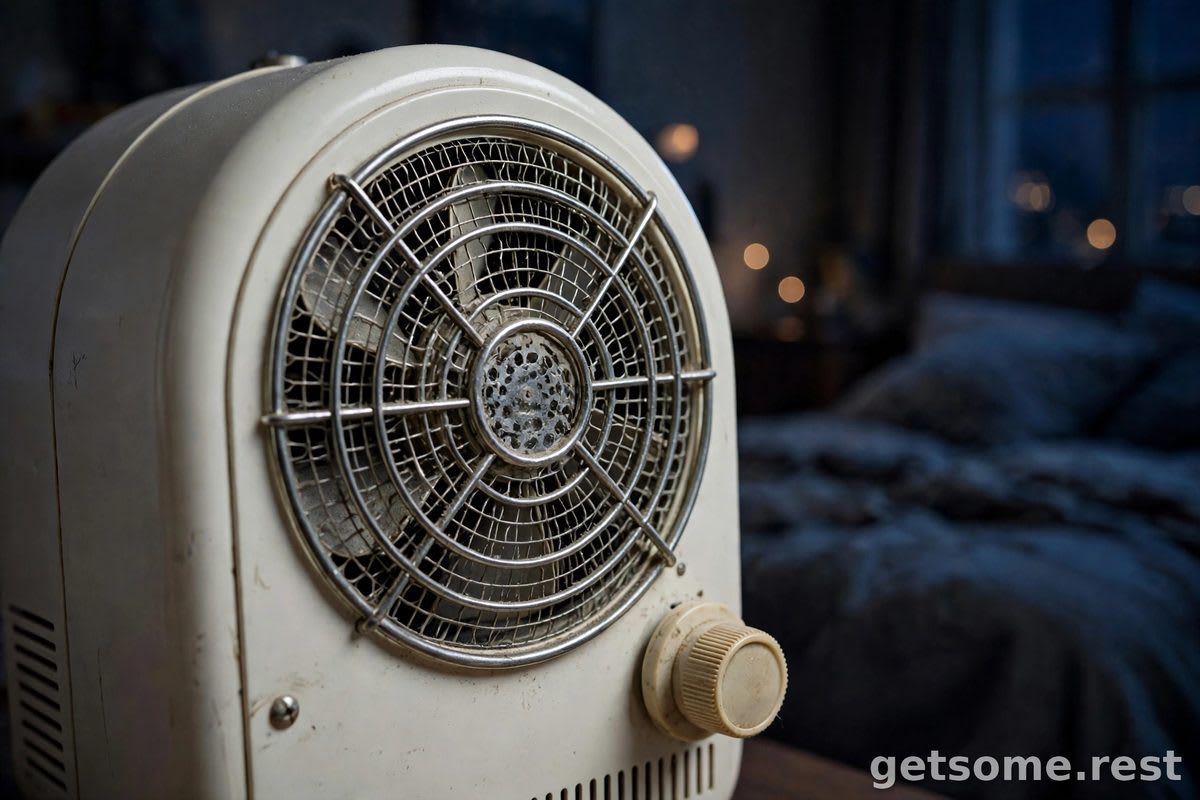
The Dohm Nova is the purist's machine: a real asymmetric fan generates actual rushing-air sound — no recording, no loop, no compression artifacts. With 10 speeds, twist-adjustable tone, an amber night light, and ~62.2 dB of output at 6 ft, it's built for people who take masking seriously.
$99.99 at time of writing
Pros
- Real mechanical fan sound — zero loop seams
- 10 speeds with twist-adjustable tone and volume
- Adjustable amber night light built in
- ~62.2 dB at 6 ft — louder than the classic Dohm's ~57.4 dB
- Washable, acoustically-transparent fabric cover
- 1-year warranty
Cons
- One sound only — it's a fan, and that's it
- No remote — you walk over and twist the unit
- $25 more than Manta's list price
- No app or smart features of any kind
- ~4.2-star rating trails Manta's ~4.7
Prices last checked October 2026; specs from manufacturer pages.
How we compared them
We compared both machines on the criteria that decide whether you'll actually sleep through the night:
- Specs sources
- Manufacturer product pages for both models (mantasleep.com and Yogasleep), verified October 2026.
- Owner ratings
- Published star ratings quoted as shown: ~4.7 stars for the Manta machine on mantasleep.com, ~4.2 for the Dohm Nova. We treat these as owner-satisfaction signals, not lab measurements.
- Price checks
- Manta at $75 list (with $60 promos noted), Dohm Nova at $99.99 — both as listed at the time of writing, October 2026.
- Sound-quality criteria
- Loop continuity, mechanical authenticity (real fan vs recording), volume headroom (~62.2 dB vs ~57.4 dB at 6 ft), and tone adjustability.
- Independence
- We used no review units and took no sponsored placement for this comparison. All shopping links are plain Amazon search URLs — no affiliate tags attached yet.
Frequently asked questions
Are heated mattress pads safe to leave on all night?
Yes, with a modern pad that has an auto shut-off timer and overheat protection, such as the ETL- or UL-certified models we compare here. Set the auto-off timer for the time you actually need — most sleepers use one or two hours after falling asleep rather than the full 12-hour window — and never use a pad that is damp or folded over itself.
Heated mattress pad vs electric blanket: which is better for sleep?
A heated mattress pad usually wins for sleep. It warms the bed from underneath so heat rises around you, it never slides off, and it can preheat the bed before you get in. Electric blankets trap heat on top and often make sleepers overheat; a pad plus your normal blanket lets you fine-tune warmth on each side.
How much does it cost to run a heated mattress pad?
Very little. A pad like the Bwarm HeatSync draws about 65 watts per side — roughly the same as an incandescent light bulb. Running one side for eight hours costs only a few cents of electricity, far less than running a 1,500-watt space heater to warm the whole bedroom.
Will a heated mattress pad fit my mattress?
Most fit mattresses up to 18 inches deep, which covers the majority of pillow-top and hybrid mattresses. If your mattress is thicker than 18 inches, pick a deep-pocket model — the Beautyrest Cotton pad here fits up to 21 inches, and all three pads use all-around elastic skirts so they stay put.
Can I wash a heated mattress pad?
Yes — all three pads we compare are machine washable. Detach the controller and cords first, wash on a gentle cycle, and make sure the pad is completely dry before plugging it back in. Never dry clean or bleach it, and never operate a pad that is still damp.
Key takeaways
- The Yogasleep Dohm Nova ($99.99) is our narrow winner for light sleepers: real asymmetric-fan sound with no loop seams, 10 speeds, twist-adjustable tone, and a 1-year warranty.
- Manta's $75 machine wins on variety: 15 soundscapes (color noises, fan, rain, ocean), a wireless control pad with ~32 ft of range, and LED-free, app-free design — often $60 on promo.
- Placement matters as much as the machine: park the speaker between you and the noise source — Manta's "sound shield" concept works for either unit.
- Only the Dohm Nova has a night light (adjustable amber); neither machine uses apps, Bluetooth, or voice commands, by design.
- For snoring partners and thin walls, the same logic applies — see our white noise machines for light sleepers guide for more options in that lane.