Soundcore SleepLab Pro Explained (2026)
Soundcore's SleepLab Pro tracks sleep with 60GHz radar from your nightstand — no wearable, no subscription. Price, features, and what Anker hasn't said yet.
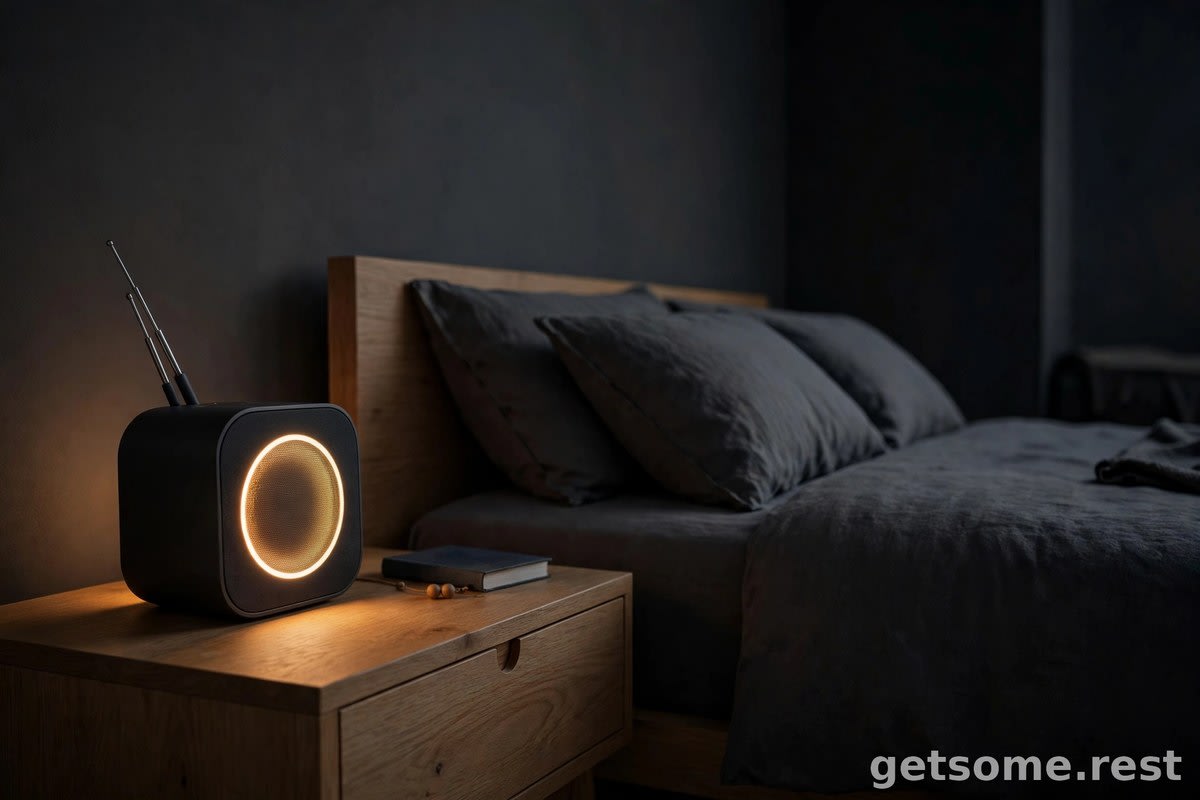
Anker's Soundcore SleepLab Pro is a bedside speaker that tracks your sleep with radar — no ring, no watch, no earbuds, nothing touching you while you sleep. Announced at IFA Berlin on September 3, 2026, it uses a 60GHz millimetre-wave radar chip to read heart rate, breathing and four sleep stages from the nightstand, plays tailored sleep audio and light, and charges no subscription for any of it. The reservation price is $269.99, with a full launch due by the end of 2026. It is the most interesting sleep tracker of the year — and also the least proven, because no independent reviewer has tested its accuracy yet.
Contents
What the SleepLab Pro Is
The SleepLab Pro is Soundcore's first sleep-focused bedside speaker, and its headline feature is not the speaker — it is the radar. A 60GHz millimetre-wave chip inside the device watches the tiny movements of your chest as you breathe, and Anker's software turns those movements into heart rate, breathing rate and four sleep stages: light, deep, REM and awake. Nothing touches you. No ring to charge, no watch to wear, no earbuds to lose in the sheets. You put a speaker on your nightstand and go to sleep.
The same device is also the thing that helps you fall asleep. It plays acoustic beats across the alpha, theta and delta ranges, tuned to different stages of relaxation and sleep, and it pairs the sound with ambient light and a smart alarm. Anker calls it a personal sleep assistant: it adjusts sound, light and breathing guidance to help you fall asleep, then tracks the night it just helped you through. That combination — audio that adapts to the sleep it is measuring — is the idea that makes the product more than a tracker with a speaker bolted on.
The pricing is aggressive for what it claims. The reservation price is $269.99 with a $30 early-bird discount on a $1 deposit, against a $299.99 list price. The standard SleepLab, without radar, is $169.99. And the subscription price is zero: Anker says none of the core monitoring features sit behind a paywall, and no phone is required to use the core sleep features. That is a direct shot at Oura and Whoop, where the sleep data you actually want costs $5.99 or more a month, every month, after you have already bought the hardware.
Anker announced the SleepLab Pro at IFA Berlin on September 3, 2026, alongside the SleepLab and two sleep earbuds, the Sleep 4 and Sleep 4 Pro. It was the headline device of the four, and the one that most directly threatens the sleep-tracking wearables: if a speaker on your nightstand can track your sleep as well as a ring on your finger, the ring's reason to exist gets narrower.
How the Radar Tracking Works
The SleepLab Pro's pitch is simple: nothing touches you. A 60GHz millimetre-wave radar chip in the speaker senses the micro-movements of your chest as you breathe, and Anker's software translates those movements into heart rate, breathing rate and sleep stages — light, deep, REM and awake. The radar works through blankets and in the dark, and it needs no skin contact at all, which is the whole point: rings chafe, watches buzz, and earbuds fall out. A speaker on the nightstand asks nothing of the sleeper.
The same device is also a sleep speaker, an ambient light and an alarm clock. It plays acoustic beats across the alpha, theta and delta ranges, tuned to different stages of relaxation and sleep, and it adjusts sound, light and breathing guidance to help you fall asleep — then tracks the night it just helped you through. That combination is what separates it from a pure tracker like the Kardian Somily, which is a wall-mounted radar with no audio at all, and from a pure speaker like a white noise machine, which plays sound but learns nothing.
Three limits are worth knowing before you get excited. First, the radar tracks one person at a time. In a shared bed it follows the sleeper closest to the speaker, and the other person's breathing is noise it has to ignore. Couples who both want tracking would need two devices — or wearables instead. Second, Anker has not disclosed the speaker's audio specs or power details, so the quality of the sound it plays is unreviewable on paper.
None of this makes the product bad — it makes it unproven. Radar sleep tracking is a real technology with real products behind it, and Anker is a large company with a hardware track record. But the sleep-stage numbers are the product's whole claim, and no independent accuracy testing exists yet. A ring that measures your pulse from your finger has a direct signal; a radar that infers sleep stages from chest movement at two feet is making a harder inference, and it deserves harder evidence before you trust it.
Price, Sizes and Launch Dates
The reservation price is $269.99, which is $30 off the $299.99 list price, and you lock it in with a $1 deposit on Soundcore's website. The standard SleepLab, without the radar, is $169.99 on the same terms. That $100 gap is the price of the radar chip and the tracking software — the audio, light and alarm are in both. Whether the two share the same speaker hardware, Anker has not said, which makes the cheaper model's value hard to judge until both are reviewed.
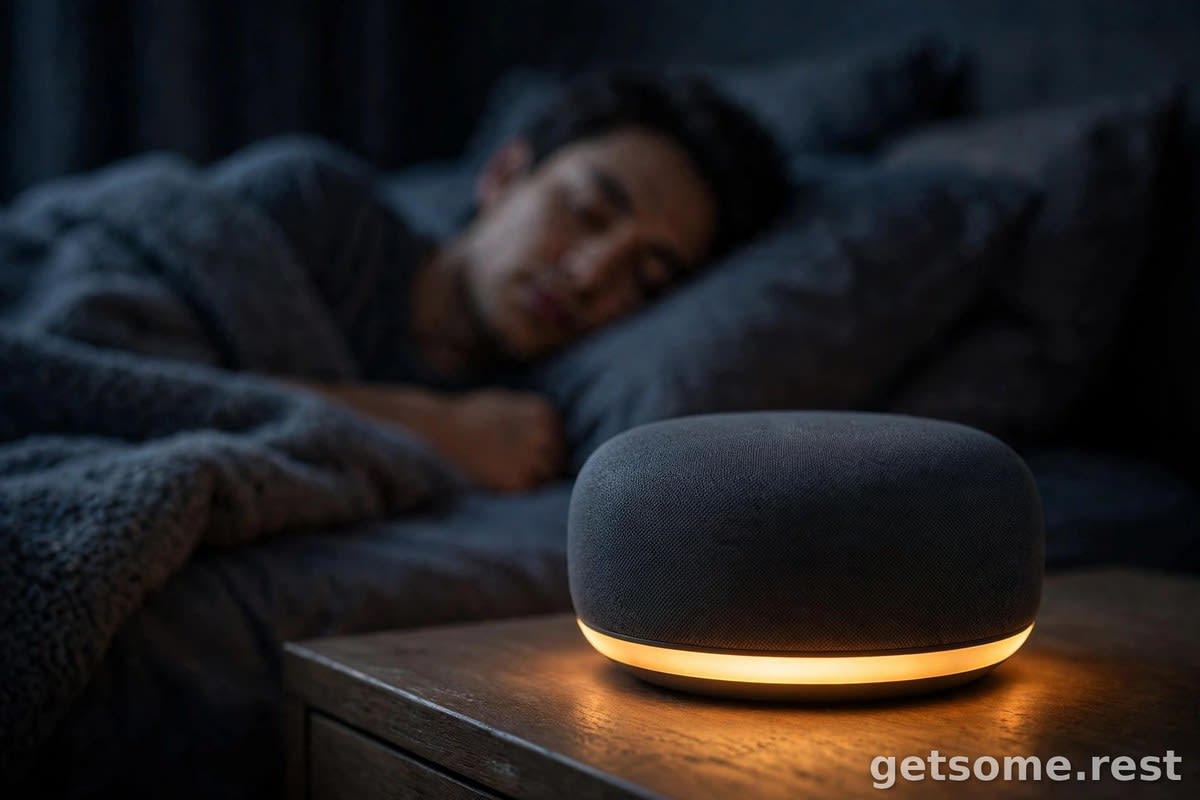
There is no size chart to worry about, because there is nothing to wear — but there is a placement question that matters more than it sounds. The radar reads the micro-movements of your chest, so the speaker needs a clear line to the bed from the nightstand, at roughly chest height and within a couple of feet. A nightstand crowded with books, a lamp and a phone charger is not the product photo's clean setup.
Launch timing is the softest part of the story. Anker has said only that a full launch is planned for the end of 2026, with reservations open now. In Europe, retail listings point to an early-2027 release under the name Soundcore Sleep Speaker X10 Pro, at around €350. The name difference may be a regional retail label, or it may be a different configuration — Anker has not clarified. Either way, the honest reading is that the SleepLab Pro is a reservation product today, not a shipping one, and the $269.99 price is a reservation price, not a store price.
What Anker has not disclosed matters too. There are no published speaker specs, no audio output figure, and no statement on whether the unit runs on mains power or a battery. Those are basic facts for a bedside speaker, and their absence says the product was announced before it was finished being specified. The data question is the other gap: where the radar data is processed, on the device or in the cloud, is unanswered. For a device that watches you sleep, that is a question worth an answer before you put it on your nightstand.
SleepLab Pro vs the Other No-Wearable Trackers
The SleepLab Pro is not the first tracker that asks you to wear nothing. It is the first that combines radar tracking with a sleep speaker, and the price puts it in the middle of the no-wearable field.
| Tracker | Price | How it tracks | Speaker | Subscription | Tracks couples |
|---|---|---|---|---|---|
| Soundcore SleepLab Pro | $269.99* | 60GHz radar, bedside | Yes | None | No, one person |
| Soundcore SleepLab | $169.99* | No radar | Yes | None | — |
| Kardian Somily | $299 | Radar, wall-mounted | No | 2 years included | Two sensors reported |
| Withings Sleep Analyzer | $129–$199.95 | Under-mattress mat | No | None for core | Two mats needed |
| Oura Ring 4 | $349 | Ring, finger sensor | No | $5.99/month | One ring each |
*Reservation price with $30 early-bird discount; list price $299.99.
The closest rival is the Kardian Somily, our full explainer on the $299 wall-mounted radar tracker that launched in November 2026. Somily is a pure tracker — radar on the wall, no speaker, no light, no audio — and it includes two years of its Kardian Max service in the price. The SleepLab Pro is the more complete bedroom device, with audio and light built in, and it is $30 cheaper at reservation pricing. But Somily is reported to handle couples with two sensors, while the SleepLab Pro is confirmed one-person-only.
Against wearables, the trade is comfort against accuracy. Our Soundcore Sleep Earbuds 4 vs 4 Pro comparison covers Anker's own sleep earbuds, launched at the same IFA event: $229 and $349, with sleep tracking in the Pro and a smart-screen charging case. And our best sleep tracker without a subscription guide covers the field the SleepLab Pro is priced against. The honest position is that a ring or a watch measures your body directly, and radar infers it from a distance — so the SleepLab Pro should be judged on comfort and price, not on tracking accuracy, until independent testing exists.
The standard SleepLab at $169.99 deserves a sentence too. It is the same speaker without the radar — sleep audio, light and alarm, but no tracking. If you want the bedside audio and do not care about sleep stages, it is $100 cheaper for the same speaker. Anker has not said whether the two share the same audio hardware, so that comparison is still open.
Who It Suits — and What to Wait For
It suits you if: you hate wearing anything to bed, you want sleep tracking without a monthly fee, you like the idea of one device that plays sleep audio and tracks the night, and you are comfortable buying a first-generation product on a reservation. At $269.99 it undercuts an Oura Ring 4 with a year of membership, and it asks nothing of your finger, wrist or ears.
Wait, or skip it, if: you share a bed and both of you want tracking, you need proven sleep-stage accuracy, or you want to know the speaker quality before you buy. In those cases the Withings Sleep Analyzer is the proven no-wearable buy at $129 to $199.95, the Kardian Somily is the radar alternative built for couples, and an Oura Ring 4 is the accuracy buy — at $349 plus $5.99 a month. Waiting for independent reviews of the SleepLab Pro is the lowest-risk move: the reservation price is attractive, but it is only a bargain if the radar is accurate.
Where to buy: the SleepLab Pro is up for a $1 reservation on Soundcore's site, which locks in the $269.99 price. It is not on Amazon yet, and no UK price or date has been confirmed. For the proven alternatives, you can find the Withings Sleep Analyzer on Amazon and the Oura Ring 4 on Amazon. Prices change often, so verify before you buy.
How We Reported This Story
We have not tested the Soundcore SleepLab Pro, and no independent reviewer had as of November 15, 2026 — the product was announced at IFA on September 3, 2026 and has not shipped. Everything in this article comes from Anker's IFA announcement and the launch coverage that followed: Digital Trends, The Verge's reporting via RouteNote, Android Authority, HomeCrux and Smart Home Assistant.
- Price: $269.99 is the reservation price with a $30 early-bird discount on a $1 deposit, per Digital Trends and Smart Home Assistant. The $299.99 list price comes from the product's retail metadata. The standard SleepLab is $169.99.
- Launch timing: a full launch planned for the end of 2026, per Digital Trends. The early-2027 European release under the X10 Pro name at around €350 comes from Galaxus's IFA report.
- One person at a time: per T2, cited by HomeCrux. The radar tracks heart rate, breathing and four sleep stages, per Anker's announcement and Android Authority.
- No subscription: Anker says none of the core monitoring features sit behind a paywall, and no phone is required for core features, per Android Authority and HomeCrux.
- What is undisclosed: speaker specs, audio output, power source and where radar data is processed — flagged by Gadget and HomeCrux coverage as still unanswered.
Frequently asked questions
How much does the Soundcore SleepLab Pro cost?
$269.99 with the $30 early-bird discount, if you reserve with a $1 deposit on Soundcore's site. The list price is $299.99, per the product's retail metadata. The standard SleepLab, without radar, is $169.99. No UK price or release date has been confirmed.
When will the SleepLab Pro be available?
Anker has said only that a full launch is planned for the end of 2026, and the speakers are up for a $1 reservation now. In Europe, retail listings point to an early-2027 release under the X10 Pro name at around €350. No firm ship date has been announced in the US.
Does the SleepLab Pro need a subscription?
No. Anker says none of the core monitoring features sit behind a paywall, and no phone is required to use the core sleep features. That is a direct contrast with Oura Ring 4 and Whoop, where advanced sleep data needs a monthly membership.
Can the SleepLab Pro track two people in one bed?
No — it tracks one person at a time. The radar reads the micro-movements of one sleeper's chest, so in a shared bed it follows the person closest to the speaker. Couples who both want tracking would need two devices, or a wearable each.
Is radar sleep tracking accurate?
Unproven so far. Anker says the 60GHz radar tracks heart rate, breathing and four sleep stages, but no independent accuracy testing exists, and the company has not published validation data. The honest answer is to wait for independent testing before trusting the sleep-stage numbers.
Key Takeaways
- What it is: a bedside speaker from Soundcore that tracks heart rate, breathing and four sleep stages with a 60GHz radar chip — no wearable, no subscription, no phone needed for core features.
- Price: $269.99 with the $30 early-bird reservation discount ($299.99 list). The radar-free SleepLab is $169.99.
- Launch: announced at IFA Berlin, September 3, 2026. Full launch planned for the end of 2026; Europe points to early 2027 under the X10 Pro name at around €350.
- One person only: the radar tracks one sleeper at a time, so couples who both want tracking need a different setup.
- Unproven accuracy: no independent testing of the radar's sleep-stage claims exists, and Anker has not published validation data or speaker specs.
- The alternative: Kardian Somily is the $299 wall-radar rival built for couples; Withings Sleep Analyzer is the proven no-wearable buy at $129–$199.95.