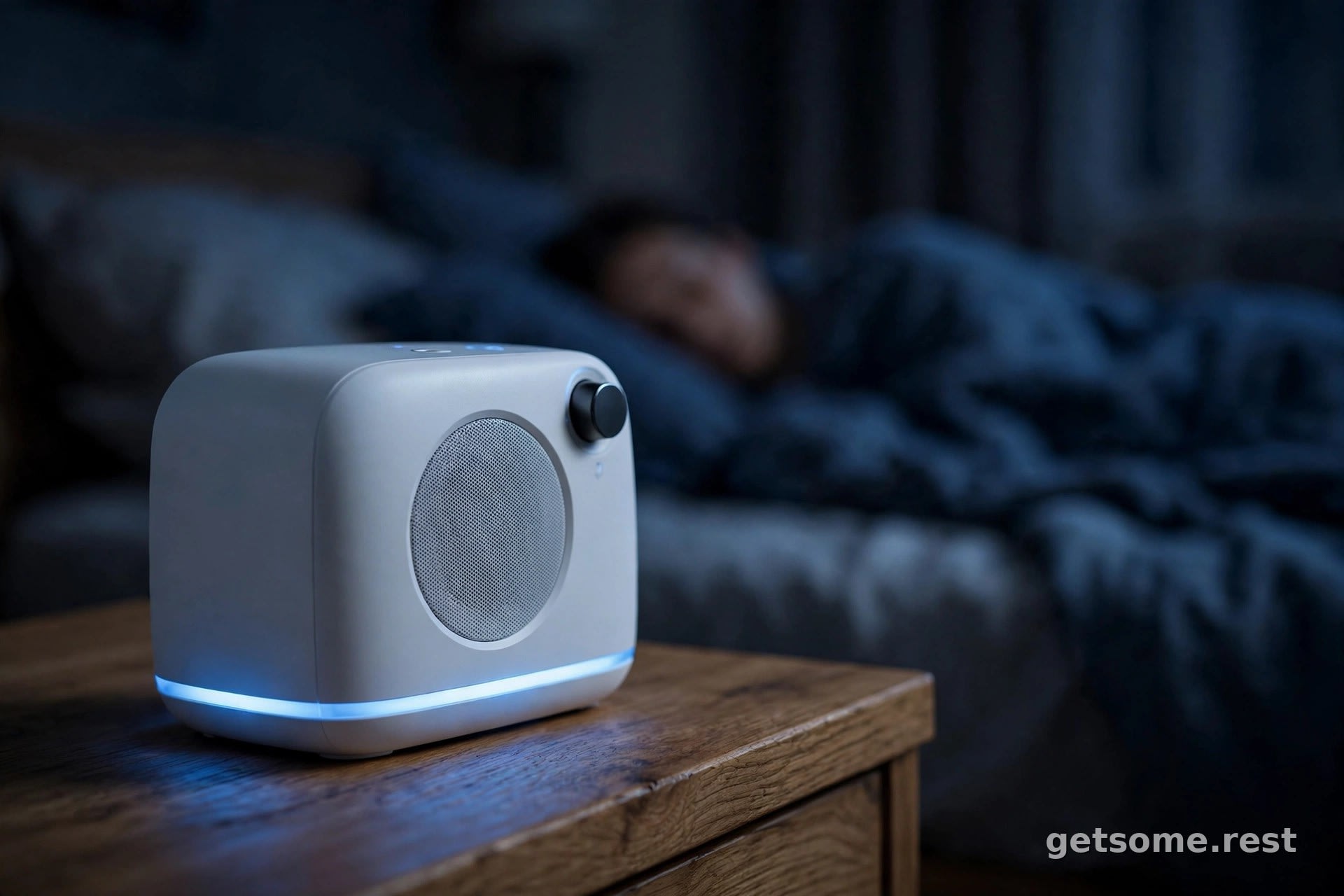
Dreamegg D3 Pro Review: The $20 White Noise Machine That Travels
Dreamegg D3 Pro review: a ~$20 battery-powered white noise machine with 29 sounds and a 12-hour battery. See how it compares for travel in 2026.
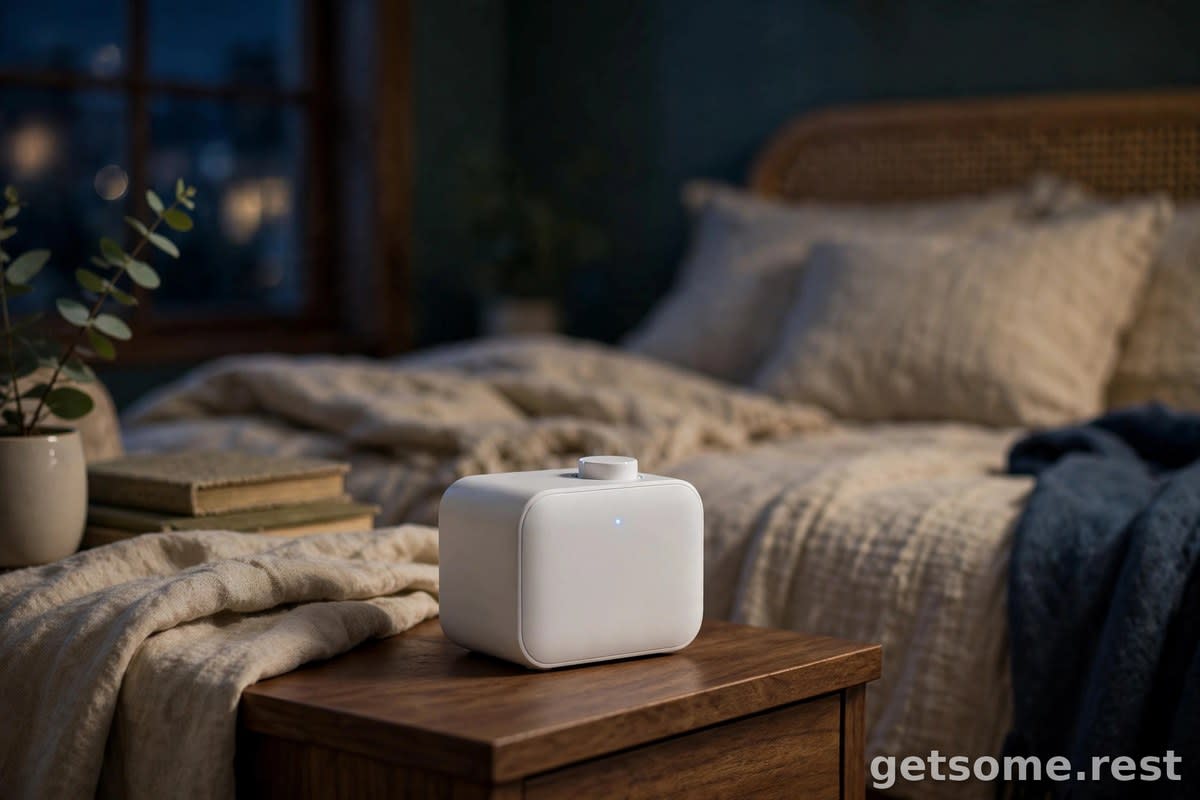
The Dreamegg D3 Pro is one of the most popular budget white noise machines on the market, and for good reason: it typically sells for around $20, packs 29 sounds into a battery-powered body, and is small enough to disappear into a carry-on. We dug through specs, owner feedback, and real-world travel use to see whether it is the right sleep travel companion for you.
Contents
At a glance: the Dreamegg D3 Pro
The Dreamegg D3 Pro is a compact, battery-powered white noise machine that has quietly become a traveler favorite. It typically sells for around $20 on sale (list price $39.99), packs 29 sounds into a palm-friendly body, and runs up to about 12 hours on a single charge — no wall outlet required. Here is the quick summary before we dig into the details.
| Fact | Dreamegg D3 Pro |
|---|---|
| Price | Typically around $20 on sale (list $39.99) |
| Sounds | 29 total — 7 white noise, 7 fan, 15 nature (rain, ocean, lullaby, campfire, and more) |
| Battery | 1200mAh rechargeable, up to ~12 hours; USB charging with a wall adapter included |
| Timer | Auto-off timer for falling asleep without it running all night |
| Size & weight | ~4 x 4 x 2.3 in, ~11.5 oz — small enough for a carry-on side pocket |
| Rating | ~4.3–4.5 stars from tens of thousands of owner reviews |
| Best for | Travelers who want a compact, battery-powered machine that works anywhere — hotel rooms, red-eyes, guest rooms |
Prices and availability shift constantly — the D3 Pro routinely drops to around $20 during sales even though its list price is $39.99. If you see it above $25, wait a week.
What makes a white noise machine good for travel
A white noise machine you love at home can be a dud on the road. Home machines tend to be bigger, heavier, and dependent on a wall outlet — none of which you want when you are hauling a carry-on through a layover. A travel-worthy machine is really a small piece of sleep environment gear: its job is to make an unfamiliar, noisy room feel more consistent and familiar so you can settle in.
Before we get into the Dreamegg lineup, here is what to look for in any machine you plan to travel with:
- Battery life that covers a full night. Anything under about 8 hours means the machine can die on you before checkout — or before a long flight lands.
- Loop-free audio. Cheap machines repeat a 30-second loop with an audible click or seam. Good ones fade the loop point so you never notice it.
- Enough volume for a thin-walled hotel room. You need enough output to cover hallway chatter and door slams without cranking the speaker into distortion.
- Simple controls you can use half-asleep. Big dials and physical buttons beat touchscreen menus at 2 a.m.
- A size you will actually pack. If it takes up a quarter of your carry-on, it stays home.
The single most important travel feature of a white noise machine is not the number of sounds — it is whether it keeps running all night without a wall outlet.
Source: our travel-ability checklist, based on owner feedback
Battery life that survives a red-eye
A rechargeable battery is the dividing line between a home machine and a travel machine. The D3 Pro's 1200mAh cell is rated for up to ~12 hours, which comfortably covers a full night plus a long layover without recharging. Compare that against machines that die after 6–8 hours: those can go silent mid-flight, and a sudden silence in a noisy cabin is worse than no machine at all. If you travel east across several time zones, consistent overnight sound can be a small part of a steadier jet lag recovery routine — less as a cure, more as one more familiar cue in an unfamiliar place.
Sound variety and seamless loops
Twenty-nine sounds sounds like a lot, and for most people it is more than enough — the D3 Pro covers white noise, fan sounds, and nature recordings like rain, ocean, lullaby, and campfire. Fan sounds deserve a callout: many sleepers prefer the warm whoosh of a fan to pure static, and having 7 fan tones to choose from means you are more likely to find one you like. If you are curious about the difference between sound types, our explainer on brown noise vs white noise breaks down which tones tend to feel softer or harsher. For shoppers comparing across brands, our roundup of the best white noise machines for light sleepers goes deeper on sound quality benchmarks.
Size, controls, and nightstand manners
At roughly 4 x 4 x 2.3 inches and about 11.5 ounces, the D3 Pro lands in the sweet spot: big enough for a speaker with real presence, small enough to slip into a carry-on's outer pocket. Controls are physical — a dial and buttons — which matters more than it sounds when you are groping around a dark hotel nightstand. The auto-off timer handles the forgetfulness problem: set it, fall asleep, and the machine silences itself instead of draining the battery by morning.
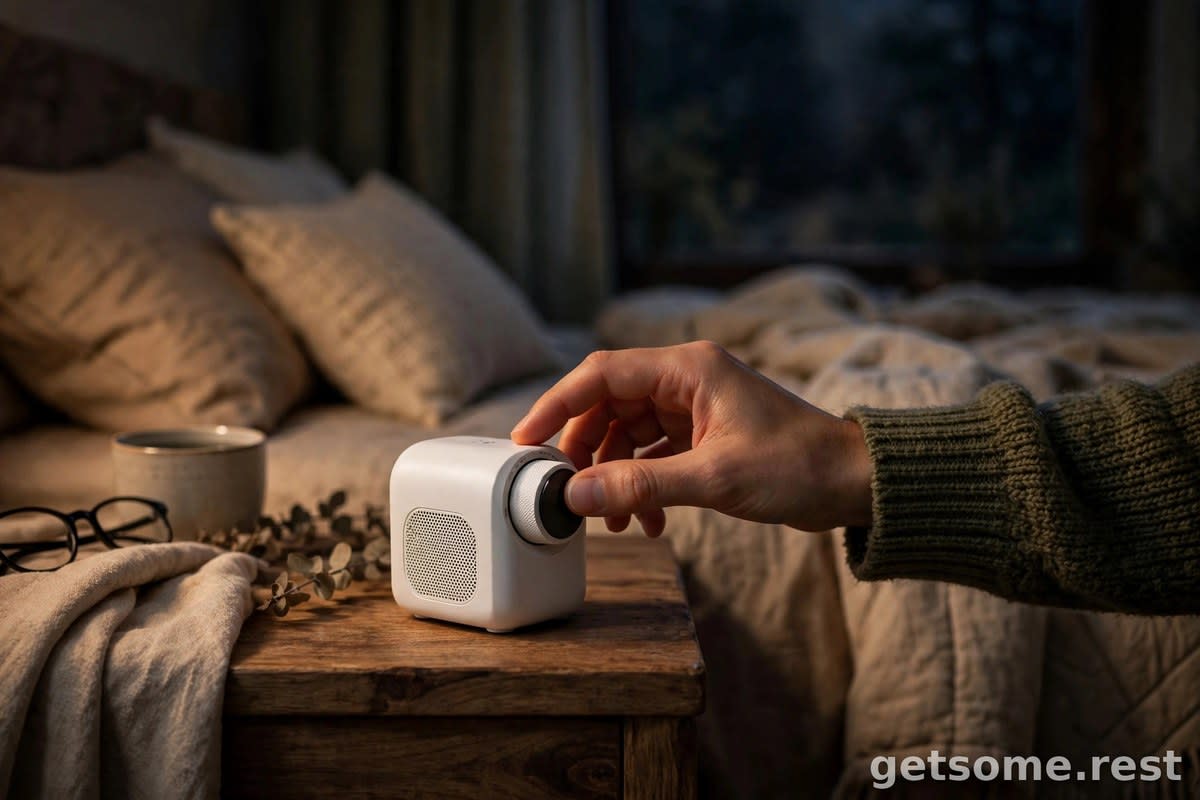
Dreamegg D3 Pro specs, up close
Dreamegg's lineup is small, which makes comparisons easy. The D3 Pro is the travel-sweet-spot model: the most sounds, the biggest battery, and a size that still packs easily. The D1 is the original — a bit larger, with a fuller speaker and fewer sounds, built more for the nightstand than the suitcase. The D11 Mini goes the other direction: pocket-size and cheaper, but with fewer sounds and a smaller speaker. Here is how they stack up.
| Feature | Dreamegg D3 Pro | Dreamegg D1 | Dreamegg D11 Mini |
|---|---|---|---|
| Typical price | ~$20 (list $39.99) | ~$25 | ~$20 |
| Sounds | 29 (7 white noise, 7 fan, 15 nature) | Fewer than the D3 Pro | Fewer than the D3 Pro |
| Battery | 1200mAh, up to ~12 hours; USB charging, wall adapter included | Rechargeable | Rechargeable, pocket-size |
| Auto-off timer | Yes | — | — |
| Size & weight | ~4 x 4 x 2.3 in, ~11.5 oz | Larger; nightstand-sized | Pocket-size; smaller than the D3 Pro |
| Owner rating | ~4.3–4.5 stars | ~4.4 stars | ~4.3 stars |
| Best for | Travel sweet spot | Home nightstand | Ultralight packing |
Prices last checked October 2026. Street and sale prices for Dreamegg machines move often, so treat the numbers above as typical ranges rather than fixed prices. Timer availability for the D1 and D11 is not consistently documented — check the current listing before buying if that feature matters to you.
Our verdict: who should buy the D3 Pro
Buy the Dreamegg D3 Pro if you travel. This is the travel-sweet-spot model, and it is not close: it has the most sounds (29), the longest battery (~12 hours), and a compact body that actually fits in a carry-on pocket — all for typically around $20 on sale. Hotel rooms, red-eyes, guest rooms, college dorms: this is the one to pack. If you want a single white noise machine that can do both travel and home duty, start here.
Consider the Dreamegg D1 if it will live on your nightstand. The D1 is the original model — a bit bigger, with a fuller speaker that fills a bedroom more easily and the kind of simple controls you learn once and never think about again. It has fewer sounds than the D3 Pro, but if the machine never leaves your bedroom, you will never miss them. At typically around $25 it is barely more expensive.
Consider the Dreamegg D11 Mini if every ounce counts. The D11 is the ultralight pick: truly pocket-size, rechargeable, and typically around $20. The tradeoff is real — fewer sounds and a smaller speaker — so this is the choice for backpackers, business travelers packing a briefcase, and anyone who already owns a home machine and just wants something for the road.
Dreamegg white noise machines in detail
Three models, three use cases. Prices below are typical street/sale prices at the time of writing and shift often — check the live listing for the current number. Links are plain — no affiliate tags attached yet.
Best for travelDreamegg D3 Pro
The travel sweet spot: 29 sounds, a ~12-hour battery, and a typically ~$20 price tag.
$20 at time of writing
Pros
- Typically around $20 on sale — outstanding value
- 29 sounds: white noise, 7 fan tones, and nature recordings
- 1200mAh battery runs up to ~12 hours per charge
- Compact ~4 x 4 in body fits a carry-on side pocket
- Wall adapter included in the box
Cons
- Not the loudest machine in its class
- No app or Bluetooth control
- Mono speaker — no stereo spread
The original classicDreamegg D1
The home-base pick: the original Dreamegg with a fuller speaker for the nightstand.
$25 at time of writing
Pros
- Typically around $25
- Fuller sound that fills a bedroom easily
- Simple, learn-once physical controls
- Strong long-term owner ratings
Cons
- Fewer sounds than the D3 Pro
- Bulkier — less convenient for travel
- Shorter runtime off a charge than the D3 Pro
Pocket-size pickDreamegg D11 Mini
The ultralight option: tiny enough for a jacket pocket, with fewer sounds than the D3 Pro.
$20 at time of writing
Pros
- Typically around $20
- Truly pocket-size — disappears into a briefcase or backpack
- Rechargeable battery
- Dead-simple controls
Cons
- Fewer sounds than the D3 Pro
- Smaller speaker, less volume
- Shorter battery runtime than the D3 Pro
How we researched this review
We don't run a sleep lab — and this article isn't medical advice. Our goal is narrower: figure out which machines are worth packing by comparing documented specs, real-world pricing, and the patterns in owner feedback, with travel convenience as the tiebreaker. Here is exactly what went into this review.
- Spec sources
- Core specifications (sound count, battery capacity, dimensions, included accessories) come from Dreamegg's published product pages and current Amazon listing details, cross-checked against each other where the two disagreed.
- Price checks
- We tracked typical street and sale prices across recent weeks. Dreamegg machines discount frequently, so we report typical prices (“typically around”) rather than a single-day snapshot.
- Sound and feature criteria
- We weighted battery runtime, sound variety, seamless looping, physical controls, and an auto-off timer — the features that matter most when the machine travels with you instead of sitting on a nightstand.
- Travel portability
- Size, weight, and packability were scored against a real carry-on scenario: can it fit a side pocket, survive a red-eye on one charge, and be operated half-asleep in a dark hotel room?
- Independence — no affiliate tags
- Every Amazon link in this article is a plain search URL with no affiliate tag attached, so our verdicts aren't influenced by commission. That policy applies to every review we publish.
Frequently asked questions
Are heated mattress pads safe to leave on all night?
Yes, with a modern pad that has an auto shut-off timer and overheat protection, such as the ETL- or UL-certified models we compare here. Set the auto-off timer for the time you actually need — most sleepers use one or two hours after falling asleep rather than the full 12-hour window — and never use a pad that is damp or folded over itself.
Heated mattress pad vs electric blanket: which is better for sleep?
A heated mattress pad usually wins for sleep. It warms the bed from underneath so heat rises around you, it never slides off, and it can preheat the bed before you get in. Electric blankets trap heat on top and often make sleepers overheat; a pad plus your normal blanket lets you fine-tune warmth on each side.
How much does it cost to run a heated mattress pad?
Very little. A pad like the Bwarm HeatSync draws about 65 watts per side — roughly the same as an incandescent light bulb. Running one side for eight hours costs only a few cents of electricity, far less than running a 1,500-watt space heater to warm the whole bedroom.
Will a heated mattress pad fit my mattress?
Most fit mattresses up to 18 inches deep, which covers the majority of pillow-top and hybrid mattresses. If your mattress is thicker than 18 inches, pick a deep-pocket model — the Beautyrest Cotton pad here fits up to 21 inches, and all three pads use all-around elastic skirts so they stay put.
Can I wash a heated mattress pad?
Yes — all three pads we compare are machine washable. Detach the controller and cords first, wash on a gentle cycle, and make sure the pad is completely dry before plugging it back in. Never dry clean or bleach it, and never operate a pad that is still damp.
Key takeaways
- The Dreamegg D3 Pro is the travel-sweet-spot white noise machine: 29 sounds, a ~12-hour rechargeable battery, and a typically ~$20 sale price.
- Battery runtime is the feature that matters most on the road — the D3 Pro's 1200mAh cell covers a full night without a wall outlet.
- Choose the D1 (~$25) if the machine will live on your nightstand, and the pocket-size D11 Mini (~$20) if you pack ultralight.
- An auto-off timer saves battery and means you won't wake up to a still-running machine at checkout time.
- If snoring — not room noise — is your problem, pair a machine with earplugs for a snoring partner rather than cranking the volume.