ISHO Ring + iFlow AI Sleep Ecosystem Explained (2026)
ISHO, founded by former Xiaomi executive Wang Teng, launched the ISHO Ring smart ring from ¥1,799 (about $253) and the iFlow temperature-control sleep system from ¥9,999 (about $1,408) in Beijing on October 29, 2026 — a closed-loop AI sleep ecosystem with no subscription for basic features in China.
On October 29, 2026, a former Xiaomi executive walked onto a stage in Beijing and made a case for going to bed. Wang Teng, who once led Redmi's brand and Xiaomi's China marketing, unveiled his new company ISHO — Jinri Yixiu, roughly 'today is a good day to rest' — and its first two products: the ISHO Ring smart ring and the iFlow temperature-control sleep system, tied together by an AI layer called ISHO Intelligence. The pitch is a closed loop: the ring watches your body, the app interprets it, and the bed changes its temperature in response. Prices undercut the category leaders sharply — the Ring starts at ¥1,799 (about $253) and the iFlow at ¥9,999 (about $1,408). The catch is availability: both are China-only for now, with an international showcase planned for CES 2027.
Contents
At a Glance: The ISHO Ring and iFlow
ISHO is a brand-new company — founded in January 2026 — and this October 29 launch was its first public outing. Rather than one gadget, it is selling a system: a ring that senses, an app that decides, and a bed that reacts.
- ISHO Ring price: ¥1,799 (about $253) for the standard Ring, ¥2,199 (about $310) for the Pro package. Both ship from November 11, 2026. Preorders placed between October 29 and November 12 get three-installment interest-free payment and full price protection, and buyers before November 30 can claim a finger-mold deduction.
- Ring hardware: a one-piece aerospace-grade titanium body with sapphire crystal glass, powered by the Apollo 330B Plus chip — the first ring to use it — with on-device AI processing, 32 MB of storage, and seven days of offline data recording.
- Ring battery: a claimed 6 to 10 days per charge, edging out the Oura Ring 5's claimed 6 to 9 days — a launch claim, since independent testing does not exist yet.
- What it tracks: 18 physiological data points through multi-sensor fusion, turned into sleep tracking and a daily energy score. ISHO has not yet disclosed the full list of the 18 metrics, so we cannot say exactly which signals are included.
- Ring Pro difference: the Pro package adds the ISHO Sensing Charging Case, which monitors the bedroom itself — carbon dioxide, temperature, humidity, noise, and light — so the app can pair body data with room data.
- iFlow price: ¥9,999 (about $1,408) for the standard system, from ¥12,999 (about $1,831) for the Pro, and from ¥15,999 (about $2,253) for a Shang Xia co-branded edition. Deliveries begin in December 2026; the co-branded edition follows in January 2027.
- iFlow tech: TEC semiconductor temperature control plus water circulation, dual BCG sensing bands that pick up heart rate, breathing, and movement without anything worn, eight bed temperature sensors, and independent temperature zones for two people. The Pro adds a 512-point pressure array for posture detection, graphene lower-back heating, and a 55°C mite-removal mode.
- Subscription: ISHO charges no subscription for basic features in China — a direct contrast with Oura and Eight Sleep. It has said it may charge eventually for selected AI capabilities, based on the computing resources they use.
The AI layer tying it together is ISHO Intelligence: the ISHO App, built around an ISHO Personal Agent, plus a physiological-signal large model. For a sense of what the established competition offers today, see our Oura Ring 4 vs Whoop MG comparison — and you can check current Oura pricing via Amazon search.
How to Choose: ISHO vs Oura vs Eight Sleep
Choose the ISHO Ring over the Oura Ring 5 if price and subscriptions are your deciding factors. At roughly $253 against Oura Ring 5's $399 to $499 in the US — and ¥2,673 to ¥3,343 plus a ¥40 monthly subscription in China — the ISHO Ring is about half the price of its most obvious rival, with no subscription for basic features. But that saving buys a first-generation product with no independent accuracy studies yet, while Oura has years of validation and a mature app. If proven accuracy matters more than price, Oura is still the safer pick.
Choose the Ring Pro if your bedroom environment is part of the problem. The standard Ring tracks your body; only the Pro's sensing charging case also tracks the room — CO2, temperature, humidity, noise, and light. That matters because a stuffy, warm, or noisy room can quietly wreck sleep quality, and the case gives the AI something to act on. If you only want sleep and energy tracking, the standard Ring at ¥1,799 is the better value.
Choose the iFlow over the Eight Sleep Pod 6 if you are in China and want dual-zone temperature control without a subscription. The iFlow starts at about $1,408 against the Pod 6's $1,999 single-sleeper and $2,699 standard US pricing, and Eight Sleep's Autopilot subscription starts at $199 a year for automatic temperature control and health analysis. Our Pod 6 explainer covers that subscription catch in detail. The catch, again, is geography: the Pod 6 is actually buyable in the US today, and the iFlow is not.
Choose to wait if you live outside China. ISHO has announced no international pricing or release date — only a showcase at CES 2027 in Las Vegas. Until then, the practical alternatives are the systems you can actually buy: a no-subscription smart ring, covered in our RingConn vs Ultrahuman comparison, or a bed-temperature system such as those in our BedJet 3 vs ChiliSleep Dock Pro comparison.
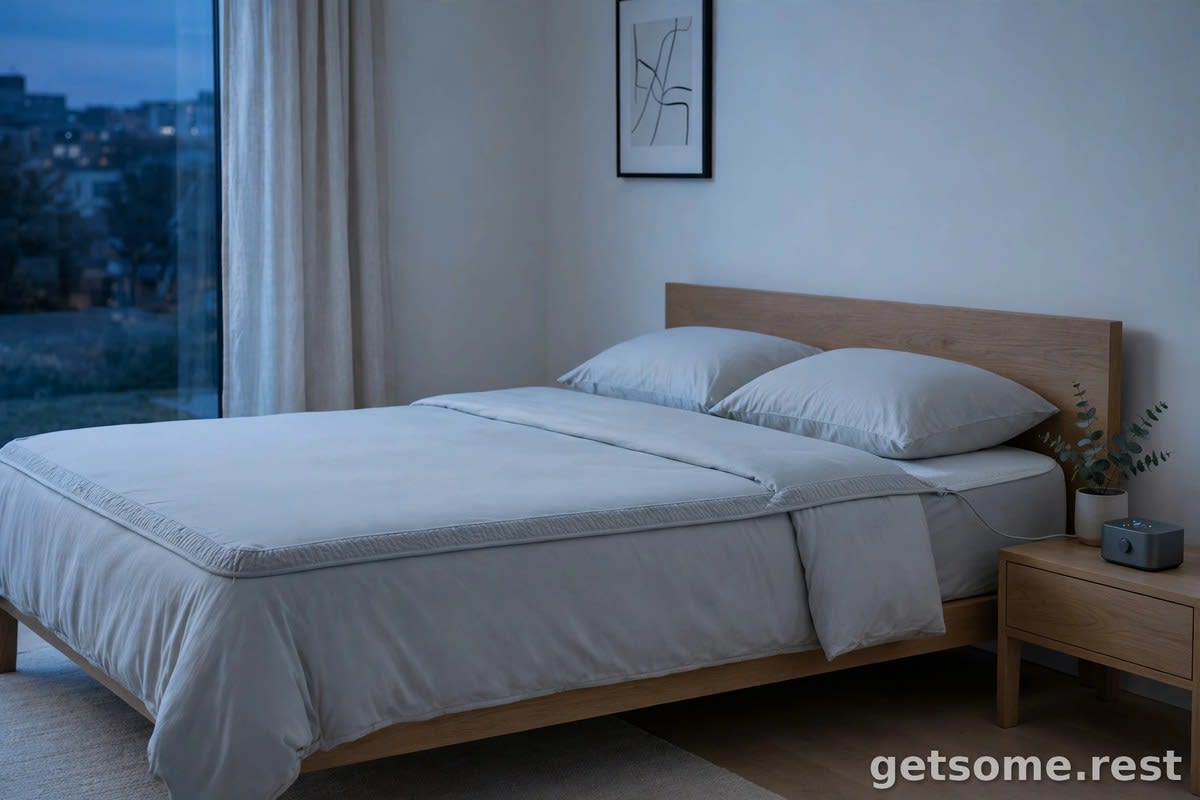
ISHO Ring and iFlow Specs, Side by Side
ISHO benchmarked both products against the category leaders on stage, so the fairest comparison uses its own chosen rivals: the Oura Ring 5 and the Eight Sleep Pod 6. Prices below are launch prices as reported, with US dollar figures approximate at about ¥7.1 to the dollar.
| Feature | ISHO Ring | ISHO Ring Pro | Oura Ring 5 |
|---|---|---|---|
| Price | ¥1,799 (about $253) | ¥2,199 (about $310) | $399–$499 |
| Chip | Apollo 330B Plus, on-device AI | Same | Not disclosed in same terms |
| Storage / offline data | 32 MB, 7 days offline | Same | Not disclosed in same terms |
| Battery (claimed) | 6–10 days | 6–10 days | 6–9 days |
| Materials | Aerospace titanium unibody, sapphire glass | Same, plus sensing case | Titanium, 6.09 mm wide, 2.28 mm thick |
| Weight | Not yet disclosed | Not yet disclosed | From 2 g by size |
| Tracking | 18 physiological data points, energy score | Same, plus room sensing | Sleep, readiness, activity, temperature trends |
| Subscription | None for basic features (China) | None for basic features (China) | $5.99/month or $69.99/year for full features |
| Availability | China, ships Nov 11, 2026 | China, ships Nov 11, 2026 | US and international, sizes 6–13 |
| Feature | iFlow | iFlow Pro | Eight Sleep Pod 6 |
|---|---|---|---|
| Price | ¥9,999 (about $1,408) | From ¥12,999 (about $1,831) | $1,999 single, $2,699 standard |
| Temperature tech | TEC semiconductor + water circulation, 600W cooling | 6 TEC units, 900W cooling | Water circulation through mattress cover |
| Monitoring | Dual BCG bands: heart rate, breathing, movement | Same, plus 512-point pressure array | 18 biometric sensors per side |
| Dual-zone control | Yes, independent per side | Yes | Yes |
| Extras | 8 bed sensors + 1 room sensor | Graphene lumbar heating, 55°C mite removal | Redesigned hub, half the size of Pod 5 |
| Subscription | None for basic features (China) | None for basic features (China) | Autopilot from $199/year |
| Availability | China, ships Dec 2026 | China, ships Dec 2026 | US and international |
Still undisclosed: the Ring's size range and weight, its water-resistance rating, the full list of its 18 tracked data points, the iFlow's exact bed-surface temperature range, and any international pricing. ISHO also has no independent accuracy validation published yet.
Our Verdict: Who Should Buy It — and Who Should Wait
Buy the ISHO Ring if you are in China and want flagship-style ring tracking at about half the price of an Oura Ring 5, with no subscription. The hardware story is genuinely strong on paper: a titanium unibody, sapphire glass, the Apollo 330B Plus chip with on-device AI, 32 MB of storage for a week of offline data, and a claimed 6 to 10 days of battery. If the tracking proves accurate in independent testing, it will be one of the best-value smart rings anywhere.
Buy the iFlow if you are in China, share a bed with someone who sleeps at a different temperature, and want that solved without a yearly subscription. Independent dual-zone control, contactless BCG monitoring, and sleep-stage-based temperature adjustment justify the premium over a basic heated cover — and the Pro's posture sensing and mite-removal mode are sensible upgrades.
Wait if you live anywhere else, or if you want proven accuracy before spending. Neither product has an international price or date, there is no independent validation of the Ring's 18 data points or the iFlow's deep-sleep claims, and first-generation hardware from a new company always carries some risk. Watch the CES 2027 showcase in January for the first sign of a global launch — and until then, buy the proven system you can actually get delivered.
What ISHO Is Really Betting On
ISHO's bet is that sleep tech's next step is not better charts but a bedroom that acts on them. Every major tracker today tells you in the morning that you slept badly; ISHO wants the bed to have already done something about it overnight — cooling your side when your temperature rises, warming it as you drift toward waking. That closed loop, ring plus app plus bed, is the whole pitch, and it is a genuinely different product idea from a ring alone. It is also why the company launched two products at once instead of one: the Ring on its own would just be a cheaper Oura, and the iFlow on its own would just be a cheaper Pod.
The pricing is the second half of the bet, and it follows the classic Xiaomi playbook — Wang Teng's old employer. Put the rival on a slide, match or beat it line by line, then charge roughly half and drop the subscription. Oura's Chinese pricing plus its ¥40 monthly membership and Eight Sleep's Pod 6 pricing plus its US subscription made easy targets. The risk is that the low price depends on scale ISHO does not have yet, and selected AI features may eventually be charged for.
The honest caveat is that none of this has been independently tested yet. There is no peer-reviewed validation of the Ring's tracking or of the iFlow's claim to extend deep sleep, and detailed sensor specifications have not been disclosed. Until reviewers outside China wear the Ring and sleep on the iFlow, this ecosystem is a promising announcement, not a proven system.
How We Reported This Story
This article is based on coverage of ISHO's October 29, 2026 launch event in Beijing, including TechNode, KrASIA, ITiger, AiBase, and Inside AI, published October 29–30, 2026. Prices are launch prices as reported in yuan, with US dollar equivalents approximate at about ¥7.1 to the dollar; Oura and Eight Sleep figures are their published US list prices and subscription rates. We have not independently lab-tested the ISHO Ring or the iFlow; sleep and energy metrics from wearables are wellness tracking data, not medical measurements, and this article is not medical advice. Disclosure: this article contains affiliate links. If you buy through them, we may earn a commission at no extra cost to you.
Frequently asked questions
How much does the ISHO Ring cost, and when does it ship?
The standard ISHO Ring costs ¥1,799 (about $253) and the Pro package costs ¥2,199 (about $310), with shipments starting November 11, 2026. Preorders from October 29 to November 12 get three-installment interest-free payment and full price protection; buyers before November 30 can claim a finger-mold deduction. Both prices are for the Chinese market; no international pricing has been announced.
Does the ISHO Ring require a subscription?
No, not for its basic features in China — that is one of ISHO's main selling points against Oura, which charges $5.99 a month or $69.99 a year for full features. ISHO has said it plans to charge eventually for selected AI capabilities based on the computing resources they use, so some advanced features may carry a fee later. The exact future pricing has not yet been disclosed.
How does the iFlow change the temperature of the bed?
The iFlow uses TEC semiconductor temperature-control modules combined with water circulation to heat or cool the bed surface, adjusting automatically as your sleep stage changes. Dual BCG sensing bands monitor heart rate, breathing, and movement without anything worn, eight bed sensors track temperature across the mattress, and each side of the bed gets its own temperature zone. The standard system offers 600W of cooling; the Pro upgrades to six TEC units and 900W, plus graphene heating for the lower back and a 55°C mite-removal mode.
Can I buy the ISHO Ring or iFlow in the US or Europe?
Not yet. Both products launched for the Chinese market only, and ISHO has announced no international pricing or release date. The company plans to showcase the system at CES 2027 in Las Vegas in January, which is the earliest likely signal of a global launch. Until then, US and European buyers should look at the systems actually available to them, such as the Eight Sleep Pod 6 or a no-subscription smart ring.
Is the ISHO Ring better than the Oura Ring 5?
On price and battery, yes on paper: about $253 against $399 to $499 for the Oura Ring 5, a claimed 6 to 10 days of battery against 6 to 9 days, and no subscription for basic features against Oura's $5.99 monthly membership. But Oura has years of refinement, a mature app, and published validation, while the ISHO Ring is a first-generation product with no independent accuracy studies yet. If you are in China and value price over proven accuracy, ISHO is compelling; if you want the validated option today, Oura is the safer choice.
Key Takeaways
- ISHO launched the Ring smart ring and iFlow temperature-control system in Beijing on October 29, 2026, founded by former Xiaomi executive Wang Teng.
- The ISHO Ring costs ¥1,799 (about $253), the Pro ¥2,199 (about $310), ships November 11, and claims 6 to 10 days of battery with 18 tracked data points and no subscription for basic features in China.
- The iFlow costs ¥9,999 (about $1,408), the Pro from ¥12,999 (about $1,831), ships in December, and heats or cools each side of the bed independently using TEC modules and water circulation.
- The closed loop is the point: the Ring senses, the app decides, and the iFlow adjusts bed temperature by sleep stage.
- Both products are China-only at launch with no international price or date — the next milestone is the CES 2027 showcase — and no independent accuracy validation has been published yet.